Hozenji Temple Osaka: Guide to the Moss-Covered Buddha & Yokocho
Visit Hozenji Temple in Osaka. Learn the Mizukake Fudo water ritual, find the Yokocho alley entrance, and pick the best hour for lantern-lit photos.
On this page
Last updated October 2026: Hozenji Temple Osaka is a small Buddhist temple founded in 1637, sitting a short walk from the neon of Dotonbori. Its Fudo Myoo statue is covered head to foot in green moss because visitors splash it with water. This guide covers the ritual, the stone-paved Yokocho alley beside the temple, the walking route, and the best hour to go.
Hozenji Temple Osaka at a Glance
Hozenji is tiny, and that is the point. You can see the statue in ten minutes, but the alley around it rewards a longer stop. Sources describe it as a place where a few steps take you out of the shopping district and into something older.
The temple was built in 1637 and is dedicated to Fudo Myoo, one of the five wisdom kings, according to the Japan Travel listing. Local people use the nickname Mizukake Fudo, which means roughly "water-throwing Fudo". Office workers and restaurant cooks from the neighborhood stop to pay respects, so expect a working place of worship rather than a museum.
- Address: 1-2-16 Nanba, Chuo-ku, Osaka
- Founded: 1637
- Hours: listed as open 24 hours, every day
- Entry: free
- Walk from Namba Station (Exit 14): about 5 minutes
- Typical visit: 10 to 15 minutes for the temple, 1 to 2 hours with a meal in the alley
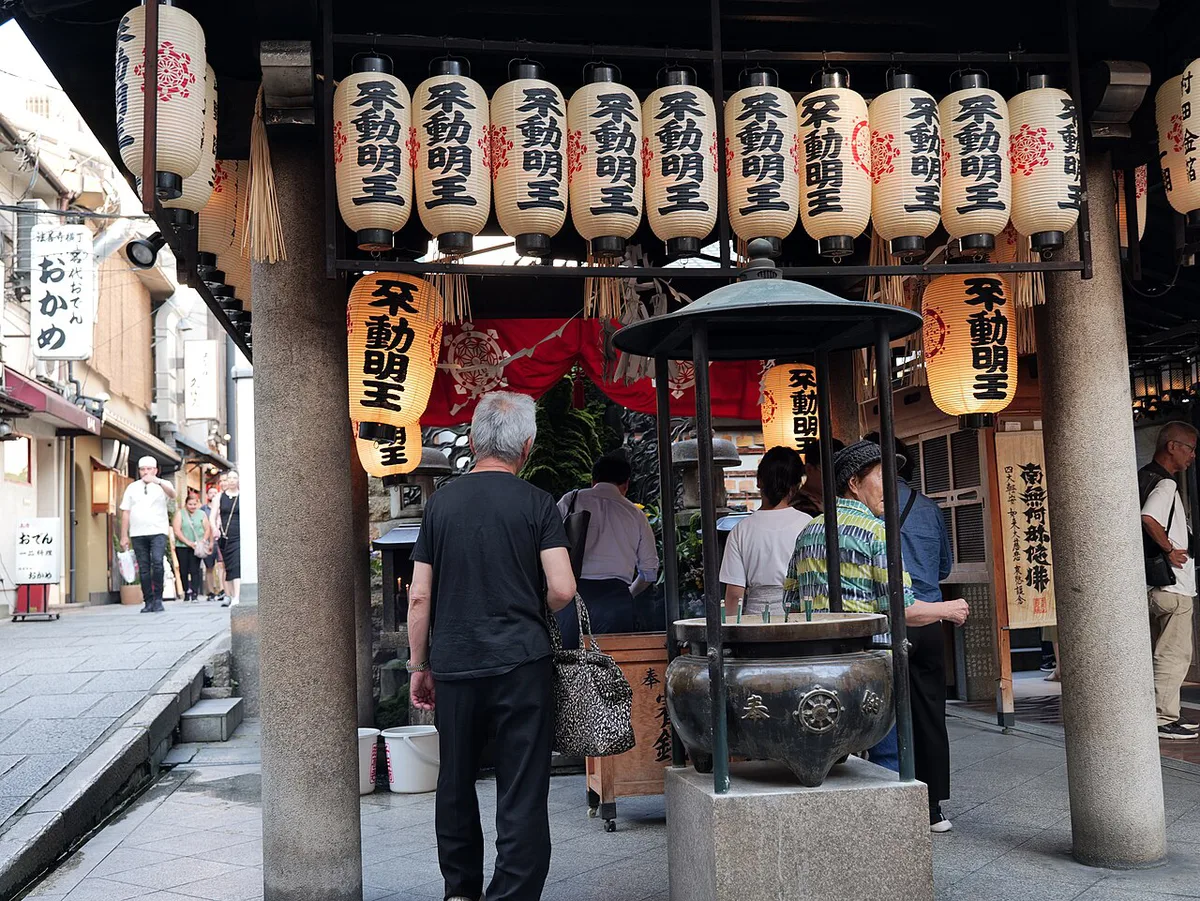
The Mizukake Fudo Ritual, Step by Step
Pouring water on the statue is the main reason people come. Treat it as a small act of prayer, not a photo prop. Locals often arrive, pour, pray, and leave within a minute, so wait your turn quietly.
A bowl and ladle sit in front of the statue. Follow this order and you will fit in with regulars.
- Walk under the entrance into the covered area, where the Fudo Myoo statue stands.
- Pause a moment before you step up, and let anyone already praying finish.
- Fill the ladle from the bowl provided.
- Pour water over the statue while you make a wish or say a short prayer.
- Step back, bow slightly, and make room for the next person.
- Take photos only after you have prayed, and keep flash off.
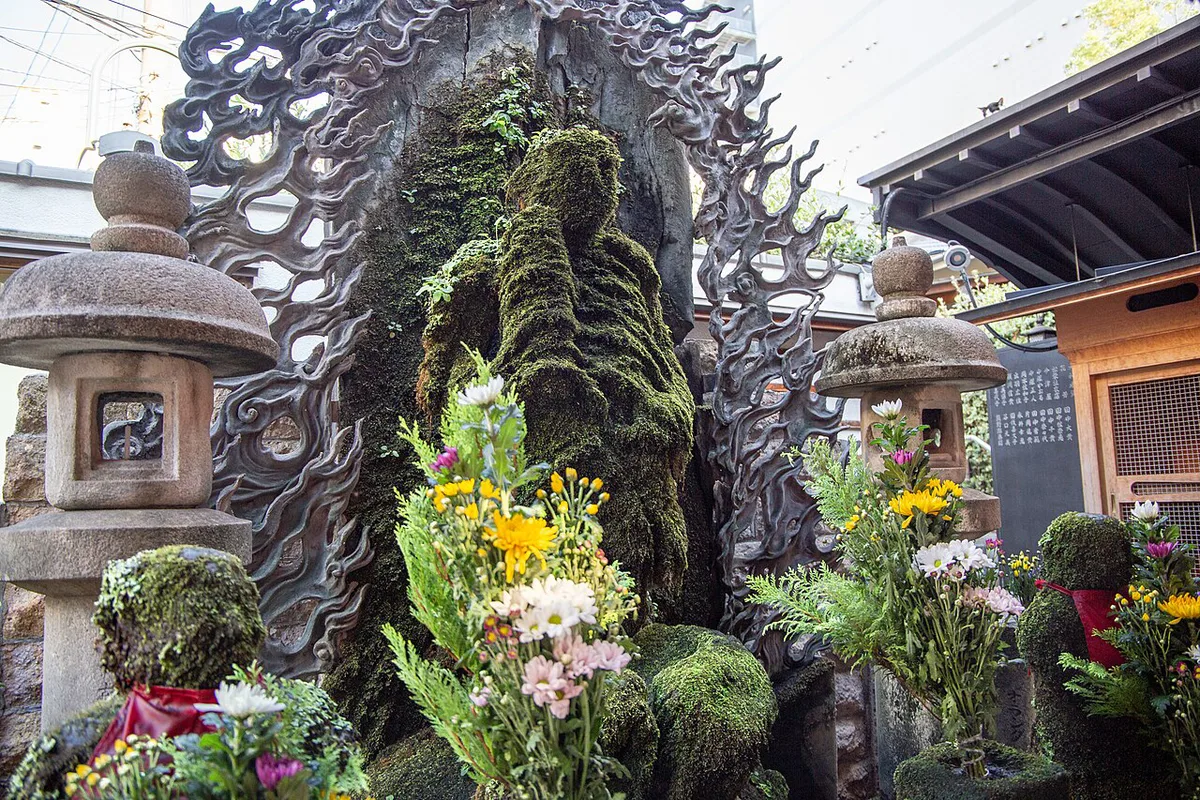
Why the Statue Is Covered in Moss
Moss grows because water lands on the same stone day after day. Years of ladles have turned the statue into a soft green shape. In photos it looks like velvet, and in person it looks closer to wet felt in lantern light.
The statue also carries a survival story. The Osaka Station guide reports that a 1945 bombing raid destroyed the temple and the surrounding area. One statue survived, and it is now a symbol of the district. Many visitors read the moss as a record of persistence and of prayers people believe were answered.
One popular tale says a woman made a wish here by throwing water over the statue. When the wish came true, others copied her. Treat that as local folklore rather than documented history.
Photographers should plan a full stop here. General visitors can treat it as a quick, meaningful pause on the way to dinner.
Hozenji Yokocho: What to Eat and How to Choose
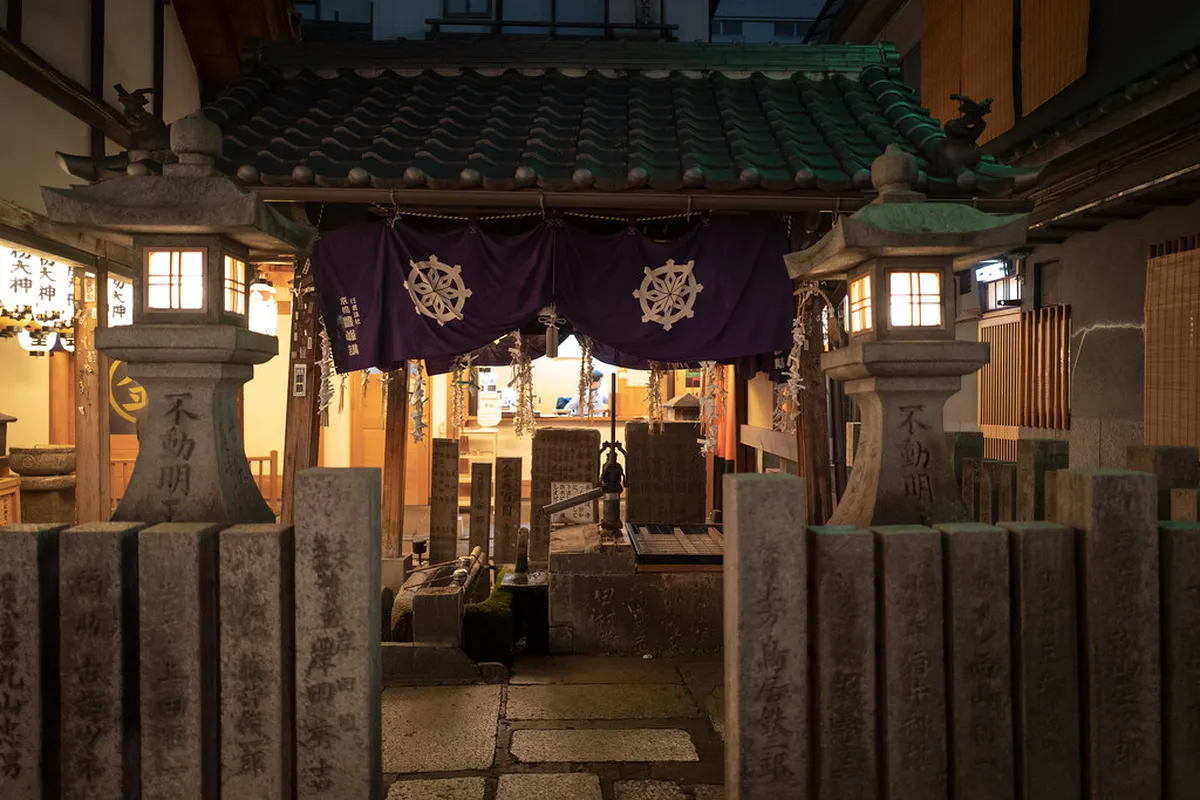
Yokocho means "street beside" and the name fits. This stone-flagged alley runs next to the temple and holds around 60 bars, cafes, and small restaurants. Hanging lanterns light it after dark, and the old-fashioned fronts make it feel far from the Dotonbori crowds.
In the 1600s the area grew up around stalls and teahouses serving pilgrims and theater crowds. Rakugo storytelling and stage shows took place at the temple itself, as the official Osaka visitor page covers for the area. Food is still the draw today.
Expect these dishes in the alley:
- Teppanyaki, cooked on a hot iron plate in front of you
- Okonomiyaki, the savory Osaka pancake
- Kushiage, deep-fried skewers
- Katsudon, pork cutlet over rice
- Modanyaki, an okonomiyaki-style dish served at Yakizen
Meoto Zenzai and the Alley Entrances
Meoto Zenzai is a sweet red bean soup linked to couples' harmony. The name also belongs to a 1940 novel by Sakunosuke Oda that made the alley famous. Because the shop can look like one more small building, check the sign before you pass it. Confirm current opening times on the day, since small shops change hours.
Look up when you reach an entrance. Calligraphy signs mark both ends of the alley. The west entrance sign was painted by the actor Kanbi Fujiyama. The east end carries a sign by the Osaka actor Harudanji Katsura III.
One simple way to pick a restaurant is to choose a place that looks inviting and step in. Many cooks train in these kitchens, so even modest counters tend to be serious about their food.
Getting There: Walking Directions from Dotonbori and Namba
From Namba Station, Hozenji is about a 5-minute walk from Exit 14. The Osaka Station guide gives 4 minutes from Namba subway station and 6 minutes from Nippombashi subway station. Allow a little extra if you are carrying bags or following a map for the first time.
From Dotonbori Bridge, the Japan National Tourism Organization page gives clear directions. Enter the covered shopping arcade heading toward Namba. Turn left at the intersection beside the Bookoff bookstore and the ABC Mart shoe shop. Walk one more block and you reach Hozenji.
Those two shop names make good landmarks, because the entrance is narrow and easy to walk past.
Coming from elsewhere in the city, plan your rail leg first. Our Umeda station orientation explains how to change trains there. Travelers arriving by Shinkansen can read Shin-Osaka arrival tips before heading south. For the neighborhood on the north side, see our Umeda area walkthrough.
Day or Night: When to Visit Hozenji
Morning and early evening work best. Visitor guides say the temple comes alive at the start of the evening, when lanterns throw warm orange light over the narrow alley and temple courtyards. In the morning you get quiet, and you can pour water without a line.
Because the temple is listed as open 24 hours, you can visit before or after a late meal. Restaurants in the alley keep their own hours, so confirm those before you plan dinner around them.
| Time | Atmosphere | Best for |
|---|---|---|
| Morning | Quiet, few people at the statue | Photos of the moss, calm prayer |
| Afternoon | Busier arcade, brighter light | Quick stop between shopping stops |
| Early evening | Lanterns lit, alley filling up | Atmosphere and a first dinner |
| Late night | Lively bars, some shops closed | Drinks and people-watching |
Mistakes to Avoid at Hozenji
A few small errors spoil the visit. Most are easy to dodge with a little planning.
Dropping bags first is simple, since Hozenji is 6 minutes from Nippombashi subway station.
First, do not visit only in daylight. The lantern-lit alley is the best part. Second, do not overlook the Meoto Zenzai shop, which is easy to miss. Third, avoid dragging a large suitcase through the narrow alley. Leave bags at your hotel or a station locker, and check our Osaka attractions guide for planning day stops around them.
Finally, do not treat the statue as a backdrop. Pour, pray, step aside, then take photos. Regulars come here for devotion, and a few seconds of patience keeps the mood intact.
Fitting Hozenji Into Your Osaka Day
Hozenji works best as a pause in a larger Namba evening. Start with shopping in Namba, walk to the temple for a short ritual, then eat in the alley. After that, stroll to Dotonbori Bridge or Ura-Namba for neon and street food, as the Japan National Tourism Organization page suggests.
With around 60 bars, cafes, and small restaurants in the alley, a Namba evening can easily end over dinner.
If you are choosing where to sleep, a base near Namba keeps this walk short. Compare options in our guide to areas for staying in Osaka. Families can scan family-friendly hotel picks for rooms that sleep more people.
For trip-wide planning beyond Osaka, our Japan travel planning guide covers routes and timing.
Frequently Asked Questions
Is Hozenji Temple free to enter?
Yes. Entry is free, and the listing on Japan Travel says the temple is open 24 hours every day. Restaurants in the alley set their own hours.
How do I perform the Mizukake Fudo ritual?
Take the ladle from the bowl in front of the statue. Pour water over Fudo Myoo while you pray or make a wish. Step back so the next person can approach.
How do I get to Hozenji Temple from Namba Station?
Walk about 5 minutes from Exit 14. Another guide gives 4 minutes from Namba subway station and 6 minutes from Nippombashi subway station.
Why is the Fudo statue covered in moss?
Visitors keep pouring water over it, so moss has grown over the stone. The Wikipedia entry and local guides say it survived the 1945 bombing when the rest of the temple was destroyed.
What should I eat in Hozenji Yokocho?
Try teppanyaki, okonomiyaki, and kushiage. Katsudon and modanyaki are also on offer. Meoto Zenzai makes a sweet finish.
Is Hozenji worth visiting at night?
Yes, and many guides call evening the best time. Lanterns light the alley and temple courtyards. Plan a meal in the Yokocho and keep the ritual short and respectful.
Free: The Osaka Essentials guide
Top things to do, where to stay, a perfect day plan, getting around, and the best time to go — a Osaka mini-guide you can take offline.
You might also like

Continue reading
More guides you'll find useful