Is Hiroshima Still Radioactive? What Visitors Should Know
No. Hiroshima's radiation is at normal background levels, per the city. Here's what visitors need to know about safety, sites, and respectful travel.
On this page
Last updated October 2026, and the short answer to "is Hiroshima still radioactive" is no. According to the City of Hiroshima, radiation in the city today is on a par with natural background levels found anywhere on Earth. Below you will find the science in plain language, a worry-by-worry table, and practical, respectful visiting advice.
Is Hiroshima still radioactive? The short answer
No. The City of Hiroshima's official FAQ states that radiation in Hiroshima and Nagasaki today is on a par with the extremely low background radiation, or natural radioactivity, present anywhere on Earth. The city adds that it has no effect on human bodies. Put simply, the city reports no measurable health risk to visitors from radiation.
A person at the hypocenter would have received 1/1000th of the immediate dose after 24 hours. That fast fall is why the short answer is no.
Hiroshima is a working modern city. People live, work, and study here every day. EBSCO Research Starters (Rogers, 2020) reports that both Hiroshima and Nagasaki were rebuilt and regained their pre-bombing populations within ten years.
One limit applies to this page. None of the sources we reviewed publish live microsievert readings, and such numbers go stale quickly. For current monitoring data, check Hiroshima Prefecture or Japan's national radiation-monitoring pages directly. For personal health questions, ask your own doctor.
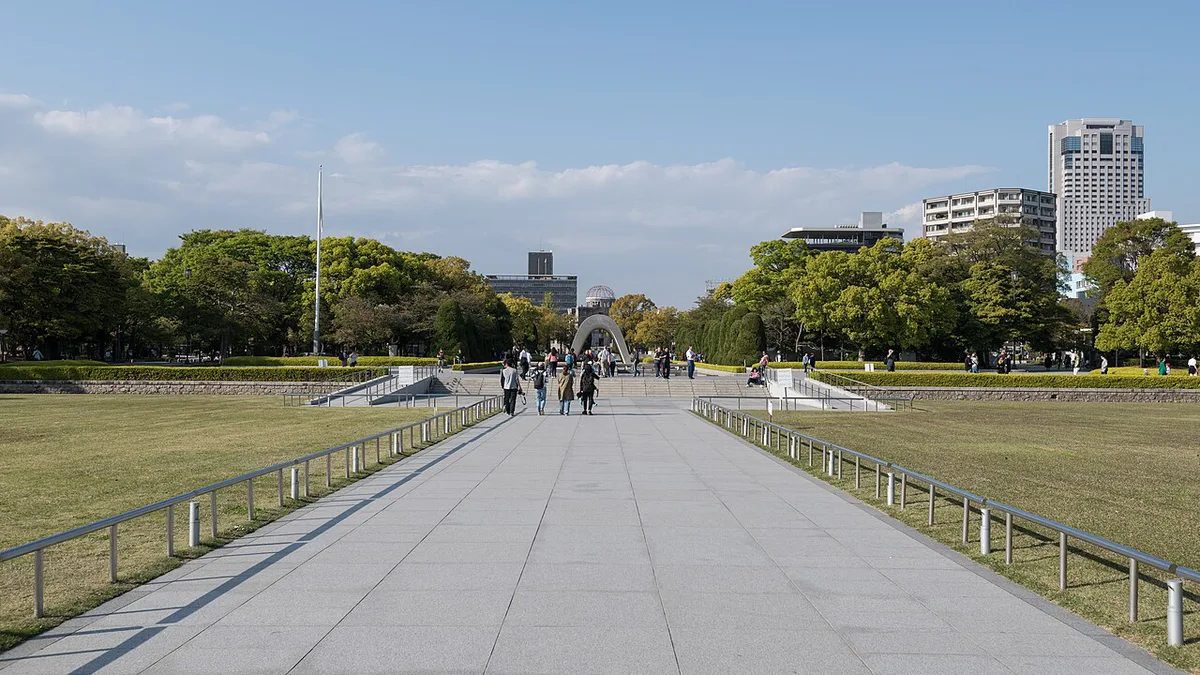
Why radiation faded so fast
Two facts explain most of it. First, the bomb exploded in the air. Second, the radiation it left behind decayed very quickly.
EBSCO Research Starters says the bomb, code-named Little Boy, exploded 580 m (1,900 ft) above Hiroshima. That makes it an air burst. Had it been a ground burst, dirt and rock would have been pulled into the fireball and made radioactive. EBSCO notes that this did not happen here, so the fallout was far less severe.
The city's FAQ describes the decay timeline. Roughly 80% of all residual radiation was emitted within 24 hours. At the hypocenter, a person would have received 1/1000th of the immediate dose after 24 hours. A week later, the figure falls to 1/1,000,000th.
EBSCO adds that radiation had returned to near background level about one month after the bombing. Short-lived isotopes created near ground zero disappeared within minutes to hours. Black rain fell within an hour of the blast. Despite reports to the contrary, EBSCO says that rain was only mildly radioactive.
- Air burst at 580 m: soil and rubble were not made heavily radioactive.
- About 80% of residual radiation emitted within 24 hours, per the city.
- 1/1000th of the initial residual level after 24 hours, and 1/1,000,000th after a week, per the city.
- Near background level after about one month, per EBSCO Research Starters.
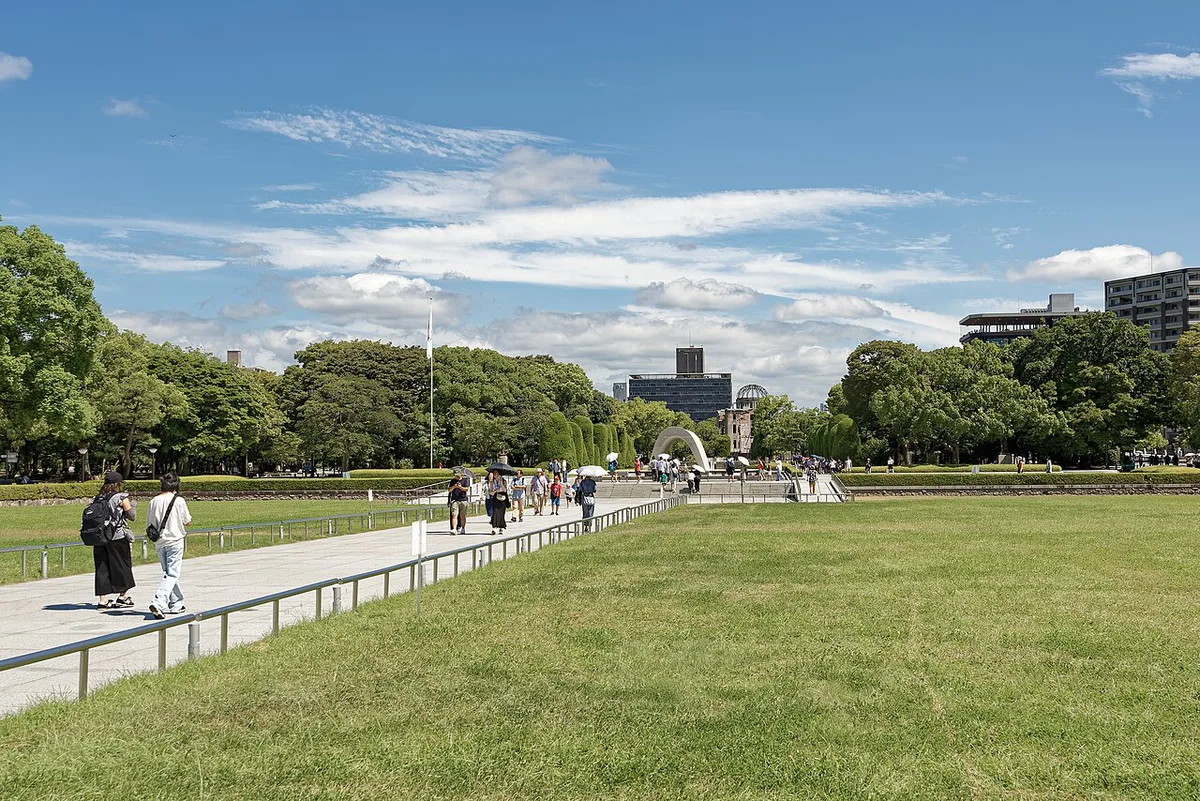
Hiroshima versus Chernobyl: why the comparison misleads
Searchers often ask why Hiroshima is not a wasteland like Chernobyl. The two events differ in kind. Hiroshima was a single detonation in the air. Chernobyl involved a reactor, which is a different release mechanism altogether.
Set at 580 m above the city, the bomb's height is one reason its aftermath diverged from a reactor release.
The air burst kept soil from becoming heavily radioactive, as covered above. The short-lived isotopes then decayed within hours, days, and weeks. That is the mechanism behind the city's timeline of rapid decline.
We do not compare contamination levels between the two places here. Our sources do not supply those figures. The safe takeaway is narrower: Hiroshima's pattern was a fast decline to background, and the city says today's levels match natural radiation.
Common visitor worries, answered
Most travelers ask the same handful of questions. The table gives a short answer to each and names the source to check. Where our sources are silent, the table says so instead of guessing.
| Common worry | Short answer | Source to check |
|---|---|---|
| Is the air or ground radioactive now? | The city says radiation matches natural background levels and has no effect on human bodies. | City of Hiroshima official FAQ |
| Is the ground at the hypocenter dangerous? | The city's decay timeline shows residual radiation fell to 1/1,000,000th within a week. | City of Hiroshima official FAQ |
| Could black rain still matter? | EBSCO describes it as only mildly radioactive, and it fell in 1945. | EBSCO Research Starters (Rogers, 2020) |
| Is food or tap water tested? | Our sources give no test results. Check official monitoring pages. | Hiroshima Prefecture and national monitoring pages |
| Is it safe with children or while pregnant? | The city reports no health effect from today's radiation. Ask your doctor about personal concerns. | Your doctor; City of Hiroshima FAQ |
| Can I touch relics or exhibits? | Follow museum signs and staff instructions. Rules vary by exhibit. | Peace Memorial Museum staff and signage |
Is it safe to eat, drink, and stay overnight?
The city's statement covers radiation levels in Hiroshima today. It says they match natural background and have no effect on human bodies. That is the claim we can attribute.
Our sources do not publish food-test or drinking-water results. We will not invent them. If you want that detail, look for official monitoring reports from Hiroshima Prefecture or Japan's national authorities. Travelers with medical conditions should ask their own doctor.
Overnight stays follow the same logic. The city says today's radiation is at normal background level. Residents live here year-round, and EBSCO notes that the population recovered within ten years of 1945. Nothing in our sources suggests a night in the city changes your exposure.
Pregnancy and young children deserve a cautious answer. We do not give medical advice. Treat the city's statement as general context, and bring individual questions to a doctor before you travel.
What to expect at the Peace Memorial sites
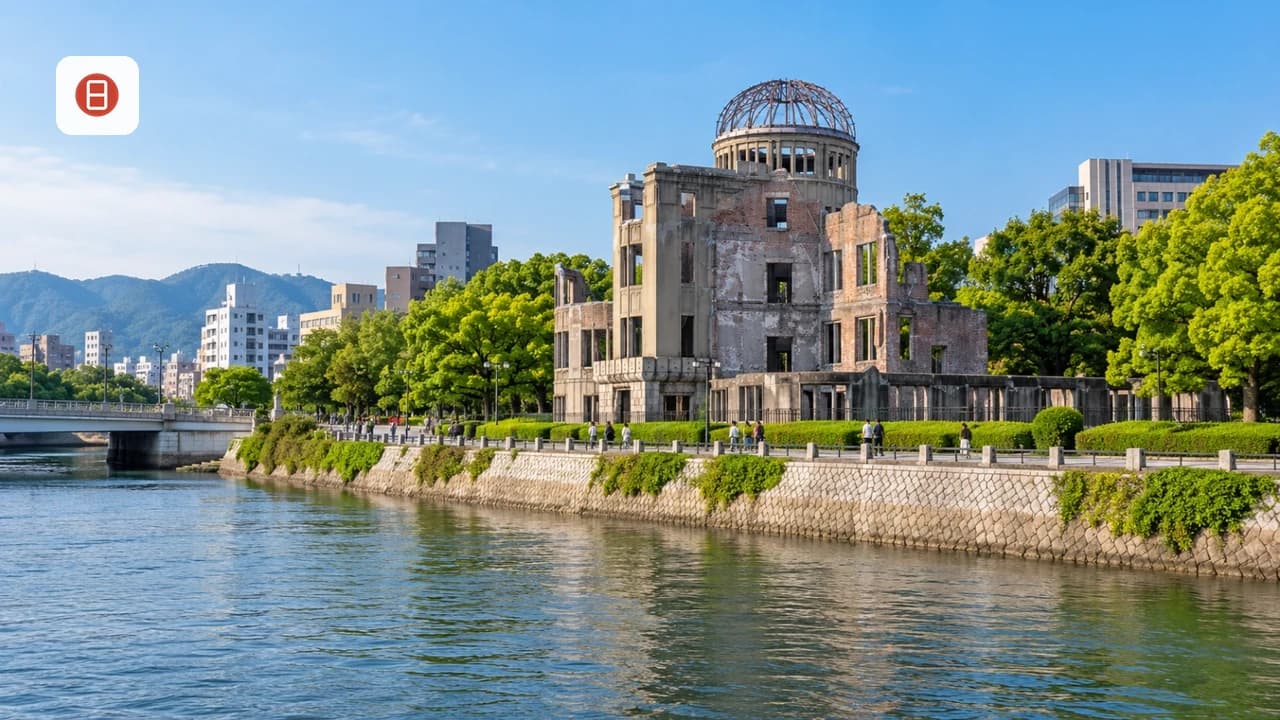
Most visitors focus on four places: Peace Memorial Park, the Atomic Bomb Dome, the Peace Memorial Museum, and the Cenotaph. The City of Hiroshima publishes official Peace Memorial Park information. Start there for current details.
We do not state admission prices, opening hours, or closure days. Our sources do not supply them, and they change. Confirm all of them on the official museum or city pages before you go. Also check for any renovation or reservation rules that apply on your date.
The radiation question is separate from the emotional weight of the sites. The Dome and the park are outdoors and quiet. The museum is the heavier visit, and it contains graphic material about the bombing and its victims.
Plan for that. Parents of young children should preview the museum content before deciding who goes in. We do not assert a minimum age. Sensitive visitors can see the park and the Dome outdoors and skip the full museum.
- Outdoor-only option: Peace Memorial Park and the Atomic Bomb Dome.
- Fuller option: add the Peace Memorial Museum and the Cenotaph.
- Check admission, hours, and closure days on official pages only.
Planning your visit
As editorial guidance, not a verified duration, a short half-day covers the park and museum at a respectful pace. Add a fuller day if you also want Miyajima or other sites. Rushing the museum defeats its purpose.
For arrivals by air, our airport transfer options page covers the trip into the city. We do not quote fares or transit times here because we have no verified operator figures.
Timing matters. August 6 is the anniversary of the 1945 bombing, and it brings the Peace Memorial Ceremony, heavier crowds, and possible restrictions. Verify current-year arrangements before you plan around that date. Visitors who want quieter conditions may prefer another day of the year.
For the bigger picture, our Hiroshima city pillar guide lays out the other major sights. Building a longer trip across the country? Our wider Japan trip planning page covers the national picture.
Visiting respectfully: etiquette and mistakes to avoid
The memorial sites honor people who died and survivors who still carry the history. Treat them as places of remembrance, not as spectacle. The rules below are common-sense guidance, not official regulations. Follow any posted signs and staff directions on site.
- Keep your voice low at the Cenotaph and the Atomic Bomb Dome.
- Photograph with care. Skip posed grins, selfie sticks, and jokes at the Dome.
- Do not climb on, lean over, or touch memorials unless signs allow it.
- Avoid "disaster tourism" framing. Ask what you can learn, not what makes a striking image.
- Follow museum rules on photography and on handling exhibits.
- Speak of casualties plainly and without sensational language.
Pairing it with the rest of Hiroshima
Many travelers feel they need a lighter stretch after the museum. Hiroshima offers it. Our guide to more things to do in the city covers what to add after the memorial sites.
Active travelers can go further. A three-day active itinerary combines hiking, kayaking, and cycling, a lighter counterpoint to the memorials. Everyday outdoor life in the city is part of the answer to the safety question.
For the full range of sights, return to our main Hiroshima guide. Together, the sites show a rebuilt city rather than a frozen one.
Frequently Asked Questions
Is there still radiation in Hiroshima and Nagasaki?
Only at natural background levels, according to the City of Hiroshima. The city's FAQ says today's radiation in both cities is on a par with the extremely low levels present anywhere on Earth. It adds that this has no effect on human bodies.
Why isn't Hiroshima a nuclear wasteland like Chernobyl?
Hiroshima's bomb exploded about 580 m above the city. EBSCO Research Starters says this air burst meant dirt and rock were not made heavily radioactive. Short-lived isotopes also decayed within minutes to hours. We do not compare contamination figures between the two places.
Is it safe to visit Hiroshima with children or while pregnant?
The city reports that today's radiation has no effect on human bodies. We cannot give medical advice. Ask your doctor about personal concerns before you travel. Parents should also preview the museum's graphic content before taking young children.
Can you visit Ground Zero or the hypocenter?
Yes, the memorial area is open to visitors. Check the official Peace Memorial Park page for current details. The city's data shows residual radiation at the hypocenter fell to 1/1,000,000th of its initial level within a week.
When did Hiroshima become safe to live in again?
EBSCO Research Starters says radiation returned to near background level about one month after the bombing. Hiroshima was then rebuilt. It regained its pre-bombing population within ten years.
How long do you need at the Peace Memorial Museum and park?
As editorial guidance, plan a short half-day for the park and museum. Add a fuller day if you want Miyajima or other sites. Check official pages for hours, closures, and any reservation rules.
Free: The Hiroshima Essentials guide
Top things to do, where to stay, a perfect day plan, getting around, and the best time to go — a Hiroshima mini-guide you can take offline.
You might also like
Continue reading
More guides you'll find useful