

Shimane Wagyu in Izumo: Where to Eat It in 2026
See where to eat Shimane wagyu in Izumo in 2026, from Okuizumo steak and Matsue yakiniku to station wagyu-don, plus prices, hours, and booking tips.
On this page
Last updated August 2026, Shimane wagyu in Izumo remains one of Japan's least crowded ways to eat A4 and A5 beef without paying Kobe-level prices. The prefecture's Itozakura bloodline gives the meat a distinctive buttery melt, and Izumo sits closest to where much of it is raised. This guide, part of the broader Izumo food guide, breaks down where to eat it, what it costs, and how to avoid paying wagyu prices for ordinary domestic beef.
What Is Shimane Wagyu? The Itozakura Bloodline
Shimane Wagyu is the prefecture-wide label for Japanese Black (Kuroge Washu) cattle raised across Shimane, from the Izumo plain to the mountain district of Okuizumo. Its genetic backbone is the Itozakura bloodline, one of three historically recognized Wagyu lines in Japan alongside Tajima (Hyogo) and Kedaka (Tottori). Tajima cattle, prized mainly for tight and delicate marbling, dominate Japan's wagyu exports. Itozakura genetics take a different path: a larger frame, steadier growth, and a calmer animal that carries deep marbling alongside more red-meat yield. Modern Shimane bloodlines also serve as a maternal base shared with neighboring Tottori and Okayama herds, contributing frame size and milking ability across the wider Chugoku region. According to regional breeder accounts, Shimane's cattle-raising history reaches back to the 14th century. Izumo sits close enough to the Okuizumo breeding grounds that restaurants here serve the beef without a long transport chain, and the wider culinary context lives in the Izumo food guide.
The Science of the Melt: Oleic Acid and the Wagyu Olympics
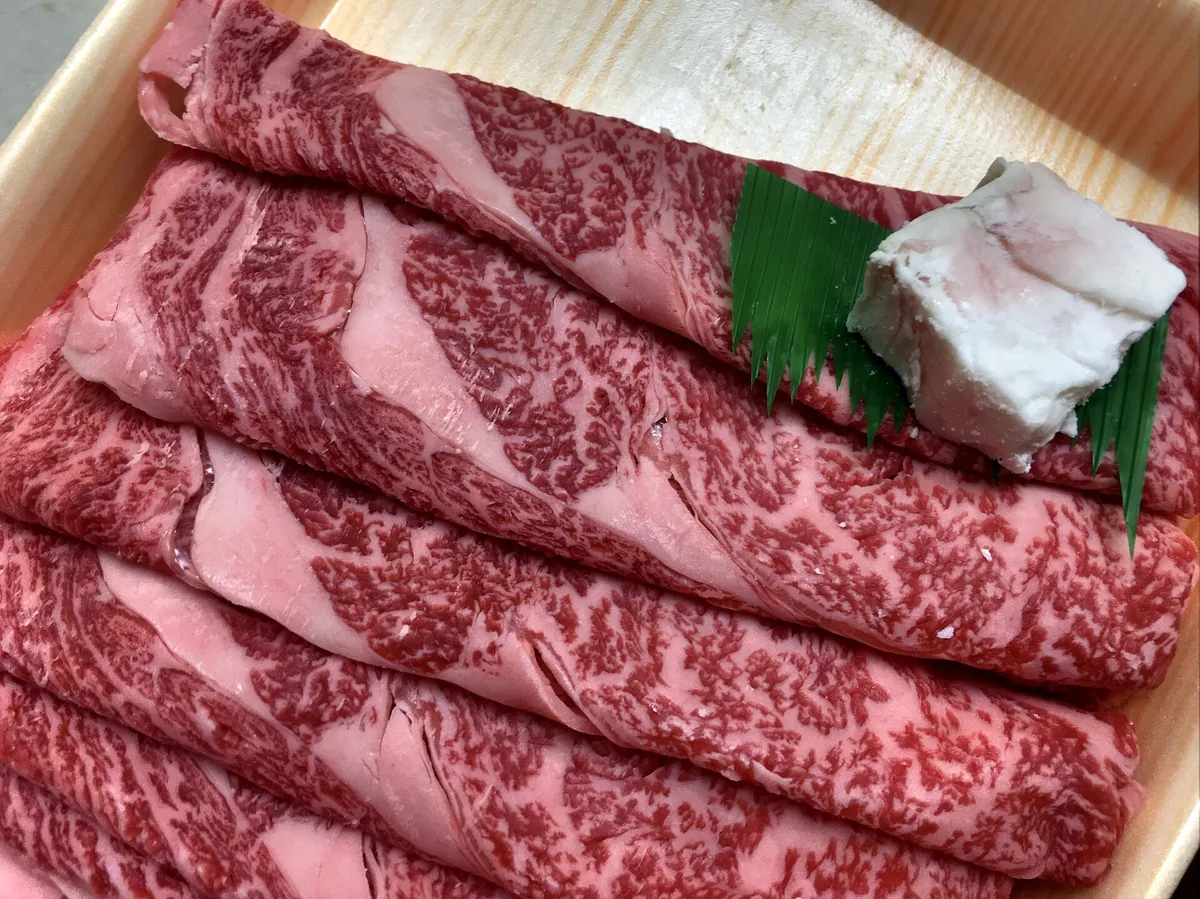
The buttery texture associated with Shimane Wagyu comes down to fat chemistry, not marketing. Higher oleic acid content lowers the fat's melting point. It turns liquid closer to body temperature, which reads as cleaner and smoother than heavy or waxy fat. Marbling density (sashi) matters too, but oleic acid explains why two similarly marbled cuts can taste different in the mouth. Shimane's herds are tested against this standard at the Zenkoku Wagyu Nouryoku Kyoushinkai, the national competition known as the Wagyu Olympics and held every five years. The competition judges carcass weight, structural balance, and fat quality across categories, with each prefecture entering only its top animals. Industry accounts describe Shimane placing first in multiple fat-quality categories at the competition, and it has also won the Japanese Carcass Contest outright. Miyazaki carries a higher international profile and larger export volumes, which is part of why Shimane remains comparatively unfamiliar outside Japan despite scoring in the same competitive tier. For how Shimane's Itozakura-based beef compares with Tottori's Kedaka-based herds across the wider San'in region, see the San'in food guide.
Shimane Wagyu in Izumo: Where to Eat It
Shimane wagyu in Izumo appears in formats such as steak, yakiniku, wagyu-don, and shabu-shabu. The format you choose affects travel time and cost. For casual snacks along the shrine approach, see the Izumo Taisha food street guide. Look for explicit Shimane Wagyu wording on the current menu and ask whether it applies to the exact cut or course. A generic wagyu label alone does not establish Shimane origin; do not rely on an assumed window seal or pedigree-card display as the only test.
Steakhouse Moemino's narrow lunch hours (11:00-14:00) require visitors to factor substantial drive time from central Izumo into their daytime plan, making afternoon Wagyu dining less casual than street-side options near Taisha.
- Steak in Okuizumo. Steakhouse Moemino in Iinan Town serves Okuizumo Wagyu as steak, sukiyaki, and gyudon. Shimane's official tourism site lists hours as 11:00-14:00 (last order 13:30) and 17:00-20:00 (last order 19:30), closed Thursdays except holidays, with free parking.
- Yakiniku toward Matsue. Karubiya Kei and Gyutonbachi Matsue Store both grill Shimane Wagyu in Matsue City. Gyutonbachi's platters let you compare Shimane Wagyu against Daisen jidori chicken and other cuts side by side.
- Wagyu-don near the station. Casual counters around JR Izumoshi Station serve wagyu rice bowls for a faster, lower-cost taste of the beef.
- Two sub-brands, two farms. Okuizumo Wagyu is reserved for cattle born and raised in the Okuizumo region, the name on the menu at Moemino. Ginzan Wagyu is a separate Shimane farm brand, served at Yakiniku Ginzan Wagyu inside Matsue's Karakoro Art Studio.
- Shabu-shabu as a fourth option. Tsukeshabu Engi lets you cook A5 Shimane Wagyu tableside in an individual pot, choosing from two broths and six dipping sauces. Courses also include Okuizumo pork and a finishing rice porridge.
Steak, Yakiniku, or Wagyu-Don: How to Choose
Three variables decide which format fits: budget, group size, and how much travel you're willing to do. Lunch is consistently the cheaper entry point across every format, and dinner courses cost more everywhere in Japan's wagyu scene, not just in Izumo. Lunch discounts like this are common practice across Japanese fine dining generally, so applying the same logic to Shimane Wagyu uses an existing norm rather than a special trick. Yakiniku suits groups who want to share several cuts and build a combination platter. A wagyu-don suits a solo traveler who wants the flavor without committing to a full seating, while a steak or shabu-shabu course suits a smaller group focused on the beef itself. Travelers based near Izumo Taisha or JR Izumoshi Station without a car get easy access to wagyu-don and the shrine-approach food stalls. Reaching Steakhouse Moemino or the Matsue yakiniku spots means budgeting drive time, so build it into the day rather than treating it as a quick stop.
Choosing a steak course at Steakhouse Moemino means planning ahead: lunch service ends at 13:30, so you'll need to arrive well before this last-order cutoff even if your usual lunch time is later.
| Format | Typical Price | Best For | Access |
|---|---|---|---|
| Steak course (Okuizumo Wagyu) | Lunch set ¥2,000-¥4,000; dinner course from ¥10,000 | Solo diners or couples wanting a purist tasting | Rental car; drive into the Okuizumo mountains |
| Yakiniku platter | Similar lunch and dinner bands, from about ¥2,000-¥4,000 at lunch | Groups wanting variety and a social meal | Short trip toward Matsue City |
| Wagyu-don | Priced well below a sit-down course | Solo travelers short on time near the station | Walkable from JR Izumoshi Station or the Taisha approach |
Planning a Wagyu Lunch Around Izumo Taisha
Lunch may cost less than dinner at some Shimane wagyu restaurants, but compare the current menus because cuts, grade, portion size, and inclusions may differ. Pair the meal with sightseeing at Izumo Taisha and nearby attractions, then add Izumo soba or Izumo zenzai. High-end steak and shabu-shabu courses may require advance booking. Confirm the exact beef, menu, last-order time, and reservation terms directly before building an afternoon around one seating.
Mistakes to Avoid When Ordering Shimane Wagyu
Three mistakes account for most disappointing Shimane wagyu meals in Izumo: brand confusion, missed last-order windows, and unverified grading near the shrine gate.
- Don't confuse the brand. Some general guides lump Shimane Wagyu together with Sendai beef or Shinshu Premium beef, since all three are Japanese Black brands. They are separate prefectural brands with separate herds. Look for "Shimane" or "Okuizumo" printed specifically on the menu or certificate.
- Watch the last order. Last order (L.O.) times typically fall 30 to 60 minutes before a restaurant's posted closing time. Steakhouse Moemino, for example, cuts off lunch orders at 13:30 for a 14:00 close and dinner orders at 19:30 for a 20:00 close.
- Check the grade near the shrine gate. Genuine A4 or A5 Shimane Wagyu is usually labeled as such on a menu board or certificate near the register. If a shop can't show that, ask before ordering, or look for stalls that post their beef grade clearly.
How This Guide Was Verified
Food availability, access details, seasonal rules, and the time-sensitive claims in this guide were checked on August 22, 2026 against the official sources below. Independent restaurant menus, prices, opening days, and sell-outs can change, so confirm the operator's same-day notice before making a special trip.
Frequently Asked Questions
Is Shimane Wagyu better than Kobe beef?
Neither is objectively better; they're different expressions of Japanese Black cattle. Shimane Wagyu's higher oleic acid content gives it a buttery, lower-melting-point fat that many diners find cleaner than Kobe's denser marbling. In our editorial assessment, Shimane also offers noticeably better value for a similar eating experience.
Can you find Shimane Wagyu near Izumo Taisha?
Yes. Casual counters near JR Izumoshi Station and stalls along the shrine approach sell wagyu-don, and the Izumo Taisha Food Street Guide: Shinmon-dori and Goen Yokocho (2026) guide lists which ones state their beef grade. For a full steak or shabu-shabu course, plan to travel toward Okuizumo or Matsue City instead.
What is Lake Shinji known for, and can you pair it with a wagyu meal?
Lake Shinji, near Matsue, is known locally for a set of seven signature seafood specialties, and some menus pair a small seafood course with a Shimane Wagyu course for contrast. Ask the restaurant which lake seafood dish is on offer that day, since the lineup shifts with season.
How much should you budget for a Shimane Wagyu meal in Izumo?
Use the intended restaurant's current menu because price depends on cut, grade, portion, and course inclusions. Lunch may be cheaper, but it should not be described as the same grade or serving as dinner unless the menu confirms that.
Do you need to book ahead for Shimane Wagyu restaurants in Izumo?
High-end steak and shabu-shabu courses often need booking days to weeks ahead, especially on weekends. Casual wagyu-don counters near the station or shrine gate are typically walk-in, so they work well for last-minute plans.
What do the A4 and A5 grades mean on a Shimane Wagyu menu?
The letter (A, B, or C) rates meat yield, and A is the highest. The number (1 to 5) rates quality, covering marbling, color, texture, and fat quality, and 5 is the top score. A4 and A5 are the two grades most Shimane Wagyu specialists serve, and menus should state the grade next to the cut.
Free guide: Japan's Hidden Gems
12 under-the-radar places beyond Tokyo & Kyoto — with the best season to visit each and a local tip you won't find in the guidebooks.
You might also like


Continue reading
More guides you'll find useful


