

Izumo Soba Guide: How to Eat, Best Shops & Local Traditions
An Izumo soba guide to hikigurumi milling, wariko vs kamaage bowls, and the shops near Izumo Taisha before they close for the day.
On this page
Last updated August 2026, this Izumo soba guide covers the region's dark, whole-grain noodles and the etiquette that trips up first-time visitors. Hikigurumi milling crushes whole buckwheat kernels together with their hulls, producing a darker, more fragrant bowl than refined soba found elsewhere in Japan. Two styles define the tradition: cold wariko in stacked lacquered bowls, and hot kamaage served in its own cooking water.
Izumo Soba Guide: One of Japan's Three Major Soba Styles
Izumo soba ranks alongside Wanko soba from Iwate and Togakushi soba from Nagano as one of Japan's three major soba styles. Shimane Prefecture's official tourism guide names it the prefecture's signature gourmet dish, distinct for its dark color and pronounced buckwheat aroma. The hikigurumi milling method grinds whole buckwheat seeds together with their husks, skipping the sifting step used for paler, refined flour. That's a sharper contrast than sarashina soba, a refined style milled from only the buckwheat's pale inner core. Because the husk stays in the flour, Izumo soba carries more fiber and minerals than sifted soba, alongside a stronger, earthier flavor. For a wider view of the prefecture's kitchen beyond noodles, see the Izumo food overview. Its companion San'in region food guide places soba within the wider dining scene across the region.
Wariko vs Kamaage: Choosing Your Izumo Soba Style
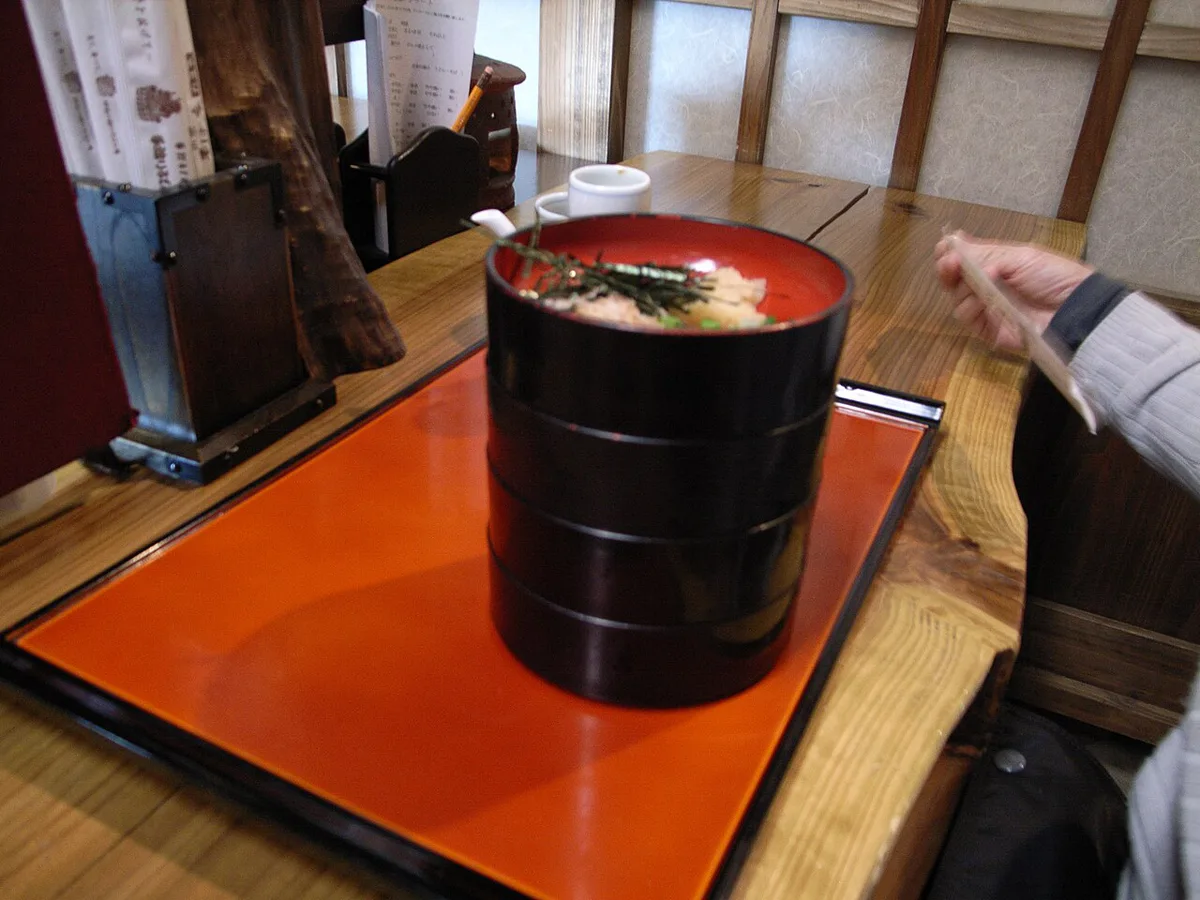
Wariko soba is the cold style, served in three tiers of round, vermillion-lacquered bowls. Kamaage soba is the hot style, ladled straight from the pot into a bowl along with its own cooking water. Cold months are the traditional time for kamaage, according to Shimane's official tourism guide, which also highlights rutin, a buckwheat polyphenol, as a reason some diners choose it year-round. Texture separates the two as much as temperature does. Wariko noodles hold a firmer bite since they're rinsed and chilled after boiling. Kamaage's noodles soften slightly in the retained broth instead. Visually, wariko's stacked red bowls make it the more photogenic order, and many shops present all three tiers together on a tray.
| Factor | Wariko Soba (Cold) | Kamaage Soba (Hot) |
|---|---|---|
| Best season | Year-round; autumn brings fresh-harvest buckwheat | Favored in colder months; autumn also brings fresh-harvest buckwheat |
| Texture | Firmer, chilled noodles | Softer noodles in hot broth |
| Nutrient angle | Rutin retained in noodles and sauce | Rutin-rich cooking water drunk directly |
| Visual presentation | Three stacked red-lacquered bowls | Single bowl with cloudy broth |
How to Eat Izumo Soba Like a Local
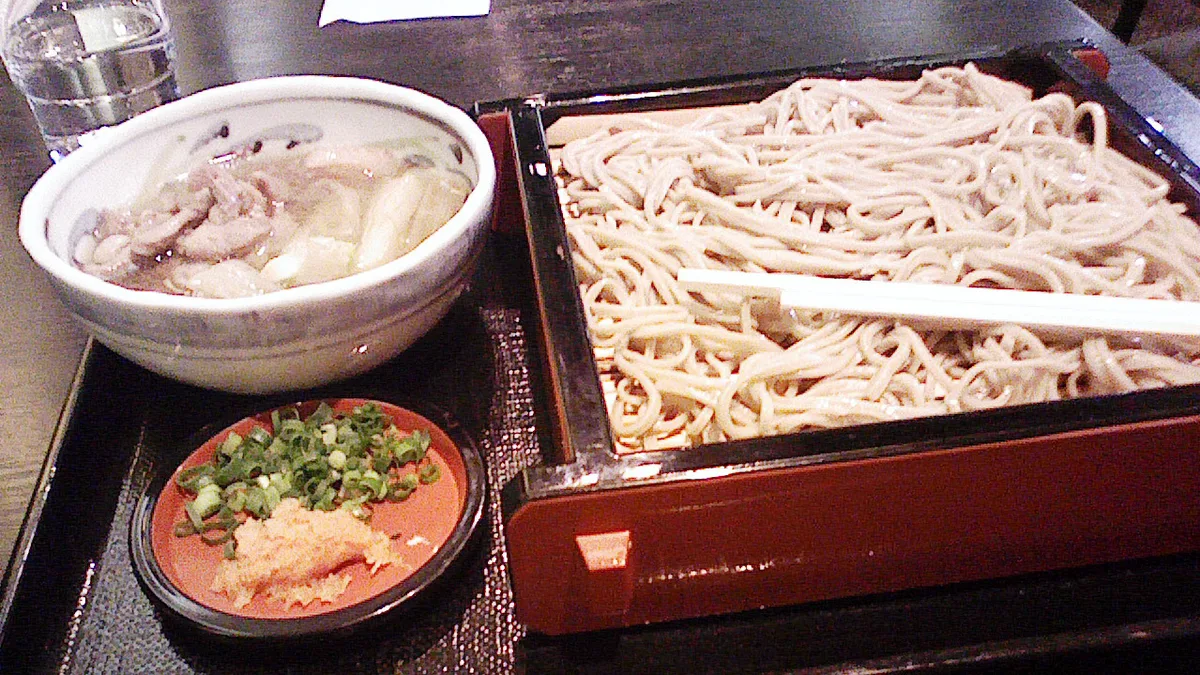
Eating wariko soba correctly means pouring the dipping sauce over the noodles instead of dipping them into a separate cup. That differs from the mori and zaru soba served in most of Japan, where noodles are dipped into a side cup of tsuyu. Add condiments to the top tier first, then pour the sauce directly over the noodles and eat. Once that tier is empty, pour any leftover sauce into the second tier. Add fresh condiments and repeat the same steps for the third tier. That cascading order, finishing with a pour of sobayu into whatever sauce remains, is the traditional way to close the meal. Kamaage soba works differently. Season the cloudy cooking water yourself, stirring in dipping sauce and condiments until the balance suits you. Typical condiments include green onion, nori, and grated daikon. Finish every bowl by drinking the sobayu mixed with the last of the dipping sauce. Skipping that step means missing the meal's nutrient-rich finish.
- Sliced green onion
- Shredded nori seaweed
- Grated daikon radish, often with a sharp bite
Where to Eat Izumo Soba Near Izumo Taisha
Arakiya is the most documented option, founded in the Tenmei era of the 1780s and widely regarded as the oldest Izumo soba restaurant still operating. Key details worth confirming before a visit appear below. The menu covers both wariko and kamaage soba, plus soba zenzai and buckwheat ice cream for dessert, served across table seating and tatami rooms. Taneya and Kizukiya are two more shops near the shrine, known respectively for a traditional shrine-adjacent atmosphere and a distinct broth profile. Confirm their current hours and menu directly before visiting, since posted hours shift with season and daily noodle supply. For a walkable overview of the shops clustered near the shrine gates, see the Izumo Taisha food street guide. Pair the meal with the Izumo attractions guide to plan the pre-lunch shrine visit.
Just a 5-minute walk from the shrine grounds, Arakiya's proximity rewards early-morning shrine visits followed by lunch. Arriving before 1:00 PM improves the odds of finding the full menu, but does not guarantee it because the restaurant can close when noodles sell out.
- Location: roughly a 5-minute walk from Izumo Taisha's grounds, or about 10 minutes on foot from Ichibata Electric Railway's Izumo Taisha-mae Station
- Hours: 11:00am to 4:00pm, ending early whenever the day's noodles sell out
- Closed day: Wednesdays
- Price range: from ¥1,000 for a standard order
- Reservations: not accepted; seating is first-come, first-served
- Address: 409-2 Kizukihigashi, Taishacho, Izumo City, Shimane 699-0701
- Phone: 0853-53-2352
Planning Your Visit: Timing, Costs, and Access
Arrive before 1:00pm for the best chance at a full menu. Arakiya's own hours show how early a kitchen can run out and close for the day. Weekends and shrine festival days push that safe margin earlier still, since local diners and tour groups compete for the same limited batches of noodles. Many visitors tour Izumo Taisha's grounds in the morning, then walk over for lunch while shops still have noodles in stock. Building the shrine visit and lunch into one loop avoids a second trip back into town later, once the lunch-only kitchens have closed. Cost tends to track the toppings more than the style, as shown below. Arakiya's two listed routes suggest the general pattern. Most soba shops cluster along the walk between Izumo Taisha's main approach and the Izumo Taisha-mae Station. Confirm each shop's exact address before setting out, since walking distances vary by location.
- Standard soba set: ¥1,000 to ¥1,500
- Sets with tempura or Shimane Wagyu added: ¥2,000 and up
Mistakes to Avoid With Izumo Soba
A few habits trip up visitors who expect Izumo soba to work like soba elsewhere in Japan. The list below covers the most common ones. None of these habits are hard to avoid once you know the pattern. Following it turns the meal into a fast, predictable lunch stop instead of a guessing game.
Shops close by 4:00pm when daily supplies run out. The typical visitor timeline—morning shrine tour, then lunch before 1:00pm—takes advantage of this constraint, turning a limitation into a focused, daylong itinerary.
- Planning it for dinner: most shops, Arakiya included, close by 4:00pm or whenever the noodles run out, so treat Izumo soba as a lunch-only meal
- Looking for a separate dipping cup: wariko soba is poured, not dipped, so use the tiered bowls instead of asking for a side cup of tsuyu
- Pouring sauce into all three tiers at once: work through them one at a time, letting the sauce cascade down as each tier empties
- Skipping the sobayu at the end: the cooking water is part of the meal, not an optional garnish
- Assuming every shop takes cards: Arakiya lists credit cards as accepted, but confirm payment options at smaller shops before ordering
- Assuming a table is guaranteed: shops like Arakiya seat guests first-come, first-served, so a short wait at the door is normal at peak lunch hours
Inside a Soba Shop: Atmosphere and Hands-On Experiences
Many Izumo soba shops operate out of renovated old private houses, with wooden interiors and small gardens visible from the tatami seating. Regional tourism coverage highlights that atmosphere alongside the food itself. It's one reason locals treat a soba lunch as a slower, sit-down meal rather than a quick bite. Izumo soba also shows up at community festivals and local events across the region, functioning as a marker of Shimane's food culture beyond restaurant menus. Beyond eating it, the wider Izumo region also offers hands-on soba-making experiences, where visitors mix and cut their own buckwheat dough before boiling and tasting the noodles in broth. Booking details and availability vary by operator, so confirm current schedules and prices directly before planning a session around it.
Beyond the Noodles: Regional Pairings Near Izumo Taisha
Soba is rarely the only stop on a shrine-day food itinerary. Izumo zenzai, a sweet red bean soup with mochi, is the region's other signature dish and a common way to close out a soba lunch. The Izumo Zenzai Guide: Best Shops, History and Prices Near Izumo Taisha covers where to find it and how it differs from zenzai elsewhere in Japan. Shimane Wagyu is the other pairing worth planning around, often added to soba sets as a premium topping once the ¥2,000 price line is crossed. The Shimane Wagyu guide breaks down where the beef shows up on local menus. Noyaki kamaboko, a grilled fish cake made from flying fish, turns up on Arakiya's own menu alongside its soba and zenzai. Mackerel shabu-shabu is another specialty regional guides group alongside soba, wagyu, and zenzai as Shimane signature dishes. Soba shops cluster densely around the shrine, so comparing two or three bowls in one visit is realistic. Locals sometimes call this soba-walking, a good way to taste both wariko and kamaage side by side.
How This Guide Was Verified
Food availability, access details, seasonal rules, and the time-sensitive claims in this guide were checked on August 22, 2026 against the official sources below. Independent restaurant menus, prices, opening days, and sell-outs can change, so confirm the operator's same-day notice before making a special trip.
Frequently Asked Questions
Is Izumo soba gluten-free?
Not automatically. Nationally, soba noodles typically range from about 40% to 100% buckwheat flour depending on the shop, and the rest is usually wheat. Ask which blend a specific restaurant uses before ordering if gluten avoidance matters, since a fully wheat-free bowl isn't guaranteed everywhere.
Can you make a reservation at Izumo soba shops?
Arakiya, one of the most established shops near the shrine, takes no reservations and seats guests first-come, first-served. Treat that as the general pattern near Izumo Taisha and plan to arrive early, especially at lunch on weekends.
Is Izumo soba kid-friendly?
Yes. Arakiya offers both table seating and tatami-room seating, which suits families more comfortably than counter-only shops. Portions and toppings are simple enough that most kids can eat the noodles plain, without the tiered wariko sauce ritual.
Why do Izumo soba shops close so early?
Most shops make a limited batch of fresh noodles each morning and close once it sells out. Arakiya's own posted hours run only 11:00am to 4:00pm as a result. Plan lunch, not dinner, around this dish.
What's the difference between wariko and kamaage soba?
Wariko is the cold style, poured in three stacked lacquered bowls and eaten tier by tier. Kamaage is the hot style, served in a single bowl along with its own cooking water, which you season yourself.
Can you do a soba-making experience in Izumo?
Yes, hands-on soba-making experiences are offered around the Izumo region, typically covering mixing, cutting, and boiling your own noodles. Confirm current operators, schedules, and prices directly, since availability shifts by season.
How much does a typical Izumo soba meal cost?
A standard soba set generally runs ¥1,000 to ¥1,500. Sets that add tempura or Shimane Wagyu typically start around ¥2,000.
Is Izumo soba spicy?
Not by default, but the condiment tray often includes grated daikon that carries real heat. Stir in as much or as little as preferred, since condiments are self-served at the table.
Free guide: Japan's Hidden Gems
12 under-the-radar places beyond Tokyo & Kyoto — with the best season to visit each and a local tip you won't find in the guidebooks.
You might also like


Continue reading
More guides you'll find useful


