

Izumo Zenzai History and Dessert Guide
This Izumo zenzai guide covers shops near Izumo Taisha, the jinzai-mochi origin story, 2026 prices, and etiquette for the lucky red-and-white sweet.
On this page
Last updated August 2026, this Izumo zenzai guide maps the shops, history, and prices behind Shimane's signature sweet. Izumo Taisha's approach streets serve zenzai as a good-luck treat tied to en-musubi, the shrine's matchmaking blessing. Expect a clearer broth than Tokyo-style oshiruko and frequent red-and-white mochi accents, although presentation varies by shop. See the broader Izumo food guide for savory dishes to pair with this dessert.
This Izumo Zenzai Guide Starts With the Jinzai-Mochi Legend
Izumo Taisha hosts Kamiarisai in the tenth month of the old lunar calendar, when tradition says gods from across Japan gather there. Shrine kitchens served an offering called jinzai-mochi during that festival. Local Izumo dialect softened the word to zunzai, and it eventually became zenzai, the name used nationwide today. That shift is why Izumo claims the origin of the dessert, rather than just a regional variant of it. A bowl in Tokyo or Osaka carries no direct tie to shrine gods or to en-musubi, the matchmaking connection Izumo Taisha is known for.
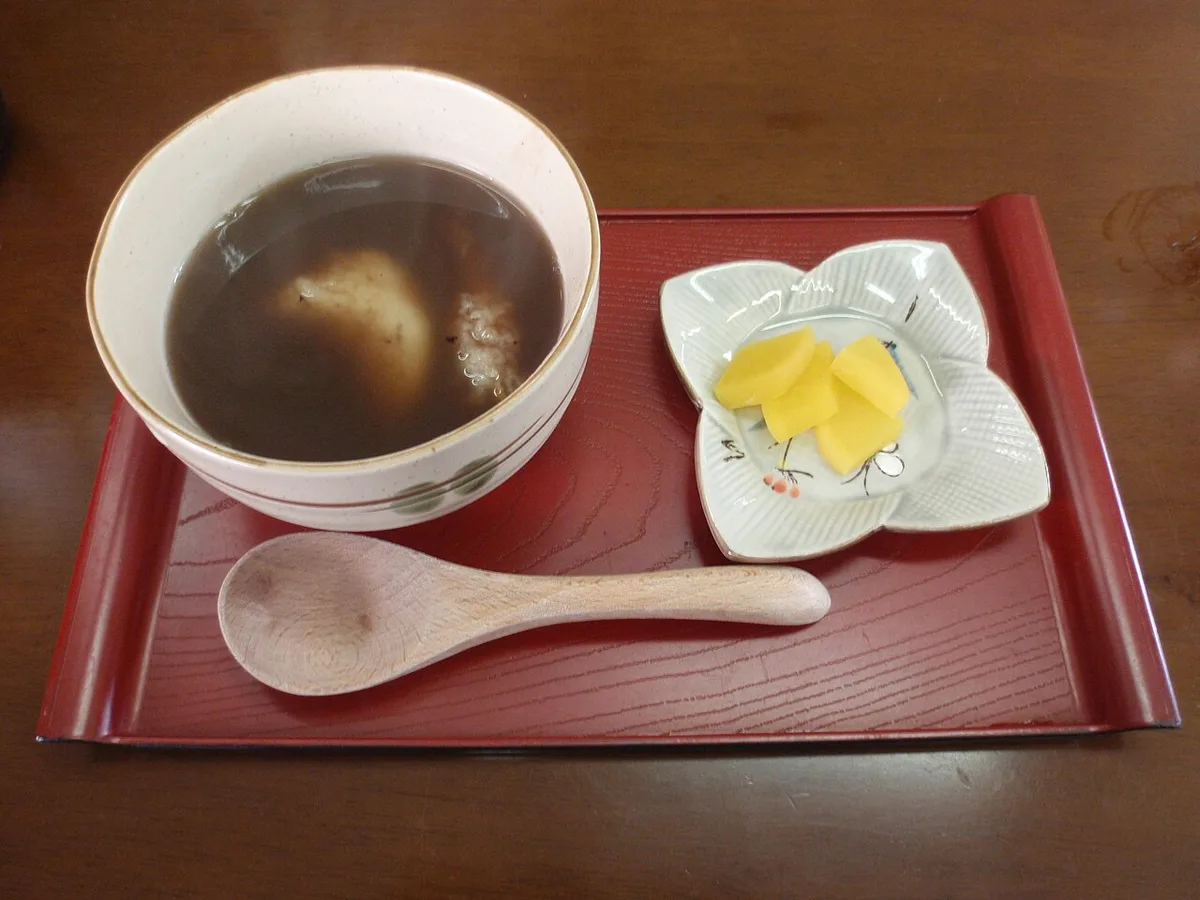
Izumo Zenzai vs Oshiruko: Regional Style Differences
Regional naming makes zenzai confusing outside Izumo. In the Kanto region around Tokyo, zenzai usually means a thicker, less soupy preparation, while the brothier version is called oshiruko. Kansai draws the line differently: chunky tsubu-an with whole beans is zenzai there, and smooth koshi-an is oshiruko. Izumo versions commonly use a lighter broth and often feature auspicious red-and-white mochi or shiratama dango, but recipes and presentations vary by shop.
| Region | What "Zenzai" Means Locally | Key Marker |
|---|---|---|
| Kanto (Tokyo area) | Thicker, less soupy preparation | Oshiruko is the soupier version |
| Kansai (Osaka/Kyoto area) | Chunky tsubu-an with whole beans | Koshi-an (smooth) is called oshiruko instead |
| Izumo | Clear, light broth with large Dainagon azuki beans | Red and white mochi or shiratama dango are mandatory |
Where to Eat: Six Zenzai Shops Near Izumo Taisha
Shinmon-dori and Goen Yokocho hold most of the town's zenzai counters, within a few minutes' walk of Izumo-taisha-mae Station on the Ichibata Electric Railway. Each shop leans into a different strength, from retro tearoom seating to fast counter service. Use the table below to match a shop to what matters most on your visit. Kutsurogi Wa Cafe Amaemon sits right in front of the shrine's Seidamari no Otorii gate, inside a Taisho-era retro interior with period lighting and sofas. Its Daikoku Zenzai comes topped with a monaka wafer shaped like Daikokuten, one of Japan's luck gods. The menu also runs an Aimori Daifuku Zenzai with a warm rice-cake dumpling inside, plus sencha, Izumo black tea, and a house Izumo blend coffee. A takeaway window beside the entrance sells Izumo Zenzai Soft, a soft-serve version for walking Shinmon-dori. Amaemon lists last order for food at 4:30pm and posts Wednesday and Thursday closures, with occasional extra closures on top, so confirm before visiting. Nippon Zenzai Society No. 1 Shop, run inside the Otsumami Kenkyujo Taisha Monzen Lab, positions itself as the modern guardian of Izumo's zenzai tradition. Its standard Izumo Zenzai set comes with pickles and tea for ¥770. The kitchen also runs three hot styles, including enmiki zenzai with baked mochi and goenzai with boiled mochi, plus a cold zenzai and an ice-cream zenzai for warmer months. A dish called the Nakai Kiichi SP is a summer-only chilled zenzai with baked mochi, named for an actor who visited the shop. The attached retail counter stocks retort-pouch zenzai for travel, alongside roughly 120 other snack items. Taisha Coffee sits about one minute from the station and swaps the soup format for a dessert twist. Its Izumo Zenzai Cake is a small pound cake made with Izumo Dainagon azuki paste and butter, priced at ¥280. Pair it with the house Enmochi Blend at ¥600, or the shop's top-selling Engo-musubi Blend, roasted in-house each morning. Seating is upstairs, in a counter space overlooking the street, and the shop adds coffee soft serve and Izumo yuzu squash during summer. The Izumo Zenzai Mochi counter in Goen Yokocho is run by Sakaneya, a confectionery house with roughly 150 years in business. Its hot Izumo Zenzai, priced at ¥800, arrives with a five-yen fortune charm and a paper fortune slip. Visitors can tie a written wish to a red string on the wall, a ritual called Kizuna Yui, that can later be dedicated at the shrine's matchmaking festival. The menu also includes Matcha Zenzai and a limited Izumo Makomo Zenzai made with soybeans and soy milk. Hours run roughly 9:00am to 5:00pm in winter and 9:00am to 6:00pm in summer, though it is worth confirming the day's schedule with the shop directly. Ofuku Cafe opened in spring 2025 next to Fukunowa, a long-running pufferfish specialty shop. Terrace seats look out over Shinmon-dori and the shrine's main gate. Its Ofuku Zenzai Shiratama sandwiches red and white rice cakes inside a pufferfish-shaped monaka wafer, playing on how fugu and fuku, meaning good fortune, sound alike. The cafe also serves uzuni, a pufferfish-broth dish tied to Izumo Taisha's New Year rituals, as a savory counterpart to the sweet menu. Shinmon-dori Cafe Pomme Beel occupies a renovated inn building roughly one minute from the station. Its Zenzai Roll wraps ogura red bean paste and fresh cream inside a rice-flour sponge, sold as a ¥1,100 sweets set with a drink. A traditional Izumo Zenzai with grilled mochi is also on the menu, alongside a cold Shiratama Cream Zenzai topped with vanilla ice cream. Last order runs 5:00pm on weekdays and 5:30pm on weekends, and the cafe typically closes Thursdays.
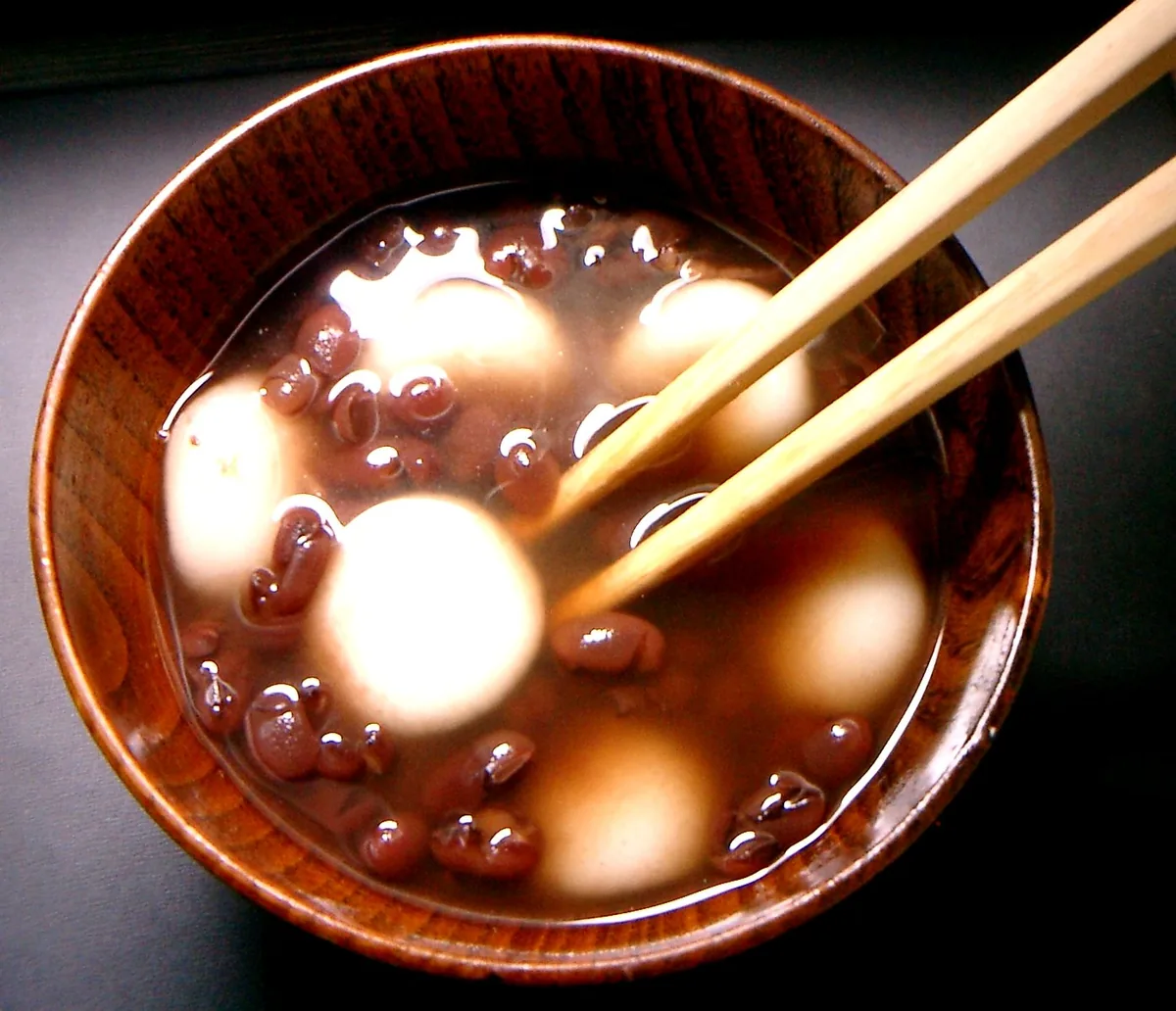
| Shop | Best For | Signature Zenzai | Price | Walk from Station |
|---|---|---|---|---|
| Kutsurogi Wa Cafe Amaemon | Retro Taisho-era sit-down | Daikoku Zenzai with monaka topping | Check current menu | About 4 minutes |
| Nippon Zenzai Society No. 1 Shop | Traditional recipe with pickles and tea | Izumo Zenzai set | Check current menu | About 2 minutes |
| Sakaneya (Goen Yokocho) | Matchmaking ritual extras | Hot Izumo Zenzai with fortune charm | Check current menu | About 5 minutes |
| Ofuku Cafe | Pufferfish motif and shrine-view terrace | Ofuku Zenzai Shiratama | Confirm current menu pricing on site | Near Shinmon-dori's gate end |
| Taisha Coffee | Quick coffee pairing | Izumo Zenzai Cake (pound cake) | Check current menu | About 1 minute |
| Shinmon-dori Cafe Pomme Beel | Modern dessert twist | Zenzai Roll Sweets Set | Check current menu | About 1 minute |
Beyond the Bowl: Rolls, Soft Serve and Souvenirs
Not every zenzai experience near Izumo Taisha requires a seated bowl. These takeaway and souvenir options work well when the sit-down shops have a line, or when time before shrine closing runs short.
- Zenzai Roll at Shinmon-dori Cafe Pomme Beel: rice-flour sponge, ogura bean paste, and fresh cream; check the current set menu.
- Izumo Zenzai Soft at Kutsurogi Wa Cafe Amaemon: a soft-serve takeaway version sold beside the entrance.
- Retort-pouch zenzai at Nippon Zenzai Society No. 1 Shop: a shelf-stable souvenir alongside roughly 120 other snack items.
- Izumo Zenzai Cake at Taisha Coffee: a Dainagon azuki pound cake; check the current price and takeaway handling.
Planning Your Visit: Timing, Budget and Access
Shinmon-dori and Goen Yokocho are busiest around midday and during major shrine periods. Arriving after a morning shrine visit often improves the odds of a shorter wait, though no fixed queue window is guaranteed. Shinmon-dori's full approach runs about 700 meters, and most zenzai shops sit within a short walk of Izumo-taisha-mae Station. For the full run of stalls, see the Izumo Taisha food street guide. Check each shop's current menu for prices because bowl sizes, sets, and seasonal desserts vary. Travelers building a full food day can add a savory splurge for dinner using the Shimane Wagyu guide.
Several counters cut off orders 30 minutes ahead of closing. With afternoon peaks between 11:00am and 2:00pm, arriving right after morning shrine visits offers shorter waits and avoids this early cutoff risk.

- Taisha Coffee, Izumo Zenzai Cake: check current price
- Nippon Zenzai Society No. 1 Shop set with pickles and tea: check current price
- Sakaneya hot Izumo Zenzai with a fortune charm: check current price
- Kutsurogi Wa Cafe Amaemon's Daikoku Zenzai: check current price
- Shinmon-dori Cafe Pomme Beel's Zenzai Roll Sweets Set: check current price
Mistakes to Avoid and Local Etiquette
A few small missteps can dent an otherwise easy stop. Not every shop uses the same beans, so look for menus that specifically label Izumo Dainagon azuki if bean provenance matters to you. Check last-order times before sitting down. Several counters cut off orders 30 minutes ahead of closing, and Pomme Beel's posted last order runs 5:00pm on weekdays and 5:30pm on weekends. Cold zenzai is a summer specialty at several shops, including Amaemon's Aisu Zenzai and Nippon Zenzai Society's ice-cream zenzai. Some traditional counters still serve only the hot version year-round, so ask before ordering if a chilled bowl matters to your visit.
Pair Zenzai With the Rest of Izumo's Food Scene
Zenzai works best as a bookend to a savory Izumo meal rather than a meal on its own. Many visitors eat Izumo soba for lunch, then walk to a zenzai counter for dessert before or after the shrine visit. For that pairing, see the Izumo soba guide. Diners building a bigger food itinerary can browse the Izumo food guide, while travelers continuing east can compare Shimane's confectionery culture in the Matsue wagashi and tea guide. Red-and-white mochi is a common auspicious presentation, but not every shop uses the same garnish or recipe.
How This Guide Was Verified
Food availability, access details, seasonal rules, and the time-sensitive claims in this guide were checked on August 22, 2026 against the official sources below. Independent restaurant menus, prices, opening days, and sell-outs can change, so confirm the operator's same-day notice before making a special trip.
Frequently Asked Questions
What makes Izumo zenzai different from zenzai elsewhere in Japan?
Izumo versions commonly use a lighter broth and may feature large Dainagon azuki beans. Red-and-white mochi or shiratama dango is a common auspicious presentation, but ingredients and garnish vary by shop.
How much does a bowl of Izumo zenzai cost near Izumo Taisha?
Prices vary by bowl, toppings, drink, and dessert-set format. Check the shop's current menu; do not compare a pound-cake slice with a full sit-down zenzai set as if they were the same serving.
When is the best time to eat zenzai near Izumo Taisha to avoid crowds?
Aim for right after a morning shrine visit, ahead of the 11:00am to 2:00pm weekend rush on Shinmon-dori. Goen Yokocho stays busiest slightly later, from 11:00am to 3:00pm, and both areas get crowded during the New Year period and late November's Kamiarizuki festival.
Is cold zenzai available in summer near Izumo Taisha?
Yes, several shops add chilled versions in warmer months, including Amaemon's Aisu Zenzai with ice-cream mochi and Nippon Zenzai Society's ice-cream zenzai. Some traditional counters still serve only the hot version year-round, so ask before ordering if temperature matters to you.
How far is Shinmon-dori from Izumo-taisha-mae Station?
Most zenzai shops sit within a one- to five-minute walk of Izumo-taisha-mae Station on the Ichibata Electric Railway. Shinmon-dori's full approach runs about 700 meters, from the outer Ukabashi torii to the shrine's inner gate.
Should I pair zenzai with a meal while visiting Izumo Taisha?
Many visitors eat Izumo soba first, then walk to a zenzai counter for dessert. Pairing the savory buckwheat noodles with the sweet broth gives a fuller sense of Izumo's food culture in one stop near the shrine.
Free guide: Japan's Hidden Gems
12 under-the-radar places beyond Tokyo & Kyoto — with the best season to visit each and a local tip you won't find in the guidebooks.
You might also like


Continue reading
More guides you'll find useful


