

Kumamoto Ikinari Dango: Where to Buy It, Make It, and Store It
A 2026 guide to Kumamoto ikinari dango: which shops to try, what the make-your-own workshop costs, the home recipe, and how to store and reheat it.
On this page
Last updated August 2026, this guide covers where to find real Kumamoto ikinari dango and how the snack got its name. Four shops across the city sell distinct versions, from Chojuan's black dango to Hanamarudo's handmade batches. Ikinariya Watanabe also runs a hands-on workshop, so visitors can shape and steam their own instead of just buying it ready-made.
What Is Kumamoto Ikinari Dango?
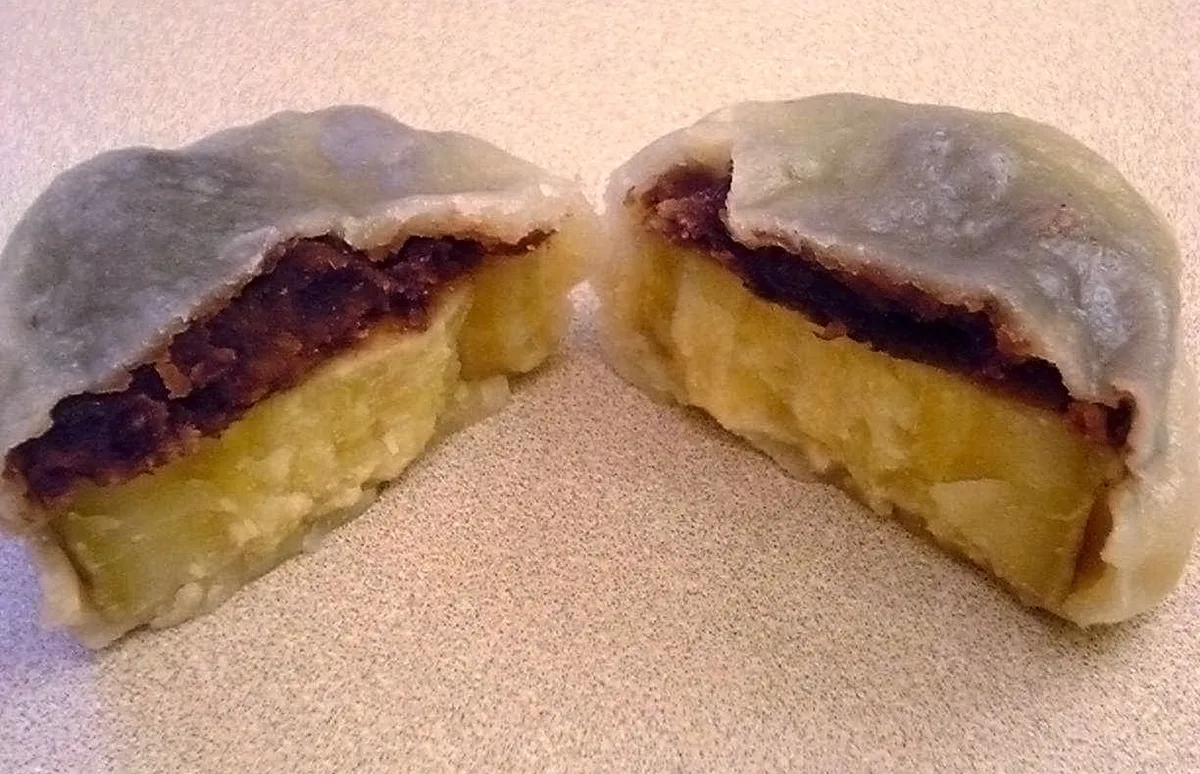
Ikinari dango is a three-layer steamed dumpling. It layers a slice of sweet potato, a scoop of azuki red bean paste, and an outer wrapper of wheat flour and rice-based dango flour. Steaming binds the layers together without frying or baking. That sets it apart from standard daifuku, which wraps sweet mochi dough around a single bean-paste filling. Skewered dango, by contrast, are firm rice-flour balls with no potato or filling inside. Kumamoto's official tourism portal lists ikinari dango as a regional specialty tied to home cooking on the Kikuchi and Kumamoto Plains. As a souvenir, it holds up well: eat it cold, or bring it back to temperature in a microwave, a steamer, or even an oven, according to that same tourism guide. For the wider spread of the prefecture's savory and sweet specialties, see the 11 Best Kumamoto Foods and Dining Tips (2026).
Why Is It Called 'Ikinari' Dango?
In the Kumamoto dialect, ikinari means simple, quick, or immediate. Two explanations for the name persist. The first holds that the dumplings come together fast enough to serve unexpected guests without notice. The second traces it to using raw, unboiled sweet potato pressed straight into the dough rather than a pre-cooked filling. Both explanations trace back to the same origin: a farmhouse snack from the Kikuchi Plain and Kumamoto Plain, eaten during the fall sweet potato harvest. Volcanic ash from Mt. Aso shaped the soil around Otsu, the prefecture's largest sweet potato producer, and the wider Kikuchi and Kumamoto Plains. That soil suited sweet potatoes well, which is part of why the snack took root there rather than elsewhere in Kyushu. Local cooking classes still teach the recipe, and some Kumamoto schools serve ikinari dango as a lunch dessert, so it remains a homemade staple as much as a shop-bought souvenir.
Where to Buy Ikinari Dango in Kumamoto
Four shops account for most of the ikinari dango recommendations on Kumamoto's official tourism site. Chojuan sells several original variations, including a black dango, alongside the classic version. Hanamarudo specializes exclusively in ikinari dango, with confectioners handmaking each piece rather than machine-pressing the dough. Ikkyu Honpo is a long-established Japanese sweets shop that also sells amazake-manju, a sweet sake steamed bun. Ikinariya Watanabe is known for serving its dumplings piping hot, and it also runs the make-your-own workshop covered below. The table below compares what each shop is known for, to help you decide where to start. Combine a dango stop with sightseeing by checking Kumamoto's main attractions before you go. For a broader restaurant shortlist beyond dessert shops, cross-check Kumamoto's best restaurants.
The four listed shops sell fresh dango, which keeps one to two days at room temperature; to avoid the city-center trip, purchase frozen or packaged versions instead from Kumamoto Station or Aso Kumamoto Airport before departure.
| Shop | Known For | Best For |
|---|---|---|
| Chojuan | Black dango and other original flavor variations | Trying something beyond the classic version |
| Hanamarudo | Fully handmade, one piece at a time | Artisanal texture over speed |
| Ikkyu Honpo | Long-established confectionery that also sells amazake-manju | Pairing dango with other traditional sweets |
| Ikinariya Watanabe | Served piping hot; runs the make-your-own workshop | Fresh-steamed dango or a hands-on session |
Wrapper Texture: Why Some Ikinari Dango Taste Different
Shops and home cooks vary the ratio of wheat flour to the rice-flour component, labeled dango-ko in some recipes and mochiko in others. That ratio changes the texture more than any filling choice does. Two documented recipes show the range.
- Wheat-flour-forward: the Ministry of Agriculture, Forestry and Fisheries recipe uses 250g medium-strength flour to 100g dumpling flour, producing a thinner, slightly salty skin that lets the potato and bean paste dominate.
- Rice-flour-forward: the Cooking with Dog home recipe uses 80g flour to 30g glutinous rice flour (mochiko), producing a softer, more mochi-like chew.
- Shops rarely publish their exact ratio, so describe what you want, thin and salty or soft and chewy, when you order.
Making Your Own Ikinari Dango at Ikinariya Watanabe
Ikinariya Watanabe runs a make-your-own workshop at its shop at 4-3-42 Tsuboi, Chuo-ku, Kumamoto-shi. The process itself is short. Flatten the dough with a hand-sized rolling pin, then wrap it around the potato and bean paste before it goes in to steam. Steaming alone typically runs 20 to 25 minutes for a home batch, so expect a similar wait during the workshop. You can eat the dango on site or take it out once it's done. The shop's listing has also noted COVID-era precautions, including alcohol disinfection, masks, and temperature checks. Confirm current hours and reservation requirements before you book, since policies can change.
At both the workshop and home, 20 to 25 minutes of steaming is the main time commitment; however, preparing at home adds a required 30-minute dough-resting phase that the hands-on workshop experience skips entirely.
- Fee: ¥3,500 per person, per the shop's listing as of 2026.
- Booking: consultation required for afternoon sessions after 1:30 pm; walk-ins are not guaranteed.
- Closed: Sundays and holidays, year-round otherwise.
- On-site time: rolling and wrapping are quick, but budget roughly 20 to 25 minutes more once the dumplings go into the steamer.
The Ikinari Dango Recipe: Ingredients and Steps
Japan's Ministry of Agriculture, Forestry and Fisheries publishes a standard home recipe for ikinari dango, scaled for 20 to 25 pieces. Resting the dough matters more than any other step. Skip it, and the wrapper won't stretch around the filling.
- Sweet potato, peeled and sliced 1 to 1.5 cm (about 0.6 in) thick
- Medium-strength flour: 250g
- Dumpling flour (dango-ko): 100g
- Sugar: 50g
- Salt: 1 tbsp
- Salad oil: about 1/2 tbsp
- Water: 180 to 200 ml
- Red bean paste: 250 to 400g
- Step 1: Soak the sliced sweet potato in water for 10 minutes to remove excess starch, then drain well.
- Step 2: Combine the flour, dango-ko, sugar, salt, and oil with the water, then let the dough rest at least 30 minutes (overnight also works).
- Step 3: Roll the rested dough flat, spread on red bean paste, and wrap it around a potato slice.
- Step 4: Steam the wrapped dumplings for about 20 minutes over medium-high heat, until a bamboo skewer slides through the potato cleanly.
Pro Tips for Steaming and Storing at Home
Line the steamer with a dampened towel before you add the dumplings. That extra layer of moisture keeps the wrapper from sticking to the basket and helps the skin stay soft instead of drying out. Increasing the dango-ko share relative to medium-strength flour, without changing the total weight, pushes the texture toward the softer, rice-flour-forward style described above.
Buying, Storing, and Reheating Ikinari Dango
Fresh ikinari dango is best eaten warm, within the day it's made. Shops and supermarkets also sell frozen versions, along with a chilled variant called hiyashi ikinari dango that's eaten half-frozen rather than steamed again. Ask the shop whether your dango is fresh or already frozen before you decide how to carry it home.
- Room temperature: eat within about a day or two before the texture turns dry.
- Frozen or vacuum-packed: keeps considerably longer; thaw before reheating.
- Reheat by steamer: closest to shop-fresh texture.
- Reheat by microwave: faster, but the wrapper softens more and the layers blur together.
- Reheat by oven: also an option per Kumamoto's official tourism guide, if a steamer or microwave isn't handy.
- Last-minute buy: both Kumamoto Station and Aso Kumamoto Airport typically stock packaged versions, so a stop there doesn't require detouring into the city center.
Pairing Ikinari Dango With Kumamoto's Savory Dishes
Ikinari dango's mild sweetness works best as a counterpoint to Kumamoto's heavier savory dishes, not a replacement for them. Karashi renkon, deep-fried lotus root stuffed with spicy mustard miso, is one of the city's signature snacks. Mori Karashi Renkon is a long-established specialist in the dish, credited locally with keeping the recipe going for generations. See the karashi renkon guide for where to find it. Basashi, raw horse meat served sashimi-style, is another Kumamoto specialty worth building a meal around. Details are in the horse sashimi guide. Tonkotsu-style Kumamoto ramen, built on pork bone broth with garlic oil, rounds out a full day of eating in the city. Keika Ramen Honten pairs that broth with medium-thick, firm noodles, a combination often cited as a benchmark for the style. The Kumamoto Ramen Guide: 7 Essential Facts and Top Shops covers where locals go for a bowl. Treat ikinari dango as the dessert stop that closes out a savory itinerary, rather than a separate outing.
Souvenir logistics for Ikinari Dango
Ikinari dango is dense, starchy, and easy to crush. Travelers often lose quality by carrying too much fresh product in warm heat. Decide how long the box can travel before you eat it, not just which shop sells it best.
- For same-day trips, buy fresh dango at a shop near your itinerary and keep it out of direct heat; aim to eat it within about a day to two days.
- For train or airport travel, prefer hiyashi or frozen versions from the shop, and move them in a cooler bag as soon as you leave the counter.
- For flights, many visitors reduce risk by buying at Kumamoto Station or Aso Kumamoto Airport close to departure, which shortens the carry window.
- At checkout, ask Chojuan, Hanamarudo, Ikkyu Honpo, or Ikinariya Watanabe whether the package is vacuum-sealed and whether portions were made that morning.
Reheating still depends on your equipment. A steamer gives the closest shop-style texture. If you must use a microwave, heat briefly in intervals and check at the end, because high power can make the wrapper soft and blur the three layers.
Frequently Asked Questions
Is Kumamoto ikinari dango vegetarian or vegan?
Most versions are vegetarian, since the base ingredients are sweet potato, red bean paste, wheat flour, and dango-ko. Some shops add lard or butter to the dough for texture, so ask before you buy if you're avoiding animal fat.
Is ikinari dango gluten-free?
No, the wrapper is made primarily from wheat flour, with rice-based dango flour blended in for chew. There isn't a standard gluten-free version at the shops covered here.
How long does ikinari dango last?
At room temperature, plan on one to two days before the texture turns dry. Frozen or vacuum-packed versions last considerably longer, which is why shops sell them as take-home souvenirs.
What's the difference between ikinari dango and daifuku or dango?
Daifuku wraps sweet mochi dough around a single filling, usually bean paste. Skewered dango are firm balls of rice flour with no filling at all. Ikinari dango is steamed rather than simply shaped, and layers sweet potato with bean paste inside a flour wrapper.
Can you buy ikinari dango outside Kumamoto?
Yes, it has spread across Kyushu and turns up in supermarkets as far as Fukuoka Prefecture. Buying it directly from a Kumamoto shop the same day still gives the best texture.
How much does the make-your-own workshop cost?
Ikinariya Watanabe's official listing puts the workshop fee at ¥3,500 per person, as of 2026. Sessions run year-round except Sundays and holidays, and afternoon slots need consultation after 1:30 pm.
What does ikinari dango taste like?
It's mildly sweet and a little salty, with the bean paste providing most of the sweetness and the potato adding a starchy, dense bite. It isn't as sugary as daifuku or Western-style desserts.
Do you need a reservation for the Ikinariya Watanabe workshop?
Effectively, yes. Afternoon sessions need consultation after 1:30 pm, and the shop is closed Sundays and holidays, so contact ahead rather than arriving unannounced.
Free: The Kumamoto Essentials guide
Top things to do, where to stay, a perfect day plan, getting around, and the best time to go — a Kumamoto mini-guide you can take offline.
You might also like



Continue reading
More guides you'll find useful


