

Ise Akafuku & Wagashi Guide: Exploring the Ise-Shima Mochi Road
Plan an Ise Akafuku and wagashi crawl along the Ise-Shima Mochi Road, with shop locations near Ise Jingu and a shop-by-shop comparison guide.
On this page
Last updated August 2026, Ise Akafuku and wagashi anchor the sweet side of any Ise Grand Shrine visit. Akafuku Mochi has topped the shrine approach since 1707, and five more named wagashi shops share the Mochi Road with it. This guide maps each stop between the Outer Shrine and the Inner Shrine, so you can plan a route instead of guessing where to go.
Ise Akafuku and Wagashi: Where the Mochi Road Begins
Akafuku Mochi is a pounded rice cake topped with smooth red bean paste. Its maker opened as a tea house near Ise Grand Shrine in 1707, and pilgrims have stopped there ever since. Akafuku's own history page recalls the Edo-period Okage Mairi pilgrimage boom. During one especially busy year, roughly a fifth of Japan's population is said to have made the journey. That single sweet eventually grew into a wider network of confectioners known today as the Ise-Shima Mochi Road. Six shops anchor the route between the Outer Shrine (Geku) and the Inner Shrine (Naiku).
Although Akafuku has been made since 1707 and is one of six shops on the Mochi Road, its short shelf life without preservatives makes it less practical for gifting than Kamiyo or Iwato Mochi.
- Akafuku Mochi — main store in Oharai-machi near the Inner Shrine, plus a counter near the Outer Shrine by Ise-shi Station
- Hemba Mochi — main store in Obata-cho, with branches in Miyagawa, Oharai-machi, and at Ise City Station
- Niken-chaya Mochi — on the Futami Kaido, between the Outer Shrine and the Inner Shrine
- Iwato Mochi — at the Oharai-machi entrance, marked by a large Otafuku sign
- Kamiyo Mochi — sold near both shrines, served with tea at Taosukoan
- Ofuku Mochi — in Futami-cho, on the approach to Meoto Iwa
The Isuzu River Symbolism Behind Akafuku's Shape
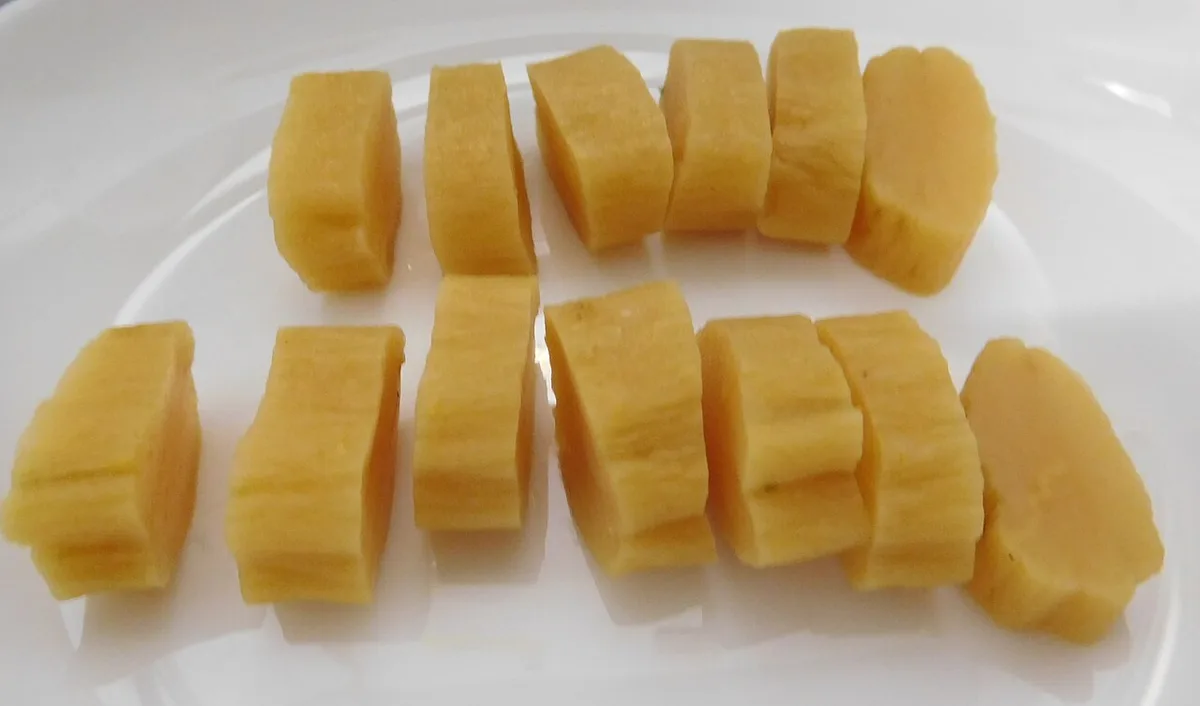
Akafuku's shape is not decorative. Three ridges pressed into the red bean paste represent the clear water of the Isuzu River, which runs past Ise Grand Shrine. White mochi underneath stands for the pebbles on the riverbed. Staff at the main store still spread the paste by hand, a detail worth watching if the counter is visible when you visit. Tradition calls for dividing the mochi with a spatula and sharing it, reflecting the company's own motto, Sekishin Keifuku, roughly translated as sincere happiness.
What Goes Into Akafuku: Ingredients and Quality Standards
Akafuku's recipe follows standards the company sets for itself, and a few details are worth knowing before you taste it. Two kinds of sugar go into the bean paste and mochi. One is large-crystal with a high sugar content, and the other is milder and light-tasting. The maker blends both for balance rather than pure sweetness. Bean paste uses only Hokkaido azuki, sourced there because the region suits azuki cultivation and produces higher-quality beans. Mochi rice comes exclusively from Japanese estates that grow mochi rice alone, with no ordinary eating rice mixed in, so the texture stays consistent. Production facilities earned ISO22000 certification in 2011, a food-safety management standard the company highlights on its official site. None of this changes the taste dramatically at the counter, but it explains why Akafuku markets itself on ingredient sourcing rather than mass availability.
Akafuku Honten and the Geku Storefront: Where to Eat
Akafuku Honten, the main store, sits along Oharai-machi's shopping arcade near the Inner Shrine. A second Akafuku counter, described on the official Iseshima tourism site as a special store, operates near the Outer Shrine along the approach by Ise-shi Station. Visiting the Outer Shrine counter first sets up a natural walk toward the Inner Shrine and the main store. Menus vary by store and season. Some locations add Akafuku zenzai, a warm sweet red bean soup, in colder months. Others add Akafuku ice cream in summer. Confirm which seasonal item is running before you plan a stop around it, since not every counter carries both.
Hemba Mochi: The Horse-Return Grilled Mochi
Hemba Mochi takes its name from a pilgrimage-era practice. Travelers heading to Ise turned their horses back at this spot on the old Sanjo Kaido. Its main store sits in Obata-cho, once the final post town on the Ise Pilgrimage Road, bordered by the Miyagawa River. Grilling gives each mochi a browned surface on both sides and a firmer, chewier bite than Akafuku's soft topping. Rice flour forms the base, and the same smooth red bean paste tops it. Hembayashoten now runs four locations, so you don't have to detour to Obata-cho if your route stays closer to the shrines.
- Obata-cho — the original main store, near the Miyagawa River
- Miyagawa branch
- Oharai-machi branch — the most convenient stop on a shrine-focused route
- Ise City Station branch
Niken-chaya Mochi and the 25th-of-the-Month Kuro-an
Niken-chaya Mochi sits on the Futami Kaido, on the stretch that connects the Outer Shrine and the Inner Shrine. Sweet bean paste wrapped in kinako, roasted soybean flour, gives it a soft, elegant texture rather than Akafuku's exposed anko topping. Visit on the 25th of the month and the shop swaps in Kuro-an, a brown sugar filling that only appears on that date. The Visit Iseshima tourism bureau calls it a detail known mainly to Ise-Shima locals. Timing a stop around the 25th is worth the planning if your dates allow it.
Iwato Mochi and the Otafuku Sign at Oharai-machi's Entrance
Iwato Mochi uses Hokkaido azuki bean paste and carefully selected kinako for a soft, mild finish. Look for the large Otafuku sign marking the souvenir shop at the entrance to Oharai-machi. That shop stocks a wide range of Ise-Shima souvenirs alongside the mochi, so it works as a single stop for gifts and a snack. Because the entrance sits at the edge of the district, Iwato Mochi is an easy first or last stop on a Mochi Road walk.
Kamiyo Mochi and the Taosukoan Tea House Experience
Kamiyo Mochi is sold at Seinokuniya, a shop positioned near both the Outer Shrine and the Inner Shrine. Selected azuki beans, brown rice, and natural yomogi give it color and fragrance without any additives. It won the Minister's Award at the 19th National Confectionery Exhibition in 1975, a credential the maker still lists as a point of pride. Pair it with a cup of Ise tea at Taosukoan, a tea house with a retro, early-Showa-period interior near the shop. Taosukoan also serves chilled matcha floats and coffee, so it doubles as a rest stop if the shrine walk has worn you down. Of the stops on the Mochi Road, this one comes closest to a hands-on wagashi experience. There is no public class, only the chance to watch preparation and sit with tea.
Ofuku Mochi and the Meoto Iwa Connection in Futami
Ofuku Mochi is shaped to echo the waves of Futamiura, the bay near the Meoto Iwa rocks. Its name honors Ofuku-san, a deity enshrined at Futami Okitama Shrine next to the main store in Futami-cho. Smooth red bean paste and a gentle sweetness make it a popular gift rather than an on-the-spot snack. Traditional methods and domestically sourced ingredients go into every batch, with no additives. Ofuku Mochi Honten also sells Ofuku Ice Cream, Ofuku White Mochi, and a zenzai sweet bean soup, so there is more to try than the base mochi. Combine the stop with a walk along the Meoto Iwa approach for a look at the rocks the mochi is named for.
Decision Matrix: Which Ise Mochi Should You Try?
Six shops is a lot of mochi for one afternoon, so match your choice to how you plan to eat it and how far you are willing to walk. The table below groups each by filling, texture, and the situation it suits best, using the details covered in each section above.
| Mochi | Filling and Texture | Best For |
|---|---|---|
| Akafuku Mochi | Smooth anko over soft rice cake | Eating right away near either shrine entrance |
| Hemba Mochi | Grilled, browned rice-flour base with red bean paste | A heartier snack with more chew |
| Niken-chaya Mochi | Bean paste wrapped in kinako; Kuro-an brown sugar on the 25th | A timed tea-break stop |
| Iwato Mochi | Hokkaido azuki paste with kinako, soft finish | A souvenir-shop stop at the Oharai-machi entrance |
| Kamiyo Mochi | Azuki, brown rice, and yomogi; no additives | Sit-down tea at Taosukoan |
| Ofuku Mochi | Smooth anko, wave-shaped, no additives | Gifting, paired with a Meoto Iwa stop |
Planning Your Wagashi Route: Geku vs Naiku Timing
Start at whichever shrine fits your itinerary, since both the Outer Shrine and the Inner Shrine have Akafuku-linked stops nearby. Beginning at the Outer Shrine puts you at the Ise-shi Station counter first. Niken-chaya Mochi on the Futami Kaido works as a natural next stop toward the Inner Shrine. Beginning at the Inner Shrine puts Akafuku Honten, Iwato Mochi, and the wider Oharai-machi shopping street within a few minutes of each other. Arrive earlier in the day if a specific shop or seasonal item matters to you. Popular counters can sell out of daily-made items before closing. Pair a wagashi stop with something savory nearby. Try a bowl of Ise udon for a quick, cheap lunch. Or stop for a plate of tekone-zushi, a raw-fish rice bowl specific to the area. A stop for Ise ebi and local seafood works too, for a heavier finish before dessert. Each guide covers a different side of the same food crawl. The citywide Ise food guide ties the savory and sweet stops together.
Gifting Ise Wagashi: What Travels Well and What Doesn't
Akafuku uses no long-life preservatives or artificial coloring, so it keeps for only a short time, according to the maker's own site. Check the eat-by date stamped on the box before you buy, especially in warmer months. It is also sold only in a specific region centered on Ise City in Mie Prefecture, so you cannot buy it again once you leave. Because of that short window, it works better as something to eat during the visit than as a souvenir carried home. Kamiyo Mochi is a better packaged option for gifting, since its no-additive recipe is built around natural yomogi rather than a perishable fresh topping. Iwato Mochi, sold at the Oharai-machi souvenir shop, is another reasonable pick if you want something wagashi-adjacent that survives a suitcase better than fresh Akafuku.
Mistakes to Avoid on the Ise-Shima Mochi Road
A few planning missteps show up often on the Mochi Road, and each one is easy to avoid with a little timing. None of them ruin a visit, but avoiding them turns a rushed stop into a more deliberate one.
- Buying too much Akafuku at once — its short, preservative-free shelf life means oversized boxes can spoil before you leave the region
- Skipping the seasonal menu — Akafuku zenzai in winter and Akafuku ice in summer are not offered at every counter or every month, so ask before you commit to a stop
- Sticking to only the flagship stores — smaller stops along the Mochi Road, including the Niken-chaya counter and the Oharai-machi branches of Hemba Mochi and Iwato Mochi, are easy to miss on a single-route walk
- Planning around the 25th without confirming dates — Kuro-an at Niken-chaya Mochi is worth timing a visit around, but only if your schedule actually lines up
The Mochi Road Is Not One Continuous Walking Route
The Ise-Shima Mochi Road is a regional collection of confectioners, not a single pedestrian street. Plan it as several clusters rather than attempting every shop on foot.
- Naiku cluster: Akafuku Honten, Iwato Mochi, and Hemba Mochi’s Oharai-machi branch fit easily into one shrine visit.
- Geku cluster: Start near Ise-shi Station for the Outer Shrine approach and nearby Akafuku and Kamiyo Mochi options.
- Separate detours: Niken-chaya Mochi lies along Futami Kaido, while Ofuku Mochi Honten is in Futami near Meoto Iwa. Hemba Mochi’s original shop is farther west in Obata-cho.
Use local buses or a taxi when moving between Geku, Naiku, and Futami. Check return schedules before visiting Futami late in the day. Travelers with limited time should concentrate on Oharai-machi, where several distinctive sweets sit close together. Choose Futami when Meoto Iwa is already part of your sightseeing plan.
Frequently Asked Questions
What is Akafuku mochi, exactly?
Akafuku mochi is a pounded rice cake topped with smooth red bean paste, made by a shop that has operated near Ise Grand Shrine since 1707. The three ridges in the paste and the white mochi below represent the Isuzu River and its pebbled bed.
Where is the best place to buy Akafuku near Ise Grand Shrine?
Akafuku Honten, the main store, sits along the Oharai-machi shopping street near the Inner Shrine. A second counter operates near the Outer Shrine along the approach by Ise-shi Station, so either end of a shrine visit works as a starting point.
What is the 25th-of-the-month secret at Niken-chaya Mochi?
Niken-chaya Mochi swaps its usual filling for Kuro-an, a brown sugar bean paste, only on the 25th of the month. The Visit Iseshima tourism bureau describes it as a detail mostly known to Ise-Shima locals, so it is worth timing a visit around that date if your schedule allows it.
How long does Akafuku mochi keep, and can you bring it home?
No long-life preservatives or artificial coloring go into Akafuku, so according to the maker it keeps for only a short time. Check the eat-by date on the box at purchase, and treat it as something to eat during the trip rather than a shelf-stable souvenir. Kamiyo Mochi and Iwato Mochi travel better if you want a packaged wagashi gift instead.
What is the difference between Akafuku and the other Ise-Shima mochi shops?
Soft anko over rice cake defines Akafuku, tied to the Isuzu River symbolism. Hemba Mochi is grilled and flatter, with a browned surface and chewier bite. Niken-chaya Mochi comes wrapped in kinako, and Ofuku Mochi is wave-shaped and geared toward gifting. Each fills a different spot on the Ise-Shima Mochi Road decision matrix above.
Can you watch wagashi being made in Ise?
Ise does not offer public wagashi-making classes in the way some cooking schools do elsewhere in Japan. Akafuku Honten's staff still spread bean paste by hand at the counter, visible if you are near it when they work. Taosukoan, the tea house tied to Kamiyo Mochi, offers the closest sit-down experience, pairing the mochi with Ise tea in a retro, early-Showa-period room.
Free guide: Japan's Hidden Gems
12 under-the-radar places beyond Tokyo & Kyoto — with the best season to visit each and a local tip you won't find in the guidebooks.
You might also like


Continue reading
More guides you'll find useful


