

7 Best Ise Udon Shops in Ise, Japan (2026 Guide)
The best Ise udon near Ise Jingu: a 2026 guide to 7 shops by Geku, Naiku, Kawasaki, and Futami, with prices, hours, and ordering tips.
On this page
Last updated August 2026, the best Ise udon in town still comes down to location, since top shops cluster near Ise Jingu's Geku and Naiku gates rather than one central food street. This guide sorts trusted shops by proximity, explains the tamari sauce and soft noodle texture, and covers ordering etiquette for a dish built for weary pilgrims rather than diners chasing chewy bite. Pair it with the full What to Eat in Ise (2026): Akafuku, Ise Udon & Local Specialties for planning meals beyond udon, and expect ¥500 to ¥900 per bowl at most shops.
What Is Ise Udon and Why Are the Noodles So Soft?
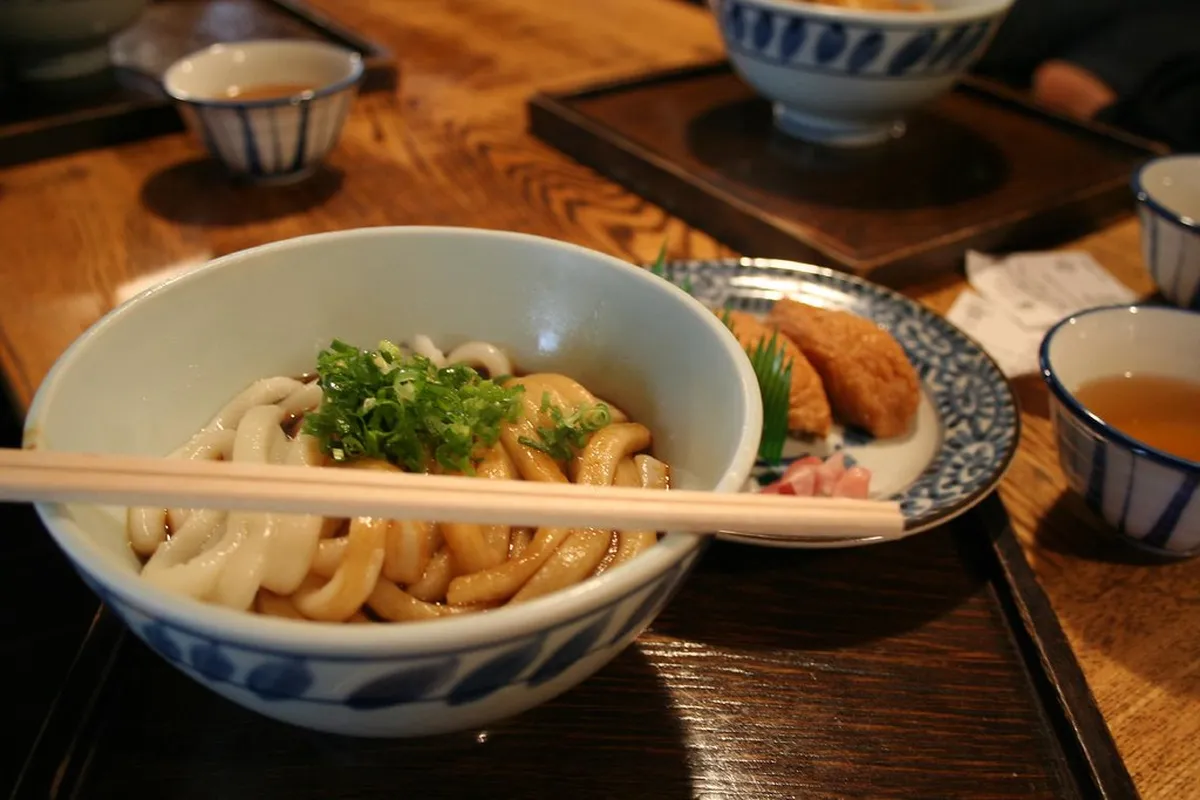
Ise udon looks unlike anything else in Japan's noodle scene. Shops serve extra-thick wheat noodles, boiled until soft, then tossed in a small pool of dark tamari-based sauce instead of broth. That softness is deliberate, not a sign of overcooked technique. Cooks boil the noodles for close to an hour. This method dates to the Edo period, developed to make the dish gentle on pilgrims' stomachs after long walks to Ise Jingu. Tamari soy sauce forms the base, simmered with dashi made from kombu, dried sardines, and bonito or mackerel flakes, plus a touch of mirin. Despite the dark color, it tastes savory-sweet rather than sharply salty. Travelers used to the firm bite of Sanuki-style udon sometimes find the texture unfamiliar at first. A soft, mochi-like chew is the entire point of the dish, not a flaw. Its current name is newer than the dish itself. Before 1972, most shops called it plain udon, or "su-udon." In that year, the Ise City Noodle and Restaurant Association standardized "Ise udon" as the name across its members. Okage-mairi, the mass pilgrimage boom of the Edo period, packed the roads between Naiku and Geku, and udon stalls lined those routes to feed the crowds. Wheat for the earliest versions came from fields around Ise, and farmers reportedly ate homemade noodles with a simple tamari dip well before Edo-period pilgrims turned it into restaurant fare. Japan's Agency for Cultural Affairs later recognized Ise udon in its 100-Year Food category, for local dishes carried on since the Edo period. Both Japan's Ministry of Agriculture and Ise's own tourism association describe the dish as the city's soul food, sold everywhere from sit-down shops to supermarket freezers. Most travelers eat a bowl between visits to Ise's shrine attractions, since Geku and Naiku sit at opposite ends of the shop map.
Home packaged noodle-and-sauce kits have been sold since 1968, but the dish's official standardized name 'Ise udon' wasn't adopted by the Ise City Noodle and Restaurant Association until 1972.
7 Best Ise Udon Shops Near Ise Jingu
Ise's udon shops cluster near four landmarks: Geku, Naiku, the Ise Kawasaki merchant district, and Futami. The Ise City Tourism Association's guide groups shops the same way, within roughly a 20-minute walk of each landmark. Pick based on where the day already has you standing, rather than backtracking across town for one bowl.
- Chitose — Near Geku and Ujiyamada Station
- Chitose's tamari sauce takes three days to make, blending bonito flakes, mackerel flakes, kelp, and dried sardines.
- Local lore ties a radio broadcast from this shop to the name "Ise udon," and the shop is also cited as the birthplace of Meat Ise Udon.
- It's open Monday, Thursday, and Friday from 11:00 to 14:30, closed Tuesday and Wednesday, at 1-15-11 Iwabuchi, Ise City.
- Yamaguchiya — Near Iseshi Station, Geku Side
- This Bib Gourmand-listed shop makes fresh noodles every morning and boils them for about an hour for the classic pillowy texture.
- Its Gochaise Udon piles on shrimp tempura, meat, and fried tofu, and it's one of the few shops offering udon topped with crunchy arare rice biscuits.
- Hours run 10:00 to 18:30, last order 18:15, with a short afternoon break; closed Thursdays and the first and third Wednesday each month.
- Mameya — Geku Area, North Exit of Iseshi Station
- Founded in 1923, Mameya still makes its noodles and stock in house, with a sauce simmered for more than three hours.
- Set menus go beyond the basic bowl, including a version topped with whole Ise ebi spiny lobster for a bigger splurge.
- Weekday hours run 10:00 to 15:00 and 17:00 to 19:30; weekends and holidays run 10:00 to 19:30 straight through, closed Tuesday.
- Fukusuke — Inside Okage Yokocho, Near Naiku
- Fukusuke serves a classic, traditional bowl from an Edo-style building inside Okage Yokocho, an easy stop while browsing the district.
- It's about a 20-minute bus ride from Ujiyamada Station to the Jingu Kaikan-mae stop, then a short walk into Okage Yokocho.
- Takeout is available here, useful for a quick bite between shrine visits rather than a sit-down meal.
- Okadaya — A Few Minutes' Walk from Naiku
- Okadaya sits facing Oharai-machi, close enough to Naiku to make it the natural stop right after visiting the inner shrine.
- Its sauce is mixed fresh daily and made slightly thicker than most shops, which helps it cling to the noodles.
- The location works best right after a Naiku visit, before continuing down Oharai-machi toward Okage Yokocho.
- Tsutaya — Ise Kawasaki Merchant District
- Tsutaya sits in the Ise Kawasaki merchant district, a quieter riverside area with preserved warehouse buildings, away from the Geku and Naiku crowds.
- It suits a day that already includes a walk through Kawasaki, rather than a special detour on its own.
- Maruhama — Futami, Near Meoto Iwa
- Maruhama is grouped with the Futami-area shops, within the tourism association's 20-minute walking radius of Futami Okitama Shrine.
- It suits travelers already heading to see the Meoto Iwa wedded rocks who want lunch on the same stop, rather than backtracking toward Ise Jingu.
How to Order Ise Udon Like a Local
Mix before eating. The sauce settles at the bottom of the bowl, so use chopsticks to coat every noodle before the first bite. Green onion is the default topping at most shops. Several shops add their own signature options. Chitose is known for Meat Ise Udon. Yamaguchiya's Gochaise Udon piles on shrimp tempura, meat, and fried tofu. A few shops let diners add arare, the crunchy rice biscuits that contrast with the soft noodles, or a raw egg for a tsukimi-style bowl. Shichimi togarashi sits table-side at almost every shop for extra heat. When the noodles are gone, pour any leftover sauce over a small bowl of rice instead of leaving it behind, a finishing move several long-running shops mention on their own menus. None of this ordering routine requires Japanese fluency, since menus at most shops include pictures. If a shop looks full during the 11:00 to 13:00 window, a short wait outside is normal rather than a sign to leave.
Choosing a Shop: Texture, Toppings, and Souvenirs
Not every shop serves the same style of bowl. Okadaya and Chitose keep it traditional, built around noodles, sauce, and green onion. Yamaguchiya's Gochaise Udon and Mameya's lobster-topped set turn the same base into a bigger, pricier meal. Atmosphere varies too. Some shops keep traditional tatami floor seating. Others run quick-service counters, a better fit for a fast bite between shrine visits. Mameya has second-floor seating suited to larger groups. Souvenirs are part of the picture as well. Boiled noodles packaged with a sauce packet have been sold since 1968. Both restaurants and local supermarkets stock the format, which travels well and needs no refrigeration until opened.
Mameya, founded in 1923, still makes noodles in-house and offers both traditional bowls and premium options like lobster-topped sets with second-floor seating.
| Priority | Shop to pick |
|---|---|
| Traditional, simple bowl | Okadaya, Chitose |
| Loaded with toppings | Yamaguchiya (Gochaise Udon), Mameya (Ise ebi set) |
| Group seating | Mameya (second-floor seating) |
| Take-home souvenir | Boiled-noodle kits at shops and supermarkets |
Prices, Hours, and Avoiding the Lunch Rush
Budget ¥500 to ¥900 for a standard bowl of Ise udon. Loaded versions, like Gochaise Udon or a lobster-topped set, run higher. The lunch window between 11:00 and 13:00 is the busiest stretch at nearly every shop near Geku and Naiku. Arriving right at opening, or after 14:00, usually means a shorter wait. Closed days differ by shop. Chitose closes Tuesday and Wednesday. Yamaguchiya closes Thursdays and the first and third Wednesday. Mameya closes Tuesday. Confirm hours before a special trip, since one closed day can mean a wasted walk. Sit-down shops aren't a breakfast option, since most open between 10:00 and 11:00. Packaged noodle-and-sauce kits are the only way to eat Ise udon earlier than that. Tokyo to Ise runs roughly three hours by Shinkansen plus a Kintetsu limited express. Osaka's Kintetsu limited express gets you there in about two hours. Most shops on this list sit within the same 20-minute walking radius used to map them by area, so a short walk from whichever gate is the norm, not the exception.
| Detail | Figure |
|---|---|
| Average bowl | ¥500–¥900 |
| Loaded/topped bowl | Higher, varies by shop |
| Busiest window | 11:00–13:00 daily |
| Travel time from Tokyo | About 3 hours (Shinkansen + Kintetsu limited express) |
| Travel time from Osaka | About 2 hours (Kintetsu limited express) |
Menu Variations Worth Trying Beyond the Classic Bowl
The plain bowl is only the starting point. Several shops build entire specialties around one extra ingredient. Curry Ise udon pairs a spicy curry sauce with the chewy noodles, popular enough that diners often add rice to the leftover sauce afterward. Cheese Ise udon melts cheese into the tamari base for a richer, milder finish. Mekabu, a sticky seaweed harvested near Toushijima Island, shows up as a topping at a handful of shops and adds distinct texture against the soft noodles. None of these variations replace the original, but they explain why regulars return to different shops for different moods. Ordering any of these works the same way as the classic bowl: ask for it by name at the counter, or point to the picture on the menu.
Pairing Ise Udon With the Rest of Ise's Food Scene
Ise udon works best as one stop in a longer food day, not the whole meal plan. Save room for Akafuku mochi and other Ise wagashi after a Naiku-area bowl, since the sweets shops sit inside the same Okage Yokocho stretch. On a day when udon doesn't fit the craving, the Ise tekone-zushi guide covers the other signature Ise lunch, built on marinated raw fish over rice. For a bigger seafood spread, especially around Futami and the coast, check the Ise ebi and seafood guide before picking a restaurant. Most travelers eat Ise udon at lunch, save wagashi for an afternoon snack, and treat tekone-zushi or seafood as the evening meal. Whichever combination fits the schedule, the full Ise food guide lays out how the dishes fit together over one or two days.
Frequently Asked Questions
Is Ise udon supposed to be this soft?
Yes. Shops boil the thick noodles for close to an hour, a technique developed for pilgrims who needed food that was easy to digest after a long walk to Ise Jingu. If you're expecting the firm bite of Sanuki-style udon, the texture will feel unfamiliar, but a lack of chew isn't a flaw here.
Is the dark tamari sauce as salty as it looks?
No. The sauce is tamari soy sauce simmered with dashi (kombu, dried sardines, and bonito or mackerel flakes) and a little mirin, which balances the salt with sweetness. Most diners describe the flavor as savory-sweet and umami-rich rather than sharp.
Is Ise udon served in broth like other udon dishes?
No. Most udon, including kake udon, arrives in a bowl of hot broth. Ise udon skips the soup entirely. A small amount of concentrated tamari sauce gets tossed directly with the noodles, so almost none pools at the bottom of the bowl.
Can vegetarians eat Ise udon?
Be cautious. Most shops build their dashi with bonito or mackerel flakes and dried sardines, so a standard bowl isn't vegetarian. Ask directly about the stock before ordering, since recipes vary by shop and few list a fish-free option.
What's the best time to avoid the lunch rush?
Aim outside 11:00 to 13:00, the busiest window at most Ise udon shops near Geku and Naiku. Arriving right at opening or after 14:00 usually means a shorter wait.
Which area should first-time visitors choose, Geku or Naiku?
Choose based on arrival point. Travelers coming straight off the train at Iseshi or Ujiyamada Station are already near the Geku-area shops, including Chitose, Yamaguchiya, and Mameya. Travelers spending the day around Naiku and Okage Yokocho are closer to Fukusuke and Okadaya instead.
Can you buy Ise udon to take home?
Yes, many shops and local supermarkets sell boiled noodles with a packet of sauce. It's a format Japan's Ministry of Agriculture and Fisheries traces back to 1968, when small bags of boiled noodles and sauce first made home-cooked Ise udon possible. It travels well as a souvenir since it needs no refrigeration until opened.
Is Ise udon spicy?
No, the base dish is mild and savory-sweet, not spicy. Shichimi togarashi is available table-side at most shops if you want to add heat yourself.
How do you get from the Geku shops to the Naiku shops?
Local buses connect the two areas in roughly 20 minutes, the same route travelers use to reach Fukusuke from Ujiyamada Station.
Free guide: Japan's Hidden Gems
12 under-the-radar places beyond Tokyo & Kyoto — with the best season to visit each and a local tip you won't find in the guidebooks.
You might also like


Continue reading
More guides you'll find useful


