

5 Best Miso Ramen Shops in Sapporo, Japan (2026 Guide)
A practical guide to the best miso ramen in Sapporo, covering five shops from Menya Saimi to Ramen Alley, with 2026 prices, queue times, and ordering tips.
On this page
Last updated August 2026, this guide narrows the best miso ramen in Sapporo down to five shops worth planning a meal around, from JunSumi-kei heavyweights to a counter-only neighborhood favorite. Sapporo's miso ramen traces to noodle shops that began stirring fermented soybean paste into pork and chicken broth in the 1950s. That broth still anchors the city's food identity today.
Quick Answer: Which Sapporo Miso Ramen Shop to Try First
For most visitors, Menya Saimi is the single best miso ramen in Sapporo, a refined take on the heavy JunSumi-kei style that most competitor coverage ranks first. If a heavier, more traditional bowl matters more than refinement, Sumire is the shop that originated the style locals still measure everything against. Both require planning around a queue, so decide which version matters more before choosing where to spend the wait. Shirakaba Sansou and Ramen Shingen round out the list for travelers who want to compare more than two shops in one trip.
Why Sapporo Miso Ramen Tastes Different
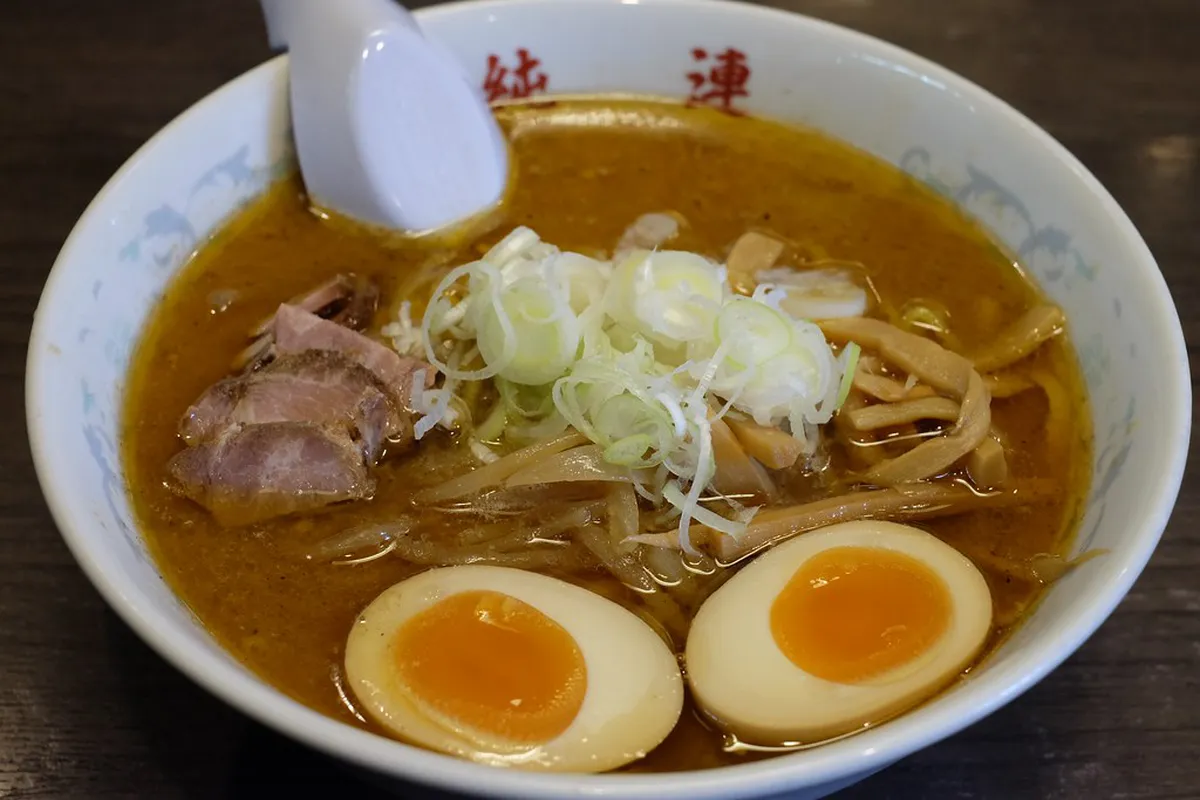
Miso ramen became Sapporo's signature dish in the 1950s, when local noodle shops started blending fermented soybean paste into rich pork and chicken broth instead of serving it plain. The result is heavier and saltier than the shoyu ramen found elsewhere in Japan, and it usually arrives under a visible layer of pork lard. That lard is not an accident. In Hokkaido winters that regularly drop below freezing, the oil film traps heat and keeps the broth hot until the last noodle is gone. For more on how this bowl fits into the city's wider food scene, see the Sapporo famous food guide. Sumire and Junren are the two shops usually credited with defining the style. Both have served this heavy, lard-topped broth for more than six decades. Ramen fans still call their shared approach JunSumi-kei, a shorthand that combines both shop names. Noodles matter as much as the broth. Most Sapporo-style shops use thick, curly noodles with a darker yellow hue from alkaline kansui, sourced in many cases from Nishiyama Seimen, the noodle maker closely associated with the region's ramen. Look for a soup with an emulsified, almost matte look rather than a thin, clear broth; that texture signals the fat and miso have been worked together properly. Miso itself is fermented soybean paste, and the fermentation is what gives the broth its umami depth rather than a straightforward salty flavor. This depth is part of why Sapporo's version reads as heavier and more savory than shoyu or shio ramen served elsewhere. Miso ramen's popularity did not stay confined to Hokkaido. Its JunSumi-kei style influenced shops as far away as Tokyo, where Sumire's official disciple, Santora, still serves a Noren-wake version of the same broth near Edogawabashi. This reach helps explain why Sapporo's version, not shoyu or shio, became the flavor most associated with the city.
5 Best Miso Ramen Shops in Sapporo
These five shops span the range of Sapporo miso ramen, from lard-forward originals to lighter, more refined bowls. Each shop below represents a distinct point on the richness spectrum, from the heaviest lard-forward bowls to something closer to a refined, contemporary take on the same broth. Prices below reflect what competitors have reported paying, typically between ¥780 and ¥1,100 per bowl as of 2026.
- Menya Saimi
- The owner trained at Sumire before opening Saimi in 1993, and many ramen writers argue the student now outranks the master.
- Expect a bold miso base with wok-fried bean sprouts, pork chashu, and a dollop of ginger sourced from Kochi that cuts through the richness.
- Saimi sits near Misono Station, away from the central Susukino strip, and has historically closed Mondays and some Tuesdays, so check current hours before the trip.
- Sumire
- Sumire is one half of the JunSumi-kei lineage and set the template for Sapporo's lard-heavy, ginger-topped miso bowl that most other shops still reference.
- Portions arrive with a thick, oily sheen and a pronounced garlic and pork-fat punch that defines the heavier end of the style.
- Go in expecting a filling, high-lard bowl rather than a delicate one, since Sumire built its reputation on richness, not restraint.
- Junren
- Junren is the other founding name in the JunSumi-kei style, credited alongside Sumire with defining Sapporo's heavy miso broth over more than six decades.
- The broth leans just as rich as Sumire's, so first-time visitors unfamiliar with the lard-forward style may want to start here or at Sumire, not both in one day.
- Both shops have inspired disciples who opened their own Sapporo-style shops elsewhere in Japan, which is why the JunSumi-kei name still carries weight.
- Shirakaba Sansou (Ramen Alley)
- This counter seats only five or six people inside Ganso Sapporo Ramen Yokocho, the block-long alley of ramen shops in Susukino that some locals dismiss as touristy.
- Miso ramen runs ¥780 and the spicy version ¥860, and a basket of hard-boiled eggs sits on the counter for anyone who wants extra.
- Open nightly from 6 PM to 3 AM, it sits about a three-minute walk from Susukino subway station and rates 3.45 on Tabelog.
- Ramen Shingen (Minami 6-jo)
- Regulars in Sapporo often name Ramen Shingen, not Saimi, as the real rival to the JunSumi-kei giants, and its Minami 6-jo counter routinely draws longer lines.
- The broth is creamier and milder than Saimi's or Sumire's, trading some of the lard-forward punch for a rounder, savory finish.
- It carries a 3.58 rating on Tabelog, just ahead of Shirakaba Sansou's 3.45, and locals treat that gap as meaningful in a city this ramen-dense.
Decision Matrix: Richness, Queue, and Location
This table compares richness, typical queue difficulty, and location for each shop, based on competitor reporting and, where noted, our editorial assessment of richness. None of these shops takes reservations, so the queue difficulty column reflects how early to arrive rather than whether a table can be booked ahead. Susukino-based shops sit within walking distance of other restaurants, while Saimi requires extra travel time near Misono Station.
| Shop | Richness (editorial assessment) | Queue Difficulty | Location |
|---|---|---|---|
| Menya Saimi | Rich but refined, less oily than Sumire | High - arrive 30+ minutes before opening | Near Misono Station, outside central Susukino |
| Sumire | Very rich, lard-forward | High, especially at weekend lunch | Sapporo flagship of the JunSumi-kei style |
| Junren | Very rich, lard-forward | High | Sapporo flagship of the JunSumi-kei style |
| Shirakaba Sansou | Rich but balanced, no heavy oil slick | Moderate | Susukino, inside Ramen Alley |
| Ramen Shingen | Creamier and milder, still savory | High, lines often longer than Saimi's | Minami 6-jo |
Budgeting for a Sapporo Miso Ramen Crawl
A single bowl of Sapporo miso ramen typically costs between ¥780 and ¥1,100, based on pricing reported at Shirakaba Sansou and consistent with general shop pricing in the city. Trying three shops across a trip works out to roughly ¥2,500 to ¥3,300 in bowls alone, which stays inexpensive even split across multiple stops. None of the shops covered here take reservations or charge a cover fee, so the bowl price is close to the full cost of a visit. Add-on toppings like a soft-boiled egg cost extra at some counters, so budget a little beyond the base price if ordering one. Cash remains the safest assumption at small counter shops, so carry enough yen before heading out.
The top-ranked choice, Menya Saimi, requires queue planning despite its refined style; miso ramen across Sapporo costs between ¥780 and ¥1,100, making quality consistent regardless of richness preference.
How to Order Miso Ramen Without the Guesswork
Ordering varies shop to shop, so a little preparation helps. Some counters use ticket machines with English options; others are Japanese-only, so having the dish name written down or saved on a phone speeds things up. Many shops also let you add extras like a soft-boiled egg or extra bean sprouts at the ticket machine, so decide on toppings before stepping up to order. Lunch service gets busiest around 12:00 PM, and dinner peaks near 7:00 PM, so arriving 30 minutes outside those windows usually means a shorter wait. Beyond ramen, the best restaurants in Sapporo guide covers a wider set of dining options in the city. The Sapporo restaurant guide rounds out where to eat between ramen stops.
Arriving 30 minutes outside those windows shortens waits during peak lunch or dinner periods, but choosing between refined and lard-forward styles requires planning around queues at any time of day.
Mistakes First-Time Ramen Hunters Make
A few habits separate a good bowl from a disappointing one in Sapporo. Keep these three in mind before choosing a shop.
- Judging a bowl by its lard layer
- The thick oil film is functional, not a sign of low quality; it insulates the broth against Hokkaido's cold and is central to the JunSumi-kei style at Sumire and Junren.
- Shops without a visible lard layer, like Saimi's more refined bowl, are not lower quality either; they simply sit at a different point on the same spectrum.
- Expecting corn and butter at every counter
- Corn and butter toppings are common at tourist-facing shops downtown.
- Locals rarely order miso ramen that way, so a plain bowl at Saimi or Shingen is closer to how it's usually eaten.
- Skipping the holiday-closure check
- Shop hours shift around New Year and Golden Week, and last-minute closures happen, so check a shop's social media before making a special trip across town.
- These recur across traveler reports and are easy to avoid once you know about them.
Fitting Ramen Alley Into a Sapporo Food Crawl
Ramen Alley sits in Susukino, a three-minute walk from Susukino subway station, which makes it easy to pair a ramen stop with other food exploration nearby. Susukino is Sapporo's nightlife district, so many visitors treat a Ramen Alley stop as one course in a longer evening out. Around Susukino, the Sapporo attractions guide covers what else is worth seeing before or after dinner. Soup curry is Sapporo's other signature dish, and the 9 Best Soup Curry Restaurants in Sapporo: 2026 Ordering & Neighborhood Guide is worth reading if ramen alone doesn't fill the itinerary. For grazing between sit-down meals, the Sapporo street food guide lists other stalls and counters worth a stop.
Frequently Asked Questions
What is the best miso ramen in Sapporo?
Menya Saimi is the most frequently cited answer among ramen writers, praised for refining the heavy JunSumi-kei style into something less oily. Sumire and Junren remain the reference point for the original, richer version of the dish.
Is Ramen Alley in Sapporo worth visiting?
Ramen Alley (Ganso Sapporo Ramen Yokocho) gets called a tourist trap by some locals, but individual counters like Shirakaba Sansou hold up well. Its ¥780 miso ramen and free counter-side eggs make it a reasonable stop even for ramen purists.
Do Sapporo miso ramen shops always add corn and butter?
Not necessarily. Corn and butter are common at shops aimed at tourists downtown, but locals typically order the bowl without them, so don't treat the topping as a marker of authenticity.
How long is the wait at popular Sapporo ramen shops?
Expect to queue, especially at Saimi and Shingen. Arriving about 30 minutes before opening is the safest strategy, and weekend lunch peaks can push the wait close to two hours at the most popular counters.
What's the difference between Sapporo miso ramen and ramen elsewhere in Japan?
Sapporo's version leans heavier and saltier, built on a miso base with wok-fried vegetables and a visible layer of pork lard. This lard traps heat, which matters in a city where winters regularly drop below freezing.
Is Sumire or Junren better than Menya Saimi?
It depends on preference. Sumire and Junren serve the heavier, original JunSumi-kei style with a thicker lard layer, while Saimi is often described as a more refined version of the same broth. Neither is objectively better; they represent two ends of the same tradition.
Can you find Sapporo miso ramen outside Sapporo?
Yes. Sumire has opened branch locations in the Kanto region, and Santora in Tokyo serves an officially sanctioned version of the same broth. Sticking to the original Sapporo locations, though, gives the most direct experience for the shops covered in this guide.
Is Menya Saimi easy to reach without a car?
Yes, though it sits farther from central Sapporo than the Susukino shops. Public transit toward Misono Station is the standard way to reach it, and budgeting extra travel time is worth doing given the queue on top of the trip.
Free: The Sapporo Essentials guide
Top things to do, where to stay, a perfect day plan, getting around, and the best time to go — a Sapporo mini-guide you can take offline.
You might also like


Continue reading
More guides you'll find useful


