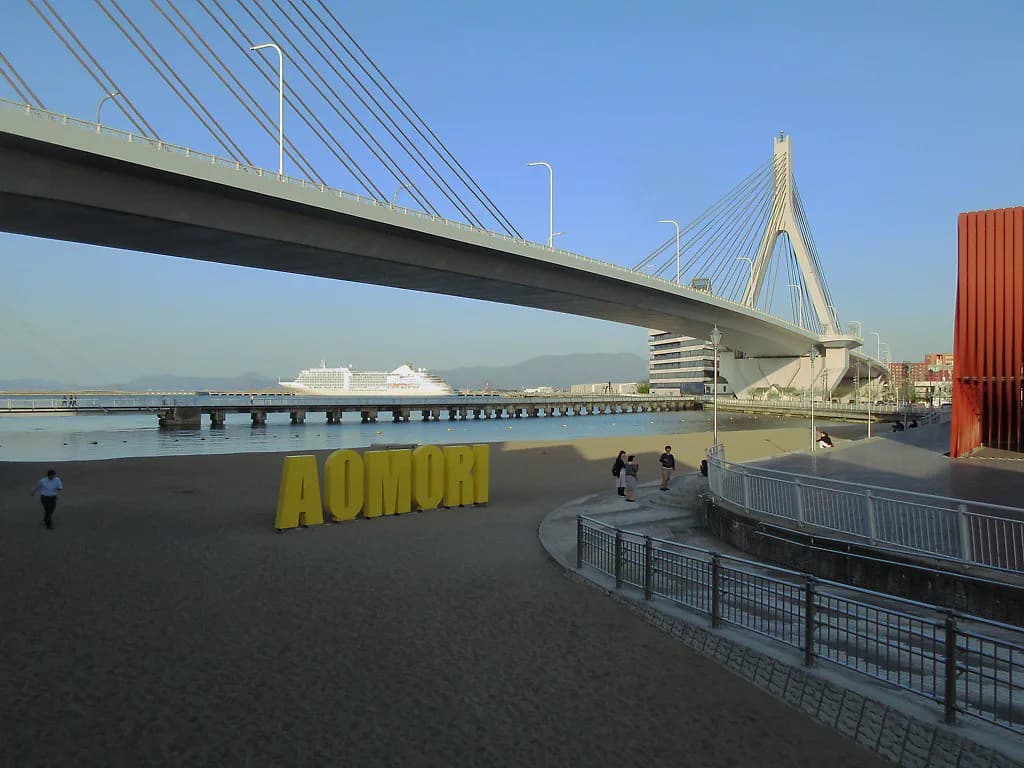
Aomori Bay Bridge stands as a striking symbol of modern engineering in northern Japan. This massive structure dominates the skyline of the city and offers incredible views of Mutsu Bay. Many travelers visit the bridge to experience its unique design and vibrant evening lights. It serves as a central landmark for those exploring the Aomori city center and its harbor.
The bridge is more than just a road for cars and heavy trucks. It features a dedicated pedestrian walkway that allows you to walk high above the water. From this vantage point, you can see the busy port and the distant mountains. It is a must-see spot for anyone interested in architecture or scenic photography.
Planning a visit requires knowing the best times for lighting and the easiest access points. The bridge connects several major tourist spots, making it a convenient part of any itinerary. Our guide will help you navigate the waterfront and find the best photo locations. Discover why this bridge is considered the gateway to the beauty of Aomori.
Aomori Bay Bridge: A Modern Architectural Marvel
The design of the bridge is intentionally shaped like the letter A to represent Aomori. Architect Hironaka Ikko envisioned a structure that would celebrate the city's name and identity. The cable-stayed design uses thick steel cables to support the long road deck. This style gives the bridge a graceful and light appearance despite its massive size.
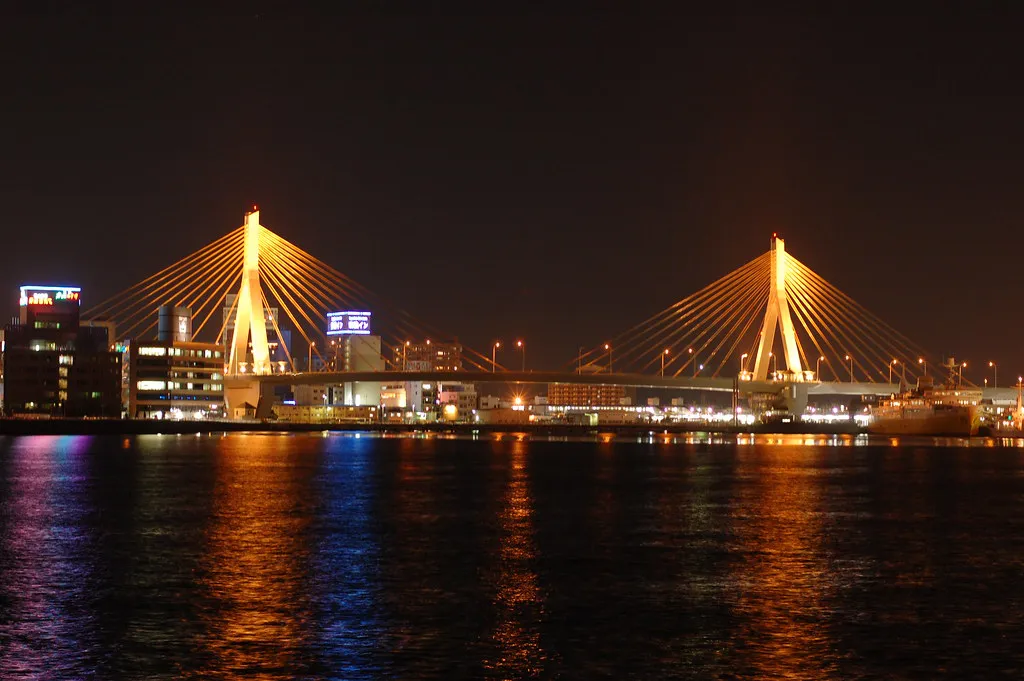
The two main towers reach high into the sky and are visible from miles away. They act as giant pillars that hold the entire weight of the central span. Engineers chose this design to withstand the strong winds and heavy snow of the region. It has become a point of pride for local residents since its completion.
Walking underneath the bridge is just as impressive as walking across the top. The geometric patterns of the steel beams create a fascinating visual for visitors. You can appreciate the scale of the construction from the waterfront parks below. It provides a modern contrast to the traditional fishing boats in the harbor.
The bridge also plays a functional role in connecting the city's industrial zones. It helps reduce traffic congestion in the narrow streets of the old downtown area. Despite its industrial use, the aesthetic beauty remains its most famous feature. It truly bridges the gap between Aomori's past and its bright future.
Quick Facts: Height, Length, and Engineering
There is often some confusion regarding the exact length of this impressive structure. Some sources state the length is 1,200 meters, while others claim it is longer. Official engineering records confirm the total length is actually 1,370 meters. This measurement includes the long approach ramps that lead up to the main span.
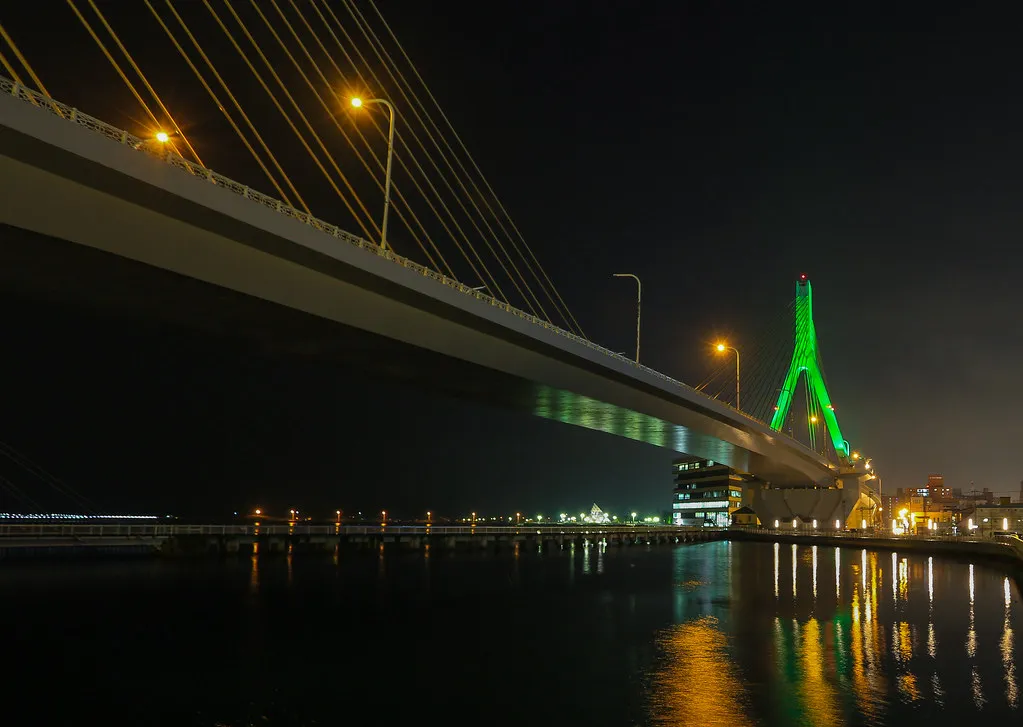
The main span between the two towers measures exactly 600 meters in length. This provides plenty of clearance for large ships to pass safely underneath. The towers themselves stand at a height of 125 meters above the water level. These dimensions make it the second-longest bridge in the entire Tohoku region.
Construction required advanced techniques to handle the soft soil of the bay floor. Deep foundations were built to ensure the bridge remains stable during earthquakes. The road deck sits about 25 meters above the surface of the sea. This height offers a clear view of the entire Aomori port area.
- Technical Specifications at a Glance
- Total Length: 1,370 meters
- Main Span: 600 meters
- Tower Height: 125 meters
- Clearance: 25 meters
- Engineering Highlights
- Type: Cable-stayed bridge
- Material: Steel and concrete
- Architect: Hironaka Ikko
- Region: Tohoku, Japan
Best Times to Visit: Day vs. Night Illumination
Visiting during the day offers the best chance to see the blue waters of Mutsu Bay. On clear days, you can see the peaks of the Hakkoda Mountains in the distance. The sunlight reflects off the white cables and towers, creating a bright and airy feel. It is a great time for a brisk walk to enjoy the fresh sea breeze.
The bridge transforms into a glowing masterpiece once the sun begins to set. Night illumination is a major draw for tourists and local couples alike. The towers and cables are lit with soft lights that change throughout the year. In 2026, expect special lighting displays during major local holidays and festivals.
August is a particularly exciting time to visit the bridge and waterfront. During the Nebuta Festival, the area is filled with energy and colorful decorations. The bridge provides a perfect backdrop for the fireworks that light up the bay. Crowds are much larger during this week, so plan to arrive very early.
Winter brings a different kind of beauty to the Aomori Bay Bridge. Heavy snow often covers the walkways and the surrounding city rooftops. The bridge is often lit with cool blue lights during the coldest months. This creates a magical atmosphere that feels like a winter wonderland.
Photographers should aim for the 'blue hour' just after sunset for the best shots. The mix of natural twilight and artificial bridge lights is truly stunning. Bring a tripod to capture the long exposures needed for night photography. Check the local weather forecast to avoid days with heavy fog or rain.
Top Things to Do at the Aomori Waterfront
The waterfront area around the bridge is perfect for a relaxing afternoon stroll. A well-maintained promenade runs along the water and offers many photo opportunities. You can walk from the bridge toward the historic Hakkoda-maru ferry ship. This yellow ship is now a museum that tells the story of old sea travel.
Cruise ship passengers can easily reach the bridge from the international terminal. The walk takes about 15 minutes and follows a scenic path along the harbor. You will pass several small parks and monuments along the way. It is a simple and free activity for those with limited time in port.
Many visitors enjoy sitting on the wooden decks near the water to watch the ships. The area is popular for fishing and watching the sunset over the bay. Small cafes and benches are scattered throughout the waterfront zone. It is a peaceful place to take a break from the busy city streets.
The bridge walkway itself is a highlight for many adventurous travelers. Walking across the span takes about 20 to 30 minutes at a steady pace. You will feel the slight vibration of the bridge as cars drive past. The height provides a unique perspective that you cannot get from the ground.
How to Get There: Access from Aomori Station and Port
Reaching the Aomori Bay Bridge is very easy from the main transportation hubs. It is located just a few hundred meters from the east exit of Aomori Station. You can see the massive towers as soon as you step outside the station building. The walk is flat and well-marked with signs in both Japanese and English.
A unique feature of the bridge is the access through the main pillars. You can find a spiral staircase located inside the large A-shaped supports. This hidden entrance allows pedestrians to climb up to the main road level. It is a fun and unusual way to start your walk across the bay.
For those who prefer not to use stairs, elevators are also available. The elevators make the bridge fully accessible for wheelchairs and strollers. You can find these lift points near the base of the towers on the waterfront. Access to the pedestrian walkway is completely free for all visitors.
If you are driving, there are several paid parking lots located near the Yasukata, Aomori, 030-0803, Japan (Google Maps) area. Most parking areas are within a five-minute walk of the bridge entrance. Taxis are also plentiful and can drop you off right at the waterfront promenade. The central location makes it one of the most accessible landmarks in the city.
- Accessing the Pedestrian Walkway
- Location: Spiral staircases
- Pillar: North and South
- Elevators: Available for use
- Entry: Near the waterfront
- Walking from Aomori Station
- Distance: 500 meters
- Time: 10 minutes
- Route: Exit East gate
- Cost: Free access
Nearby Attractions: Nebuta Museum Wa Rasse and A-Factory
No trip to the bridge is complete without visiting the Nebuta Museum Wa Rasse. This museum is located right next to the bridge and features massive festival floats. The red-slatted exterior of the building is an architectural marvel on its own. Inside, you can learn about the history and craft of the famous Nebuta Festival.
Directly under the bridge, you will find the popular A-Factory market. This facility is a paradise for food lovers and fans of local Aomori apples. You can watch the production of local apple cider through large glass windows. The tasting room offers several varieties of cider ranging from sweet to dry.
A-Factory also has a wonderful selection of souvenirs and local snacks. It is the perfect place to buy apple-themed gifts for friends and family. The building features a modern design that complements the nearby bridge. Many visitors stop here for a light lunch or a refreshing dessert.
The ASPAM building is another nearby landmark shaped like a large triangle. It serves as a tourism center and offers an observation deck on the top floor. From ASPAM, you can get a great aerial view of the Aomori Bay Bridge. It is only a short five-minute walk from the base of the bridge.
These attractions together create a vibrant cultural hub on the waterfront. You can easily spend an entire morning or afternoon exploring this small area. The proximity of these spots makes the bridge a central point for sightseeing. Everything is within walking distance, making for a very convenient day trip.
Practical Tips for First-Time Visitors
The wind on the bridge can be much stronger than at ground level. Even on a sunny day, the breeze coming off Mutsu Bay can feel quite chilly. It is wise to bring a light jacket or windbreaker when walking the span. Hold onto your hat and loose items to prevent them from blowing away.
Check the Aomori Bay Bridge Location (Google Maps) for real-time traffic updates. While the pedestrian path is separate, the road can get busy during rush hour. Early morning is the quietest time if you want to avoid the noise of cars. Late evening is best for those looking for a romantic and quiet atmosphere.
The bridge is open 24 hours a day, but the elevators may have limited hours. Most elevators operate from early morning until late in the evening. If the elevators are closed, you will need to use the spiral stairs. Always wear comfortable walking shoes as the metal walkway can be hard on feet.
Winter visitors should be extra careful of ice on the pedestrian paths. The city does its best to clear snow, but patches of ice can remain. Wear shoes with good grip to ensure you stay safe while walking. The views of the frozen harbor are worth the extra effort in the cold.
Frequently Asked Questions
Is there a toll for walking across the Aomori Bay Bridge?
No, there is no toll for pedestrians or cyclists using the walkway. You can enjoy the views and walk the entire span for free. This makes it one of the best budget-friendly activities in the Aomori region for all travelers.
Is the Aomori Bay Bridge wheelchair accessible?
Yes, the bridge is fully wheelchair accessible thanks to elevators located at the base of the main towers. These lifts take you directly to the pedestrian level. The walkway itself is flat and wide enough for easy movement for everyone.
How long does it take to walk across the bridge?
A one-way walk across the main span takes about 20 to 30 minutes at a relaxed pace. If you stop to take photos, you should plan for at least one hour. This allows time to enjoy the views and explore the spiral staircases.
What is the best spot to photograph the bridge?
The best views are from the waterfront promenade near A-Factory or the ASPAM building. These spots allow you to capture the full A-shape of the towers against the water. Nighttime offers the most dramatic lighting for professional-looking photos.
The Aomori Bay Bridge is a spectacular landmark that defines the city's modern waterfront. Whether you visit for the engineering, the views, or the night lights, it never fails to impress. It serves as a perfect starting point for exploring the many cultural gems of the harbor area. Make sure to include this architectural marvel in your next trip to northern Japan.
Walking the span offers a sense of peace and a unique look at the local maritime life. The combination of the bridge, museum, and local markets creates a complete travel experience. You will leave with a deeper appreciation for Aomori's unique blend of tradition and progress. Enjoy your time exploring one of the most iconic sights in the Tohoku region.
To verify current details, consult the Aomori Bay Bridge on Wikipedia and Aomori Bay Bridge official site.