Asahikawa Shinkoyaki and Shio Horumon: A Complete Eating Guide
Find real Asahikawa shinkoyaki and shio horumon: where to eat, how to order, costs, and izakaya etiquette for 2026.
On this page
Last updated August 2026. Asahikawa shinkoyaki and shio horumon define this Hokkaido city's after-dark food scene, pairing crisp-skinned grilled young chicken with salt-seasoned pork offal. Locals treat both as everyday soul food, not novelty items, and the two dishes anchor most nights out near Asahikawa's food scene. This guide covers where to eat each dish, how to order like a regular, and what a meal costs in 2026.
Asahikawa Shinkoyaki and Shio Horumon: An Overview
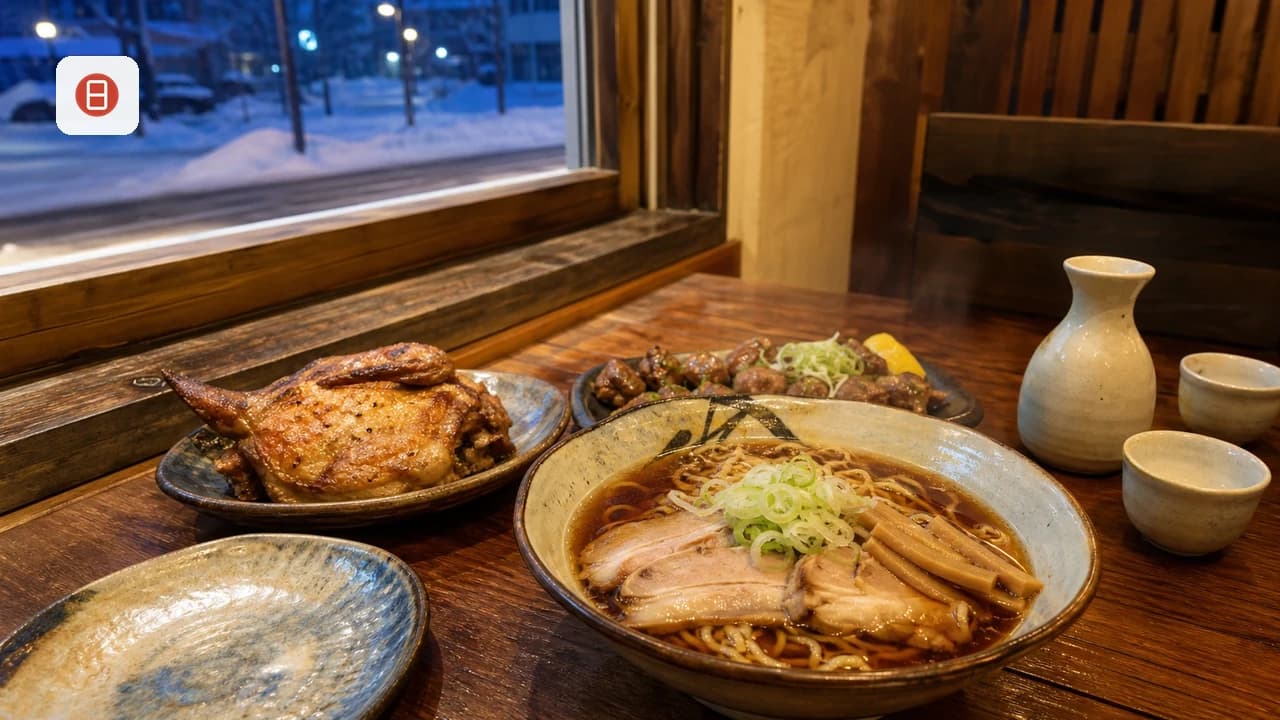
Shinkoyaki means grilled young chicken, usually a half bird cooked whole over charcoal. The skin turns crisp while the meat underneath stays tender. Shio horumon means salt-grilled pork offal, cleaned thoroughly and seasoned simply. Salt lets the meat's own flavor lead, instead of a heavy sauce. Locals sometimes call this pairing B-kyu gourmet: humble, everyday food built around neighborhood izakaya rather than formal dining rooms.
Asahikawa's shinkoyaki tradition traces to post-war poultry farming in the surrounding Kamikawa region. Small farms raised young chickens quickly, and halving the bird let it cook evenly over charcoal. Shio horumon grew alongside Kamikawa's pig-farming history, which kept offal cheap and plentiful. Cooks leaned on careful cleaning and a light hand with salt, rather than masking cuts in miso or heavy sauce. That salt-forward style is now what separates Asahikawa horumon from the heavier miso-based versions found in other parts of Japan. Together, the two dishes give visitors a way into the city's food culture beyond its ramen shops.
Hokkaido's cold climate shapes the appeal of both dishes. Fatty, salt-forward grilled meat suits the region's cooler evenings, and both shinkoyaki and shio horumon show up most often on menus built around drinking through a long winter. That combination of fat, salt, and char is part of why both dishes remain year-round menu staples rather than a seasonal novelty.
Shinkoyaki: Asahikawa's Grilled Young Chicken
Shinko refers to a young chicken, and shops typically grill half a bird whole rather than cutting it into small skewers. This half-bird format is one of Asahikawa's defining grill styles, distinct in scale from smaller izakaya skewers found elsewhere. Two seasoning styles dominate the menu: tare, a sweet-savory soy glaze, and shio, plain salt. Many regulars order tare first, since the glaze soaks into the meat as it rests after grilling. Shio versions stay lighter, letting the char and the chicken's own fat carry the flavor. Either way, expect a contrast between blistered, shattering skin and juicy meat underneath. That contrast is what separates shinkoyaki from standard yakitori skewers.
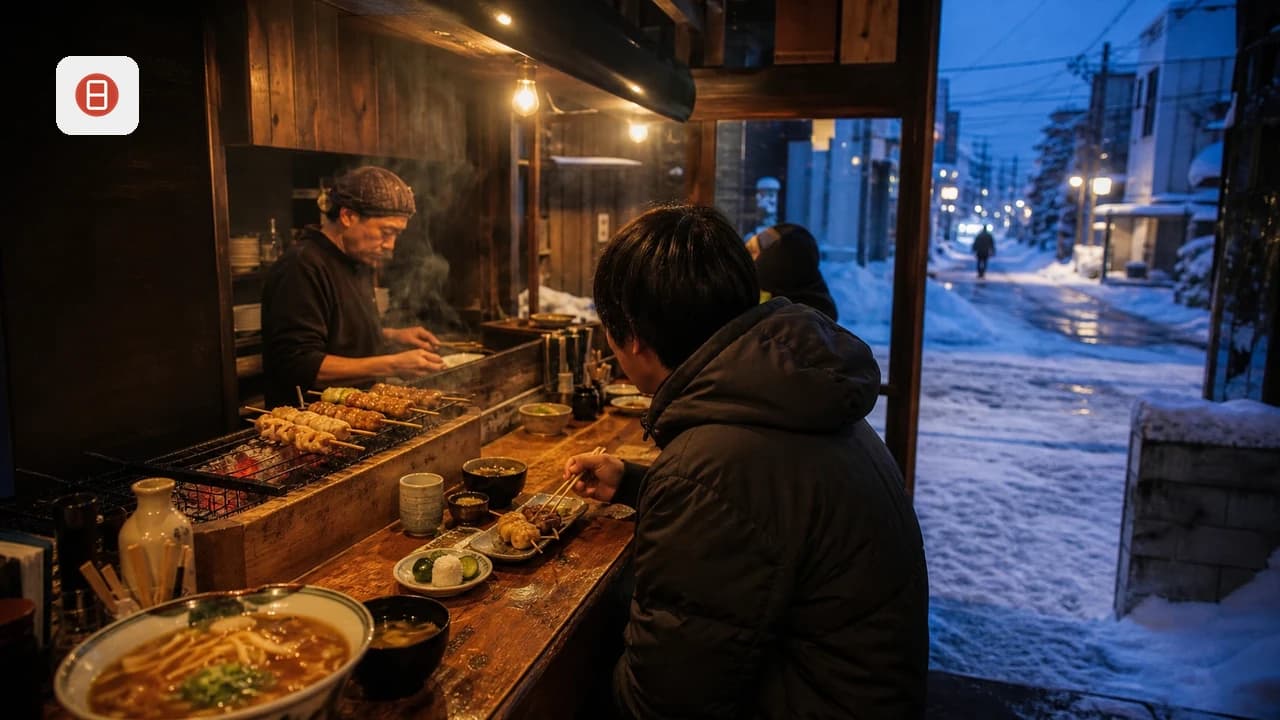
The shinkoyaki shops concentrated in 5-jo 7-chome form a tight cluster designed for casual walk-ins, where ordering is simplified to just two words—tare or shio—making language barriers mostly irrelevant.
Most specialist shops cluster in the alley network near 5-jo 7-chome, an area sometimes signed as 5-7 Alley Furari-ito. Gin-neko is the name most often cited as the benchmark shinkoyaki shop in that pocket of downtown. Hours and availability shift, so confirm current status before heading over. Shop signage sometimes specializes in just one dish, shinkoyaki or horumon, while others serve both under one roof. Scanning the grill setup out front usually signals which. When you're comparing shops, look for a few concrete signs of quality rather than guessing from the outside.
- A visible charcoal grill instead of a gas one, for deeper char and a smokier edge
- Half-bird portions cooked to order, not pre-grilled and held warm
- A tare glaze applied in layers while grilling, not poured on at the end
Shio Horumon: Salt-Grilled Offal Done Right
Horumon means offal, and Asahikawa's version leans almost entirely on shio, plain salt, instead of the miso-heavy sauces common in Osaka or Tokyo. That choice puts freshness on display, since salt has nowhere to hide an off cut. Shops typically grill the meat at the table over a small charcoal brazier called a shichirin, so you cook pieces yourself in batches. Grilling at your own pace means you control doneness, cut by cut, rather than receiving a plate cooked to a single standard. Baba-horu and Tenkin both come up often as specialists in this style, though menus and hours vary, so check current listings before visiting.
Standard cuts on the menu include shiro (stomach), tan (tongue), and hatsu (heart), alongside other offal pieces depending on the shop. Thorough cleaning is what makes Asahikawa horumon approachable, even for diners who find offal intimidating elsewhere. Properly prepared, the meat grills up tender rather than rubbery, with a light char on the outside. Cook each piece in small batches, since thin cuts can go from perfectly done to overcooked in under a minute on a hot shichirin. If offal isn't for you, most counters also keep a few plain grilled options on the menu.
How to Order Like a Regular
Ordering at a shinkoyaki or horumon counter is straightforward once you know the two or three words that matter. Ask for tare or shio to set the seasoning, and staff will usually confirm which cuts are available that night. At horumon counters, pointing at another table's shichirin or a menu photo works well when a shared vocabulary is limited. Asking staff to recommend the night's freshest cut is common practice and usually gets an honest answer, since a stale offering reflects poorly on the shop.
Portions are typically sized for sharing, so two or three diners can order a mix of cuts and split them over the grill. Staff generally do the initial cutting and cleaning before the meat reaches your table, so raw handling isn't something you need to manage yourself. Pace the order in rounds rather than ordering everything at once. Start with two or three items, see what the kitchen has that night, and add more as the table clears. This spreads out the cook time on a small shichirin and keeps every piece arriving fresh off the grill.
Logistics: Location, Timing, and Cost
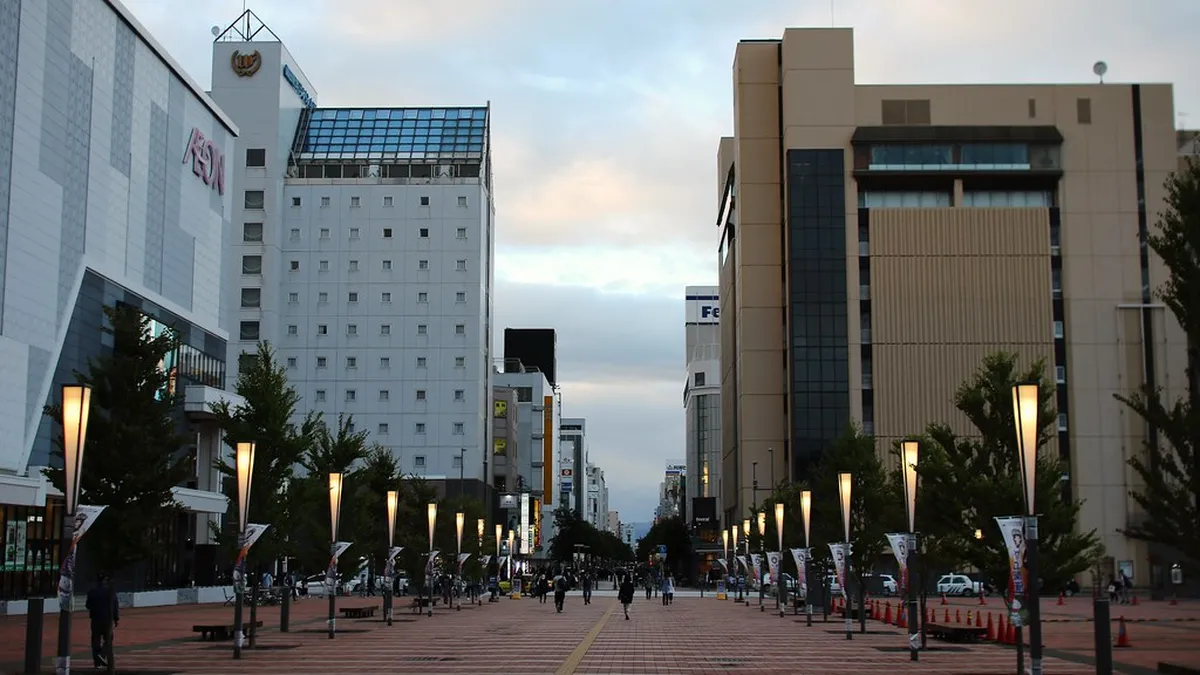
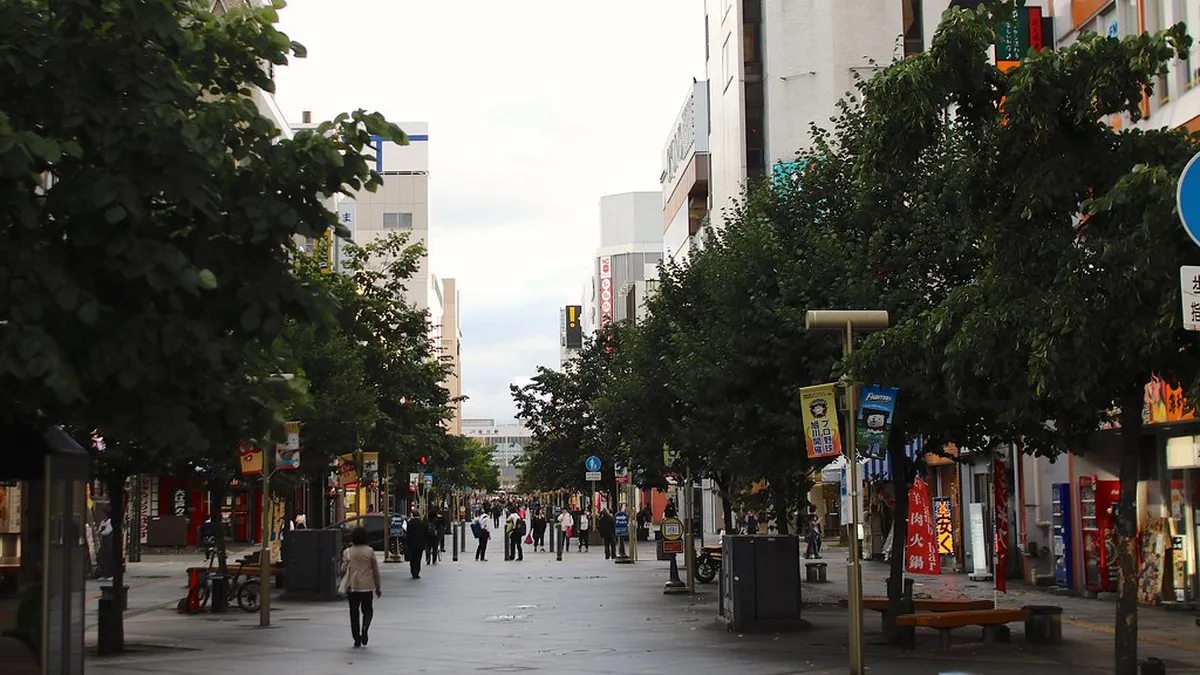
Most shinkoyaki and horumon shops sit within walking distance of Asahikawa Station or in the Sanroku-gai entertainment district. Sanroku-gai formed as the city's downtown entertainment strip, with a dense run of izakaya, snack bars, and grill counters within a few blocks. Both areas fill with locals after dark, so plan on dinner rather than lunch. Popular cuts and half-birds can sell out by around 8:00 PM at the busiest counters. Arrive earlier in the evening if you want the full menu rather than whatever's left.
Every counter charges an otoshi (appetizer cover fee) automatically and non-negotiably—a mandatory component of the ¥2,000 to ¥4,000 per person budget that appears on every bill.
Budget roughly ¥2,000 to ¥4,000 per person for a meal that includes a few rounds of drinks. For a wider spread of budget-friendly options in the same style, the budget izakaya guide covers more ground. Both dishes pair naturally with local sake, and the fat and salt cut through a cold pour the way they cut through a cold Hokkaido night. The local sake brewery guide has pairing suggestions if you want to build a bottle into the evening.
- Typical dinner with drinks: ¥2,000–¥4,000 per person
- Peak sell-out time for popular cuts: around 8:00 PM
- Best areas to start: near Asahikawa Station or Sanroku-gai
Izakaya Etiquette: Smoke, Seating, and the Otoshi
Many traditional shinkoyaki and horumon counters stay smoke-heavy, since charcoal grilling happens right at the table or just behind the bar. Seating is often narrow, with counter stools rather than private tables, so expect close quarters with other diners. English menus are uncommon at the most local spots. Pointing at another table's order or using a translation app both help when the menu is a mystery.
Almost every izakaya in Asahikawa charges an otoshi, a small appetizer served automatically at the start of the meal. Treat it as a cover charge rather than an optional dish. It's a small, fixed charge added automatically, and isn't something you can decline. Tipping isn't practiced in Japanese izakaya, so the otoshi functions as the only automatic add-on to the bill. Pace your evening around the meal itself, and save sightseeing for earlier in the day. The things to do guide has options for the hours before dinner.
Shinkoyaki vs. Shio Horumon at a Glance
Both dishes show up on the same menus at some shops, but they suit different moods and appetites. Use the comparison below to decide which to order first, or split an order between them at a shared table.
If dinner is a shared table with mixed appetites, order both and let the shichirin do double duty. Solo diners chasing a quieter counter seat often gravitate to horumon, where the grilling itself is part of the pacing. Groups celebrating or catching up tend to default to shinkoyaki, since a shared half-bird gives everyone something to reach for.
| Dish | Flavor Profile | Primary Meat | Best For | Recommended Pairing |
|---|---|---|---|---|
| Shinkoyaki | Smoky and crisp-skinned; tare adds sweet-savory depth | Young chicken, half bird | Sharing at the table, groups | Local sake or a cold beer |
| Shio Horumon | Clean and salt-forward; lets the offal's own flavor lead | Pork offal (stomach, tongue, heart) | Solo drinkers, counter seating | Local sake, served cold |
Beyond the Grill: Building Out the Meal
Shinkoyaki and shio horumon rarely stand alone on a full night out in Asahikawa. Many visitors follow dinner with a late bowl from the late-night ramen guide, since some ramen shops here stay open past standard dinner hours. Others prefer to start the evening lighter and save room for the grill. A stop at a stand from the sweets and dairy stops works well earlier in the day. Either order works, since both dishes are filling enough to anchor a night out on their own. Building the two dishes into a broader food day works well. Start with something light, move to the grill for dinner, and close with a nightcap or dessert nearby.
Frequently Asked Questions
Is shio horumon chewy?
Properly cleaned offal turns tender rather than rubbery once it's grilled. Toughness usually means a cut sat on the shichirin too long, not a flaw in the meat itself. Ask staff how long a cut needs if you're unsure, since cook times vary by piece.
Can you find shinkoyaki and shio horumon at lunch?
Most specialist shops open for dinner only, since these dishes anchor Asahikawa's izakaya culture rather than daytime dining. A handful of spots may run a limited lunch menu, but confirm current hours before planning around one.
Are these spots child-friendly?
Smoke and narrow counter seating make many traditional shops a tougher fit for young children. Larger izakaya with table seating tend to work better for families than single-counter specialists. Call ahead or check current listings if you're planning to bring kids.
Do you need a reservation?
Walk-ins are common at most counters, especially earlier in the evening. Busiest specialist shops fill up fast on weekends, so a reservation or an early arrival helps secure a seat. Popular cuts can also sell out before closing, which is another reason to arrive on the earlier side.
What's the difference between shinkoyaki and regular yakitori?
Yakitori usually means small pieces of chicken grilled individually on skewers. Shinkoyaki instead grills a half bird whole, so the portion and presentation are both larger. The result is a shared, centerpiece dish rather than a handful of individual skewers.
What if you don't want to eat offal?
Order shinkoyaki instead, since most menus offer it alongside horumon at the same counters. Many horumon-focused izakaya also grill plain chicken or vegetable skewers for diners who prefer something milder. Sharing a table lets everyone order differently off the same grill.
Free guide: Japan's Hidden Gems
12 under-the-radar places beyond Tokyo & Kyoto — with the best season to visit each and a local tip you won't find in the guidebooks.
You might also like

Continue reading
More guides you'll find useful