What to Eat in Asahikawa: 9 Best Local Specialties (2026 Guide)
A 2026 guide to what to eat in Asahikawa, covering shoyu ramen, shinkoyaki, shio horumon, jingisukan, sake, and where to eat in San-roku and Fraleet Alley.
On this page
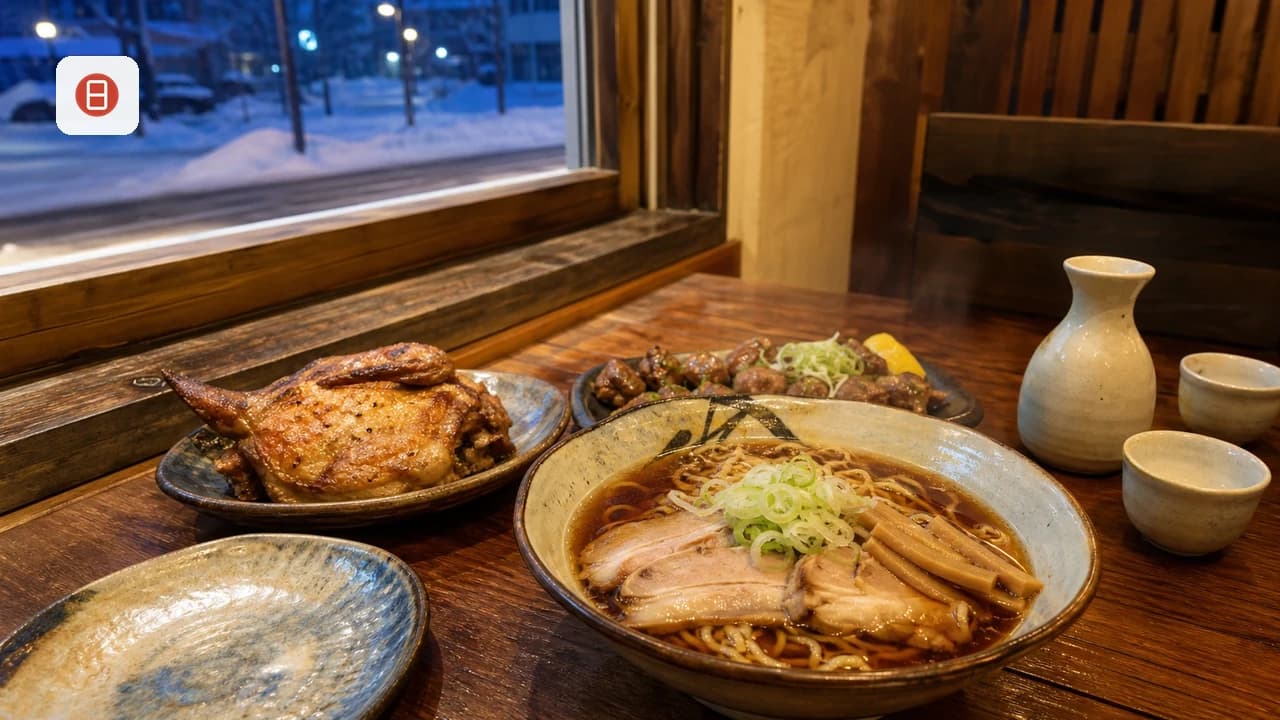
Last updated August 2026, this guide covers what to eat in Asahikawa through the city's own hierarchy of dishes rather than a generic prefecture-wide list. Winters here run severe enough that the local kitchen leans on calories and heat for survival. Lard-capped ramen broth, charcoal-grilled offal, and grilled young chicken all trace back to keeping diners warm through that cold.
9 Local Specialties: What to Eat in Asahikawa
Each dish below has a defined home base in the city, and most cluster within walking distance of Asahikawa Station.
Most shops outside San-roku close by 8 or 9 PM, making specialty establishments like Ginneko in Fraleet Alley inaccessible without a 7 PM seating for visitors arriving after typical work hours.
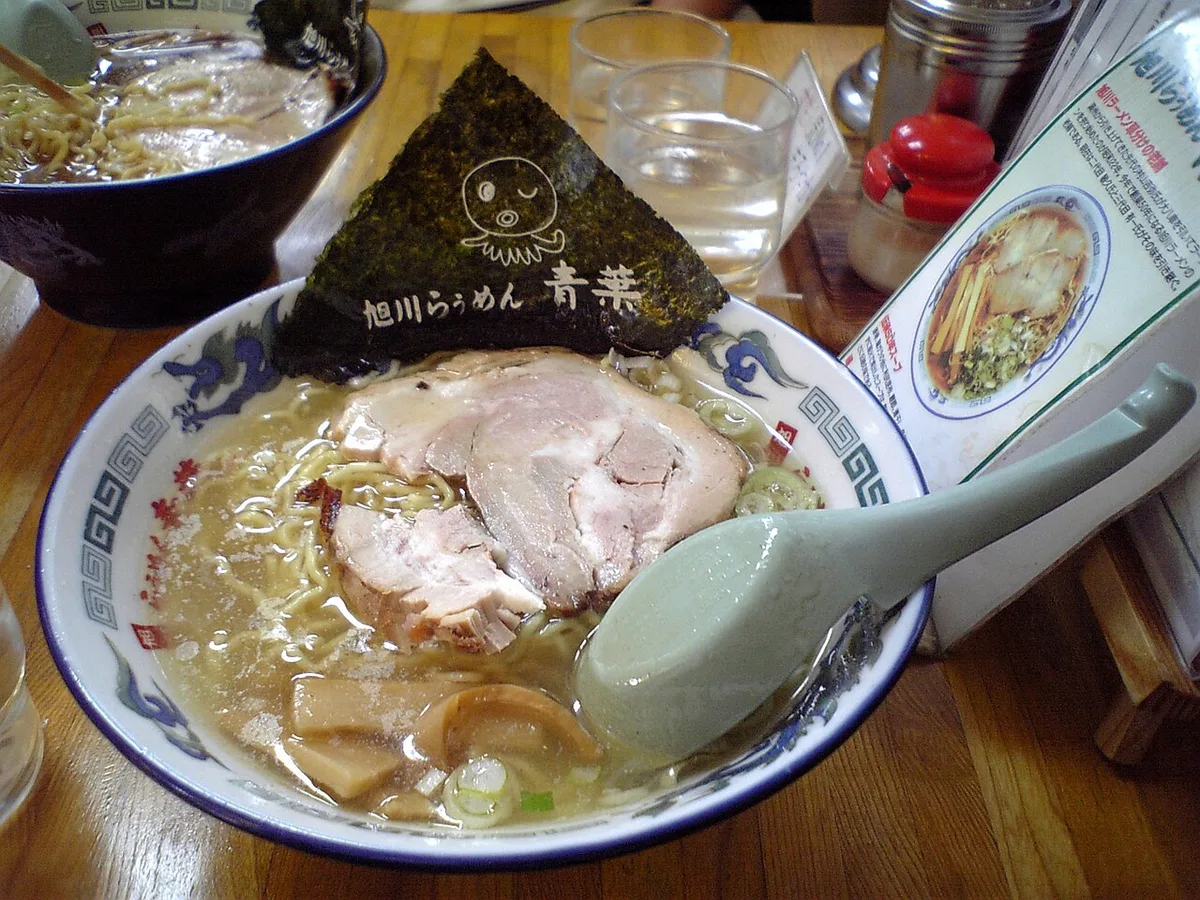
- Shoyu Ramen (Lard-Topped Soy Sauce Ramen)
- Thin, wavy noodles sit in a double broth built from pork and seafood, then get capped with a layer of lard that locks in heat.
- Asahikawa Ramen Aoba and Baikohken serve historic downtown versions. Ramen Village gathers several stalls under one roof for easy comparison.
- Bowls typically run ¥800 to ¥1,200. The full ramen guide breaks down which shop suits which craving.
- Shinkoyaki (Grilled Young Chicken)
- Shinkoyaki is a whole young chicken grilled bone-in, a specialty distinct from the skewered yakitori found elsewhere in Japan.
- Ginneko, tucked into Fraleet Alley, is the name most locals mention first for this dish.
- Ordering tips and nearby alternatives appear in the shinkoyaki and shio horumon guide.
- Shio Horumon (Salt-Grilled Offal)
- Shio horumon is salted pork or beef offal grilled tableside over a shichirin, a small charcoal grill set on the table.
- The style favors smoke and char over polish, so expect a low-lit, traditional room rather than a sleek dining space.
- Horumon counters tend to run smokier and more casual than shinkoyaki spots, which stay a notch tidier.
- Jingisukan (Grilled Lamb)
- Jingisukan is lamb grilled on a domed or flat iron plate at the table, often alongside onions and cabbage.
- Yukitoniku, near Asahikawa Station, serves both jingisukan and Hokkaido wagyu, with a multilingual menu and staff on hand.
- Tamari grills on lava plates with seasonal vegetables and closes on Mondays, so confirm hours before heading over.
- Hokkaido Wagyu Steak and Yakiniku
- Ishiyaki Steak Kikuzan, close to Asahikawa Station, stone-grills wagyu steak and also serves shabu shabu and seafood.
- Dinner mains there run roughly ¥5,000 to ¥5,999, with a lighter lunch menu around ¥2,000 to ¥2,999.
- For a more casual cut, Yakiniku no Champ offers semi-private rooms and prices around ¥2,000 to ¥2,999 for classic cuts.
- Gibier (Hokkaido Game Meat)
- Cafe Gibier Kogyo, near Nagayama Station, plates housemade game dishes inside a converted stone warehouse.
- Sunken kotatsu seating and semi-private rooms suit a slower dinner, with mains priced around ¥2,000 to ¥2,999.
- This cafe closes on Thursdays, so plan an evening visit for another day of the week.
- Handmade Soba at Sobasen
- Sobasen, attached to Ryokan Sensyoen, makes its buckwheat noodles fresh in-house every day.
- Beyond plain soba, the menu includes steamed buckwheat buns filled with pork, deep-fried soba, tempura, and a pumpkin gratin.
- Ryokan Sensyoen sits about ten minutes by taxi from the city center, so budget transit time around a meal there.
- Local Sake From the City's Big Three Breweries
- Otokoyama, Takasago, and Godo Shusei are the three breweries most associated with Asahikawa sake.
- All three draw on the same cold, clean water that also shapes the local food, and Otokoyama runs a museum next to its brewery.
- The sake brewery guide lays out tasting options and how to fit a visit around a meal.
- Soft Serve and Dairy Sweets
- Hokkaido milk and cream turn up across Asahikawa in soft serve and other dairy desserts, a natural pairing with the cold climate.
- Presentation at several dessert spots echoes the ice-and-snow style the Snow Crystal Museum made familiar downtown.
- Specific shops and souvenir ideas appear in the sweets, dairy, and souvenirs guide.
San-roku and Fraleet Alley: Choosing a Dining District
San-roku and Fraleet Alley anchor Asahikawa's evening dining, and picking between them mostly comes down to atmosphere rather than distance. Both sit within walking range of Asahikawa Station, so trying one district for dinner and the other for a nightcap is realistic in a single evening. For a longer list of budget-friendly stops across all three areas, see the izakaya and cheap eats guide. It groups options by price rather than by neighborhood, which helps when budget matters more than location.
- San-roku (3-6) District
- Izakaya and yakiniku cluster here, and the area stays lively later into the evening than most of downtown.
- Ichigo Ichie, an izakaya built around shared shichirin grilling, sits in the heart of 3-6 and opens daily.
- Fraleet Alley (5-7 Alley)
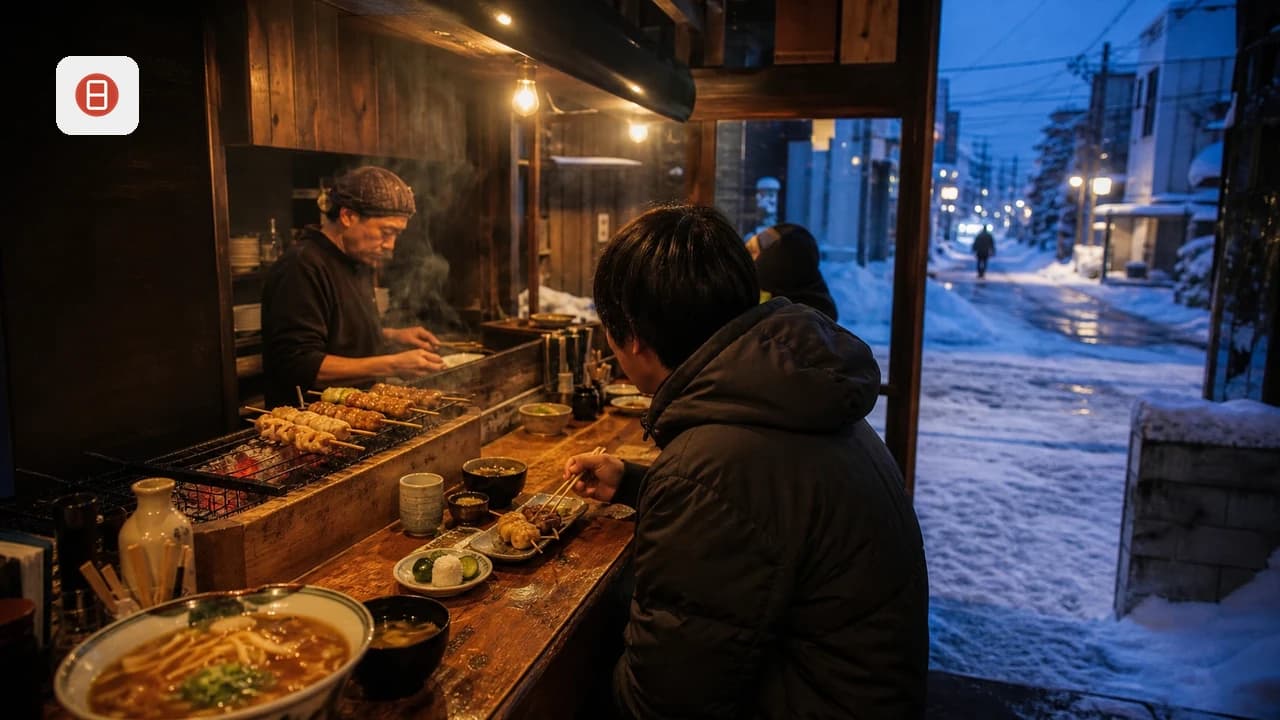
- This narrow corridor holds Ginneko and other shinkoyaki counters inside a showa-era setting.
- Asahikawa Izakaya Fukuro Tei, also on this alley, runs a two-hour all-you-can-drink plan from ¥4,500.
- Expect a quieter, more traditional room here than San-roku's brighter storefronts.
- Kaimono Koen Pedestrian Mall
- This car-free shopping street suits cafes and quick bites between meals or sightseeing stops.
- Tama and Yama no Saru, both izakaya and yakitori counters, sit directly along the mall.
Costs, Reservations, and Tabelog Ratings
Money and timing questions come up more in Asahikawa dining than menu questions, so plan logistics before you plan dishes. Tabelog listings for well-regarded Asahikawa restaurants commonly show scores between 3.0 and 3.4. That range reads as strong rather than average on Japan's rating scale, so do not rule out a 3.1 or 3.2 spot on the number alone. A handful of restaurants, including Yukitoniku and Yakiniku no Champ, list multilingual menus or staff on Tabelog. Confirm that detail before booking if language support matters for the visit. Reservations for popular jingisukan and wagyu tables run through Tabelog directly, and a day or two of lead time is usually enough outside peak weekends.
| Meal Type | Typical Price | Booking Note |
|---|---|---|
| Ramen bowl | ¥800–¥1,200 | Walk-in, no reservation needed |
| Izakaya dinner | ¥3,000–¥5,000 | Walk-in for small groups; book ahead on weekends |
| Jingisukan or wagyu dinner | ¥5,000–¥5,999 | Reserve via Tabelog, especially Friday and Saturday |
| All-you-can-drink plan (Fukuro Tei) | From ¥4,500 for 2 hours | Book ahead, popular with groups |
| Casual yakiniku lunch | ¥1,000–¥2,999 | Walk-in generally fine on weekdays |
Mistakes to Avoid When Eating in Asahikawa
A few planning missteps show up often enough among visitors to call out directly.
- Arriving Too Late
- Many shops outside San-roku close by 8 or 9 PM, earlier than a typical late dinner hour elsewhere in Japan.
- Aim to sit down by 7 PM when a specific shop, rather than the nightlife district itself, is the goal.
- Assuming Every Shop Takes Cards
- Smaller ramen counters and older izakaya are more likely to be cash-only than larger Tabelog-listed restaurants.
- Carry enough cash to cover a bowl of ramen or a round of drinks as backup.
- Skipping a Reservation for Jingisukan or Wagyu
- Popular grilled-lamb and wagyu spots fill up on weekend evenings, and walk-ins can face a wait or a turned-away table.
- Book through Tabelog a day or two ahead when a specific restaurant, not just the neighborhood, is the priority.
- Skipping Fraleet Alley for San-roku Only
- San-roku's brighter signage draws most first-time visitors, so Fraleet Alley's shinkoyaki counters and older izakaya get skipped.
- Building one dinner into each district over a two-night stay covers more of the city's range.
Pairing Meals With Asahikawa Sightseeing
Food pairs naturally with a handful of Asahikawa sights, and timing a meal around them keeps a day trip efficient. The Snow Crystal Museum's ice and snow displays sit near several dessert shops that echo the same aesthetic in soft serve and parfaits. Asahikawa's zoo is another common stop, and a shinkoyaki or shio horumon dinner afterward suits the appetite that a cold day outdoors builds. See the Asahikawa attractions guide for hours and how to combine sights with a meal. Seasonal timing also matters here. Summer visits bring white corn, sold sweet and simple across the city center. Winter visits lean toward nabe hot pot and other dishes built to warm you back up after time outside.
Explore food in other cities
Frequently Asked Questions
What is Asahikawa most famous for eating?
Asahikawa is best known for shoyu ramen, a soy-sauce broth topped with a layer of lard that keeps the bowl hot through the city's cold winters. Shinkoyaki grilled chicken and shio horumon grilled offal round out the city's signature dishes.
How is Asahikawa ramen different from Sapporo ramen?
Asahikawa ramen uses a soy sauce base with a double broth of pork and seafood, finished with a lard layer that Sapporo's miso-based style skips. The noodles also run thinner and wavier than typical Sapporo ramen noodles.
Do restaurants in Asahikawa take credit cards?
Many larger restaurants listed on Tabelog, including several izakaya and yakiniku spots, accept credit cards. Smaller ramen counters and older shops are more likely to be cash-only, so carry cash as backup.
Do you need a reservation for jingisukan or wagyu in Asahikawa?
Reservations are not required everywhere, but popular jingisukan and wagyu restaurants fill up on Friday and Saturday evenings. Booking a table through Tabelog a day or two ahead avoids a wait at the door.
What time do restaurants close in Asahikawa?
Outside the San-roku nightlife district, many restaurants close by 8 or 9 PM. San-roku and Fraleet Alley stay open later, so plan a late dinner around those two areas.
Is Asahikawa food different from the rest of Hokkaido?
Asahikawa's cold climate pushes its kitchen toward heavier, warming dishes like lard-topped ramen, grilled offal, and jingisukan. The city also has its own sake breweries and dairy producers, so a food-focused stop here covers ground that a Sapporo-only trip would miss.
Explore Asahikawa Food and Dining
Use these guides to compare local dishes, dining areas and practical food experiences in Asahikawa.
Food and Dining Guides
- Asahikawa attractions hub: tickets, hours & maps
- Asahikawa Ramen Guide: Best Shops and Local Flavors
- Asahikawa Shinkoyaki and Shio Horumon: A Complete Eating Guide
- Asahikawa Sake Breweries and Tasting
- Asahikawa Sweets, Dairy, and Food Souvenirs
- Asahikawa Izakaya and Cheap Eats: Best Budget Dining Guide (2026)
Free guide: Japan's Hidden Gems
12 under-the-radar places beyond Tokyo & Kyoto — with the best season to visit each and a local tip you won't find in the guidebooks.
You might also like


Continue reading
More guides you'll find useful