Hiraizumi Soba and Vegetarian Food: A Traveler's Guide
A practical guide to Hiraizumi soba and vegetarian food, from fish-free tsuyu requests to shojin ryori and mochi near Chuson-ji and Motsu-ji.
On this page
Last updated August 2026, this guide breaks down Hiraizumi soba and vegetarian food near the Chuson-ji and Motsu-ji temple sites. Soba and mochi are easy to find, but the tsuyu dipping sauce for soba is almost always made with katsuo, or skipjack tuna, dashi. This guide maps where to eat near each temple, when shojin ryori justifies its extra cost, and which ordering mistakes catch first-time visitors off guard.
Hiraizumi Soba and Vegetarian Food: The Quick Answer
Hiraizumi is easier for vegetarian travelers than most rural Japanese destinations, mainly because of two local staples: buckwheat soba noodles and mochi rice cakes. Both are naturally meat-free at the ingredient level. The complication is the sauce, not the noodle. Most soba shops make their tsuyu with katsuo dashi, a broth built from dried, smoked skipjack tuna flakes. A bowl that looks vegetarian often is not. Hiraizumi's temples, Chuson-ji and Motsu-ji, grew out of a Pure Land Buddhist vision. That history still shapes Hiraizumi's food scene, which keeps a vegetable-and-grain backbone even where fish stock hides in the details. Travelers who are not vegetarian will also find Maesawa Beef Near Hiraizumi: Where to Eat Iwate's Top Wagyu in 2026 as the region's other signature dish. That popularity explains why many menus default to meat or fish unless asked otherwise.
Soba in Hiraizumi: Navigating the Dashi Question
Dashi is the savory broth base in soba tsuyu and many soups. Katsuo dashi contains skipjack tuna, while kombu dashi uses kelp. Do not assume a shop can swap a batch-made sauce: ask whether a fish-free preparation is available before ordering, and accept that some kitchens cannot provide one. Miso, soy sauces, toppings, and shared equipment also need checking; the local fermentation guide covers the same issue.
Wanko Soba vs. Zaru Soba for Vegetarians
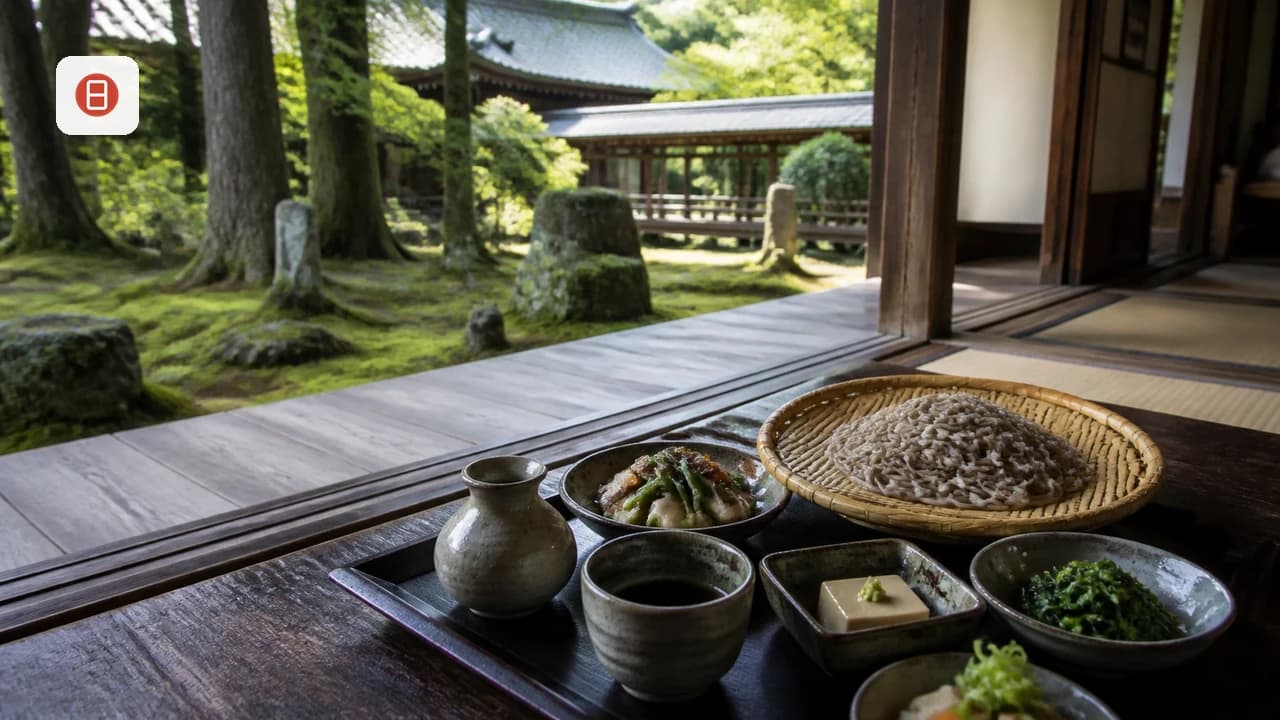
Wanko soba is an Iwate specialty in which small bowls are refilled continuously. For strict diets, ask how both noodles and sauce are prepared before the service begins. Zaru soba keeps the dipping sauce separate, but that does not make the meal vegetarian: the standard tsuyu is often fish-based, noodles may blend buckwheat with wheat, and kitchens may share equipment. Choose it only when the restaurant confirms a suitable sauce and preparation.
Shojin Ryori: Temple-Friendly Buddhist Cuisine
Shojin ryori is Buddhist monastic cooking based on vegetables, tofu, rice, and grains, but Hiraizumi's temple history does not guarantee that nearby restaurants serve formal shojin cuisine. No current official Hiraizumi tourism listing reviewed for this guide confirms a standard temple meal or a fixed starting price. Likewise, goma-dofu should not be called dashi-free without checking its sauce and preparation. Treat both as dishes to verify with a named venue, not automatic temple-area options.
| Dining Style | Typical Price | Pace | Best For Vegetarians When... |
|---|---|---|---|
| Zaru soba (cold, sauce on the side) | Check current menu | Quick, single course | The shop confirms fish-free sauce and shared-prep details |
| Wanko soba (all-you-can-eat) | Priced above a standard bowl; confirm locally | Fast-paced, continuous refills | You confirm how the tsuyu is poured before the rhythm starts |
| Shojin ryori (if a venue currently offers it) | Confirm directly | Usually multi-course | The named venue confirms the menu and ingredients |
Where to Eat Near Chuson-ji, Motsu-ji, and the Station
Hiraizumi's dining options cluster around three zones. Planning meals around this shape avoids backtracking on a walking day. Near Chuson-ji, ask about konbu dashi before ordering. This cluster near Hiraizumi's temple attractions sees heavy foot traffic, and menus are often built for speed rather than customization. Near Motsu-ji, sit-down vegetarian options are fewer. A packed mochi snack, covered below, works as a reliable backup here. Kameya, near the station, is the easiest stop for travelers arriving without a lunch plan already set. Tendon Tenya, the nationwide tempura chain, has locations that may sit closer to Ichinoseki than Hiraizumi itself. Check current locations before planning around it. Its vegetable tempura option does not guarantee a fish-free hot noodle broth.
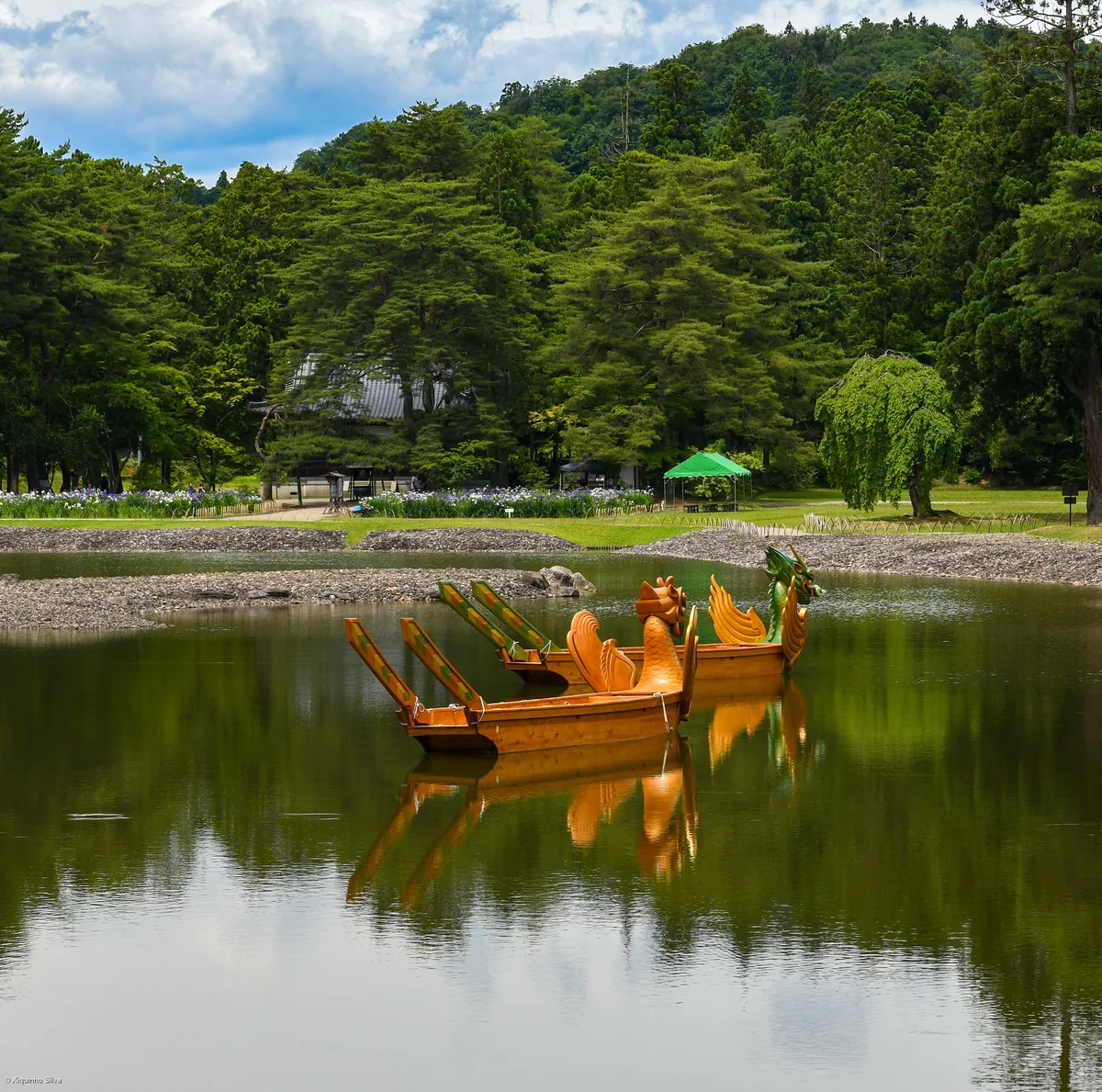
Motsu-ji is only a 10-minute walk from the station, yet sit-down vegetarian options are fewer there than near the approach roads, making a mochi snack a practical backup.
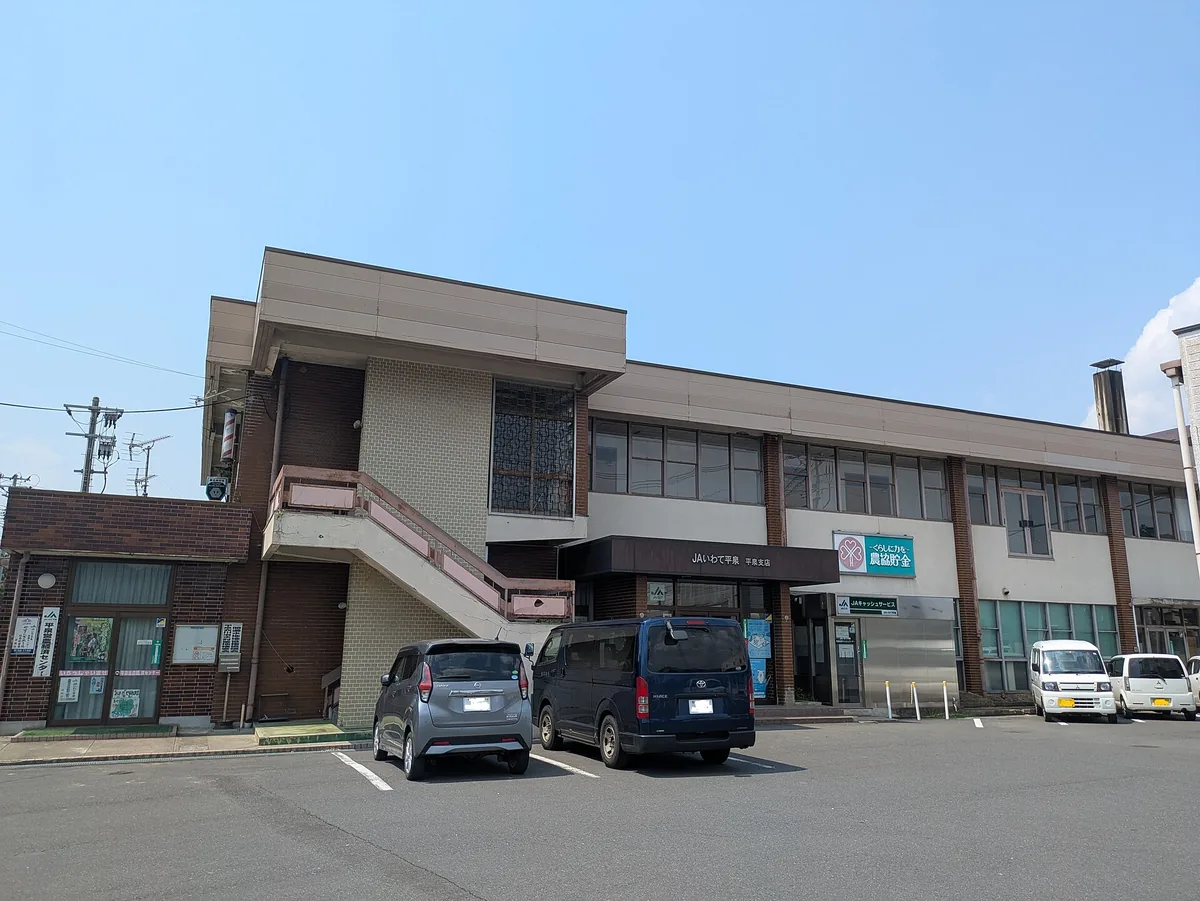
- Chuson-ji approach: several soba shops line the temple approach road.
- Motsu-ji area: fewer sit-down options near the Pure Land Garden; keep a mochi snack as backup.
- Station area: Kameya offers a fast, affordable bowl near Hiraizumi Station.
Mochi and Fermented Foods Beyond Soba
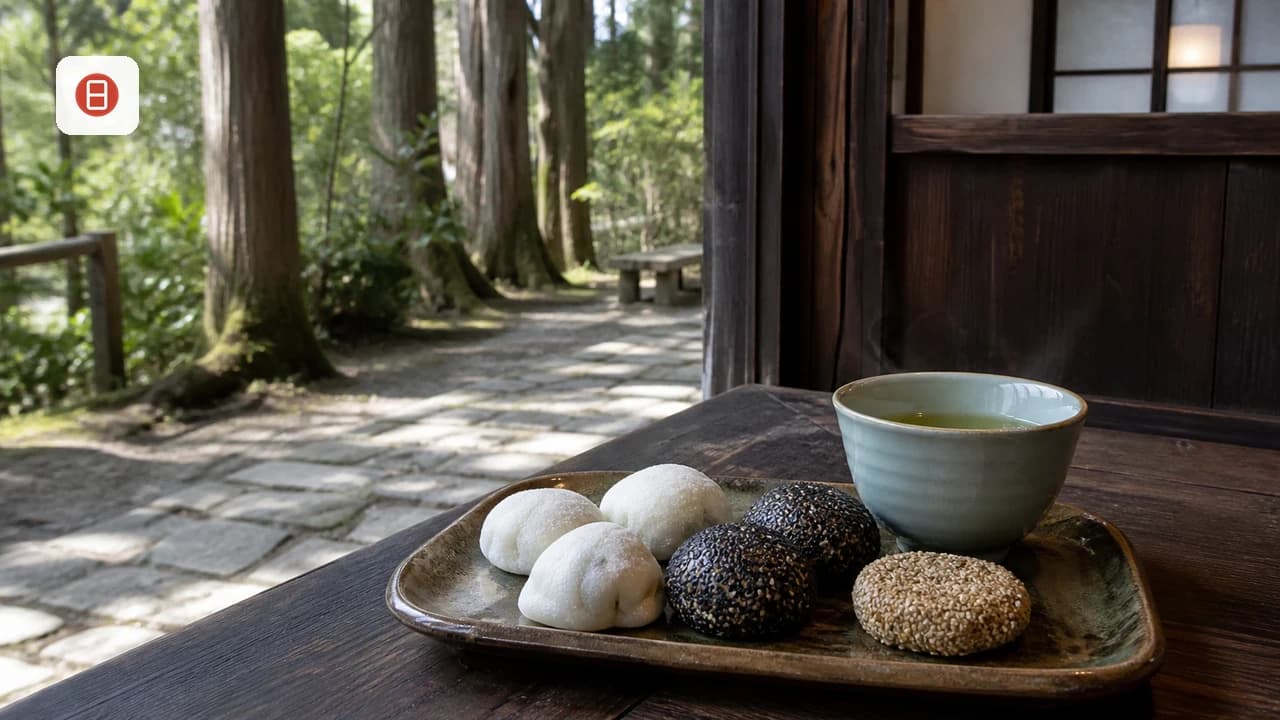
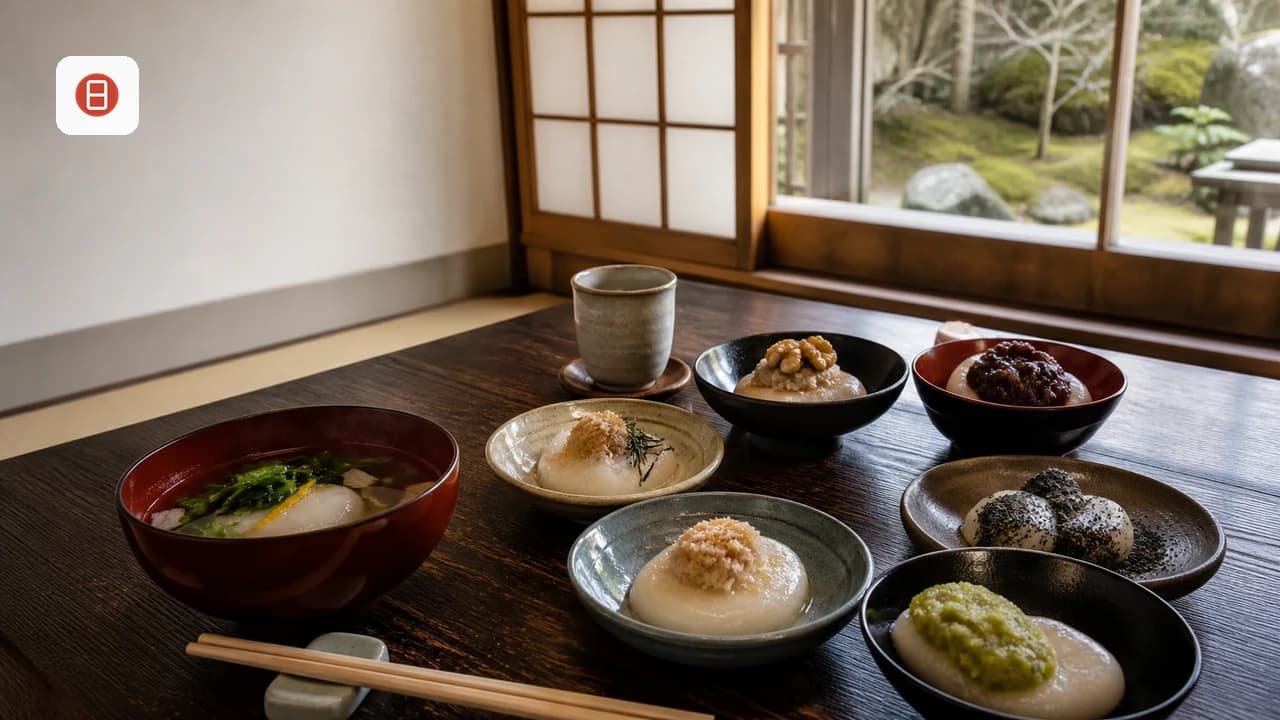
Mochi is Hiraizumi's other signature food, and it doubles as a practical energy source for a day spent walking between temples. Pounded rice cakes are naturally vegetarian, though not every flavor is safe by default. For a deeper dive into the region's rice-cake culture, local mochi cuisine covers the full range of shops and styles. Pair a soba lunch with something from Hiraizumi's sweets and cafés for a dessert that does not depend on asking about stock.
- Zunda, anko, and kurumi mochi may be plant-based, but confirm sweeteners, sauces, and shared preparation.
- Ginger-flavored mochi can include dashi or a fish-derived seasoning.
- Shrimp or seafood mochi varieties are not vegetarian.
- When unsure of a savory flavor, ask directly, or default to a sweet filling.
Practical Logistics: Phrases, Hours, and a Survival Checklist
Two Japanese phrases cover most ordering situations. Dashi wa sakana desu ka? asks whether the stock is made from fish. Niku to sakana wo taberaremasen states that meat and fish cannot be eaten. This direct phrasing works better than asking if a dish contains fish, since dashi is often not treated as an ingredient by kitchen staff. Timing matters as much as vocabulary. Many temple-side shops close by 4:00 or 5:00 pm, well before a typical dinner hour. Plan soba or shojin ryori as a lunch, not a late meal, near Chuson-ji or Motsu-ji.
With most shops closing by 4:00 or 5:00 pm and walking between temples taking 10 to 25 minutes, eating near the station before exploring ensures you don't get stranded without options.
- Save or print the two key phrases above before arriving.
- Ask about tsuyu and dashi before ordering, not after the bowl arrives.
- Plan temple-area meals for lunch; most shops close by 4:00-5:00 pm.
- Carry a mochi snack as backup near Motsu-ji, where sit-down options are limited.
- Budget separately for a soba lunch and a shojin ryori splurge rather than expecting one meal to cover both.
Mistakes to Avoid
A few recurring mistakes catch vegetarian travelers off guard in Hiraizumi. Vegetable tempura looks meat-free on the plate, but the accompanying hot noodle broth is often not vegetarian. Bowls are also commonly served with a fish cake garnish. Arriving in the late afternoon without a dinner plan is a second common mistake, since temple-area kitchens shut down early. Ordering wanko soba while expecting full control over the sauce is a third mistake. Ask how the tsuyu is served before the rhythm starts, not mid-meal.
- Don't assume vegetable tempura is automatically vegetarian; check the broth and any fish cake garnish separately.
- Don't plan a late dinner near Chuson-ji or Motsu-ji; most kitchens close by 4:00-5:00 pm.
- Don't order wanko soba without asking how the tsuyu is served.
- Don't skip mochi as a backup snack near Motsu-ji, where sit-down options thin out.
A Vegetarian-Friendly Walking Route Between the Temples
Plan food around Hiraizumi Station, rather than treating each temple as a separate dining stop. The station sits between the two main sites and is the best place to resolve a meal before the smaller temple-area shops close.
From Hiraizumi Station, Motsu-ji is roughly a 10-minute walk. Chuson-ji is about 25 minutes on foot from the station, with a climb on the temple approach. Walking directly between Motsu-ji and Chuson-ji takes longer, so it is wise to eat or buy a snack before starting the second site.
- Arriving before lunch: stop near the station, then walk to Motsu-ji first.
- Visiting Chuson-ji first: eat before the approach or carry sweet mochi for later.
- Finishing after 4:00 pm: do not rely on temple-side kitchens still being open.
This route also makes sauce questions easier. Ask about fish-free dashi at a station-area soba stop while you still have time to choose another option. Keep a sweet anko, zunda, or walnut mochi snack for the stretch between sites.
How This Guide Was Verified
Food availability, access details, seasonal rules, and the time-sensitive claims in this guide were checked on August 22, 2026 against the official sources below. Independent restaurant menus, prices, opening days, and sell-outs can change, so confirm the operator's same-day notice before making a special trip.
Frequently Asked Questions
Is soba in Hiraizumi vegetarian?
Not by default. Tsuyu commonly contains fish, many noodles combine buckwheat with wheat, and shared preparation matters for allergies. Ask whether the shop can confirm a suitable sauce and preparation before ordering.
What is shojin ryori, and where can travelers find it near Hiraizumi's temples?
Shojin ryori is Buddhist monastic cuisine, but temple history does not prove that a nearby restaurant serves it. The current official Hiraizumi listings reviewed here do not establish a standard temple meal or fixed price, so book only through a named venue that confirms the menu.
Is wanko soba a good option for vegetarians?
Wanko soba can work, but it needs more caution than a regular bowl. Many services pre-pour the tsuyu into each small bowl before the meal starts. Confirm how the sauce is prepared before the rhythm begins, since switching mid-meal is difficult.
Which Hiraizumi foods are vegetarian without special requests?
No prepared category is guaranteed. Sweet mochi, plain noodles, and goma-dofu can still involve animal-derived sauce, wheat, allergens, or shared equipment. Confirm the finished dish with the venue.
What time should travelers plan a vegetarian meal near the temples?
Plan lunch, not dinner, around Chuson-ji and Motsu-ji. Many temple-side shops close by 4:00 or 5:00 pm, well before a typical dinner hour. Eating earlier also avoids relying on a mochi snack as a backup meal near Motsu-ji later in the day.
Free guide: Japan's Hidden Gems
12 under-the-radar places beyond Tokyo & Kyoto — with the best season to visit each and a local tip you won't find in the guidebooks.
You might also like

Continue reading
More guides you'll find useful