

Vegetarian Food in Japanese Alps Huts
Plan vegetarian or vegan meals in Japanese Alps mountain huts with advance-contact advice, dashi cautions, backup food, and self-catering trade-offs.
On this page
Last updated August 2026. Vegetarian food in Japan Alps huts is achievable, but it depends on planning the request before you leave home rather than browsing options on arrival. Yamagoya cook one set dinner and one set breakfast for every guest each night, so this guide covers booking timelines, the hidden dashi problem, and when to carry backup food instead of relying on the hut kitchen.
Vegetarian Food in Japan Alps Huts: The Quick Answer
Eating vegetarian in the Japan Alps huts is realistic for most trekkers who plan ahead of arrival. Huts cook a single set meal for the entire guest list each night, so a meat-free plate depends on advance notice rather than a menu choice at the table. Three practical paths cover most itineraries, and combining more than one path is often the safest strategy on a multi-day traverse. None of the three requires fluent Japanese, but all three reward planning done before the trailhead rather than at the hut counter.
- Pre-booked hut meals: flag dietary needs when you reserve, then confirm again at check-in.
- Self-catering at tent sites: carry a stove, fuel, and dehydrated meals so the hut kitchen becomes optional.
- Backup provisions: pack dried fruit, nuts, and instant noodles in case a hut kitchen cannot adjust that night.
Yamagoya Dining Culture: How Mountain Hut Kitchens Work
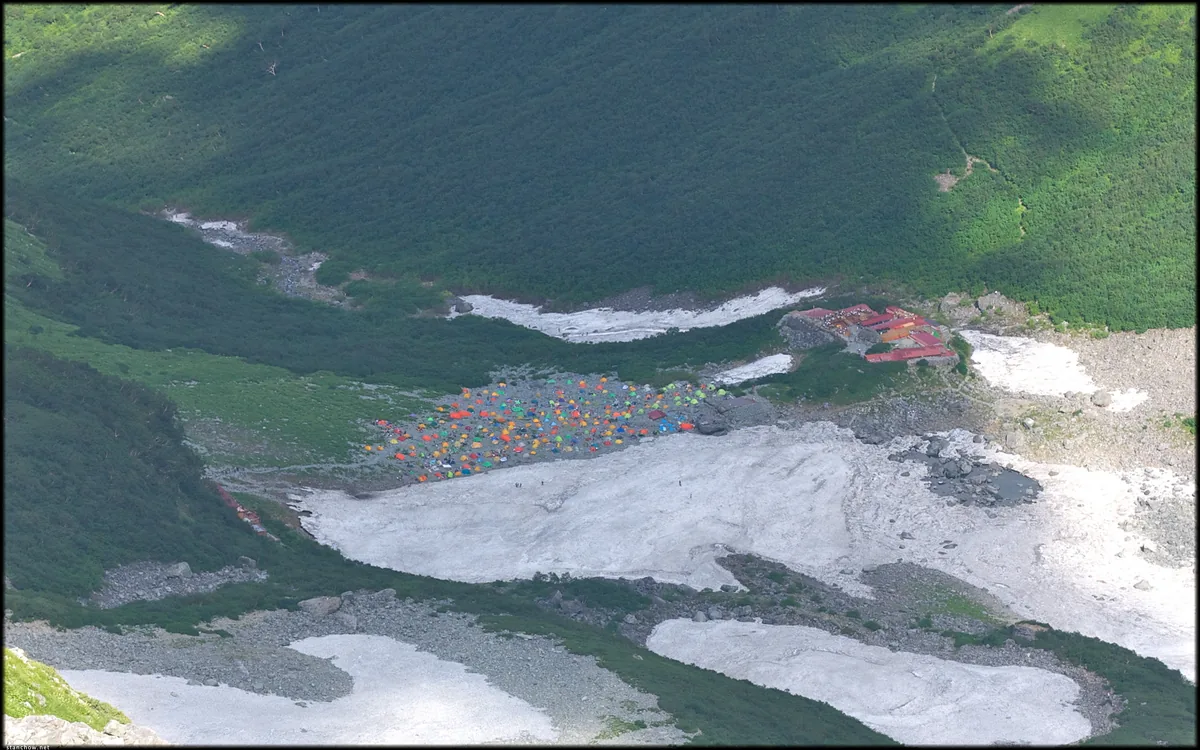
Mountain huts across the Japan Alps run on a fixed schedule, not an à la carte kitchen. Dinner typically starts around 5:00 PM and breakfast around 5:00 AM, timed around early departures for the next stage of trail. Standard fare leans toward curry rice, tonkatsu, grilled fish, and miso soup, cooked in bulk for the number of guests confirmed at check-in. Supplies arrive by helicopter or porter rather than a daily delivery truck. A hut kitchen therefore works from a fixed inventory instead of restocking mid-week the way a valley restaurant can. Staff plan portions and ingredients days ahead based on the confirmed headcount. That planning cycle is exactly why a dietary change needs advance notice rather than a request made at the dinner table. Showing up and asking the cook to improvise puts the whole kitchen's supply math at risk, not just your own plate. For a closer look at what a typical set meal contains, see mountain hut meal patterns.
Booking Vegetarian Meals: Step-by-Step Logistics
Advance notice is the single biggest factor in getting a meat-free plate. Treat 48 hours before arrival as the absolute minimum, and a full week ahead as the safer target when a hut only takes phone reservations. Huts deep in the backcountry, supplied mainly by porter rather than road access, generally need the longer end of that window. Booking methods vary hut by hut, so confirm the current reservation process directly with each hut before you go. Language matters as much as timing. Stating that you do not eat meat or fish is niku to sakana wa tabemasen. Saying you can eat dashi is dashi wa daijoubu desu, and the two are different requests. Dashi is fish-based stock hidden in miso soup, simmered vegetables, and most sauces. Bring both phrases written in Japanese, because a cook working from a printed reservation sheet needs the distinction spelled out rather than translated on the spot. Referencing shojin ryori, the traditional Buddhist no-meat-no-fish cooking style, can also help a hut cook understand the request quickly, even though few huts actually serve it. Realistic expectations help too. A hut's version of a vegetarian plate is usually the same set meal with the meat or fish course swapped out. Expect extra tofu, pickles, and rice, rather than a separate dish built from scratch for one guest. For tips on carrying your own backup meals alongside hut food, see packing hiking bento boxes.
Self-Catering vs Hut Meals: Cost and Weight Trade-offs
Cost and weight pull in opposite directions on this decision. Booking hut dinner and breakfast costs more than carrying the same weight in dehydrated meals. It also removes the need to haul a stove, fuel canister, and several days of food up the trail. Exact supplement pricing varies by hut and by season. Check the individual hut's website or call ahead for the current 2026 rate before you budget the trip. Self-catering shifts that cost into pack weight instead, and a few staples make the trade-off easier to manage. Access to hut kitchens is not guaranteed for hikers who are not staying overnight. Some huts let day-trekkers boil water on a hut burner, sometimes for a small fee. This policy is set hut by hut and should never be assumed, so ask staff directly when you arrive. Waste management follows one consistent rule across the range. Huts expect you to carry out your own food scraps and packaging rather than leaving them behind, since there is no daily trash collection at altitude. Planning meals around local mountain cuisine traditions can help you pack lighter without sacrificing calories.
- Kansou yasai (dried vegetables): light, long-lasting, and easy to rehydrate at camp.
- Instant miso soup packets: check the label or ask, since many contain dashi by default.
- Dehydrated rice or noodles: pair with your own vegetable and protein additions.
- A resealable trash bag: for carrying out every wrapper and food scrap you generate.
Regional Differences: North Alps vs South Alps Hut Food
Hut food logistics differ across the range. In the North Alps, around Kamikochi and the Yarigatake corridor, hut traffic is heaviest and kitchens tend to be better staffed. Higher guest volume gives these huts more reason to keep a flexible pantry, which generally improves the odds of a real vegetarian substitution rather than a bare rice bowl. South Alps huts run smaller, more remote operations, often with a single cook managing the entire kitchen for the night. Carrying your own food becomes the more dependable option in that region instead of a fallback plan. A lone cook has less room to improvise for one guest's request on top of the standard headcount. Both regions sit inside the wider regional food and dining guide, which maps hut and valley options together.
Dinner at 5:00 PM and breakfast around 5:00 AM represent the fixed schedule that challenges single-cook South Alps kitchens more than better-staffed North Alps operations when handling last-minute vegetarian substitution requests.
| Factor | North Alps (Kamikochi/Yarigatake) | South Alps |
|---|---|---|
| Hut traffic | Heaviest on the range | Lighter and more remote |
| Kitchen staffing | Multiple cooks common | Often a single cook |
| Vegetarian request odds | Better chance of a real substitution | Depends on that week's cook |
| Self-catering need | Useful backup option | Often the more dependable plan |
Huts Known for Flexible Kitchens
A small number of huts have built reputations for handling dietary requests with more flexibility than a typical yamagoya kitchen. Tokusawa-en and Enzanso are two names that come up among trekkers researching meat-free options in the North Alps. Staffing and menu policy can change between seasons, so confirm directly with the hut when you book rather than assuming last year's flexibility still applies this season. Route planning matters as much as picking the right hut. Trekkers combining several huts on one route through the nearby Japan Alps attractions should send the same dietary note to every hut on the itinerary, not only the first night's stop. A hybrid approach works well on longer traverses. Rely on the more flexible huts for hot dinners, and carry self-catered backup for the smaller, more remote stops along the way.
Even huts with reputations for flexibility still require 48 hours before arrival as the absolute minimum, so trekkers should notify every planned stop rather than assuming flexibility eliminates the need for advance notice.
After the Trail: Recovery Meals in the Valleys
Coming off the trail, valley ryokans offer a different kind of meal than any yamagoya kitchen. Kaiseki dinners are built from a fixed multi-course sequence, so a vegetarian version still needs advance notice, just like a hut reservation. Contacting the ryokan when you book, rather than at check-in, gives the kitchen time to plan substitutions for the fish and meat courses that anchor a standard kaiseki set. Referencing shojin ryori again can help here, since it gives ryokan staff a familiar culinary term for a no-meat-no-fish request rather than a list of individual exclusions. This advance-notice principle carries from the huts straight into the valley. Give the ryokan reservation the same lead time you gave huts higher on the route. For guidance on requesting a meat-free kaiseki course, see valley ryokan kaiseki dinners.
How This Guide Was Verified
Mountain-hut meal patterns and hiking logistics were checked on August 22, 2026 against official national-parks and Nagano tourism guidance. Individual huts set their own menus, water policies, and dietary limits.
Frequently Asked Questions
Can I get vegan meals in Japan Alps huts?
Vegan requests are harder than vegetarian ones because huts need to avoid dashi, eggs, and dairy at the same time. Most hut kitchens can drop meat and fish with enough notice, but a fully vegan plate depends on the cook's ingredients that week. Confirm directly with the hut before booking, and ask specifically about eggs and dairy in side dishes, not only the main course. Pack backup snacks in case the kitchen cannot fully accommodate the request.
Do huts sell vegetarian snacks?
Most hut shops stock a small selection of packaged snacks alongside meals. Nuts, chocolate bars, and dried fruit are common finds. Some huts carry fresh fruit too, when supply runs allow it. Treat these as a supplement to your own food, since stock varies by hut and by how recently supplies arrived by helicopter or porter.
Is the tap water safe to drink at Japan Alps huts?
Water source matters more than the tap itself. Huts fed by mountain spring water are generally reliable for drinking, while huts that collect rainwater should be treated with more caution. Ask staff which water source the hut uses when you check in. Carry a filter or purification tablets as backup on longer routes, especially above huts with limited spring access.
What if I arrive at a hut without a reservation?
Arriving without a reservation is possible, but a hut may not have a meal ready for you, especially if it is near capacity that night. Staff can sometimes fit in an extra guest or sell instant noodles and packaged food from the shop. Otherwise, staff can point you toward the nearest hut with space. Carrying backup food for at least one unplanned night is the safer approach on any multi-day route, vegetarian or not.
Free guide: Japan's Hidden Gems
12 under-the-radar places beyond Tokyo & Kyoto — with the best season to visit each and a local tip you won't find in the guidebooks.
You might also like


Continue reading
More guides you'll find useful


