Lake Shinji Shijimi Clams: Matsue's Famous Shellfish
Learn why Lake Shinji's Yamato shijimi clams matter in Matsue, where to watch the fishing boats, how to order shijimi-jiru, and what to buy to take home.
On this page
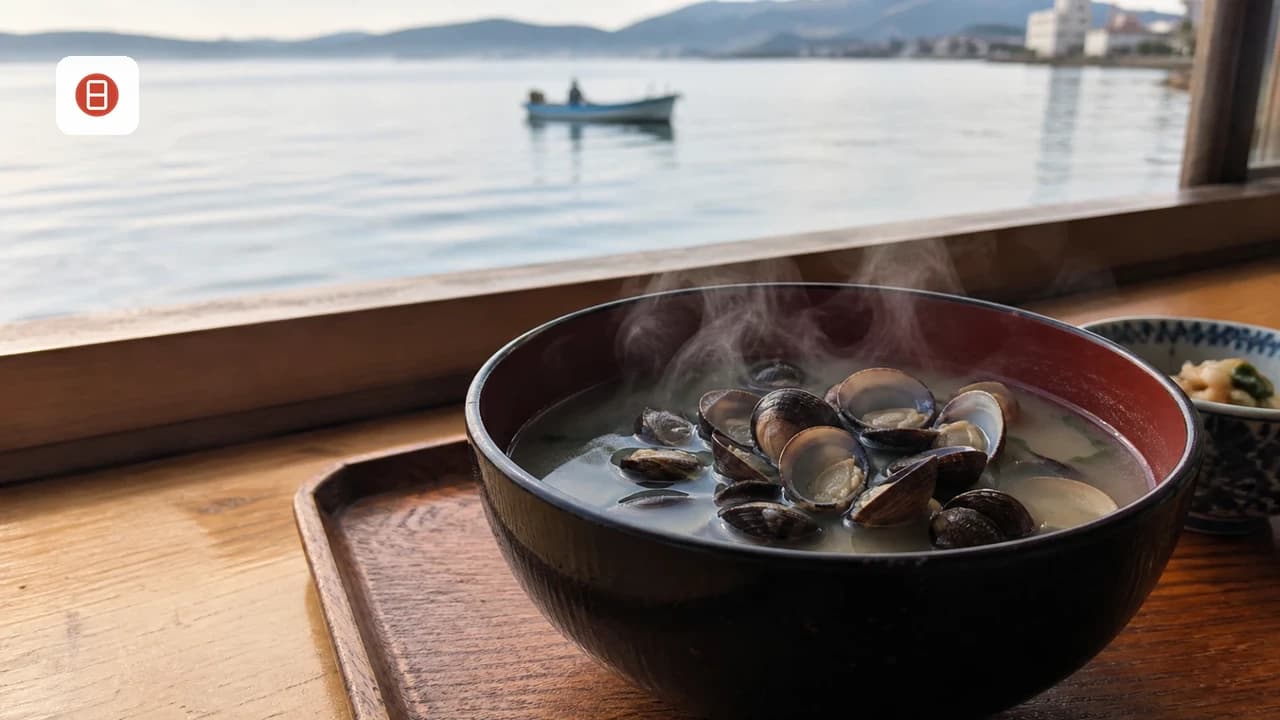
Last updated August 2026. Lake Shinji shijimi clams are the ingredient most associated with Matsue's food scene, harvested most mornings from the brackish lake just west of Matsue Castle. Ryokan breakfasts, station kiosks, and lakeside restaurants all build a dish around this small black-shelled clam, known locally as Yamato shijimi. This guide covers where to watch the fishing boats, how the soup changes by season, and which packaged versions travel well as a souvenir.
Why Lake Shinji Shijimi Clams Are Unique
Yamato shijimi (Corbicula japonica) grow larger than most other shijimi varieties in Japan, with black shells and a firm, sweet meat. Lake Shinji sits at the lower reaches of the Hii River, and saltwater flowing in through the Ohashi River gives the lake its brackish chemistry. That mix of fresh and salt water shapes the clam's flavor. MAFF's regional cuisine profile also credits Lake Shinji as Japan's seventh-largest brackish lake fishery. Shijimi filter the lake as they feed, and the resulting water quality helps support the other fish and shellfish that share the habitat. Shijimi rank alongside sea bass, eel, moroge shrimp, smelt, carp, and whitebait as the Seven Delicacies of Lake Shinji. For the other six specialties, see the San'in food guide. A smaller shijimi fishery also operates at Jinzai Lake in Izumo City, though Lake Shinji remains the larger and better-known source. Older residents recall women pulling carts of shijimi through town each morning to sell door to door. That scene was once as familiar as Tokyo's natto sellers or Kyoto's tofu vendors.
- Species: Yamato shijimi (Corbicula japonica)
- Lake rank: Japan's seventh-largest brackish lake, per MAFF
- Active fishers: about 300 working Lake Shinji
- Annual catch: Visit Matsue reports roughly 6,000 tons from Lake Shinji
The Shijimi Morning: Watching Lake Shinji's Fishing Boats
Early risers can watch the shijimi fleet work the lake before most of Matsue wakes up. Fishers use a mix of harvesting methods. Some rake by hand from small boats. Others move under quiet engine power, and a few wade directly into the shallows. The small white boats spread across the lake, and the water stays quiet enough to hear a joren scrape the lakebed. Boats stay close to shore, so a short walk along the water is enough to see the harvest in progress. Skip a weekend visit if watching the boats is the priority, since the fleet does not typically go out then. The official Matsue tourism guide puts the lake's annual shijimi harvest at about 6,000 tons, among the largest hauls in Japan. Cyclists sometimes extend the morning with a ride across Eshima Ohashi Bridge, a lake crossing popular for its views. Afterward, the Shimane Art Museum on the lake's western shore is a natural next stop for sunset views, detailed in the Matsue attractions guide.
Visitors hoping to see the fishing boats should look early in the morning on Monday, Thursday, or Friday. The official tourism source does not promise a fixed 7:00–9:00 window, and weather can affect operations.
- Viewing spots: the Ohashi River and the eastern shore of Lake Shinji
- Typical window: early morning; no fixed public viewing time
- Active days: Monday, Thursday, and Friday, weather permitting
- Tool: a joren, a rake tethered to a basket
How to Eat Shijimi in Matsue: Soup, Season, and Modern Plates
Shijimi-jiru is the classic preparation and a familiar item on ryokan breakfast trays around Matsue and Tamatsukuri Onsen. Preparation shifts with the season: miso-based broth is common in winter, while a clearer sumashi-jiru style also appears, as described in the MAFF regional-cuisine notes. Shijimi contain the amino acid ornithine, but this guide does not make a claim that eating them treats or improves liver function. Beyond soup, the clams turn up in seasoned rice, simmered shigureni sides, pasta, and sake-steamed preparations. A sake-steamed version pairs naturally with a stop covered in the Matsue sake guide. The wider seafood scene around the lake is mapped in the Matsue Seafood Guide 2026: Lake Shinji's Seven Delicacies and Sea of Japan Catches.
Buyer's Guide: Shijimi Souvenirs and Processed Products
Fresh shijimi require cold storage and careful handling, while vacuum-packed and canned versions are more practical souvenirs. Follow the seller's storage, use-by, and preparation instructions for the exact product rather than applying one same-day rule to every fresh pack or one shelf life to every processed pack. Processed lines and fresh catch turn up across the Matsue food guide, alongside the rest of the city's specialty dishes. For gift shopping, check the current shijimi selection at the Shimane Local Products Center near Matsue Castle or Matsue Station, and verify whether a product is suitable for the journey home.
Fresh, Vacuum-Packed, or Canned: Choosing What to Bring Home
Trade-offs break down by format, not by brand, so match the pick to the trip. Anyone renting a kitchen can buy fresh clams only when the seller's storage and preparation guidance can be followed. Travelers packing for a flight may find shelf-stable products easier, but should still check the label and destination import rules.
The lake yields about 6,000 tons annually, but most serves local fresh consumption. Travelers rely on processed versions with 12 months shelf stability to access the fishery beyond Matsue.
| Feature | Fresh (Market) | Vacuum-Packed | Canned/Dried |
|---|---|---|---|
| Best for | Same-day cooking in a rental kitchen | Gifts to carry home | Long-term pantry storage |
| Flavor | Maximum texture and umami | Close to fresh, slightly muted | Best suited to dashi and extract |
| Portability | Low; needs cooling and quick use | High; shelf-stable for months | High; shelf-stable |
| Typical price | Varies by market vendor | About ¥350–¥500 per 100g–140g pack | About ¥350–¥500 per 100g–140g pack |
Getting to Lake Shinji and Mistakes to Avoid
Ichibata Electric Railway runs along the lake's north shore, with stops near Izumo Grand Shrine, the Momen Kaido historic district, Shinjiko Onsen, and Matsue Vogel Park. Momen Kaido, a historic cotton-trade street, is an easy detour on the same Ichibata line. JR West trains and city buses also reach central Matsue and the lakefront. Retail shijimi packs generally run ¥350 to ¥500 for 100g to 140g, based on current 2026 pricing from Kokuyo Suisan and Hirano Kanzume. Restaurants rarely itemize a bowl of shijimi-jiru on its own. It typically comes bundled into a ryokan breakfast or teishoku set, so check the set price rather than expect a standalone menu line.
- Do not overcook. Pull the pot off the heat the moment the shells open.
- Do not plan boat-watching around a weekend. The fleet is normally out Monday, Thursday, and Friday mornings only.
- Check for sand-out (sunuki) status on fresh clams. Most pre-packaged retail versions are already purged.
- Follow the seller's instructions for purging, refrigeration, and cooking; methods can differ by product.
How to Choose Fresh Lake Shinji Shijimi
Buy fresh shijimi from a seller who identifies the source and states whether the clams have been sand-purged. Ask the seller how to keep, purge, and cook that batch; do not rely on a shell-tap test or a universal overnight-soak rule as a safety check.
- Choose pre-cleaned, or sunuki, clams for the simplest rental-kitchen meal.
- Keep fresh clams at the temperature instructed by the seller and observe the stated use-by period.
- Choose a labeled shelf-stable product if refrigeration is impractical during travel.
How This Guide Was Verified
Food availability, access details, seasonal rules, and the time-sensitive claims in this guide were checked on August 22, 2026 against the official sources below. Independent restaurant menus, prices, opening days, and sell-outs can change, so confirm the operator's same-day notice before making a special trip.
Frequently Asked Questions
When can you see the shijimi fishing boats on Lake Shinji?
Visit Matsue describes fishing on Monday, Thursday, and Friday in the early morning, weather permitting. It does not publish a guaranteed 7:00–9:00 viewing window, so treat sightings as weather- and operation-dependent.
What is shijimi-jiru and when will you find it on a menu?
Shijimi-jiru is a miso or clear-broth soup built around Yamato shijimi clams, and it is a standard item on ryokan breakfast trays in Matsue and Tamatsukuri Onsen. Miso-based broth is more common in winter, while a clearer sumashi-jiru style is typical in summer.
How much does shijimi cost in Matsue?
Retail packs from producers such as Kokuyo Suisan and Hirano Kanzume run about ¥350 to ¥500 for 100g to 140g. Restaurant bowls are usually included in a set breakfast or teishoku price rather than sold as a standalone item, so check the set menu instead of a per-bowl price.
Is Lake Shinji shijimi really good for the liver?
Shijimi contain ornithine, but this guide does not claim that eating the clams treats, protects, or improves liver function. Anyone seeking health guidance should use a qualified medical source rather than local food tradition.
Do fresh shijimi need to be purged of sand before cooking?
Some packs are sold already sand-purged, or sunuki, while others require preparation. Follow the seller's or package's instructions for the exact product rather than applying a universal overnight-soak method.
Where should you buy shijimi to take home?
The Shimane Local Products Center near Matsue Castle and the shops at Matsue Station both stock vacuum-packed and canned shijimi. Vacuum-packed versions from producers like Kokuyo Suisan keep for about 12 months at ambient temperature, which makes them practical for checked luggage.
How long does shijimi keep after you buy it?
Storage life depends on whether the clams are fresh, frozen, vacuum-packed, or canned. Follow the seller's temperature guidance and the package use-by or best-before date; do not assume one same-day or 12-month rule applies to every product.
Free guide: Japan's Hidden Gems
12 under-the-radar places beyond Tokyo & Kyoto — with the best season to visit each and a local tip you won't find in the guidebooks.
You might also like


Continue reading
More guides you'll find useful