Nagasaki Prefectural Art Museum: Kengo Kuma Architecture & Guide
Plan your visit to the Nagasaki Prefectural Art Museum. Explore the Kengo Kuma design, the Suma Collection of Spanish art, and the roof garden.
On this page
Last updated October 2026: the Nagasaki Prefectural Art Museum sits at 2-1 Dejima-machi, beside the canal and harbor, and opened in 2005. Kengo Kuma designed it as two buildings joined by a glass corridor over water. Inside, you get Spanish masters from the Suma Collection and art tied to Nagasaki, plus a free roof garden above the port.
Nagasaki Prefectural Art Museum at a Glance
Nagasaki Prefectural Art Museum opened in 2005 and forms part of Nagasaki Seaside Park. Architect Kengo Kuma split it into two buildings with a small canal running between them. Visitors cross from one side to the other on a glass-enclosed corridor. Local writers describe the idea as a "living" or "breathing" art space. That means a gallery that doubles as a community hub, not a sealed box.
The museum answers three questions at once. Do you want a serious Spanish art collection in an unexpected place? Do you want a Kuma building you can walk through and photograph? Do you want a free harbor view without a ticket? A yes to any of them justifies the detour. Spend extra time here if you like architecture, because the building is half the attraction.
If you are building a city route, start with our Nagasaki attractions overview. This museum fits a slow waterfront afternoon better than a rushed day of sightseeing. Its listing on Art Platform Japan confirms the address and links to the national collections search.
- Address: 2-1 Dejima-machi, Nagasaki City
- Opened: 2005
- Hours: 10:00 to 20:00
- Permanent collection ticket: ¥400 per adult (listed as of June 2019)
- Free areas: the building itself, including the roof garden and shop
- Closed: second and fourth Mondays, plus December 29 to January 1
The Architecture of Kengo Kuma
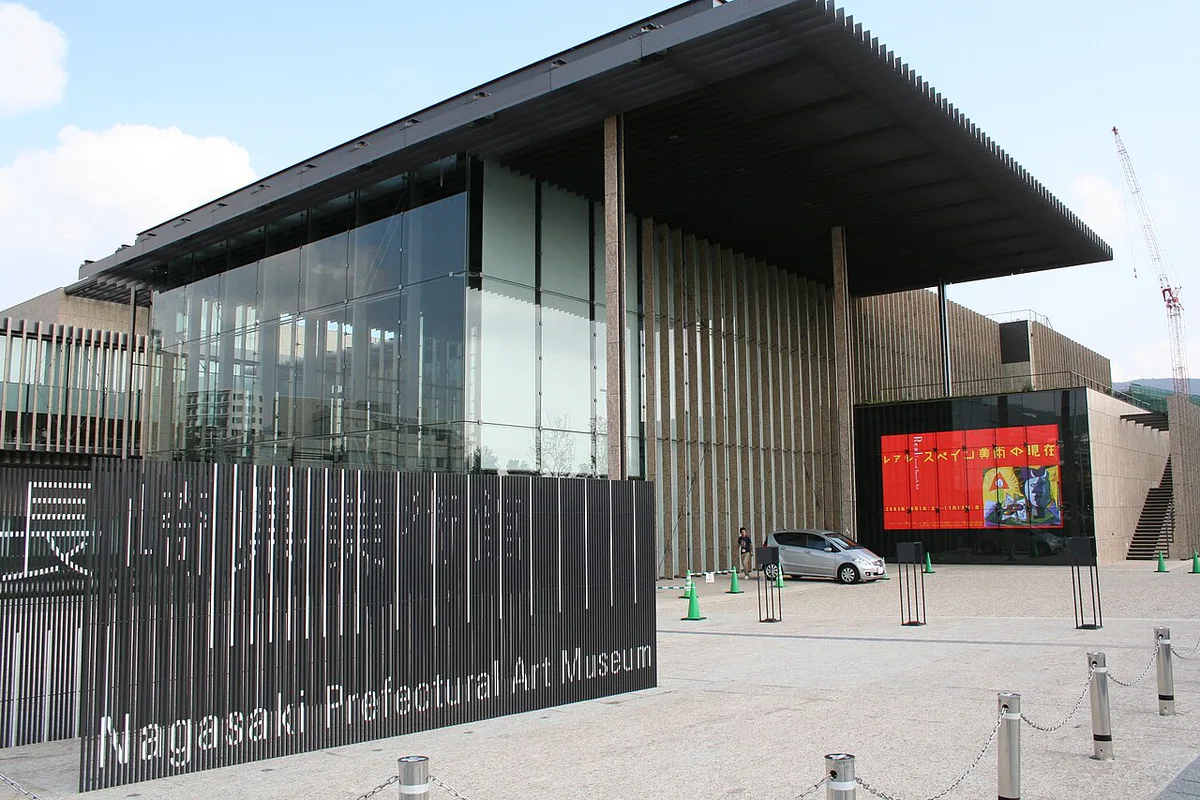
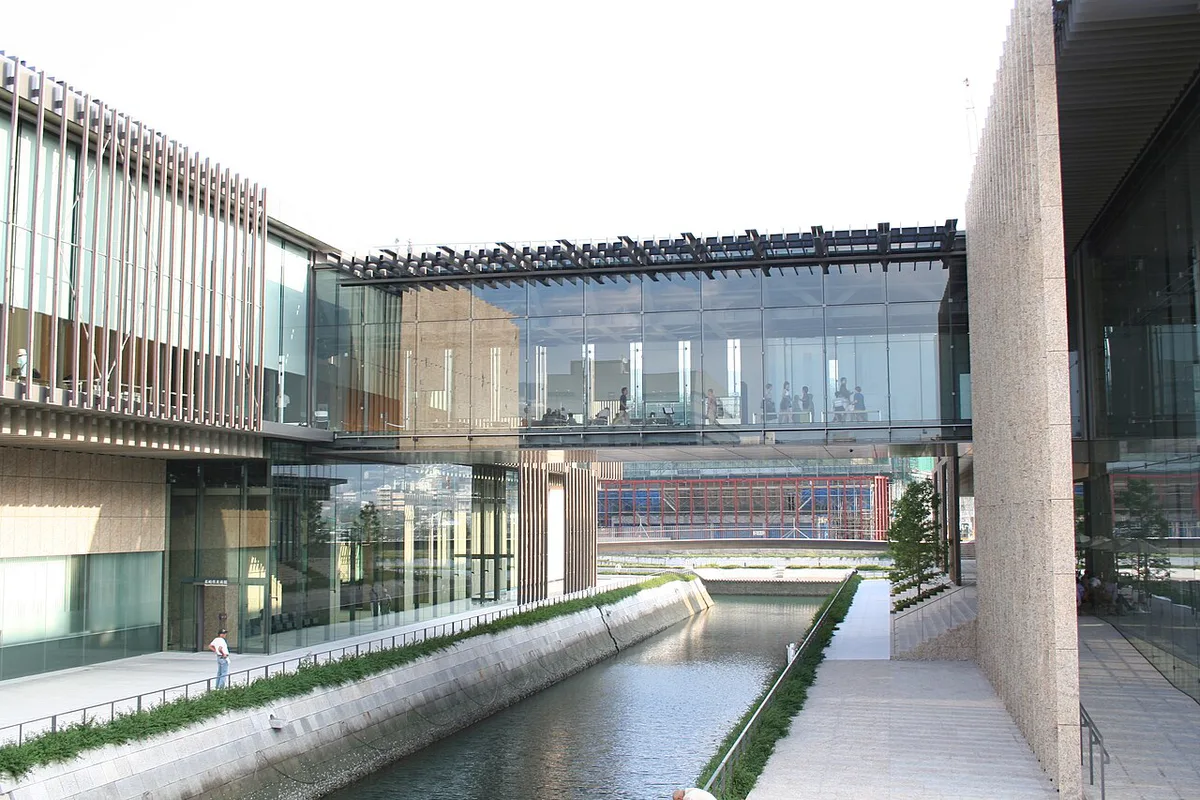
Start outside, because the layout explains the visit. Two buildings face each other across a narrow canal. One is the Gallery Building. The other is the Art Museum Building. Between them, a glass-walled bridge corridor lets you cross while still looking down at the water.
Kuma's idea of a "breathing" museum shows up in how the building treats its surroundings. Water runs through the footprint instead of stopping at the walls. Glass curtain walls let harbor light and canal reflections into the public areas. Granite cladding ties the structure to the stone character of the waterfront park. According to the IN Places city guide, the frame is steel and reinforced concrete.
This matters for navigation. Many first-timers expect one entrance and one corridor. Here you move across a canal, so the route has a sense of crossing. Stay on the public side first and look at how the glass doubles the water. Then decide which building you want to enter.
- Two buildings: Gallery Building and Art Museum Building
- Connection: glass bridge corridor across the canal
- Materials: steel frame, reinforced concrete, glass curtain walls, granite cladding
- Setting: part of Nagasaki Seaside Park, near Dejima
The Permanent Collection: From Nagasaki to Spain
Two collecting threads define the permanent displays. The first is modern and contemporary art related to Nagasaki. That includes works by artists born in the city and pieces themed on its history. The second is Spanish art, and it is the reason many specialists make the trip.
The SHŪZŌ listing shows 5,230 records, yet displays rotate, so a catalogued work may be in storage.
Fun Japan describes a collection of about 7,000 items overall. The Spanish works came through Yakichirou Suma, a Japanese diplomat posted in China and Spain. The Suma Collection is why Picasso, Miró, and Dalí appear in a port city in Kyushu. IN Places calls it one of the largest holdings of Spanish art in Japan.
The collection exhibition sits on the second floor of the museum building, next to the planned exhibition room. Fun Japan calls the collection exhibition especially worthwhile. It also mentions Japanese-style paintings, such as hanging scrolls and folding screens. Displays rotate several times a year, so no two visits are identical.
Before you go, check the official museum site for current exhibitions. Art Platform Japan also links to the SHŪZŌ Japanese Museum Collections Search, where it lists 5,230 records for this museum. Search it if you want to confirm specific works. A listing is not a guarantee that a piece is on the wall that day.
- Suma Collection: Spanish works gathered by diplomat Yakichirou Suma
- Spanish names to look for: Picasso, Miró, Dalí
- Nagasaki focus: artists born in the city and works themed on its history
- Japanese-style paintings: hanging scrolls and folding screens
- Rotation: displays change several times a year
The Roof Garden and Bridge Corridor Cafe
Take time over the non-gallery spaces. The roof garden is open to visitors and looks over Nagasaki Port, where ships come and go in daylight. In the evening, the view shifts to the lights around Nagasaki Bay. Fun Japan describes it as a panoramic night view.
The bridge corridor holds a cafe above the canal. Fun Japan says it serves dishes made from local prefectural ingredients, with water glittering outside during the day. That is a practical lunch or coffee stop between galleries. Cards work at the cafe, according to the same source, but check current payment details on arrival.
For photography, there are two clear choices. Midday gives you the clearest harbor view and the strongest reflections on the canal glass. Evening gives you the lit bay. The museum stays open until 20:00, so you can see both in one longer visit. A weekday visit usually means fewer people at the railings.
Weather matters on the roof. Wind and rain make an open garden less pleasant, so our guide to the Best Time To Visit Nagasaki: Weather By Month & Guide helps with timing. On a wet day, switch your plan: galleries first, corridor cafe next, roof garden only if the rain stops.
Hours, Admission, and Getting There
Opening hours run from 10:00 to 20:00. Regular closures fall on the second and fourth Monday of each month. If one of those Mondays is a national or substitute holiday, the museum closes the next day, Tuesday. It also closes for the New Year period, December 29 to January 1.
Admission splits into free and paid. The building itself is free to enter. Planned exhibitions and the collection exhibition require a ticket. Fun Japan listed the permanent collection at ¥400 per adult as of June 2019. Treat that as a baseline and confirm the current rate on the official site. Special exhibitions are priced separately, so check the exhibition page before you commit.
At the ticket counter, Fun Japan reported that credit cards were not accepted. The shop and cafes did take major cards. That report is from 2019, so carry yen cash for the ticket anyway.
Getting there is simple. Take the Nagasaki Electric Tramway from JR Nagasaki Station to Dejima. The ride takes about 4 minutes. From Dejima station, walk about 3 minutes to the museum. The Medical Center station is closer, at about 2 minutes on foot. Tram stop names can change, so confirm the label on the tram display.
- Tram: JR Nagasaki Station to Dejima, about 4 minutes
- Walk from Dejima station: about 3 minutes
- Walk from Medical Center station: about 2 minutes
- Ticket payment: bring yen cash (cards not accepted at the counter in 2019)
- Shop and cafe: major cards accepted per the 2019 listing
Pairing the Museum With the Waterfront
The museum works best as one stop in a waterfront day. Dejima-machi is the district where it sits, and Fun Japan lists a feature on Dejima Island as related reading. Nagasaki Seaside Park is the setting around the building. A short walk after the galleries makes a natural cooldown.
If you are traveling with children, plan the day differently. Art galleries tend to be a stretch for small kids. Pair a shorter gallery visit with the Nagasaki Penguin Aquarium afterward. Alternatively, choose the Nagasaki Bio Park for an animal-focused outing. Verify each venue's hours on its official page before you build the day.
Some readers arrive from the Atomic Bomb Museum and Peace Park. This museum is a sharp tonal change from those sites. Some travelers prefer to separate the two, giving each a different half-day. In our editorial assessment, the art museum suits the late afternoon, when the roof garden is at its best.
For a longer stay, a harbor-side evening pairs well with an overnight base. Our list of the 9 Best Ryokan in Nagasaki: Top Onsen & Traditional Stays (2026) covers where to sleep. If you have another day, 14 Best Day Trips and Planning Tips from Nagasaki (2026) take you beyond the port. Broader Japan planning lives in the Japan Travel Guide: Plan Your Trip with Expert Tips & Itineraries.
Practical Tips and Mistakes to Avoid
The biggest mistake is assuming the whole building needs a ticket. The building is free to enter, and Fun Japan notes that only planned exhibitions and the collection exhibition charge admission. The roof garden and shop therefore cost nothing. If your schedule is tight, you can enjoy the architecture and harbor view for free.
The ¥400 per adult as of June 2019 covers the collection, while the roof garden and shop cost nothing.
A second mistake is arriving on the wrong Monday. Closures fall on the second and fourth Monday. Check a calendar before you go, because a holiday Monday shifts the closure to Tuesday. Missing this costs you a wasted tram ride.
Third, do not skip the research step. Search the museum's records on SHŪZŌ before visiting if you want a particular work. Remember that displays rotate several times a year. A work in the database may be in storage.
Fourth, bring cash for the ticket. Cards worked at the shop and cafe in the 2019 listing, but not at the ticket window. Policies have shifted across Japan since then, so confirm on arrival.
Finally, leave time for the building itself. Cross the glass corridor slowly, step onto the roof garden, and look back at the canal. The architecture rewards people who treat it as an exhibit.
Frequently Asked Questions
How much does the Nagasaki Prefectural Art Museum cost?
The building is free to enter. Paid tickets apply to the collection exhibition and planned exhibitions. Fun Japan listed the permanent collection at ¥400 per adult as of June 2019. Confirm the current rate on the official museum site.
What are the opening hours and closing days?
The museum opens from 10:00 to 20:00. It closes on the second and fourth Monday of each month. A holiday Monday moves the closure to the next day. It also closes from December 29 to January 1.
How do I get to the museum from JR Nagasaki Station?
Take the Nagasaki Electric Tramway to Dejima. The ride takes about 4 minutes. From Dejima station, walk about 3 minutes. Medical Center station is about 2 minutes away on foot.
Why does Nagasaki have a Spanish art collection?
Yakichirou Suma, a Japanese diplomat posted in China and Spain, assembled the Spanish works. They form the Suma Collection. Picasso, Miró, and Dalí are among the names Fun Japan lists.
Can I visit the roof garden without buying a ticket?
Yes. The roof garden and shop are in the free-access part of the building. You can view Nagasaki Port by day. Evening visits show the bay lights, and the museum stays open until 20:00.
Free: The Nagasaki Essentials guide
Top things to do, where to stay, a perfect day plan, getting around, and the best time to go — a Nagasaki mini-guide you can take offline.
You might also like


Continue reading
More guides you'll find useful