14 Best Day Trips and Planning Tips from Nagasaki (2026)
Plan the 14 best day trips from Nagasaki with our guide to Shimabara, Gunkanjima, and the Goto Islands, including logistics, itineraries, and local tips.
On this page
Nagasaki is already one of Japan's most layered cities, but the real soul of the region lies beyond the harbor. Within two to three hours you can reach active volcanic springs, UNESCO-listed churches on remote islands, abandoned industrial ruins, and a Dutch theme park the size of a small town. This guide covers every major route out of Nagasaki City with transport details, entry costs, and practical tips updated for 2026.
We cover the classic six destinations that every SERP guide lists — Shimabara, Unzen, Arita, Sasebo, Huis Ten Bosch, and Gunkanjima — plus eight further trips for travelers with extra time. Ferry weather, Gunkanjima landing cancellation rates, and cruise dock logistics are covered in the FAQ at the bottom.
My Favorite Things to Do in Nagasaki City
Before heading out, spend a morning anchoring yourself in Nagasaki's layered identity. The Glover Garden sits above the harbor on the Minamiyamate slopes and contains several preserved colonial mansions including the former Glover House — the meeting point of Scottish merchant Thomas Glover and the rebel samurai who shaped the Meiji Restoration. Views across the harbor are exceptional at any hour.
The Nagasaki Atomic Bomb Museum is a half-day commitment, not a quick tick. Give yourself the full morning to move through the exhibits and walk next door to Peace Park. The Martyrdom Monument on Nishizaka Hill — where 26 Catholics were crucified in 1597 — is five minutes by tram from the Peace Park and rarely crowded.
For the evening, take the ropeway to Mount Inasa. The 333-meter summit is consistently ranked among Japan's top three night views. Arrive thirty minutes before sunset to watch the lights come on across the harbor and surrounding valleys.
Shimabara: Samurai History and Natural Springs
Shimabara is the most rewarding half-day trip from Nagasaki, combining a restored castle, living samurai streets, and a "city of water" fed by volcanic springs. The five-story white castle costs ¥540 to enter and is open daily from 09:00 to 17:30. Inside you can try on replica samurai armor, and the top floor gives clear views of Ariake Bay on calm days.
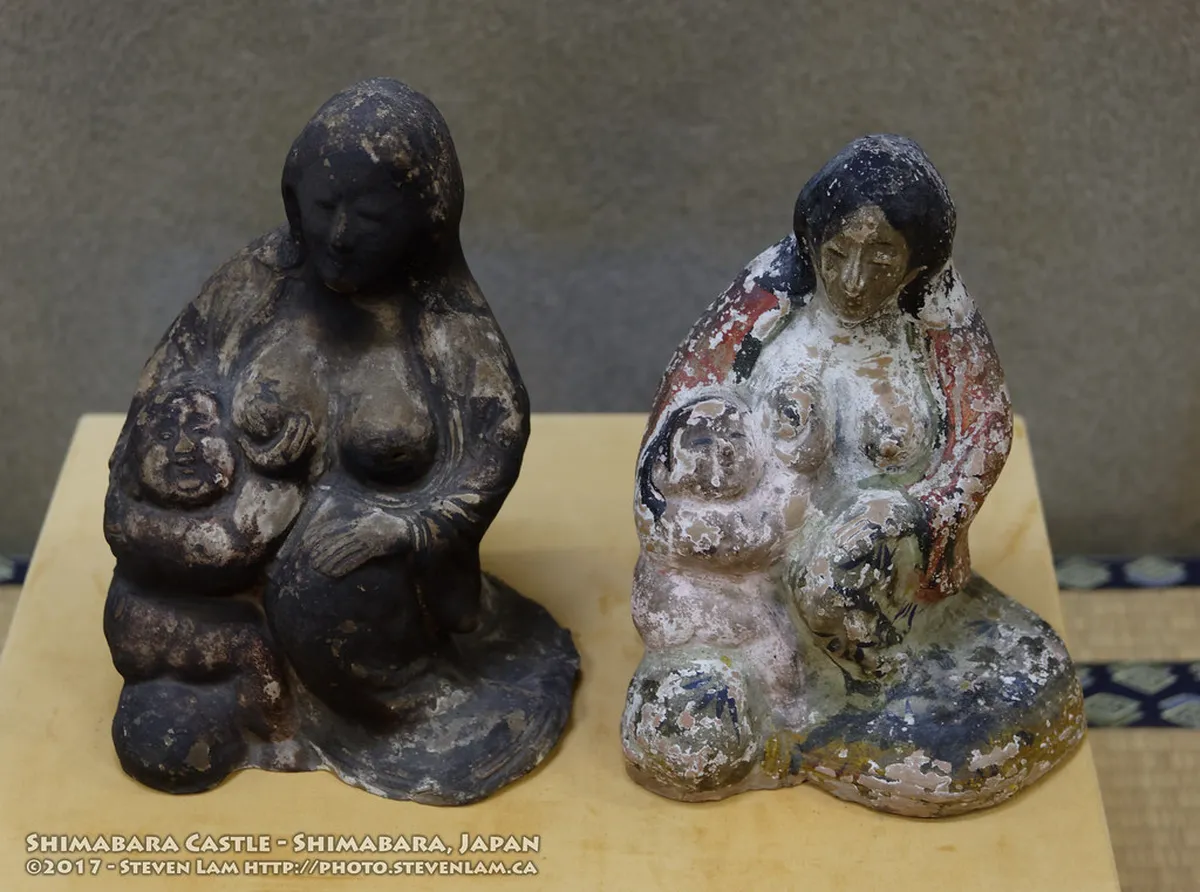
The Buke-Yashiki samurai district sits a ten-minute walk from the castle. Stone walls line the narrow lanes, and koi swim through the clear-water aqueducts that run between the houses. Several residences are open free of charge. The 1637–1638 Shimabara Rebellion — when persecuted Christians and overtaxed peasants rose against the local lord — gives the town a surprisingly complex history beyond its scenic looks.
Local food is the best reason to linger. Try kanzarashi dumplings in honey syrup at the stalls near the springs, and sit down for guzoni stew at one of the old townhouse restaurants along the main street. Transport from Nagasaki is straightforward: JR to Isahaya (20 minutes), then the Shimabara Railway coastal line to Shimabara (70 minutes, ¥1,390). The railway runs right alongside the sea; Omisaki Station is said to be the station closest to the ocean in all of Japan.
Unzen Onsen: Volcanic Hells and Hot Spring Resorts
Unzen-Amakusa National Park was Japan's very first national park, designated in 1934, and it also holds the distinction of being Japan's first Global Geopark. The Unzen Jigoku (Hell Fields) are a network of boiling mud pools and sulfuric vents accessible on free wooden boardwalks. The steam is thick and the smell is sharp — it is genuinely dramatic, not a theme-park imitation.
Beyond the hell fields, Unzen rewards slower travelers. The Nita Pass viewpoint sits at nearly 1,100 meters between two peaks and looks down over layered mountain ridges. In autumn the foliage here is among the best in Kyushu; in spring pink azaleas cover the slopes. The Misojien Garden holds evening illuminations in November that are worth building an overnight stay around.
For food, try the onsen lemonade — a local staple since Unzen's days as a Western summer resort in the Meiji era, made with spring water and Shimabara Peninsula lemons. Foot steam cooking stations near the main hell entrance let you steam your own eggs and vegetables for a few hundred yen. Public baths cost ¥300–¥800; private facilities at resort hotels run ¥1,500–¥3,000. Ken-ei buses from Nagasaki Station reach Unzen in about 100 minutes (¥1,700 one way), with several departures each morning.
Arita: Exploring the Birthplace of Japanese Porcelain
Arita sits in neighboring Saga Prefecture but is a natural Nagasaki day trip (90 minutes by JR Limited Express, ¥2,310). The town began producing porcelain in the early 17th century using kaolin clay discovered nearby, and its blue-and-white Imari ware became a sensation in 17th-century Europe — shipped out through Nagasaki's port under Dutch and Chinese trading licenses at the height of Japan's isolation.
The Tozan Shrine is the most unusual sight in town: its torii gate, stone lanterns, and guardian lion-dogs are all made of ceramic. Arita Porcelain Park recreates a German Baroque town complete with a Zwinger Palace replica and an active kiln where visitors can throw clay or paint designs. For a quieter experience, walk to Okawachiyama village, a mountain hamlet of centuries-old kilns with winding stone paths and almost no tour groups.
Most galleries are open 09:00–17:00 and admission is free, though the active-kiln workshops cost ¥1,000–¥2,000 per person. Combine Arita with neighboring Hasami (30 minutes by bus) on the same day: where Arita specializes in fine traditional ware, Hasami makes bold modern tableware that has become fashionable in Scandinavian-style cafes across Asia.
Sasebo: Kujukushima Islands and Naval History
Sasebo is Nagasaki's second city and sits at the edge of the Kujukushima area — a scattering of nearly 200 densely forested islands set against an emerald sea. The name means "99 islands" though the actual count is far higher. The Tenkaiho Observatory gives the classic panoramic shot of the whole archipelago; the Pearl Sea Resort is where you board glass-bottom boats and pleasure cruises that weave between the islands (around ¥1,500 per adult, departing hourly).
Sasebo's downtown carries a strong American flavor from the US Navy base that has operated there since 1950. The Sasebo Burger — always stacked with bacon and egg, influenced by American diner culture — is a genuine local specialty rather than a tourist gimmick. Find a seat at one of the original diners near the main shopping arcade. Miura Catholic Church by Sasebo Station is one of Kyushu's prettier Gothic stone churches and worth fifteen minutes of your time.
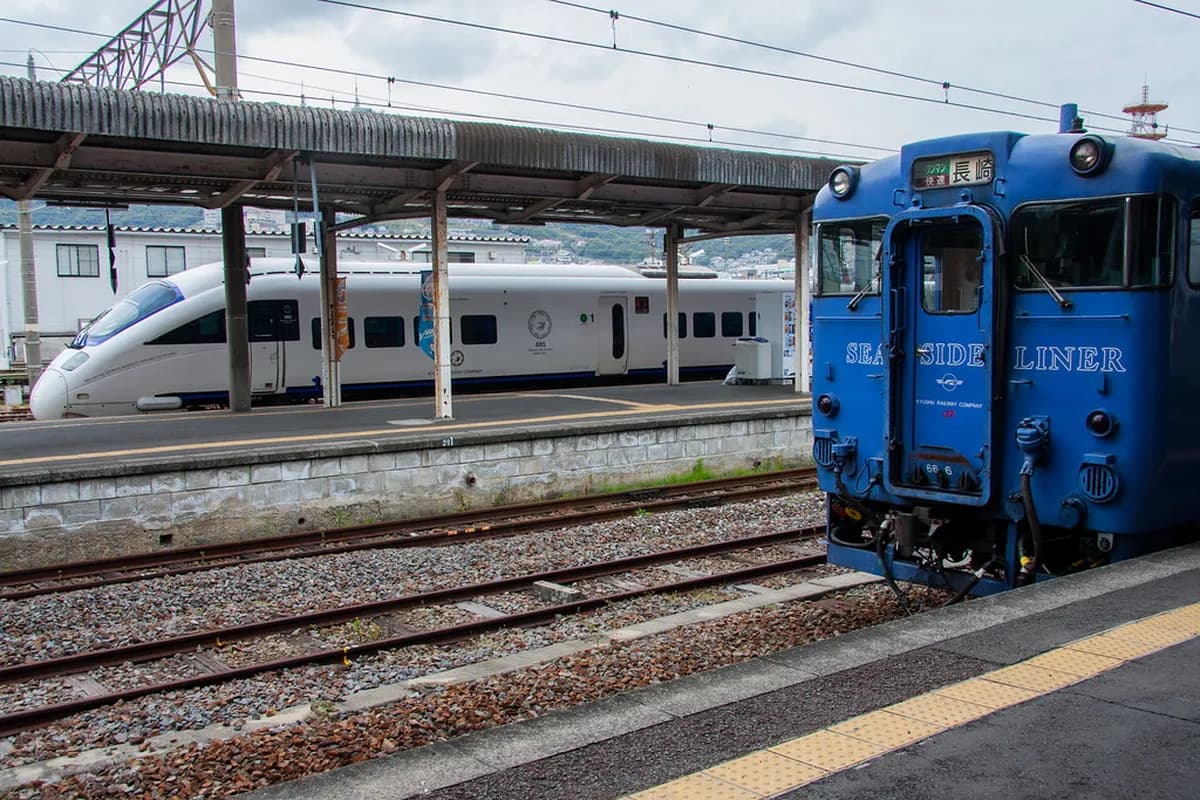
The JR Seaside Liner from Nagasaki reaches Sasebo in about 110 minutes (¥1,830). A rental car gives you more flexibility for reaching the best Kujukushima viewpoints, which are scattered along rural coastal roads.
Huis Ten Bosch: The Dutch Theme Park Experience
Huis Ten Bosch opened in 1992 as an elaborate recreation of a Dutch harbor town — named after a royal palace outside The Hague — and sprawls across 152 hectares, making it one of Japan's largest theme parks. The exterior brick-and-stone architecture is convincing enough to briefly confuse European visitors, but inside it runs the full spectrum: waterpark, VR attractions, robot restaurants, a teddy bear museum, live shows, canal boats, and Nagasaki-themed porcelain galleries. For current hours, ticket prices, and seasonal events, consult the official Huis Ten Bosch website to plan your visit.
The best reason to visit in 2026 is the seasonal programming. The park's winter illumination uses 13 million lights and runs from October through February, drawing crowds from across Kyushu. Summer evenings close with fireworks above the canal. A full-day passport costs ¥4,800–¥5,200 for adults; the park is open 09:00–21:00 on most days, later during illumination season.
The dedicated Huis Ten Bosch Limited Express from Nagasaki runs in 75 minutes (¥2,130) and is the easiest transport option. The park is adjacent to Sasebo, so a combined visit in one day is possible if you leave Nagasaki early.
Gunkanjima: How to Book a Landing Tour That Actually Lands
Hashima Island — universally known as Gunkanjima ("Battleship Island") for its silhouette — is the most photographed day trip from Nagasaki. The abandoned coal mining settlement was designated a UNESCO World Heritage site in 2015 and once housed over 5,000 workers in the world's most densely populated urban space. Today its concrete apartment towers and rusted infrastructure decay visibly, and the atmosphere is unlike anything else in Japan.
Gunkanjima landing cancellations exceed 30% during July–August due to typhoon swell. Book early morning departures when sea state is calmer, and choose operators with modern high-stability vessels. Spring (April–May) and autumn (October–November) offer the highest landing success rates.
The critical detail most guides skip: landing is not guaranteed. Wave height at the island must be below a set threshold for the dock to be safe, and Nagasaki's summer typhoon season (July–September) produces cancellation rates above 30% on some operators' records. Even in calm months, swell from distant storms can close the dock on a clear-sky day. You will still tour the island by boat with commentary if landing is refused, but you will not set foot on it.
To maximize your landing odds: book the earliest morning departure (sea state is typically calmer before afternoon winds build), choose an operator with a modern high-stability vessel rather than the cheapest ticket, and avoid July–September if your schedule allows. Three licensed operators — Yamasa Kaiun, Gunkanjima Concierge, and Takashima Kaiun — all depart from the Nagasaki Port Terminal near Ohato tram stop. Guided tours cost ¥4,000–¥5,000 including the mandatory ¥310 port entry fee. Book at least two weeks ahead for spring and autumn weekends.
The Goto Islands: Hidden Christian Heritage and Beaches
The Goto Islands sit 100 kilometers west of Nagasaki in the East China Sea and hold four of the churches that anchor the UNESCO "Hidden Christian Sites of the Nagasaki Region." During the Edo Period, while Christianity was banned under pain of death, communities on these remote islands quietly preserved the faith for two centuries — an extraordinary act of cultural resilience. When prohibition lifted in the Meiji era, they built opulent stone churches as thanks.
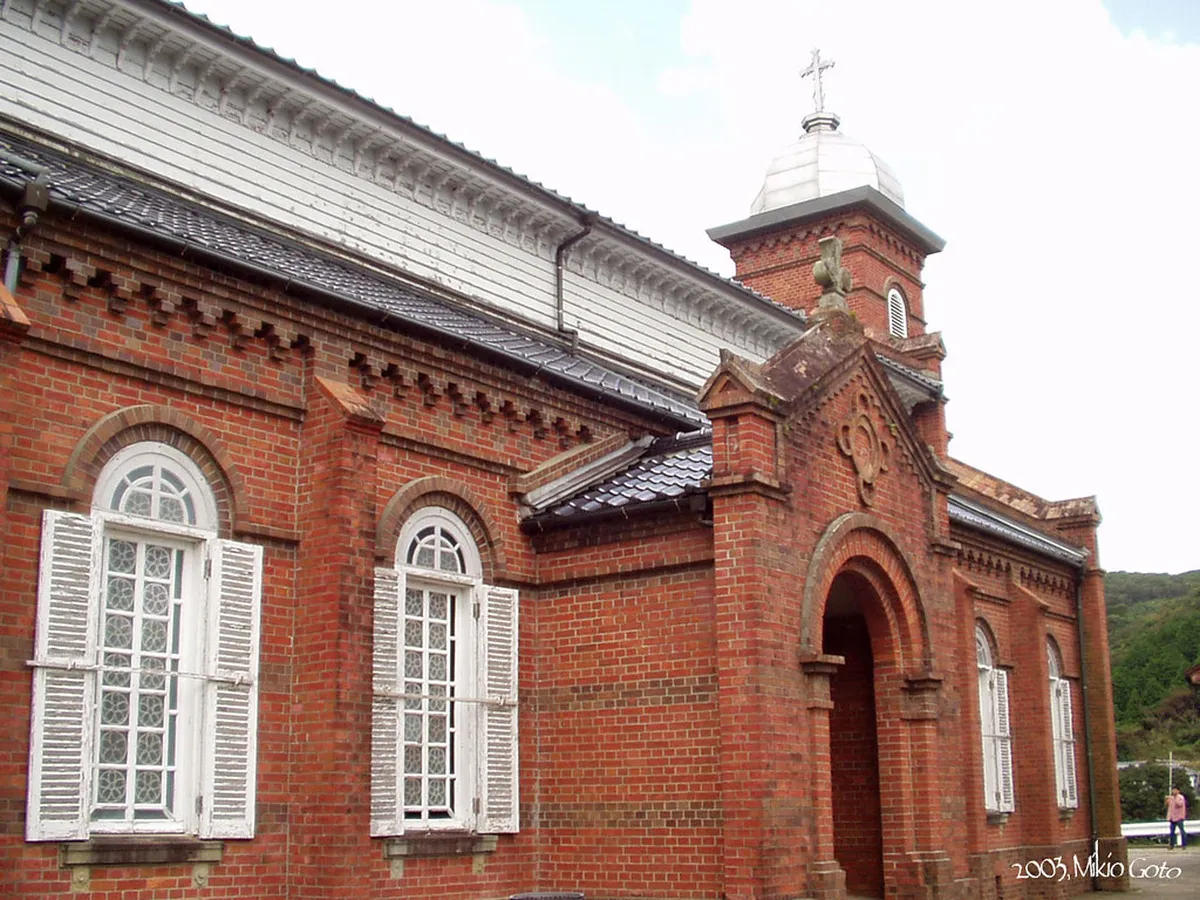
Fukue, the main island, is the most accessible base. The Dozaki Church is now a museum of Hidden Christian history. The white-walled Mizunoura Catholic Church stands above a harbor and is one of the most photogenic buildings in Kyushu. Osezaki Lighthouse at the island's western tip requires a rental car but rewards you with a clifftop view across open ocean — most guides mention the churches without mentioning the lighthouse, which is equally worthwhile.
For the beach traveler, Takahama Beach on Fukue has turquoise water that competes with Okinawa. Mt. Onidake offers a two-hour volcanic hike to an observatory with a sweeping night sky view. Jetfoils from Nagasaki Port reach Fukue in 85 minutes (¥5,000 one way); the slower car ferry takes around three hours and costs ¥2,000. Rent a car at Fukue Port — the island's sights are spread too widely for local buses.
Iki Island: Shinto Traditions and Wagyu Paradise
Iki is a small island in the Tsushima Strait, roughly equidistant between Kyushu and Korea, with over 1,000 shrines crammed into 139 square kilometers. The island's most photographed natural landmark is Monkey Rock (Saruiwa), a 45-meter basalt formation rising directly from the sea that looks exactly like a crouching monkey from the shore. The density of Shinto sites is genuinely unusual — local tradition credits this to ancient sea-route piety from maritime traders.
Iki Beef is the culinary draw. The island's wagyu cattle are raised on grass fed by the island's mineral-rich groundwater, and the marbling is prized enough to command premium prices in Fukuoka restaurants. Eating it at source — at one of the small yakiniku restaurants near Gonoura Port — costs a fraction of mainland prices. Make a reservation before you arrive; options are limited and the best cuts sell out early.
The most practical access from Nagasaki is via Fukuoka: bus or bullet train to Hakata, then jetfoil to Iki (65 minutes, ¥3,000). It is a long transit day from Nagasaki but manageable if you leave by 07:00. Alternatively, some travelers combine Iki with a Fukuoka night stop to split the journey.
Tsushima Island: Wilderness and Ghost of Tsushima Sites
Tsushima gained international visibility through the 2020 PlayStation game Ghost of Tsushima, which dramatized the 1274 Mongol invasion. The island's real landscape — dense cedar forest, ruined castle ramparts, and cliff-edge beaches — closely matches the game's art direction, and it now draws a steady stream of international visitors specifically for that connection. The Komoda Beach memorial commemorates the Tsushima samurai who held the Mongol landing; Kaneda Castle ruins sit above a forest clearing with a short hiking trail to the walls.
The honest logistical note: Tsushima is technically reachable as a day trip, but the ferry from Hakata takes two hours each way and the island is 82 kilometers long. You will spend most of your day in transit and see almost nothing. A two-night stay is the realistic minimum to cover the Kaneda ruins, Watatsumi Shrine (built over a shallow tidal flat), and the Tsushima Leopard Cat Conservation Center — home to the island's critically endangered endemic wildcat. Factor this in when deciding whether to include Tsushima in a Nagasaki itinerary or reserve it for a dedicated Fukuoka base trip.
There are no direct ferries from Nagasaki to Tsushima. All service routes via Fukuoka (Hakata), adding four hours of round-trip transit. For multi-day Tsushima exploration, base yourself in Fukuoka rather than day-tripping from Nagasaki.
Jetfoils from Hakata to Tsushima run multiple times daily (¥6,000 one way, 135 minutes). There are no direct ferries from Nagasaki.
Hirado: Where Western and Japanese Cultures Met
Before the shogunate closed Japan's borders in 1641 and forced all Western traders to the tiny artificial island of Dejima in Nagasaki, the primary entry point for Dutch and English merchants was Hirado. The island's trading history produced a skyline that genuinely surprises first-time visitors: a Catholic church spire stands in direct sight line of a Buddhist temple roofline, and neither structure has been moved. This juxtaposition is not accidental — it is a physical record of how Hirado processed four centuries of competing foreign influences.
Hirado Castle charges ¥500 for the keep and is open 08:30–17:30 daily. The Matsura Historical Museum inside the castle grounds holds genuine samurai armor, tea ceremony artifacts, and documents from the early Dutch trading years. The castle courtyard cherry blossoms in late March are among the best in the region. Cross the bright red Hirado Bridge on foot to reach the town from the Tabira-Hiradoguchi railway station.
Take the JR Seaside Liner toward Sasebo and transfer at Tabira-Hiradoguchi for the bridge walk, or bus from Sasebo if combining with Kujukushima. A combined Sasebo–Hirado day is the most efficient single-day route from Nagasaki.
Four More Day Trips Worth Your Time
Obama Onsen is a seaside hot spring town on Tachibana Bay with a specific local claim: the "Hot Foot 105" footbath is the longest in Japan at 105 meters, running parallel to the shoreline. Soaking is free. The town's public steam cooking stations (called mushi-gama) let you bring raw vegetables, eggs, or sweet potatoes from a nearby shop and steam them in geothermal vents for ¥100–¥200. Buses from Isahaya Station take about 60 minutes.
Isahaya is the transit hub for trips to the Shimabara Peninsula and takes 20 minutes by JR from Nagasaki. The city's own Isahaya Park holds the Meganebashi ("Spectacles Bridge"), a double-arched stone structure relocated to the park to protect it from flooding. The park is free and open 24 hours — worth a brief stop when transferring trains.
Saikai National Park covers the northern bays and bridges above Sasebo. The best single sight is the tidal whirlpools that form beneath Saikai Bridge during tidal changes — check local tide tables before arriving since the whirlpools are only active for a narrow window around high and low tide. A rental car is essential here; public transport does not reach the good viewpoints.
Hasami rounds out the ceramics circuit alongside Arita. The Nishi-no-Hara district has converted old pottery warehouses into design studios and minimalist cafes that sell modern tableware — thicker, more casual, and more colorful than Arita's fine ware. Bus from Sasebo or Isahaya takes 30–45 minutes.
Sample Itineraries for Nagasaki Day Trips
With one day for an excursion, the Shimabara Peninsula loop is the most efficient choice. Start at Shimabara Castle (09:00), walk the samurai district (10:30), then take a Ken-ei bus to the Unzen Hell Fields for lunch and a walk (12:30–15:00). Finish with the Obama Onsen footbath on the return toward Isahaya. You are back in Nagasaki City by 19:00.
| Destination | Travel time | Highlight |
|---|---|---|
| Shimabara | 90 min (JR + rail) | Samurai castle and district, natural springs |
| Unzen Onsen | 100 min (bus) | Volcanic hell fields, mountain views, hot springs |
| Arita | 90 min (JR Limited Express) | Porcelain kilns, ceramic workshops, Baroque park |
| Sasebo & Kujukushima | 110 min (JR) | Island views, glass-bottom boats, US Navy heritage |
| Huis Ten Bosch | 75 min (dedicated express) | Dutch theme park, seasonal illuminations, entertainment |
| Gunkanjima | 30 min (ferry) | Abandoned coal mining ruins, UNESCO heritage site |
| Goto Islands | 85 min (jetfoil) | Hidden Christian churches, beaches, lighthouse views |
| Iki Island | Via Fukuoka (complex) | Sacred shrines, wagyu dining, Monkey Rock formation |
A three-day regional loop works well in this order: Day 1 to Sasebo and Kujukushima by JR, with an evening at Huis Ten Bosch illuminations. Day 2 to Arita and Hasami for ceramics shopping and lunch, returning via the JR Limited Express. Day 3 to Gunkanjima on the first morning boat departure, leaving the afternoon free for Nagasaki City attractions.
Five days allows the Goto Islands to fit properly. Spend nights one and two on Fukue Island — church circuit and Takahama Beach on day one, Osezaki Lighthouse and Ohama Beach water activities on day two. Return to Nagasaki on day three and use days four and five for the historical peninsulas. For more itinerary options across the prefecture, the Discover Nagasaki Official Itineraries site lists 36 routes by duration and interest type.
Logistics: How to Get Around Nagasaki Prefecture
JR trains cover the main northern corridors efficiently. The Seaside Liner reaches Sasebo in under two hours; the Limited Express reaches Arita in 90 minutes. Both are covered by the JR Kyushu Pass (2-day ¥5,000, 3-day ¥7,000), which saves money if you are doing multiple northern trips. The Nagasaki to Fukuoka Transport Guide: 4 Best Ways to Travel has detailed pass comparisons and Shinkansen timing for the 2026 Nagasaki route.
Ken-ei buses are the backbone for the Shimabara Peninsula and Mount Unzen. The main bus terminal is directly across from Nagasaki Station — last buses back from Unzen leave around 17:30, so plan your return carefully. Rural services on the peninsula stop running in early evening with no replacement transport.
Rental cars open up Saikai National Park, Hirado's back roads, and the remote corners of the Goto Islands once you arrive by ferry. Driving in Nagasaki City itself is challenging due to the steep hilly terrain; pick up a rental at Isahaya or Sasebo instead of the city center. International travelers need a valid international driving permit (IDP) and a major credit card for deposits.
For cruise passengers, two docks serve Nagasaki. Matsugae Pier is the primary international cruise terminal at Matsugae-machi (zip 850-0921), equipped with customs and immigration facilities and tourist information desks. Dejima Wharf is a secondary berth for ships under roughly 30,000 GT, used mainly when multiple vessels share the port on the same day. Matsugae is a 10-minute taxi to Glover Garden; Dejima Wharf is a five-minute walk from the historic Dejima Dutch trading post.
Frequently Asked Questions
What is the best day trip from Nagasaki for first-time visitors?
The Shimabara Peninsula is the strongest single-day trip for first-timers. It combines Shimabara Castle, the well-preserved Buke-Yashiki samurai street, and the nearby Unzen Hell Fields into a logical loop. The JR and Shimabara Railway connection is straightforward, the entry costs are low, and the contrast between samurai history and volcanic landscape is hard to beat in one day.
How often do Gunkanjima landing tours get cancelled?
Cancellation rates vary significantly by season. During July and August, wave swell from typhoons can result in landing refusals on more than 30% of departure days. Spring (April–May) and autumn (October–November) have the highest success rates. You will still complete the boat tour with commentary if landing is refused, but you will not set foot on the island. Book early morning departures when sea conditions are typically calmer, and avoid July–September if landing is your priority.
Where do cruise ships dock in Nagasaki?
Most international cruise ships dock at Matsugae Pier (Nagasaki International Cruise Terminal, Matsugae-machi, zip 850-0921), which has customs, immigration, and tourist information facilities. Smaller vessels under roughly 30,000 GT may dock at Dejima Wharf, a secondary berth used mainly during busy multi-ship days. Matsugae is about a 10-minute taxi ride from Glover Garden. Dejima Wharf is within walking distance of the historic Dejima Dutch trading post.
Is Tsushima Island doable as a day trip from Nagasaki?
Technically yes, but not recommended. There are no direct ferries from Nagasaki to Tsushima — you must go via Fukuoka (Hakata), which adds four hours of round-trip transit. Tsushima is also 82 kilometers long, and spending the remaining hours on a single site would not do the island justice. A two-night stay based in Fukuoka is the realistic minimum to see the Kaneda Castle ruins, Watatsumi Shrine, the Ghost of Tsushima filming locations, and the Tsushima Leopard Cat sanctuary.
Should I visit Nagasaki or Hiroshima if I only have time for one?
Both cities are worth visiting for different reasons. Nagasaki offers a far greater range of surrounding day trips — volcanic landscapes, island churches, and ceramics towns — as well as its unique European and Chinese cultural layers that Hiroshima does not have. Hiroshima has the more internationally recognized peace memorial complex and is more convenient for a Kyoto–Osaka–Hiroshima itinerary. For travelers based in Kyushu with several days available, Nagasaki wins on sheer day-trip variety. Check our Nagasaki Itinerary for First-Timers in 2026 for a full city planning guide.
Do I need to book day trips from Nagasaki in advance?
Gunkanjima tours and Goto Islands jetfoils should be booked at least two weeks ahead during spring (April–May) and autumn (October–November) peak seasons. Huis Ten Bosch benefits from advance booking during the winter illumination period (October–February). Train and bus trips to Shimabara, Unzen, Sasebo, and Arita do not require advance booking and can be done on the day. Iki Island yakiniku restaurants require reservations as capacity is small.
Nagasaki Prefecture is one of the richest regions in Japan for day-trip variety. Whether you are drawn to the volcanic steam of Unzen, the porcelain workshops of Arita, the abandoned ruins of Gunkanjima, or the UNESCO churches of the Goto Islands, almost every interest type is covered within a two-hour radius. The key to a good trip is choosing the right transport combination and booking island tours well ahead of the peak seasons.
Start with Shimabara if you only have one day. Build from there with the northern ceramics route or an island ferry if your schedule allows. The logistics are manageable once you have the train passes sorted, and the prefecture rewards the extra planning effort more than almost anywhere else in Kyushu.
For related deep-dives, see our How to Get to Nagasaki from Tokyo, Osaka, and Fukuoka guide and 10 Nagasaki Hidden Gems Off The Beaten Path.
Pair these day trips with our complete Nagasaki attractions guide to plan the city portion of your trip.
Free: The Nagasaki Essentials guide
Top things to do, where to stay, a perfect day plan, getting around, and the best time to go — a Nagasaki mini-guide you can take offline.
You might also like

Continue reading
More guides you'll find useful