10 Best Free Things to Do in Nagasaki: Budget Guide (2026)
Discover the best free things to do in Nagasaki, from the Peace Park to hidden glass beaches. Save money with our 1-day budget itinerary and local travel tips.
On this page
Nagasaki is one of the most rewarding cities in Japan for budget travelers. Its best experiences — somber atomic bomb memorials, sweeping harbor viewpoints, historic streets, and hidden coastal beaches — cost nothing to access. Most of the free sites cluster within walking distance or a single tram stop of each other, which keeps transport costs low too.
This guide gives you a curated list of the top free attractions, a practical 1-day itinerary, and a Day 2 extension for travelers who have more time. You will also find tram tips, neighborhood guides, and the one viewpoint that most guides completely overlook. For broader Nagasaki Travel Tips Practical Guide: 3-Day Itinerary, including seasonal weather and public holidays, see our dedicated planning guide.
Top Free Historical Sites: Peace Park and Beyond
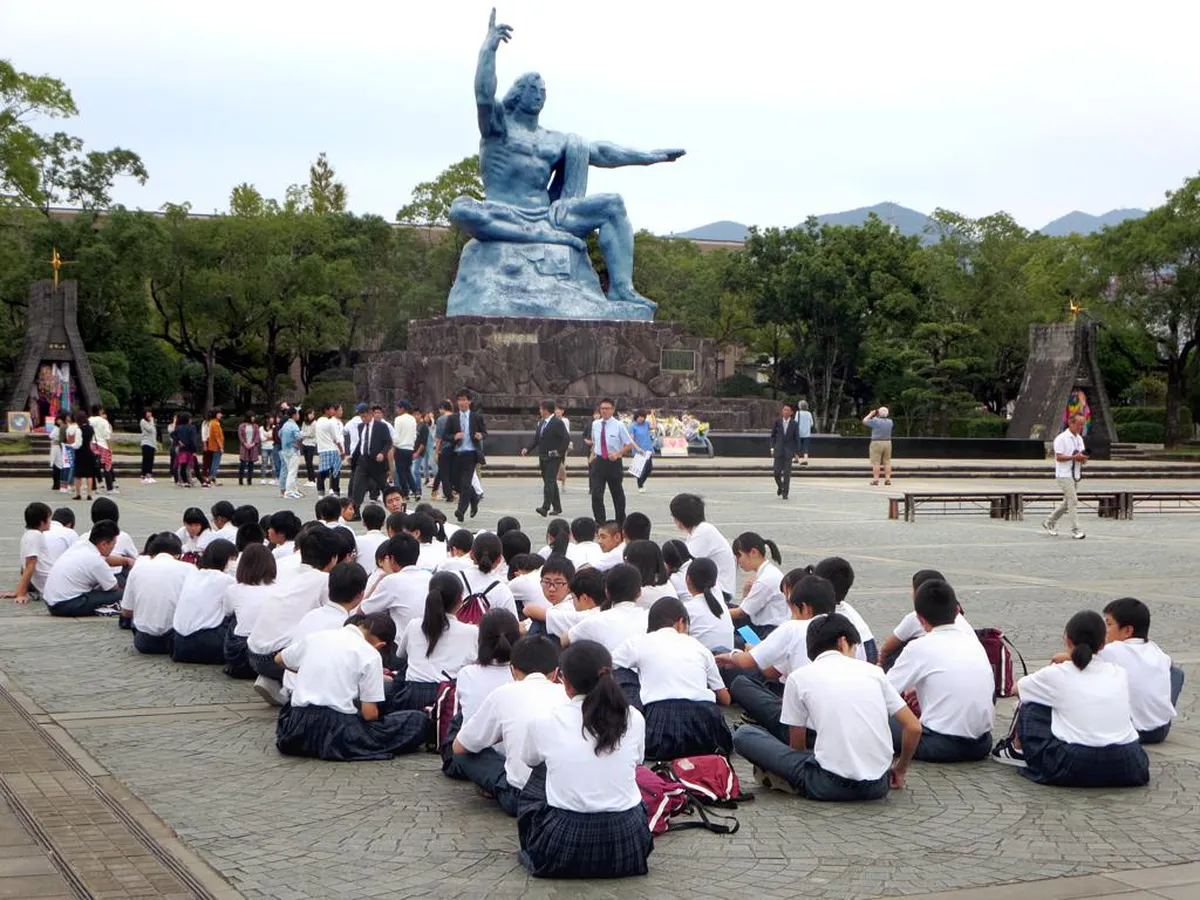
The northern part of Nagasaki holds the city's most emotionally powerful free sites. Start at Nagasaki Peace Park (open 24 hours, free), a wide public park that marks where the atomic bomb detonated on 9 August 1945. The 10-metre bronze Peace Statue dominates the space — right hand pointing skyward as a nuclear warning, left hand extended in a gesture of peace. International memorial sculptures donated by various countries line the path. Arrive before 09:00 to experience the silence before tour groups arrive.
A five-minute walk south brings you to the Atomic Bomb Hypocenter Park. A black basalt monolith marks the exact point 500 metres above which the bomb detonated. Steps lead down to a glass-covered section of the 1945 ground level, showing rubble and personal belongings. The nearby ruins of Urakami Cathedral walls are also free to walk past. The paid Atomic Bomb Museum (200 yen) sits adjacent — excellent, but the outdoor sites alone provide deep context if your budget is zero.
Ten minutes further south by foot is Sanno Shrine and the One-Legged Torii Gate. The stone gate lost one pillar in the blast but remained standing while the surrounding neighborhood was completely flattened. Two massive camphor trees nearby were scorched to the core yet sprouted new growth the following spring — their combined canopy now measures 40 metres across. There is no entrance fee. The scarred bark is visible at close range and hits harder than almost any museum exhibit.
Continue down Teramachi Street while you are in this area. Fourteen Buddhist temples and two shrines line the road at the foot of Mount Kazagashira, including the nationally listed Sofukuji Temple (entry 200 yen, exterior free). Walking the length of the street past temple gates and lantern-lit approaches costs nothing and takes about 20 minutes.
Nagasaki Peace Park is open 24 hours and entirely free to enter. The two massive camphor trees at Sanno Shrine were scorched to the core by the atomic blast yet sprouted new growth the following spring — their combined canopy now measures 40 metres across.
Best Free Viewpoints: Mount Inasa and the Korea Observatory
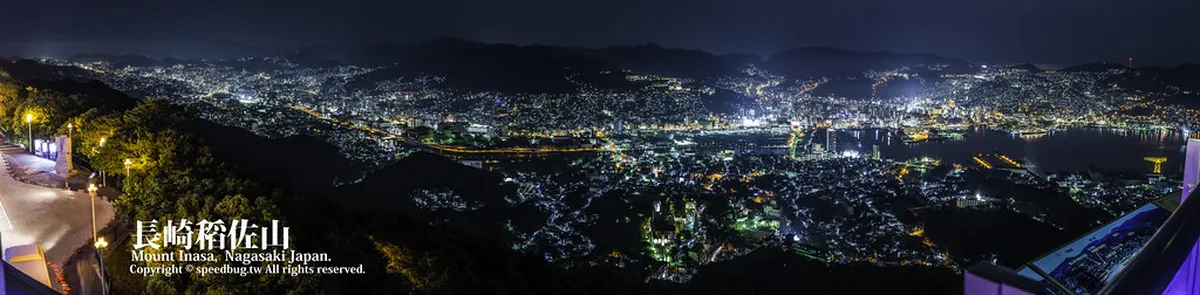
Mount Inasa holds the "Million Dollar Night View" — officially ranked alongside Monaco and Shanghai as one of the world's top three night views. Most visitors pay 1,250 yen for the round-trip ropeway. The free option is a hiking trail that starts near Fuchi-jinja Shrine (Ropeway-mae bus stop, Bus No. 3 or 4 from Nagasaki Station). The path winds through forest and takes 40–60 minutes to the summit depending on your pace. The observatory deck itself is free once you are up there.
Leave Nagasaki Station by 16:00 to reach the summit in time for sunset. The trail gains significant elevation, so bring water and wear shoes with grip. If you hike up, you can always pay the one-way ropeway fare (750 yen) to descend in the dark — but the hike down is also doable with a torch app on your phone.
Here is the detail no other guide mentions: the upper observation deck includes a small platform signposted as the Korea Observatory. On clear days in autumn and winter — typically November through February — you can see the mountain ridges of South Korea's Tsushima Island and occasionally the Korean mainland across the Korea Strait, roughly 200 km away. It is one of the few places in mainland Japan where another country is visible with the naked eye. Cloud cover blocks the view more than half the time, but on a clear day it is genuinely remarkable.
A second free viewpoint is the rooftop garden of the Nagasaki Prefectural Art Museum (open 10:00–20:00, free). Designed by architect Kengo Kuma, the roof terrace gives an unobstructed view over Nagasaki Seaside Park and the harbor. It is a good leg-rest stop after a long walking day in the south of the city.
Mount Inasa holds the "Million Dollar Night View" — officially ranked alongside Monaco and Shanghai as one of the world's top three night views. The upper observation deck includes a Korea Observatory platform where on clear days in autumn and winter you can see South Korea's Tsushima Island and occasionally the Korean mainland, roughly 200 km away.
Beautiful Parks and Gardens with No Entry Fee
Nagasaki Seaside Park runs along the harbor waterfront near the Prefectural Art Museum. The park is free, open at all hours, and gives clean views across to Dejima Wharf. It is a useful connector when walking between the Chinatown area and the museum district. The lawns fill with locals in the late afternoon and the harbor lights up nicely after dark.
Suwa Shrine occupies a hilltop above the city center near the Suwa-jinja tram stop. The shrine complex is free to enter and the stone staircase — famous for its role in the annual Kunchi Festival — offers a direct view over the downtown rooftops once you reach the top. Allow 20–30 minutes. Walk around the back of the main hall to find a shaded row of smaller torii gates that most visitors miss.
Oyama Park near Nagasaki Station is a quieter option for a morning stop. The park has walking paths, benches, and a small Japanese garden section. It is unremarkable compared to the hillside shrines but useful if you need a calm start before hitting the northern memorial sites. Entry is free at all hours.
Cultural Walks: Chinatown, Dutch Slope, and Higashi-Yamate
Nagasaki Chinatown (Shinchi district) is the oldest in Japan — established when Chinese traders were among the few foreigners allowed into the country during the Edo Period. Walking through the four ornate gates and along the main lantern-lit street costs nothing. Food stalls sell Nagasaki champon noodles and steamed buns for 300–600 yen if you want to spend. During Lunar New Year (late January or February), the entire district is strung with thousands of traditional lanterns for Japan's largest lantern festival — entirely free to walk through.
From Chinatown, the Meganebashi Bridge (Spectacles Bridge) is a 10-minute walk along the Nakashima River. Dating to 1634, the double stone arch reflects in the river to form the shape of a pair of glasses. The riverbank is a public park, free at all hours. Hunt the stone walls along the river for the famous heart-shaped stone embedded in the masonry — it takes a few minutes of scanning to find.
The Dutch Slope and Higashi-Yamate district provide the best free alternative to paid Glover Garden (620 yen entry). The stone-paved slope is lined with late 19th-century Western-style residences built during Nagasaki's open-port era. Walk uphill past the Higashi-Yamate No. 12 Building — one of the oldest Western-style buildings in the district, now a small free-entry museum — and continue up the steep staircases behind Oura Catholic Church to reach hilltop vantage points over the harbor. The church itself is a UNESCO World Heritage site; the exterior view is free, interior entry costs 1,000 yen. Wear shoes with grip — the cobblestones become slippery when wet.
The Hidden Gem: Glass Beach (Omura Bay)
Glass Beach is a shoreline made entirely of rounded, sea-polished recycled glass rather than sand or pebbles. The pieces range from clear to deep cobalt and amber, and catch sunlight in a way that feels genuinely surreal. It sits on Omura Bay near Nagasaki Airport, roughly 30 km from the city center — accessible by train to Hario Station (JR Omura Line, around 40 minutes from Nagasaki Station, covered by the JR Pass) then a short walk to the shore.
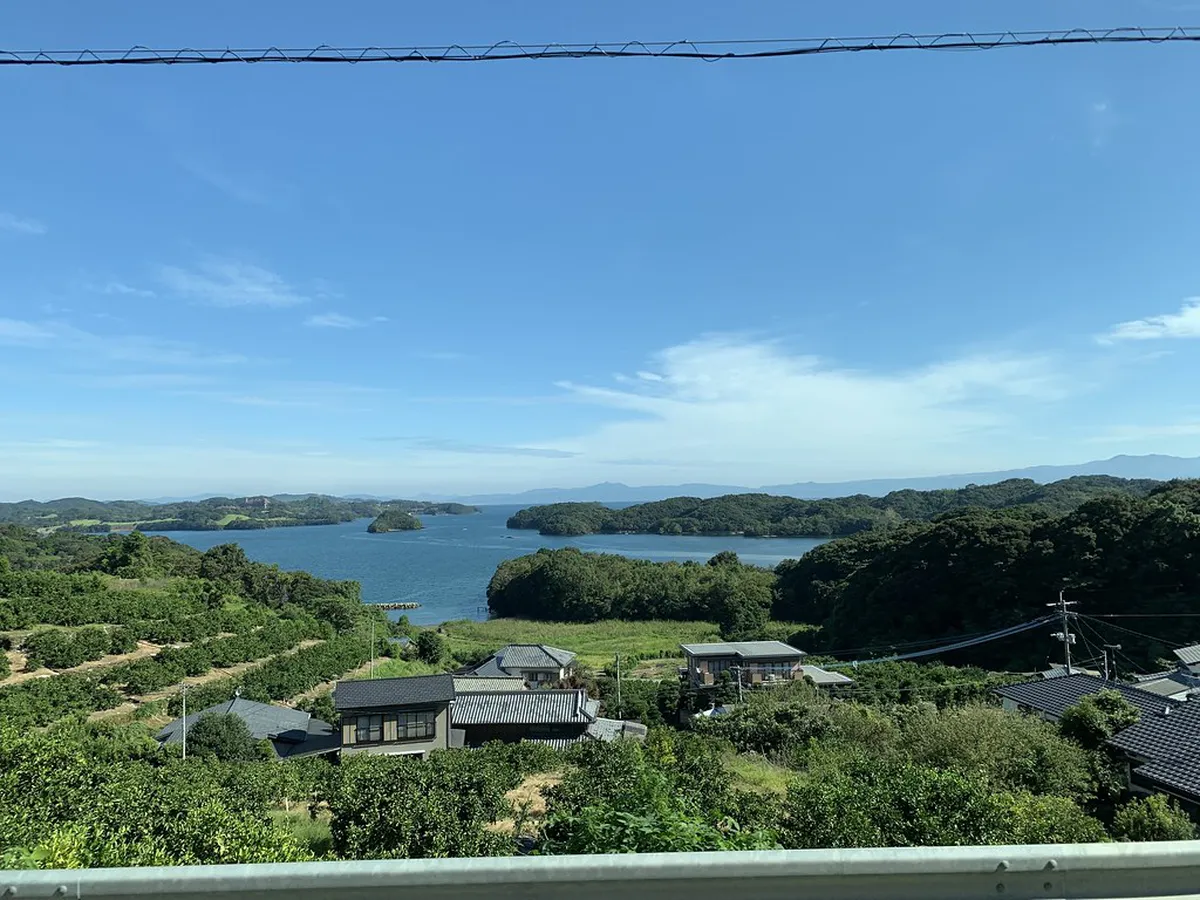
The beach is free to visit at any time. The best conditions are low tide on a sunny morning, typically between 09:00 and 11:00, when the glass glows most vividly and the tide does not cover the colored bands. Overcast days flatten the color significantly. Check tide tables before going — a low tide of 0.3 m or below gives the widest glass spread. Do not take glass as a souvenir; it is the entire point of the place.
Most Nagasaki itineraries skip this site entirely because it requires a dedicated trip. If you are arriving at or departing from Nagasaki Airport, it is worth building in 90 minutes for a detour. Combine it with lunch at one of the small teishoku (set meal) restaurants near Hario Station for 800–1,000 yen.
A Perfect 1-Day Free Nagasaki Itinerary
This route covers the northern memorial sites in the morning and the harbor cultural district in the afternoon, ending at the Mount Inasa summit for sunset. Total transport cost if you use single tram rides: around 450 yen. A one-day tram pass (600 yen) breaks even at four rides — worthwhile if you plan to explore widely.
- 09:00 — Bus No. 1 from Nagasaki Station to Peace Park stop. Walk the Peace Park grounds and the Fountain of Peace (30 min).
- 09:45 — Walk 5 min south to the Atomic Bomb Hypocenter Park. Take time at the monolith and the ground-level glass case (20 min).
- 10:30 — Walk 15 min south to Sanno Shrine. See the One-Legged Torii Gate and the camphor trees (15 min).
- 11:15 — Tram to Minato Iriguchi stop. Walk to Meganebashi Bridge and search for the heart stone along the river (20 min).
- 12:00 — Walk 10 min to Shinchi Chinatown. Street food lunch for 400–700 yen (45 min).
- 14:00 — Tram to Ouramachi stop. Walk the Dutch Slope and climb the staircases behind Oura Church for harbor views (45 min).
- 15:30 — Bus No. 3 or 4 from Nagasaki Station toward Ropeway-mae. Hike to the Mount Inasa summit (60 min).
- 17:00 — Watch sunset from the summit observatory. Use the Korea Observatory platform on clear days (60 min).
- 18:30 — Descend by ropeway (750 yen one-way) or hike down with a torch (free). Bus back to Nagasaki Station.
This schedule is realistic without rushing. If you want to include Suwa Shrine, swap the Chinatown lunch break to 60 minutes and head to the shrine tram stop directly after (10-minute ride). The shrine adds about 30 minutes.
Day 2 in Nagasaki: Budget Extensions
A second day lets you cover the southern harbor district properly and reach a few sites that Day 1 skips. Start the morning at Glover Street — the sloped lane below Glover Garden (620 yen entry) is free to walk and lined with craft shops, food stalls, and European-influenced architecture. The Inori Hill Picture Book Museum on this street is one of the most charming free-browsing stops in the city. Skip paid Glover Garden itself if your budget is tight; the Dutch Slope and these exterior viewpoints give a comparable sense of the foreign-merchant era.
In the late morning, walk to Dejima — the former Dutch trading island built in 1636. The exterior grounds and the canal-side promenade are free. The reconstructed interior (500 yen) is worth it for history enthusiasts but skippable on a strict budget. Adjacent Nagasaki Seaside Park is free and gives good harbor views.
After lunch, take the tram out to Suwa Shrine if you skipped it on Day 1. Then walk Teramachi Street in the late afternoon when the temple lanterns begin to glow. Finish with an evening stroll along Motoshikkuimachi — a narrow lantern-lit lane parallel to the main Harusame Street near Chinatown. Small bars and restaurants open from around 18:00, but the street itself is free and atmospheric even if you only walk it. This area is described in more detail in our guide to Nagasaki Attractions: Top 20 in 2026.
If you have a third day, the Gunkanjima (Battleship Island) boat tour is the one paid experience worth budgeting for — typically 3,500–4,500 yen. The abandoned coal-mining island 15 km offshore is now a UNESCO Heritage site and access depends on sea conditions. Book the day before to stay flexible.
How to Get Around Nagasaki on a Budget
The tram network is the backbone of budget transport in Nagasaki. A single ride costs 150 yen regardless of distance. Pay in exact change when boarding — the machines do not give change, so carry small coins. The one-day tram pass costs 600 yen and is available at the Tourist Information Center inside Nagasaki Station and at some hotels. It breaks even at four rides and pays off quickly if you are moving between the northern memorial sites, the city center, and the southern harbor district.
The city is hilly, but the valley floor between Chinatown, Meganebashi Bridge, and the station area is flat and walkable in under 15 minutes. The main cost trap is the tram to the Peace Park — it is a 10-minute bus ride north of the station (Bus No. 1, 150 yen). Using Google Maps for Nagasaki tram navigation works reliably and shows live stop names in English. Avoid taxis; the narrow hillside streets cause frequent delays and fares run high. More detail on arriving in the city by Shinkansen from Fukuoka (about 1.5 hours, JR Pass valid) is in our guide on How to Get to Nagasaki from Tokyo, Osaka, and Fukuoka.
Cycling is rarely practical here because the terrain is steep. On the other hand, most of the top free sites are grouped so that a tram pass plus comfortable walking shoes is all you need. The One Bus Day Pass (600 yen, available at Nagasaki Station) covers city buses and is useful specifically for reaching Teramachi Street and the Mount Inasa ropeway — routes that the tram network does not serve directly.
Where to Stay in Nagasaki, Japan
Staying near Nagasaki Station is the most practical choice for budget travelers. Business hotels in this area run 5,000–9,000 yen per night and put you steps from the tram network. The One-Day Bus Pass and Day Tram Pass are both available inside the station, and the Nishi-Kyushu Shinkansen drops you directly here from Fukuoka in about 1.5 hours. The famous Ramen Hiiragi (tomato-broth Nagasaki ramen) is a short walk from the station, which is worth factoring in.
The Chinatown and Shinchi district is a strong alternative for travelers who want to be close to the free southern attractions. Hostels and small guesthouses in the nearby hillside lanes charge 2,500–4,500 yen per night. You can walk to Meganebashi Bridge, the Dutch Slope, and the Art Museum roof garden without using a single tram ticket. The evening lantern atmosphere of Chinatown and Motoshikkuimachi lane is right outside your door. See our Where to Stay in Nagasaki: 10 Best Areas and Hotels guide for specific hotel recommendations by budget tier.
For a more local feel, minshuku (family-run inns) further up the hillside slopes charge as little as 3,500 yen per night and often include breakfast. The trade-off is a 5–10 minute tram or bus ride to the main sights. Book at least three to four weeks in advance during Golden Week (late April–early May) and the Kunchi Festival (7–9 October), when prices spike and rooms sell out.
Frequently Asked Questions
Is Nagasaki Peace Park free to enter?
Yes, the Nagasaki Peace Park is entirely free to enter and is open to the public twenty-four hours a day. While the nearby Atomic Bomb Museum requires a small admission fee, the park and the Hypocenter monolith cost nothing to visit. For official planning resources, see Japan's official travel guide
Can you walk to the top of Mount Inasa for free?
You can definitely walk to the top of Mount Inasa for free using a designated hiking trail. The path starts near Fuchi-jinja Shrine and takes about forty to sixty minutes to reach the summit. This is a great way to see the night view without paying for the ropeway.
What are the best free things to do in Nagasaki for families?
Families will enjoy the open spaces of the Peace Park and the colorful Glass Beach near the airport. The Spectacles Bridge is also a fun spot for children to hunt for the hidden heart-shaped stone in the walls. These activities provide plenty of space for kids to explore without costs.
Nagasaki delivers one of the richest free travel experiences in Japan. The combination of atomic bomb memorials, harbor viewpoints, colonial-era streets, and hidden coastal beaches would cost significant admission fees in most other cities. Here, the best of it is entirely accessible to anyone with a tram pass and comfortable shoes.
The key is sequencing: tackle the northern memorial sites in the morning before tour buses arrive, use the city center for afternoon cultural walks, and save Mount Inasa for sunset. A second day extends the experience into the southern harbor district without adding much cost. The city rewards slow, curious walking — the hilly streets constantly offer unexpected views that no amount of pre-planning fully captures.
Free: The Nagasaki Essentials guide
Top things to do, where to stay, a perfect day plan, getting around, and the best time to go — a Nagasaki mini-guide you can take offline.
You might also like


Continue reading
More guides you'll find useful