Nagasaki Travel Tips Practical Guide: 3-Day Itinerary
Plan your trip with this nagasaki travel tips practical guide. Discover 3 days of history, harbor views, and local food tips for first-time visitors.
On this page
Nagasaki is a city of incredible layers and deep resilience. This nagasaki travel tips practical guide covers everything a first-time visitor needs: what to see, how to get around, what to pack, and how to handle money. The Nagasaki Itinerary for First-Timers in 2026 below spans three days and balances somber peace memorials with vibrant alleys, harbor views, and island ruins.
Nagasaki feels unlike any other Japanese city. Its long history as Japan's only open trading port shaped a distinctive blend of Dutch, Chinese, and Portuguese influences you won't find in Tokyo or Kyoto. The city is compact enough to cover on foot or by tram, and most major sites cluster into two neighborhoods that sit about 20 minutes apart.
Most accommodations are near the tram lines, which makes daily logistics straightforward. Budget 2026 admission prices are modest — the Atomic Bomb Museum charges around 200 JPY — so the bulk of your spending goes on food, boat tours, and the ropeway to Mount Inasa. Start early each day to beat school groups and catch the best light.
Nagasaki Facts: What Makes This City Different
Nagasaki was Japan's sole gateway to the outside world for over 200 years during the Edo Period. Foreign traders — first Portuguese, then Dutch — were confined to the man-made island of Dejima, and their influence is still visible in the architecture and cuisine of the city today. That history of enforced isolation, followed by catastrophic destruction in 1945, then remarkable recovery, gives Nagasaki a depth of character that genuinely surprises first-time visitors.
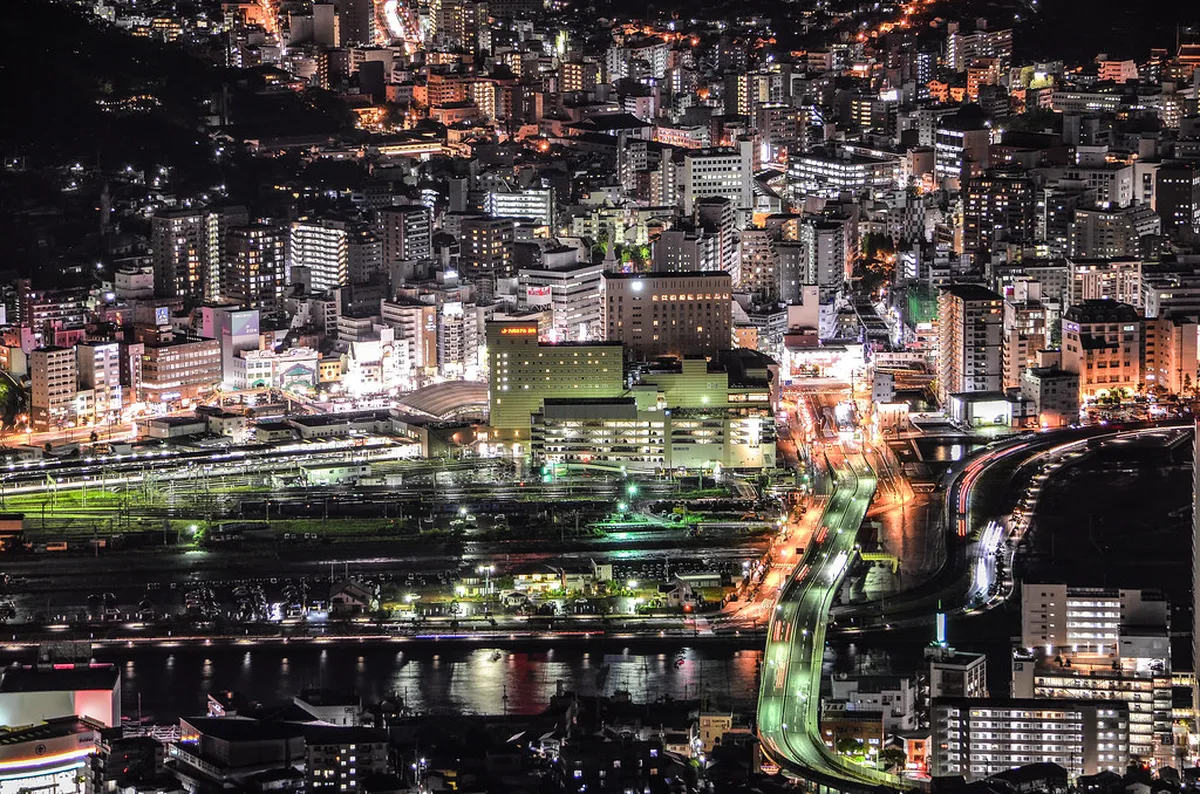
The city sits on a steep harbor surrounded by terraced hills, which means views are everywhere but so are stairs. Population hovers around 400,000, making it large enough to have solid infrastructure but small enough that you rarely feel overwhelmed by crowds. Nagasaki's famous champon noodle soup — a rich, milky broth packed with seafood and vegetables — was invented here in the 19th century as a filling meal for Chinese students.
One practical fact worth knowing before you arrive: Nagasaki is more cash-dependent than Tokyo. Smaller restaurants, tram ticket machines, and some temple entrance booths do not accept IC cards or foreign credit cards. Withdraw cash at a 7-Eleven or Japan Post ATM before heading out each morning. Both reliably accept Visa, Mastercard, and most foreign debit cards.
Nagasaki Peace Park and Ground Zero
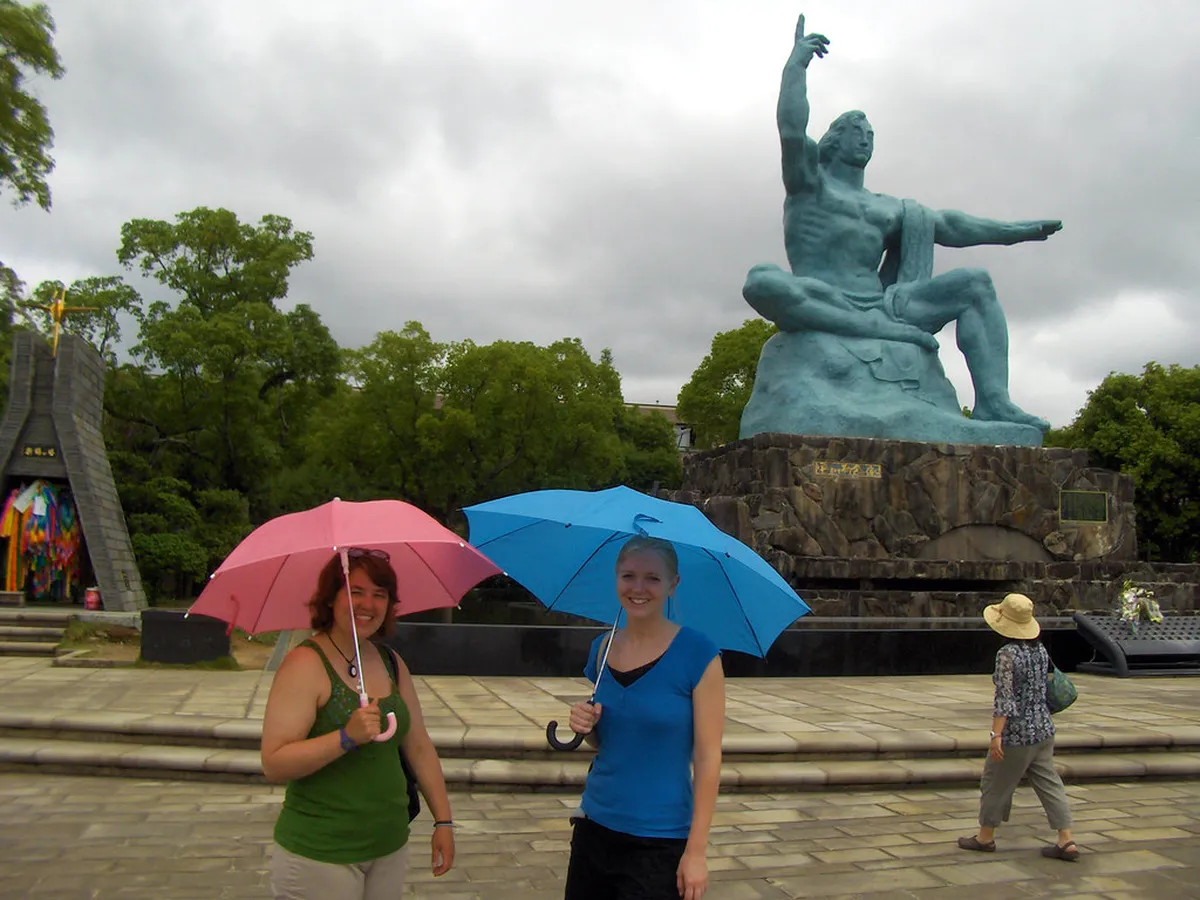
The Nagasaki Peace Memorial Park marks the approximate location above which the atomic bomb detonated on 9 August 1945. At the entrance, a 10-metre bronze Peace Statue sits with one arm raised skyward — a warning against nuclear weapons — and the other extended horizontally to represent world peace. The park is free to enter and open at all hours. Most visitors spend 30 to 45 minutes here before walking 500 metres south to the Hypocenter Park.
At the Hypocenter Park, a black pillar marks the spot directly below the detonation point. The surrounding area was flattened in seconds; over 73,000 people died almost instantly and a further 74,000 were injured. One half of the original stone torii gate at nearby Sanno Shrine survived the blast and still stands, blackened and scarred, as a testament to the city's resilience. The two enormous camphor trees behind the shrine were stripped bare by the explosion but sprouted new growth the following spring — they now shade a large courtyard with combined canopy over 40 metres wide.
Give yourself at least two hours for the northern Peace Zone if you combine the park, Hypocenter, Urakami Cathedral, and Sanno Shrine. Take tram line 1 or 3 northbound from central Nagasaki and alight at Matsuyamamachi stop. The walk between the Peace Park and the Hypocenter is pleasant and clearly signposted in English.
Continue the History Lesson at the Atomic Bomb Museum
The Nagasaki Atomic Bomb Museum sits a short walk from the Peace Park and is the most comprehensive account of the bombing available in English outside of academic libraries. Admission is roughly 200 JPY for adults in 2026. Standard opening hours are 08:30–17:30 daily, with extended hours to 18:30 between May and August. Arrive at opening to avoid school groups, which typically arrive by 09:30.
The exhibits move chronologically: pre-war Nagasaki, the bombing itself (with a stopped clock showing 11:02 AM, the moment of detonation), survivor testimonies, medical aftermath, and the ongoing global disarmament movement. Audio guides are available in English, Chinese, and Korean for a small additional fee and are worth renting — the exhibit labels give context but the audio guides add survivor voices that change how you experience the space.
Most visitors need 90 minutes to two hours to move through the museum without rushing. If you have already visited Hiroshima's Peace Memorial Museum, the Nagasaki museum covers the same events from a different perspective; both are worth visiting. The walk from the museum back to the Peace Park passes a small memorial garden that most visitors overlook but is genuinely moving.
Glover Garden and the Southern Hills
Glover Garden sits in the hilly Minamiyamate district in southern Nagasaki and was once the residence of Scottish merchant Thomas Blake Glover, who played a significant role in Japan's industrialisation during the Meiji era. The garden offers sweeping views over the harbor and is a UNESCO World Heritage-listed site. Admission is 660 JPY. The recommended route is to take the Skyroad outdoor escalators to the top of the hill first, then walk downhill through the garden — this is far easier on the legs than the reverse.
If 660 JPY feels steep, the surrounding Minamiyamate district is entirely free and arguably more atmospheric. Stone-flagged lanes wind past preserved Western-style merchant houses from the 19th century, and the hilltop viewpoints are among the best in the city. Look for the free vantage points behind Oura Church — a UNESCO-listed Catholic basilica built in 1865 as the first Gothic church in Japan. The church itself charges a small entry fee but the exterior views from the lane above are free.
While you are in the southern district, stop at the Minami-Yamate pudding shop near Oura Church. These local custard puddings at around 450 JPY each are genuinely excellent and come in flavors inspired by the church's stained-glass windows. Expect a short queue on weekends. From Glover Garden, the walk north to Shinchi Chinatown takes about 15 minutes along the waterfront.
DAY 2: Things to Do in Nagasaki City Center
Your second day works well as a loop through the city's trade-history zone. Start at Dejima, the reconstructed Dutch trading post that operated as Japan's only link to the Western world from 1641 to 1859. The site is now a living museum with restored warehouses, residences, and a working garden. Admission is around 510 JPY. Give it 60 to 90 minutes — the detail in the reconstruction is impressive and staff are knowledgeable in English.
From Dejima, walk five minutes east to Shinchi Chinatown, the oldest Chinatown in Japan. Unlike the Chinatowns in Yokohama or Kobe, this one is small and genuinely local-feeling. The signature dish is champon — order it at any of the dozen or so restaurants fronting the main square. Evenings here are lively; the lanterns over the streets illuminate the entire neighborhood during the Nagasaki Lantern Festival each February. Two minutes further east is the Confucius Shrine (660 JPY, includes museum), an ornate example of Chinese settler influence with stone scholar statues arranged in a formal courtyard.
Round out the afternoon at the Meganebashi "Spectacles" Bridge, a dark stone arch dating to 1634 that survived the atomic blast. Its reflection in the river below forms the shape of glasses. It's free to visit and most people reach it in five minutes from Chinatown. End the day with the ropeway ride up to Mount Inasa for the night view — arrive 90 minutes before sunset to secure a spot at the railing. The ropeway runs until 21:00 and costs around 1,240 JPY return.
Exploring Battleship Island (Gunkanjima)
A Hashima Island tour is the highlight of Day 3 for most visitors. This abandoned coal mining island was home to 5,000 workers at its peak in the 1960s before closing in 1974. From offshore it looks like a concrete battleship — the nickname is immediate obvious. Tours typically cost around 4,000 JPY and last three hours including the boat journey. Boats depart from Nagasaki Ferry Terminal near the city center; the crossing takes about 45 minutes each way.
Book at least 30 days in advance for weekend departures — tours sell out consistently from March through November. Morning sailings generally have calmer seas than afternoon ones. Landing is weather-dependent; operators will notify you by phone if conditions are unsafe. Keep the cancellation policy in mind when booking — most operators offer a full refund if the landing is canceled due to weather.
Bring water and sunscreen. There is almost no shade on the island and walking paths are restricted for safety. Guides explain the conditions miners worked under in great detail, including the fact that the island once had the highest population density in the world. The ruins are genuinely haunting. Photography is unrestricted within the marked areas.
Tram Day Pass and Getting Around Nagasaki
Nagasaki's tram network is the most practical way to move between neighborhoods and covers nearly every major tourist site. A single tram ride costs 140 JPY paid on exit. The one-day unlimited pass costs 500 JPY and breaks even after just four rides — on any active sightseeing day you will almost certainly use it more than four times. Buy the day pass at the tourist information desk inside Nagasaki Station or at major hotels; you cannot purchase it on the tram itself. The Nagasaki Electric Tramway pass is valid until the last tram of that calendar day.
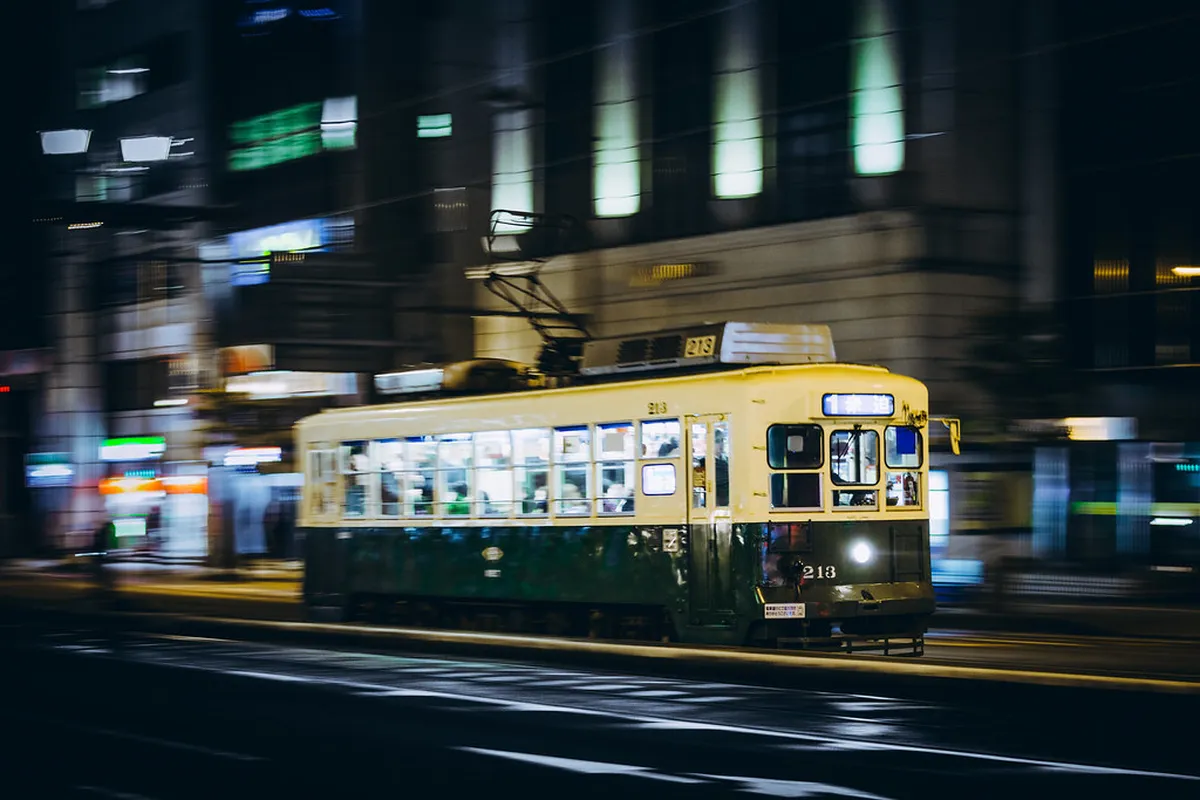
There are four tram lines numbered 1, 3, 4, and 5. Line 1 runs north–south and connects the Peace Park area (Matsuyamamachi stop) to the city center and Chinatown. Line 5 runs to the Glover Garden area (Ouramachi stop). Most visitors need only Lines 1 and 5 for the first two days. Trams run approximately every eight to twelve minutes and display destination names in English on the front board.
For the Gunkanjima boat tour and Mount Inasa ropeway, you will need either a taxi or a short bus ride from the tram terminus — neither stop is directly on the tram lines. The Ferry Terminal for Gunkanjima is about 10 minutes on foot from Ouramachi tram stop. For Mount Inasa, take tram Line 3 to Takaramachi stop, then a local bus (about 10 minutes) or a 20-minute uphill walk to the ropeway base station.
The one-day unlimited tram pass costs 500 JPY and breaks even after just four rides. On any active sightseeing day you will use it far more than four times, making it an essential investment for getting around Nagasaki efficiently.
Nagasaki vs. Hiroshima: Which Should You Visit?
Many travelers ask whether Nagasaki is worth visiting if they have already been to Hiroshima. The honest answer is that they complement each other more than they compete. Hiroshima's Peace Memorial Museum is larger and the A-Bomb Dome is more visually immediate; the day trip to Miyajima island makes Hiroshima a natural two-day stop. Nagasaki's history runs deeper and wider: the peace sites are one layer, but the Dutch trading history, Chinese district, and hilltop European architecture give the city a multicultural texture Hiroshima does not have.
If you have only one day and must choose, Hiroshima wins on sheer impact for the atomic bomb narrative alone. If you have a week in Kyushu, Nagasaki is absolutely worth two to three nights. The city also has better food variety than Hiroshima for most tastes — champon, Nagasaki castella sponge cake, kakuni pork bun from the Chinese-influenced shippoku tradition — and the harbor setting makes evenings especially pleasant.
How long should your Nagasaki trip last? Two days covers the peace sites, Dejima, Chinatown, and the Mount Inasa night view. Three days adds Gunkanjima and time to explore the Minamiyamate hills at a relaxed pace. A fourth day works well as a trip to Unzen Onsen (90 minutes by bus), the volcanic area with steaming hot-spring pools and forest hikes above the town of Shimabara.
Money, Etiquette, and What to Pack
Cash is more important in Nagasaki than in larger Japanese cities. Many local restaurants, street food stalls in Chinatown, and smaller temple ticket booths operate cash-only. Withdraw yen at a 7-Eleven or Japan Post ATM (both found inside Nagasaki Station) before heading out each morning. Most hotel concierges can also exchange major currencies. The daily budget for food, transport, and entry fees typically runs 3,000–6,000 JPY per person excluding accommodation and the Gunkanjima tour.
Standard Japanese etiquette applies throughout the city. Remove shoes before entering tatami areas in temples or traditional restaurants. Avoid eating and walking simultaneously in the narrow temple alleys. At the Peace Park and Hypocenter, keep noise low — this is an active memorial site where local families come to pay respects, not a photo backdrop. Bowing slightly when receiving change or a ticket is appreciated and never goes wrong.
Pack accordingly for the terrain. Nagasaki is hilly and the most rewarding spots — the viewpoints behind Oura Church, the stone lanes of Minamiyamate, the path between the Peace Park and Hypocenter — require comfortable walking shoes with grip. A light rain jacket is sensible year-round; the city sits on a harbor and afternoon showers arrive without warning. If you plan the Gunkanjima tour, sunscreen and a hat are non-negotiable. A portable battery is useful since navigation apps drain phones quickly on a full day of tram-hopping and walking.
Nagasaki is significantly more cash-dependent than larger Japanese cities. Many local restaurants, street stalls, and temple entrance booths operate cash-only and do not accept IC cards or foreign credit cards. Withdraw yen at a 7-Eleven or Japan Post ATM before each day of sightseeing to avoid being caught short.
Where to Stay and Day-Trip Options
Staying near the tram lines is the single most important accommodation decision in Nagasaki. The area around Nagasaki Station is the most practical: you are within walking distance of Chinatown, Dejima, and the tram connections north to the peace sites. The Indigo Hotel Nagasaki Glover Street places you within reach of both the historic district and the harbor. The Candeo Hotels Nagasaki Shinchi Chinatown puts you in the heart of the food scene with easy evening access to the lit-up lantern district. Check the official Nagasaki tourism guide for current festival dates and seasonal recommendations.
Budget travelers will find clean hostels near the harbor in the Ouramachi area. Most mid-range hotels carry English-language tram maps at the front desk. Book early if visiting during the Kunchi Festival (early October) or the Nagasaki Lantern Festival (late January or February, following the lunar calendar) — prices rise sharply and availability is limited.
For day trips, the most rewarding is Unzen Onsen — volcanic hot springs and walking trails around the steaming jigoku (hell) vents, reachable in about 90 minutes by bus via Shimabara. Alternatively, Fukuoka is 1.5 hours away on the Kyushu Shinkansen opened in 2022 from Nagasaki Station to JR Hakata Station, making a day trip or an extension of your itinerary easy to arrange.
Frequently Asked Questions
Is 3 days in Nagasaki enough for a first visit?
Yes, three days is the perfect amount of time for most travelers. You can cover the major historical sites, enjoy the harbor views, and take an island tour. This pace allows for relaxation without missing the main attractions.
Nagasaki is a destination that stays with you long after you leave. Its combination of somber history and vibrant culture is truly unique. Use the tram day pass to keep logistics simple, keep cash on hand for street food and temples, and give yourself at least one evening on Mount Inasa for the harbor lights. Nagasaki rewards visitors who move at a thoughtful pace — the city has earned it.
Once the logistics are sorted, see our Nagasaki attractions guide to decide what to actually do in the city.
Free: The Nagasaki Essentials guide
Top things to do, where to stay, a perfect day plan, getting around, and the best time to go — a Nagasaki mini-guide you can take offline.
You might also like

Continue reading
More guides you'll find useful