15 Best Free Things to Do in Kanazawa: Budget Guide (2026)
Discover the 15 best free things to do in Kanazawa. From samurai districts to museum free zones, plan your perfect budget trip to Japan with our expert guide.
On this page
Kanazawa punches well above its weight for budget travelers. While Kenrokuen Garden charges ¥320 and a handful of museums ask ¥300–¥500, the city has layered decades of free cultural infrastructure on top of its paid highlights. Castle park grounds, preserved geisha streets, a world-class contemporary art museum with open public zones, and one of Japan's most architecturally striking libraries are all completely accessible without a ticket. This guide covers every major free attraction in the city, refreshed in 2026 with current opening hours and access rules.
Kanazawa is also compact enough to make free travel practical. The core cluster of free sites — the castle, the 21st Century Museum, the samurai district, and Omicho Market — sits within a 25-minute walk. Planning a 2-day Kanazawa itinerary around these free zones lets you allocate your budget toward one or two paid highlights like Kenrokuen proper or the museum's ticketed exhibitions.
1. Kanazawa Castle Park and Kahoku-mon Gate
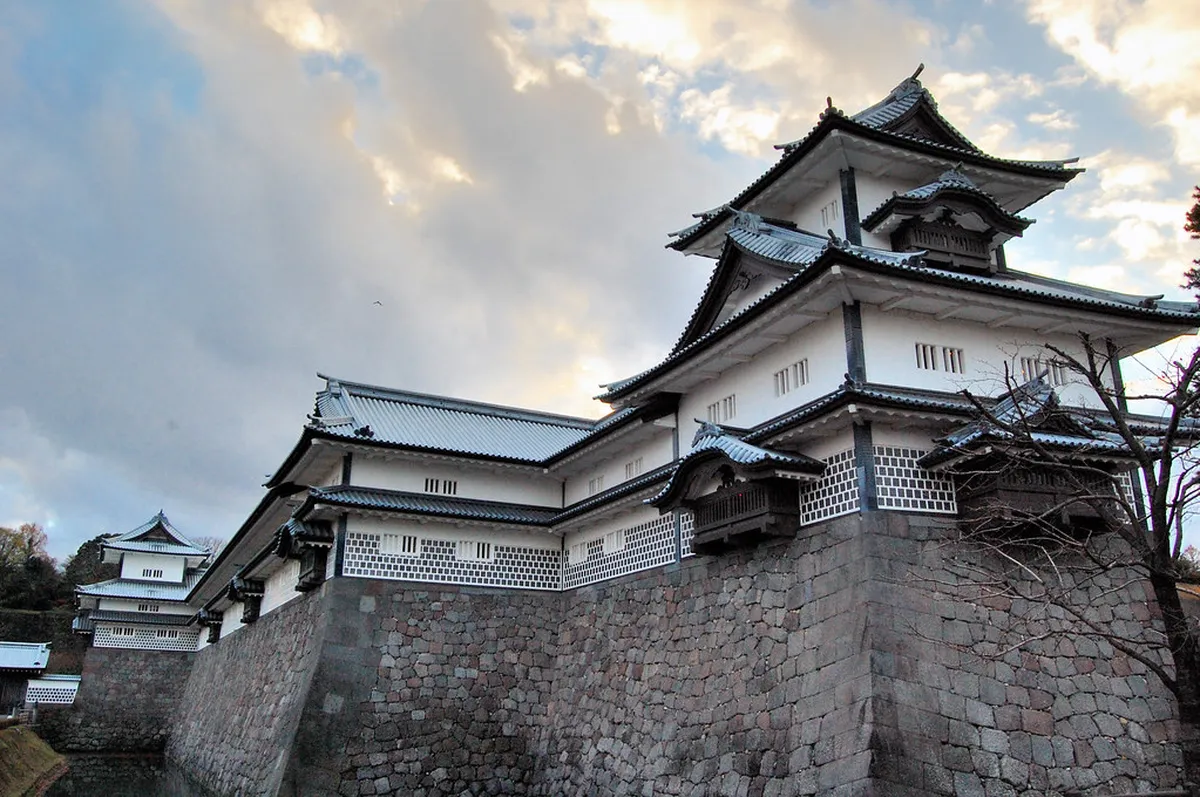
The castle grounds are free to enter from 7:00 to 18:00 (March–October) and 8:00 to 17:00 (November–February). You pay only if you enter the three reconstructed structures inside — the Hishi Yagura turret, the Gojikken Nagaya, and the Hashizume-mon Tsuzuki Yagura — which together cost ¥320. The free grounds already include the dramatic Ishikawa-mon Gate, the Kahoku-mon Gate, and the circuit of stone walls that show three distinct masonry styles built across different Edo-period decades.
The Maeda clan ruled the Kaga Domain for the full 280-year Edo Period and never lost control to rivals — an unusual record that kept the castle intact while others fell. Walking the outer walls makes this history legible: the older sections used rough-cut stone while later work shifted to more precisely fitted blocks, a visual record of advancing craft over centuries. Allow 30–45 minutes for a full circuit of the free perimeter.
Free volunteer guides from the Kanazawa Goodwill Guide Network (KGGN) are stationed at the information booth near Ishikawa-mon Gate on most mornings. These local English-speaking volunteers offer 30-minute walking strolls focused on the castle and its history at zero cost. You are expected to cover their admission if you enter any paid buildings together, but for the free exterior circuit the service is completely without charge.
2. Kenrokuen Garden — Free Early Morning Entry
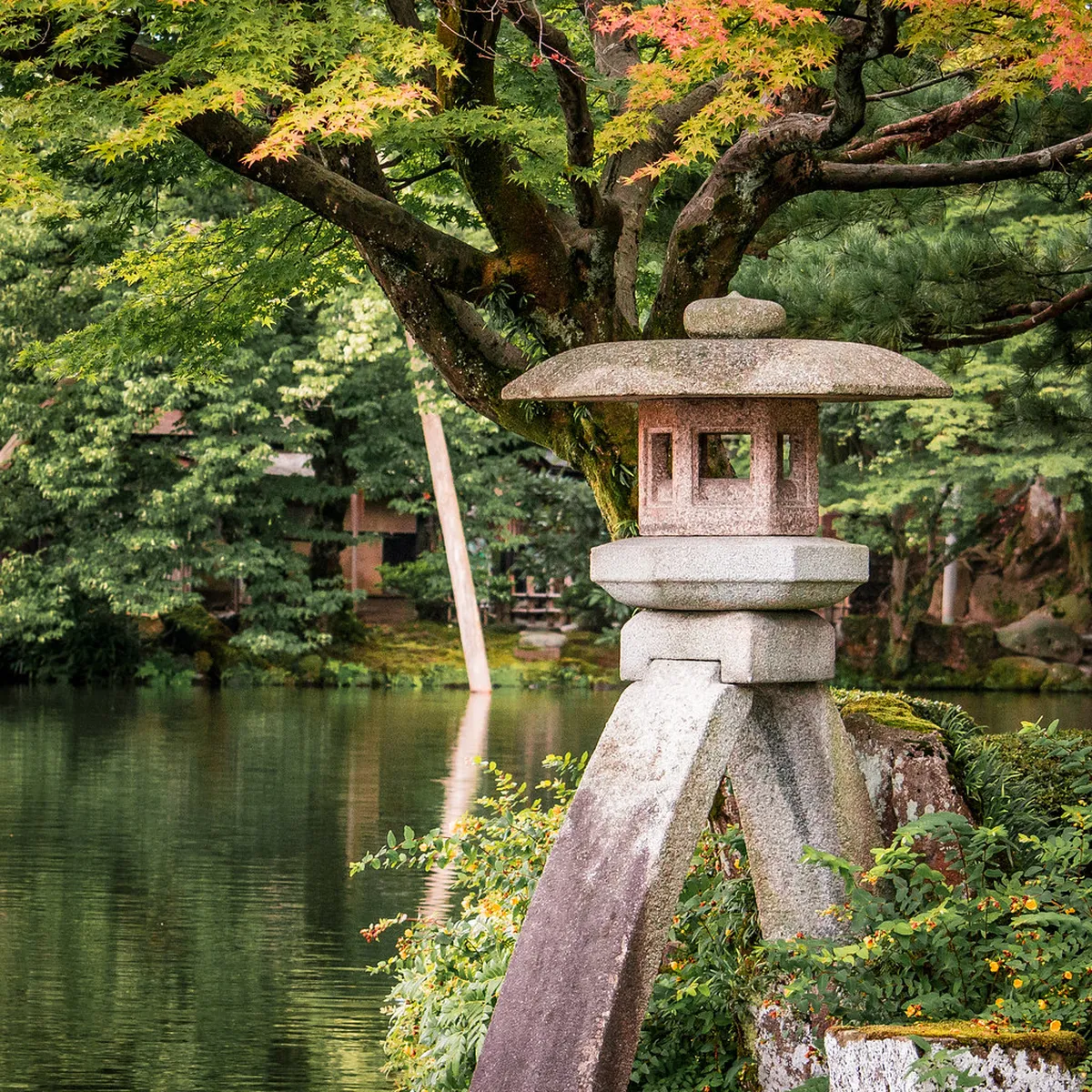
Most visitors pay ¥320 to enter Kenrokuen, consistently ranked among Japan's top three landscape gardens. Fewer know the garden opens free of charge before its official paid hours every single day of the year. In summer (April–August) the free window runs from 04:00 to 06:45. In spring and autumn (March, September, October) it opens at 05:00. Winter months (November–February) allow free entry from 06:00 to 07:45. Arriving at these times means near-empty paths, soft morning light, and the same garden that later costs money. You can verify current opening times and seasonal changes on visitkanazawa.jp.
The early window is long enough for a full lap around the Kasumigaike pond, past the iconic karasaki matsu pine tree (planted from seed over 150 years ago), and up to the elevated viewpoint at the northern end of the garden. In winter, the yukizuri rope structures draped over the pines are fully visible during the free morning period. Carry a coat — the garden sits slightly elevated and mornings are colder than the city center suggests.
No competitor article highlights this free entry mechanism as a primary strategy, but it is one of the highest-value free experiences in all of Kanazawa. You see exactly the same garden that charges admission for the rest of the day, with a fraction of the crowd. Pair it with a walk through the adjacent castle park grounds immediately after and you have two of the city's biggest draws covered before 08:00 at zero cost.
3. Higashi Chaya District — Historic Geisha Streets
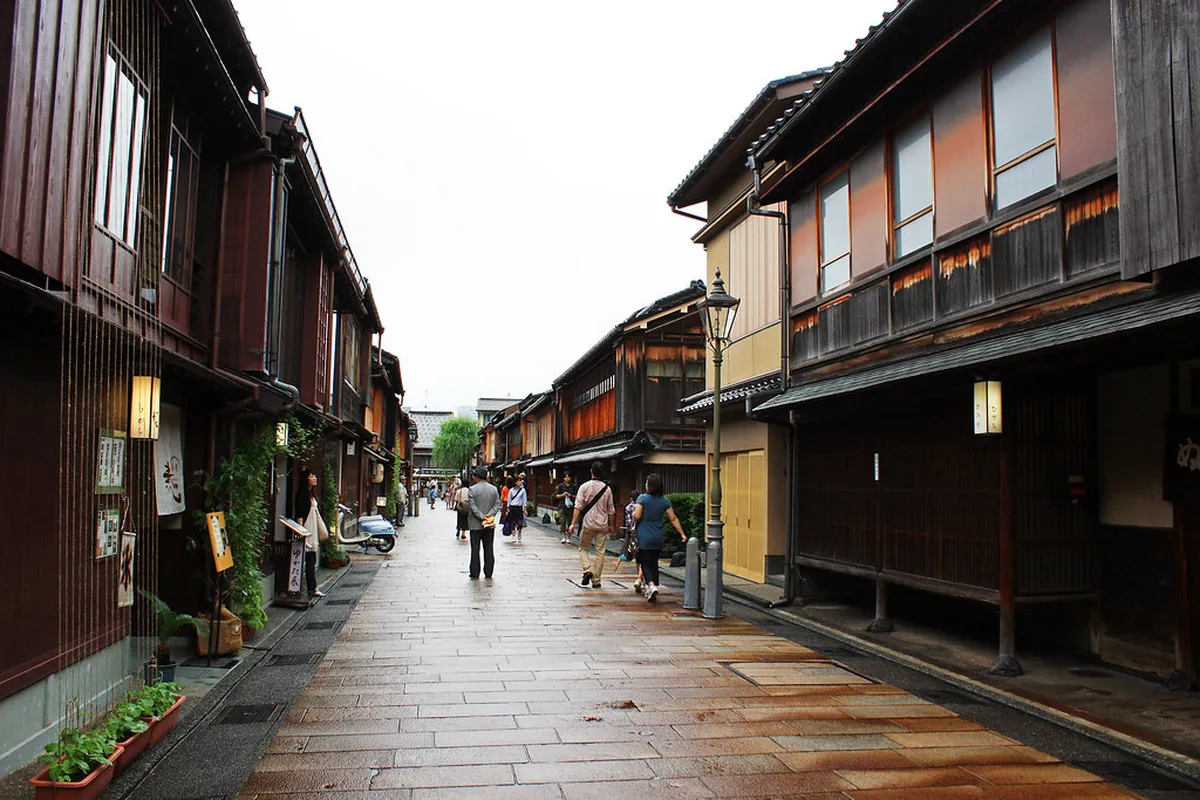
The Higashi Chaya district is Kanazawa's largest surviving geisha quarter, its two-story wooden lattice-fronted buildings largely unchanged since the Edo period. Walking the main cobblestone street and the quieter back alleys costs nothing and is always accessible. The district is designated as an Important Preservation District for Groups of Historic Buildings, meaning the city maintains the streetscape at public expense. You are free to photograph, wander, and sit on the benches along the canal without spending a yen.
The best times to visit are early morning before 09:00 or after 16:00 on weekdays. Midday on weekends brings tour buses and long queues at the gold-leaf soft-serve stalls. Several of the teahouses still operate at night as working geisha establishments — if you walk the district on a Thursday or Friday evening you may hear shamisen music drifting from upstairs windows. Individual teahouse interiors and museums on the street charge ¥500–¥700 to enter, but the street experience itself is free.
The Shima teahouse (built 1820, designated as an Important Cultural Asset) is the most visited paid interior. If you skip it, you lose almost nothing architecturally — the exterior and the street proportions around it tell the same story. Your money is better spent on a broader look at Kanazawa attractions if budget is tight.
4. 21st Century Museum of Contemporary Art — Free Zones
The circular glass building designed by SANAA architects is one of Japan's most significant postwar structures, and about half of it is free. The outer ring of the building — called the "Free Zone" — runs from 09:00 to 22:00 daily (the paid exhibition zone closes at 18:00 Tuesday–Sunday, closed Monday). The free areas include the outdoor courtyard installations, the circular corridors, and several permanently installed works that do not require a ticket.
The most photographed free work is Pipilotti Rist's "Pixel Forest" in the courtyard during certain installation periods, and the large outdoor sculpture "The Man Who Measures the Clouds" by Jan Fabre on the south side of the building. The "Colour Activity House" by Olafur Eliasson — a set of coloured glass pavilions in the courtyard — is accessible without charge and provides one of the best photography opportunities in the city. Check the museum's current installation calendar at kanazawa21.jp before your visit, as some outdoor works rotate seasonally.
Leandro Erlich's famous "Swimming Pool" — the most iconic work in the collection where visitors appear to stand underwater — requires a paid ticket (¥1,000 adults). This is the only must-see work behind the paywall. If your budget only allows one paid entry at the museum, this is where to spend it. Everything else visible from the free zone is architecturally and artistically substantial on its own.
5. D.T. Suzuki Museum — Water-Mirror Garden
The D.T. Suzuki Museum honours Daisetz Teitaro Suzuki, the Kanazawa-born philosopher who introduced Zen Buddhism to the Western world in the early 20th century. The museum interior charges ¥300 admission (open 09:30–17:00, closed Monday and national holidays). However, the celebrated Water-Mirror Garden — a minimalist reflecting pool enclosed by concrete walls, designed by architect Yoshio Taniguchi — is partially visible from the public walkway that runs behind the building at no cost.
The exterior approach along the path from Kenrokuen toward the museum offers a clear view of the garden's proportions and the quality of the Taniguchi stonework. The spatial calm of the design communicates the philosophical atmosphere of the museum without needing to enter. That said, at ¥300 this is one of the cheapest museum tickets in the city and worth the spend if you have any interest in Zen or contemporary Japanese architecture.
6. Ishikawa Prefectural Museum of Art — Free Lobby Access
The Prefectural Museum of Art charges ¥370 for its permanent collection (open 09:30–18:00 daily). The lobby and the attached Le Musee de H cafe area are free to enter and display rotating selections of local ceramics and lacquerware in glass cases near the entrance. Kanazawa's craft heritage — particularly its Kutani-ware porcelain and Wajima lacquer — is introduced through these lobby displays without any admission requirement.
The museum also runs designated free-entry days several times a year, typically aligned with local cultural festivals and the Cultural Day national holiday on November 3rd. Check the museum's event calendar before your visit. The building itself is architecturally interesting — a modernist structure integrated into the hillside next to Kenrokuen — and the approach through the sculpture garden on the south side can be walked for free at any time.
7. Kanazawa Machiya Information Center
This restored Edo-period townhouse (machiya) on Tamagawa-cho serves as a free visitor center and informal museum. Entry costs nothing (open 09:00–21:00 daily). The building itself is the attraction: the interior shows the traditional doma earthen-floor entryway, the raised tatami reception rooms, the lattice-screened windows that provided ventilation, and the narrow inner courtyard that machiya architecture used to bring light into deep, thin buildings.
Staff provide free maps and explanations of the district in English, Japanese, and Chinese. The small permanent exhibit on the ground floor covers the history of Kanazawa's merchant townhouse architecture. Remove your shoes at the entrance — the tatami rooms upstairs can be viewed from the threshold — and allow 20–30 minutes for a self-guided visit. On rainy days this becomes one of the better free sheltered stops in the city center.
8. Kanazawa City Ashigaru Museum
Two original ashigaru (foot soldier) houses in the Nagamachi district are preserved here as a free museum, open 09:30–17:00 daily. Ashigaru were the lowest rank of samurai — the enlisted men who performed actual military labor while higher-ranking samurai focused on administration. Their homes were modest by samurai standards, with small vegetable gardens, compact tatami rooms, and minimal decorative work. Visiting them alongside the grander Nomura Samurai Residence (paid, ¥550) makes the social hierarchy of Edo-period Kanazawa visually immediate.
The vegetable gardens at the rear of both houses have been replanted with period-appropriate crops. Interpretive panels are available in English. Budget travelers get more contextual education here than in many paid museums because the contrast between ashigaru poverty and Maeda-clan wealth — told through the architecture alone — is one of the sharper social narratives in the city. Arrive before 11:00 on weekdays to have both houses almost entirely to yourself.
9. Nagamachi Samurai District — Free Street Wandering
The Nagamachi district occupies the area southwest of Kanazawa Castle and contains some of the most intact Edo-period urban fabric in Japan. The earthen walls (dobei) lining the narrow lanes are still standing, enclosing the former properties of mid- and high-ranking samurai families. Walking the district costs nothing. The canal that runs through the center of Nagamachi is original infrastructure — water was diverted from the Saigawa River to supply the district's properties — and the stone channels are still in place.
Each winter, the earthen walls are wrapped in straw mats (komomaki) to protect them from frost damage, a maintenance ritual the city has continued for centuries. If you visit between late November and March you will see the walls in their wrapped state, which itself has become an iconic image of winter in Kanazawa. The only paid building accessible to the public is the Nomura Samurai Residence. The lanes, walls, and canals are always free.
10. Kanazawa Station — Motenashi Dome and Tsuzumi-mon Gate
The western exit of Kanazawa Station is one of the most photographed train stations in Japan, and it costs nothing to stand in front of it. The Motenashi (Welcome) Dome is a steel-and-glass structure large enough to shelter waiting passengers from the city's heavy rainfall. Behind it stands the Tsuzumi-mon Gate — two enormous drum-shaped wooden pillars representing the tsuzumi hand-drums used in traditional Noh theater, which has deep roots in Kanazawa. Both structures are public infrastructure, always accessible.
The Tourist Information Center inside the station is an important first stop for budget travelers. Staff speak English and provide free city maps, bus route guides, and current event schedules. The center also runs a free umbrella lending service — pick up a loaner umbrella here if it starts raining and return it to any of the partner drop-off points around the city. This is a genuinely useful free service for a city that receives around 2,400mm of rain annually.
11. Omicho Market — Free to Explore
Omicho Market is Kanazawa's 300-year-old covered food market, housing over 170 stalls and small restaurants. Walking through it is free. The market operates roughly 09:00–17:00 daily with most seafood stalls most active in the morning. It has been called the "Kitchen of Kanazawa" because it supplies the restaurants of the city as well as local households. The atmosphere alone — the smell of fresh crab, the calls of fishmongers, the stacks of seasonal Hokuriku produce — is worth a full 30-minute circuit.
Eating at Omicho costs money. A kaisendon (seafood bowl) at one of the second-floor restaurants runs ¥2,000–¥4,000. Standing stalls at ground level sell individual oysters and grilled skewers for ¥300–¥500 each. If you want to eat, arrive before 10:30 to avoid queues. If you just want the sensory experience and a look at Hokuriku seafood culture, a free walk through the market is entirely satisfying. November through March is peak crab season — the snow crab and king crab on display are genuinely impressive even if you don't buy.
12. Shofukaku Garden — Quiet Alternative to Kenrokuen
Shofukaku is a small free garden tucked behind the Honda Museum, a short walk northeast of Kenrokuen. It is open during daylight hours at no cost. The garden features a central pond, mature maple trees, and a raised wooden rest platform that looks back toward the castle district. On autumn weekends when Kenrokuen is packed with tour groups, Shofukaku often has fewer than ten visitors.
It is one of the city's genuinely hidden free spots — not featured prominently in most English-language guides. The approach from the Honda Museum along the narrow lane adds to the sense of discovery. Budget 20–30 minutes here as a quieter counterpoint to the main garden circuit.
13. Gyokusen'inmaru Garden — Free Evening Light-up
Gyokusen'inmaru is a reconstructed 17th-century garden inside the castle grounds, originally commissioned by the third Maeda lord in 1634. During the day it charges ¥320 for entry. On Friday and Saturday evenings, and during several seasonal events in spring (cherry blossom), summer, and autumn, the garden opens for free evening illuminations that run from sunset to approximately 21:00. The light-up sequence illuminates the central pond, the stone lanterns, and the hillside karesansui section.
Check the Ishikawa Prefecture castle park website before your visit to confirm light-up dates — the schedule changes seasonally and some events are added ad hoc. Arrive 10–15 minutes before sunset to find a bench on the main viewing terrace. The reflection of the illuminated stone walls in the pond is one of the more striking free night views in the city.
14. Kanazawa Umimirai Library — The Cake Wall
The Umimirai Library is a 2011 building by architects Coelacanth K&H, and its exterior — 6,000 small circular perforated openings punched through a white concrete wall — has become known informally as the "Cake Wall" for its appearance in photographs. The library is a functioning public facility, open 10:00–19:00 Tuesday–Friday and 10:00–17:00 on weekends (closed Monday and some national holidays). Entry is free for everyone.
Inside, the same perforated wall pattern filters diffused natural light across the reading floor, creating an unusually calm atmosphere for a public building. You can sit and read, use the free Wi-Fi, or simply walk through the space for the architectural experience. Keep your voice low — this is a working library and Kanazawa residents use it daily. Photography of the building exterior is fine; pointing a camera at seated patrons inside is not. The library is a 20-minute bus ride northwest of the station, making it a reasonable add-on if you are visiting the Kenroku/castle area and want a mid-afternoon break.
15. Kanazawa Night Museum — Seasonal Free Evening Events
Several of the city's museums and cultural facilities participate in an annual "Night Museum" program that extends hours and removes entry fees on designated evenings. These events are typically scheduled in late spring (May–June), the Obon period in August, and autumn (October). Participating venues in recent years have included the Ishikawa Prefectural Art Museum, the Ishikawa Prefectural History Museum, and the 21st Century Museum. Free evening hours typically run 18:00–20:00.
The Night Museum events often coincide with outdoor live performances — traditional Noh or Kyogen theater staged on the castle grounds, or jazz and classical music in the museum courtyards. The Kanazawa Tourism Association publishes a seasonal events calendar at visitkanazawa.jp with dates and participating venues. Booking ahead is not required for most Night Museum events, but popular venues fill early. Arrive 20 minutes before the start to secure a good position.
A Free One-Day Walking Route Through Kanazawa
The free sights above sit close together, but their opening windows do not line up. This order follows those windows so you never wait for a gate to open. It uses the April–August timings, so shift the early hours in other seasons.
- 04:00–06:45, Kenrokuen Garden. Use the free early window and walk the full Kasumigaike pond circuit. In March, September and October the window starts at 05:00. In November–February it runs 06:00–07:45.
- 07:00–08:00, Kanazawa Castle Park. The grounds open at 7:00 from March to October. The park is right next to Kenrokuen, so you can walk straight over. In winter the grounds open at 8:00, so use the gap for a coffee.
- 09:00–10:00, 21st Century Museum free zone. The free ring opens at 09:00. You can see the courtyard works and corridors without a ticket.
- 10:30–12:00, Omicho Market. Browse the stalls first and buy lunch afterwards, as the first hour is when the market is liveliest.
- 13:00–15:00, Nagamachi Samurai District. The earthen-walled lanes are quiet in the early afternoon, and the free wandering fits well after lunch.
- 16:00 onward, Higashi Chaya. Arriving after 16:00 on a weekday avoids the tour-bus crowds. On a Thursday or Friday you may hear shamisen from the upper windows.
- Evening, Gyokusen'inmaru Garden. End with the free light-up if it is running during your visit.
Weather and fatigue. Allow for a pause after the early start. A break at the Kanazawa Station dome or in the Ishikawa Prefectural Museum of Art lobby fits between the morning and afternoon legs. On a rainy day, swap the outdoor stops for the indoor options in the rainy-day section below.
Total cost: ¥0 for admission. Budget separately for food and any paid interiors you choose to add.
Best Free Indoor Spots for Rainy Days
Kanazawa is one of the rainiest cities in Japan — the local saying holds that even if you forget your lunch, do not forget your umbrella. Annual precipitation averages around 2,400mm, with rain or snow falling on roughly 180 days per year. The good news is the city's free indoor infrastructure is excellent. The Motenashi Dome at Kanazawa Station is a covered public space you can shelter in at any time. The Tourist Information Center inside the station gives you dry time plus useful free maps and event schedules.
The Machiya Information Center on Tamagawa-cho is a heated tatami-and-timber townhouse that absorbs rainy afternoons well. The Umimirai Library is the best option for extended wet-weather shelter — free Wi-Fi, unlimited seating, and the architectural experience of the perforated wall in grey-sky light (which looks better than in direct sun). The 21st Century Museum's free public corridor circuit stays dry even in heavy rain. For more ideas on rainy-day Kanazawa, see our guide to Kanazawa Rainy Day Activities: Indoor Travel Guide.
Practical Planning Tips for Budget Travelers
Most of the sites on this list cluster in two walkable areas: the castle-museum-Higashi Chaya zone in the northeast, and the Nagamachi-Omicho zone to the west. A logical route from Kanazawa Station covers Omicho Market, Nagamachi, the Ashigaru Museum, and the castle park in a single 4–5 hour morning loop. Afternoons can be spent at the 21st Century Museum and Higashi Chaya. The D.T. Suzuki Museum, Umimirai Library, and Shofukaku Garden all work as standalone afternoon additions.
Transportation is rarely necessary between the main free sites. If you need a bus, the Kanazawa Loop Bus covers the most important stops for ¥200 per ride (day pass ¥600). The free umbrella lending at the Tourist Information Center saves you ¥800–¥1,200 on a cheap convenience-store umbrella every time it rains. Return the umbrella to any partner drop-off point, including those at the main museums. For travelers arriving from Tokyo, reviewing the options in our guide to Tokyo To Kanazawa Travel Guide travel can help you find cheaper Shinkansen fares booked in advance.
Finally: the KGGN volunteer guides at the castle are one of the best-kept free secrets in the city. Find them at the Ishikawa-mon Gate information booth, usually available 09:30–15:00 on weekdays. Their 30-minute strolls cover local history that does not appear in English-language signage. The guide's knowledge of the stone walls alone is worth the stop.
Quick Reference: Free Kanazawa Attractions at a Glance
| Attraction | Why free | Hours (free access) |
|---|---|---|
| Kanazawa Castle Park | Public grounds; structures inside cost ¥320 | 07:00–18:00 (Mar–Oct) / 08:00–17:00 (Nov–Feb) |
| Kenrokuen Garden | Pre-opening free window, every day of the year | Apr–Aug 04:00–06:45 · Mar/Sep/Oct 05:00–06:45 · Nov–Feb 06:00–07:45 |
| Higashi Chaya District | Public streetscape, Important Preservation District | Always accessible |
| 21st Century Museum — Free Zone | Outer corridor and outdoor works are public | 09:00–22:00 daily |
| Nagamachi Samurai District | Public lanes, original earthen walls and canals | Always accessible |
| Ashigaru Museum | City-operated free museum | 09:30–17:00 daily |
| Omicho Market | Public covered market; eating costs extra | ~09:00–17:00 daily |
| Kanazawa Machiya Info Center | Free visitor center in a restored townhouse | 09:00–21:00 daily |
| Kanazawa Station (Motenashi Dome) | Public infrastructure | Always accessible |
| Umimirai Library | Public library, free entry | Tue–Fri 10:00–19:00 · Sat–Sun 10:00–17:00 |
| Shofukaku Garden | Public garden, rarely listed in guides | Daylight hours |
| Gyokusen'inmaru Garden | Free on Fri/Sat evenings and seasonal light-up events | Sunset to ~21:00 on event nights |
Frequently Asked Questions
Is the 21st Century Museum of Contemporary Art free?
The museum features several public 'Free Zones' and outdoor installations that cost $0 to visit. However, the special rotating exhibitions and the famous 'Swimming Pool' interior require a paid ticket. You can spend about an hour exploring the free areas without any cost.
How many days do you need to see the free sites in Kanazawa?
You should plan for at least two full days to see the major free landmarks at a relaxed pace. This allows you to explore the samurai and geisha districts on day one and the museums and gardens on day two. Check our guide on How Many Days in Kanazawa: 9 Essential Planning Tips for more details.
Are there free walking tours in Kanazawa?
Yes, the Kanazawa Goodwill Guide Network (KGGN) offers free volunteer-led walking tours of the castle and surrounding areas. While the service is free, you are expected to cover the guide's entrance fees if you enter paid sites together. It is a great way to learn local history for $0.
Kanazawa rewards budget travelers who know where to look. The castle grounds, the geisha streets, the 21st Century Museum's public zones, and the early-morning free window at Kenrokuen together make a full day of zero-cost sightseeing at Japan's most underrated cultural city. Use the free umbrella service at the station, check the Night Museum calendar for your travel dates, and let the KGGN volunteers at the castle fill in the history that signage leaves out. This is a city that has invested seriously in making its culture accessible without a ticket.
Free: The Kanazawa Essentials guide
Top things to do, where to stay, a perfect day plan, getting around, and the best time to go — a Kanazawa mini-guide you can take offline.
You might also like


Continue reading
More guides you'll find useful