

14 Best Free Things to Do in Kagoshima: Budget Guide (2026)
Discover the top free things to do in Kagoshima, from Sakurajima lava fields to Shiroyama views. Save money with local tips on parks, shrines, and hidden gems.
On this page
Kagoshima is one of the most wallet-friendly major cities in Japan, largely because its best experiences cost nothing. The active volcano dominates the skyline twenty-four hours a day, the samurai history is written across open parks and riverside paths, and the volcanic hot spring at Sakurajima's coast is free to soak in any afternoon. Three trips to this corner of Kyushu have convinced me that the paid attractions are optional extras, not the main event.
This guide covers the fourteen best no-cost experiences available to visitors in 2026, organized by area so you can group them efficiently into half-day blocks. Every location listed here has been verified as free to enter. Where transport costs apply, we give you the cheapest route. We have also included practical timing notes and one section on what Kagoshima gives away free that most travel guides miss entirely.
Is Kagoshima Worth Visiting for Budget Travelers?
Kagoshima stands out as one of the most affordable major cities in Japan because its headline attraction — the smoking Sakurajima volcano across Kinko Bay — never closes and never charges admission. Most of the city's 22 Best Kagoshima Attractions in 2026 tied to the Satsuma domain and Meiji Restoration sit in open parks or along free riverside paths. You can spend three full days here without paying a single yen in admission fees.
The layout of the city helps. The central tram network connects most of the historic areas, and the waterfront is flat and walkable. Budget travelers can comfortably cover Shiroyama, the riverfront statue walk, Tenmonkan, and the port in one day on foot. Add the Sakurajima day trip and you have a genuinely rich two-day itinerary at near-zero sightseeing cost.
One structural advantage that other cities lack: Kagoshima's volcanic geography means most of its scenic viewpoints are hilltops, coastal walks, and lava fields rather than museums or theme parks. Outdoor spaces are free by default. The city leans into this — the famous foot bath at Nagisa Park, the lava trail observatory, and the Kotsuki riverside walk all exist specifically for public enjoyment without barriers or fees.
Shiroyama Park and Observatory
The Shiroyama Observatory viewpoint is the single best free viewpoint in Kagoshima and, arguably, one of the best free viewpoints in all of Kyushu. The platform sits 107 meters above sea level and frames the full width of Kinko Bay, with Sakurajima's volcanic cone directly across the water. The observation deck is open twenty-four hours a day with no entry fee.
Most visitors combine the viewpoint with the Satsuma Rebellion trail running through the forested hillside below. Saigo Takamori made his final stand in this park in 1877, and small cave monuments and historical markers are tucked among the camphor trees along the walking paths. The trail from Terukuni Shrine to the summit takes about twenty minutes at a steady pace. City View Bus line stops directly at the summit for those who prefer not to walk up.
Timing matters here. Sunrise from the deck is exceptional — Sakurajima's silhouette turns deep purple against the sky before the city lights fade below you. On clear days after rain, the volcanic plume is sharply defined against the blue bay. Arrive thirty minutes before dawn or within an hour of sunset for the cleanest light.
Sakurajima Nagisa Park and Yogan Nagisa Lava Trail
Sakurajima Island charges no entry fee and the best experiences on the island cost nothing beyond the 200-yen ferry crossing. The Nagisa Park foot bath is the most famous: a 100-metre long open-air channel fed by natural volcanic hot springs running along the shoreline. Soaking your feet while watching the ferry route cross Kinko Bay is a quintessential Kagoshima moment. The foot bath runs from 09:00 to sunset daily; bring your own small towel.
The Yogan Nagisa Lava Trail runs 3 kilometres along the coast directly north of the ferry terminal, following the edge of the 1914 eruption's hardened lava flow. The path is paved and flat, passing over black volcanic rock shelves that drop into the bay. It remains completely free and is one of the only places in Japan where you can walk on a documented historical lava field without paying for a guided tour. Allow around forty-five minutes to walk it at a comfortable pace.
The Arimura Lava Observatory on the island's southern side offers the closest safe view of the active craters and is also free. You can reach it on the Sakurajima Island View Bus, which departs from the ferry terminal. The jagged black landscape surrounding the observatory gives a strong sense of the geological power involved in these eruptions. Avoid visiting during heavy ash fall days — the tourism office posts daily ash forecasts online and at the ferry terminal.
Kotsuki River and Meiji Restoration Statue Walk
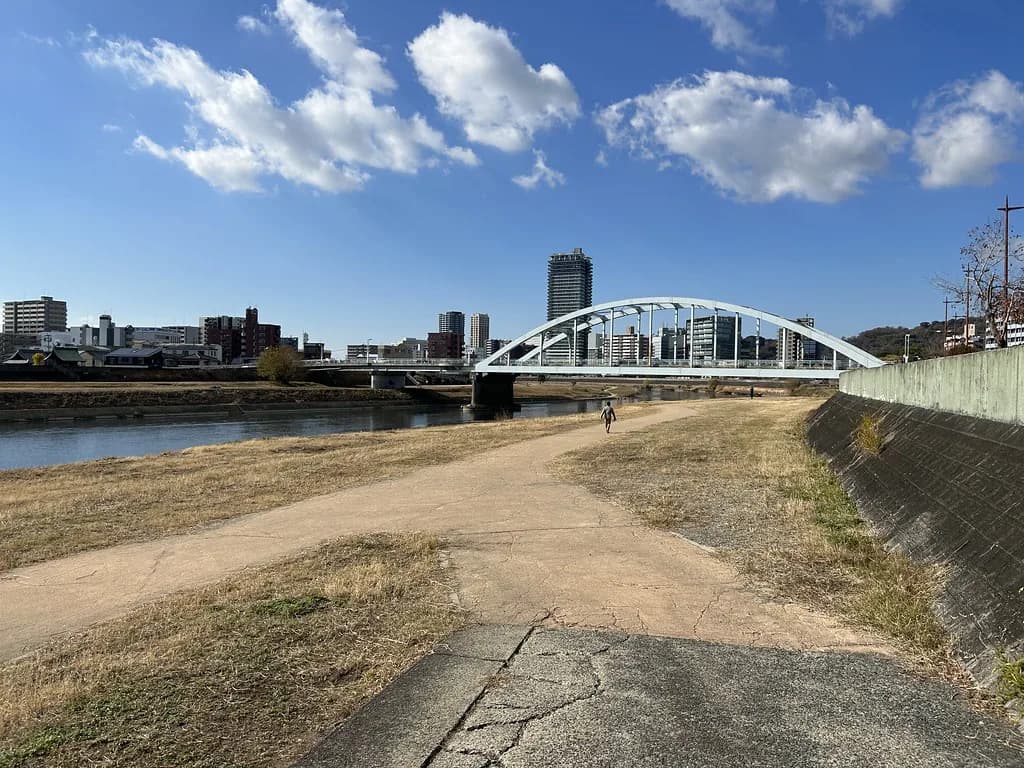
The paved riverside path along the Kotsuki River is Kagoshima's best free walking route for history. Bronze statues of the key figures of the Meiji Restoration — Saigo Takamori, Okubo Toshimichi, and their contemporaries — are placed at intervals along the bank with explanatory plaques. The route is free, flat, and open twenty-four hours. From Kagoshima-Chuo Station the path starts in about a five-minute walk and runs several kilometres toward the city centre.
In late March, the riverbank fills with cherry blossoms, making this the city's best free hanami location. During the rest of the year it functions as a jogging and cycling route for locals. Evening is particularly atmospheric: the stone lanterns along the path reflect in the water, and the distant glow of the Sakurajima ferry crossing the dark bay is visible from the northern section of the walk.
The Museum of the Meiji Restoration (Ishin Furusato-kan) sits directly on this route but charges admission. You do not need to enter to appreciate the broader significance of the area — the outdoor statues and plaques provide enough context for a meaningful walk. Save the museum budget for Reimeikan, which has more breadth.
Terukuni Shrine and Free Shrine Grounds
Terukuni Shrine, dedicated to the 28th Shimazu lord Nariakira, sits at the foot of Shiroyama hill and is completely free to enter and wander. The grounds feature the main hall, a large camphor tree said to be centuries old, and a small pond garden. The shrine is less crowded than major tourist shrines in Kyoto and Nara, which makes it a genuinely calm stop for fifteen to twenty minutes. From here the trail to Shiroyama Observatory begins.
Kagoshima Jingu Shrine, about forty minutes by train near Hayato Station, is another no-cost stop worth combining with a Kirishima day trip. It serves as the head shrine of the former Osumi Province and features intricate wooden carvings under the main eaves. The grounds are open from dawn and the architecture is more elaborate than the city-centre shrines.
Both shrines fall into the category of everyday spiritual spaces that Kagoshima residents use regularly — they are not tourist-packaged experiences with entrance huts or required offerings. Visiting them gives a more grounded impression of Kagoshima's religious life than the famous paid gardens.
Reimeikan Museum: When Entry Is Free
The Reimeikan (Kagoshima Prefectural Museum of Culture) charges 300 yen for adults on most days, making it one of the cheapest museums in Kyushu. However, on designated national culture days — including Culture Day (3 November) and Kagoshima Prefectural Culture Day — the permanent collection is fully free to all visitors. The museum covers the Satsuma domain, Meiji Restoration political history, and regional folklore with well-labelled English displays.
Even on paid days, the exterior grounds around the reconstructed Tsurumaru Castle stone walls are free to explore. The remaining castle ruins and the wide moat are impressive from the outside and make for good photography without requiring a ticket. The moat walkway connects to the Kotsuki River path, so you can incorporate it into a longer free riverside walk.
Check the museum's official website before you visit for the current free-entry calendar. The schedule changes slightly from year to year based on national holiday dates. This is a detail most travel blogs skip entirely — arriving on the right day saves you 300 yen and rewards the effort with good English context for everything else you will see in the city.
Reimeikan is fully free on Culture Day (November 3) and Kagoshima Prefectural Culture Day. Check ahead for the exact 2026 dates on the museum website. The permanent collection covers Satsuma domain history and Meiji Restoration politics with English labels.
The Sengan-en Boundary Walk and Iso Beach
Sengan-en garden charges 1,000 yen for entry — that fee is worth paying on a longer visit, but budget travelers can still absorb a significant portion of the experience for free. The outer stone walls and the garden's sea-facing elevation are visible from the public road and coastal path that runs along the northern edge of the property. From this path you get the characteristic view of formal plantings against the Sakurajima backdrop that makes Sengan-en famous.
Iso Beach, the narrow strip of shoreline immediately north of the garden entrance, is free and accessible from the bus stop. Locals come here for summer swimming, windsurfing, and evening walks. The view across Kinko Bay from beach level — looking directly at Sakurajima from water height — is different from the hilltop observatory view and worth the short detour. The beach is calm and shallow, protected by the bay's geography.
This section of the northern coast is best visited in the late afternoon when the light falls behind Shiroyama and catches the smoke above Sakurajima from the east. The coastal bus route from central Kagoshima stops at Iso-teien, a ten-minute ride from Tenmonkan. Combining Iso Beach with a stop at the garden exterior and then the return bus journey costs only the bus fare.
You can view the famous Sengan-en garden's iconic Sakurajima backdrop composition completely free from the public coastal path on the northern edge of the property. The formal plantings and sea-facing elevation frame perfectly from the road — you capture the essence of the garden without paying the 1,000 yen entry fee.
Tenmonkan Arcade and Waterfront Square
Tenmonkan is the largest covered shopping district in southern Kyushu and costs nothing to walk through. The covered arcade network runs for several blocks, sheltering you from Kagoshima's frequent summer showers and occasional ash fall. Most shops open at 10:00 and close by 20:00. The area is good for window-shopping local Satsuma crafts, watching street vendors, and picking up supermarket snacks from the 24-hour convenience stores on the side alleys.
Hidden within the side streets are bronze sculptures of local historical figures and small shrine niches built into the arcade walls. These are easy to miss if you walk straight through. Slow down and look at the intersections — several small plaques explain the neighborhood's role in pre-Meiji trade.
Dolphin Port and the Marine Port waterfront square are a short tram ride from Tenmonkan toward the bay. The green lawns and wide promenade here offer unobstructed water views and make a good picnic stop. The square is free and typically open from 06:00 to 22:00. When no cruise ships are docked, the expanse of calm bay water with Sakurajima behind it creates the kind of simple, unhurried scene that the city does best.
Ishibashi Memorial Park and the Saigo Takamori Statue
Ishibashi Memorial Park preserves three historic stone bridges relocated from their original sites to protect them from flood risk. The park includes a small shingle beach and a direct sightline to Sakurajima across the narrow southern bay. Entry to the park grounds is free and hours are roughly 09:00 to 17:00. It is a short walk from the city aquarium or the ferry terminal area and serves as a good fifteen-minute stop between other sites.
The Saigo Takamori bronze statue stands eight metres tall near the base of Shiroyama hill and is one of Kagoshima's most photographed landmarks. It is free to view at any time and is illuminated after dark. The best angle for photography is from the pavement on the opposite side of the street, where you can capture both the statue and the wooded hillside rising behind it. Walking from Tenmonkan to the statue takes about ten minutes.
These two sites pair naturally in a half-morning route: start at the Saigo statue in the morning light, walk up to Shiroyama Observatory along the forest trail, then descend to Ishibashi Park via the southern side of the hill before heading back to the tram. The combined circuit covers the most photogenic free sites in the city centre without backtracking.
Volcano Watching and Ash-Day Tips
Watching Sakurajima erupt is free and happens regularly — the volcano has been continuously active since 1955. The best free viewing spots in the city are the waterfront at Dolphin Port (broad water-level view), the Shiroyama Observatory platform (elevated bay panorama), and the pier at the Ferry Terminal (ground level with the ferry crossing as foreground). Each gives a different compositional angle. Check the Sakurajima eruption status on the official Japan Meteorological Agency website before heading to the island — eruption alerts above level 3 restrict access to parts of the island.
Ash fall is a routine part of life in Kagoshima. When the wind blows toward the city, a light grey dusting covers streets, cars, and café tables. Most locals carry a folding umbrella as an ash shield rather than a rain shield. As a visitor, the main practical steps are: keep camera lenses covered between shots, wear a light mask if the ash is heavy, and avoid wearing contact lenses on high-ash days. The city still functions completely normally during light ash fall — it is not a hazard, just an inconvenience.
For the complete Sakurajima ferry guide and ash-survival advice, we have a dedicated article that covers ferry timings, the Island View Bus circuit, and the best lava field trails. That article also lists which island areas close during higher alert levels in 2026.
Day-Trip Free Spots Near Kagoshima
Cape Nagasakibana at the southern tip of the Satsuma Peninsula offers one of the most dramatic free views in the region. The volcanic cone of Mount Kaimon rises 924 metres directly from the sea just offshore, earning it the nickname "Satsuma Fuji." The coastal path and lighthouse at the cape are free to access all day. Local legend connects this cape with the Urashima Taro folklore. Getting here requires a train to Ibusuki then a local bus to the cape, so budget a full half-day.
The Sakurajima Natural Dinosaur Park is a hilltop playground on Sakurajima Island with large dinosaur-themed climbing equipment and an open view of the volcano's northern face from close range. It is free and open around the clock. The uphill walk from the ferry terminal takes about ten minutes — bring water as vending machines are sparse near the top.
Both of these spots work best as add-ons to a day already committed to the Sakurajima circuit or an Ibusuki trip. If you are staying two or three nights, they slot naturally into the second day alongside the lava trail and Nagisa foot bath. Find more ideas in our 12 Kagoshima Hidden Gems and Local Secrets guide, which covers several less-visited free sites across the prefecture.
Getting Around Kagoshima Without Spending Much
The CUTE Pass is the most practical transport option for a day of free sightseeing. It covers the city tram, city buses, and the Sakurajima ferry for a flat daily rate. Current pricing is on the CUTE Pass information page — the pass typically pays for itself if you plan to visit Sakurajima and Shiroyama on the same day. The City View Bus route, which loops the main sightseeing points in the city centre, is included.
Walking is reliable for the central cluster of sites. Shiroyama, the Saigo statue, Terukuni Shrine, the riverfront walk, and Tenmonkan form a roughly oval circuit that takes two to three hours on foot. Most paths are flat or gently sloped. The only steep section is the Shiroyama hill trail itself, which can be bypassed using the City View Bus summit stop.
The Sakurajima ferry runs twenty-four hours a day at approximately fifteen-minute intervals during the day. You pay the 200-yen fare at the terminal on the island side rather than at the city terminal — meaning you board the boat in the city without buying a ticket first. Night crossings cost the same and offer an unusual view of the city lights reflecting across dark water. Consult our 10 Essential Kagoshima Travel Tips: A Complete Guide article for more detail on transport options and the current CUTE Pass price.
Frequently Asked Questions
What are the best free things to do in Kagoshima for families?
Families should prioritize the Sakurajima Natural Dinosaur Park for its large slides and the Nagisa Park foot bath. Both locations are free and offer plenty of space for children to move around. These spots provide great volcanic views while keeping kids entertained without any entry fees.
Is the Sakurajima ferry free?
The Sakurajima ferry is not free, but it is very affordable at around 200 yen for adults. You pay the fare at the terminal on the Sakurajima side rather than in the city. Using a 'Cute Pass' will cover this cost as part of your daily transport ticket.
How do I get to the Shiroyama Observatory without a car?
You can reach the Shiroyama Observatory by taking the Kagoshima City View Bus which stops directly at the viewpoint. Alternatively, a scenic nature trail starts near the Terukuni Shrine and takes about twenty minutes to walk. Both options are popular and provide easy access to the city's best panorama.
Kagoshima proves that you do not need a massive budget to experience the best of Japan's southern charm. From the rumbling peaks of Sakurajima to the samurai riverfront, the city offers genuine discovery at almost zero cost. By grouping these sites into the half-day circuits outlined above — central hill loop, coastal north, Sakurajima island — you can cover fourteen locations in two full days without ever queuing at a ticket window. Pack your walking shoes and a small towel for the foot baths.
We hope this guide helps you plan a rich itinerary while keeping your travel costs under control. Be sure to check out our comprehensive Kagoshima itinerary for more planning inspiration. The warmth of the local people and the beauty of the bay will stay with you long after you leave. Safe travels and enjoy the volcanic wonders of this incredible city.
Free: The Kagoshima Essentials guide
Top things to do, where to stay, a perfect day plan, getting around, and the best time to go — a Kagoshima mini-guide you can take offline.
You might also like


Continue reading
More guides you'll find useful


