

Best Time To Visit Nagasaki: Weather By Month & Guide
Discover the best time to visit Nagasaki with our month-by-month weather guide. Learn about cherry blossoms, the Lantern Festival, and when to avoid the rainy season.
On this page
The best time to visit Nagasaki is October or early November. The air is cool, skies are clear, and the Kunchi Festival fills the city with energy. Spring (late March to early May) is a close second, especially for cherry blossoms. Both windows offer comfortable walking weather for the city's steep hillside streets.
Nagasaki sits in a deep harbor on Kyushu's western coast, giving it a warmer, more humid climate than Tokyo or Kyoto. The surrounding hills trap heat in summer, making midday temperatures feel several degrees hotter than official readings. Winter is mild by Japanese standards, but harbor winds add a bite after sunset. Understanding these micro-climates is the key to planning your visit around the weather, not despite it.
This guide covers Nagasaki weather by month with specific temperature and rainfall data, festival timing, crowd patterns, and packing advice for each season. Whether you are chasing sakura, planning around the Lantern Festival, or simply trying to avoid the rainy season, the breakdown below will help you pick the right week.
Nagasaki Weather by Month: Temperature and Rainfall Table
The table below gives a quick reference for planning. Temperature averages are sourced from Japan Meteorological Agency historical data for Nagasaki station. Daylight hours are included because sightseeing at Nagasaki's outdoor attractions — especially the Peace Park and harbor viewpoints — depends heavily on usable light.
| Month | Avg High (°C) | Avg Low (°C) | Rainfall (mm) | Daylight (hrs) | Notes |
|---|---|---|---|---|---|
| January | 10 | 4 | 65 | 10.5 | Quiet; Lantern Festival prep |
| February | 11 | 4 | 75 | 11.3 | Lantern Festival (dates vary) |
| March | 14 | 7 | 110 | 12.2 | Cherry blossoms from late March |
| April | 19 | 11 | 155 | 13.2 | Peak sakura; crowds rise |
| May | 24 | 16 | 165 | 14.0 | Humid from mid-month; Golden Week |
| June | 27 | 20 | 310 | 14.3 | Tsuyu starts; heaviest rainfall |
| July | 31 | 24 | 265 | 14.0 | Hot and humid; Obon approach |
| August | 32 | 25 | 190 | 13.2 | Peak heat; Obon; Peace Memorial (Aug 9) |
| September | 28 | 22 | 195 | 12.2 | Typhoon risk; still humid |
| October | 23 | 15 | 85 | 11.3 | Best month; Kunchi Festival (Oct 7–9) |
| November | 17 | 9 | 80 | 10.5 | Autumn foliage; low crowds |
| December | 12 | 5 | 60 | 10.2 | Quiet; cold at night |
June is the rainiest month by a wide margin at around 310 mm. October and November are the driest months of the second half of the year, which is why autumn consistently delivers the most comfortable outdoor conditions. August has the longest effective heat — highs above 30°C from mid-July through early September — so plan your days carefully if you visit in summer.
The Tsuyu rainy season (June 1–July 14) brings humidity above 80% and monthly rainfall around 310 mm — avoid hiking the exposed hilltop sites during this window. Bring a sturdy umbrella and plan for indoor museums on the wettest days.
Spring in Nagasaki (March–May): Cherry Blossoms and Mild Temps
Spring is a spectacular time to explore Nagasaki Attractions: Top 20 in 2026 on foot. Cherry blossoms typically appear between the last week of March and early April at Nishizaka Park and along the slopes below Glover Garden. Temperatures range from 10–20°C / 50–68°F during the day, making the hillside walks genuinely pleasant. The parks become vibrant social hubs where locals gather for hanami flower viewing.
Golden Week in early May brings large domestic crowds from across Kyushu. Book accommodation at least two months ahead if your dates overlap with April 29 through May 5. The hillsides are carpeted in fresh greenery and blooming azaleas by mid-May, though humidity starts to creep up toward the end of the month. Rain showers are frequent but usually brief — a compact folding umbrella fits easily in a daypack.
Nagasaki's sakura season averages five to seven days earlier than Tokyo due to its southerly latitude. Check the Japan Meteorological Corporation forecast in February to lock in your specific week. The soft spring light also makes this the best season for daytime photography around the Dutch Slope and Dejima historic areas.
Summer in Nagasaki (June–August): Festivals, Heat, and Humidity
Summer in Nagasaki is characterized by intense heat and humidity that accumulates through the city's bowl-shaped topography. Daily highs often reach 31–32°C / 88–90°F, but the humidity and lack of airflow on the hillsides make it feel three to five degrees hotter. June and July mark the Tsuyu rainy season with persistent downpours and overcast skies. Rainfall peaks in June at around 310 mm — roughly double any other month.
Planning a Nagasaki Itinerary for First-Timers in 2026 in summer requires careful timing to avoid midday heat. Use the city trams to move between neighborhoods rather than climbing the slopes on foot in the afternoon. The city's August 9 Peace Memorial Ceremony at the Peace Park draws significant crowds and is a deeply moving event. Fireworks displays light up the harbor on many weekend nights throughout July.
Despite the heat, summer has real energy. The Obon festival in mid-August features traditional spirit-boat processions through the streets of Chinatown. Indoor museums — the Atomic Bomb Museum, the Museum of History and Culture, and the Dejima exhibits — offer cool refuges during the hottest hours. Hydration is essential; convenience stores on every block sell cold sports drinks for around ¥150.
Fall in Nagasaki (September–November): Kunchi and Autumn Leaves
The Nagasaki Kunchi Festival, held every October 7–9 at Suwa Shrine, is the undisputed highlight of the autumn season. This three-day festival showcases the city's multicultural heritage through dragon dances, Chinese-influenced floats, and Dutch-style ship processions — a direct product of Nagasaki's centuries as Japan's only open trading port. Fall temperatures average 15–24°C / 59–75°F through November, with clear skies and excellent harbor visibility.
Autumn foliage begins turning vibrant red and orange from late October, peaking in mid-November at Kofukuji Temple and the grounds of the Glover Garden. Hiking the surrounding hills becomes far more comfortable as humidity drops after September. This is the most consistent season for outdoor sightseeing, and the city's hilly topography actually becomes an asset once the summer heat lifts.
Crowds are manageable outside the specific Kunchi festival dates. Hotel prices are moderate in late October and November, making this a good window for budget-conscious travelers who still want ideal weather. Pack a light sweater for evenings from late October onward — the harbor breezes turn noticeably cooler after 18:00.
Winter in Nagasaki (December–February): Lanterns and Crisp Air
Winter is surprisingly magical in Nagasaki because of the famous Nagasaki Lantern Festival. Over 15,000 lanterns decorate the city for roughly 15 days aligned with Chinese New Year, typically falling in late January or February (2026 dates: January 29 – February 12). Temperatures are cool but rarely freezing, ranging from 3–11°C / 37–52°F. Snow is rare, though it occasionally dusts the hilltops surrounding the harbor.
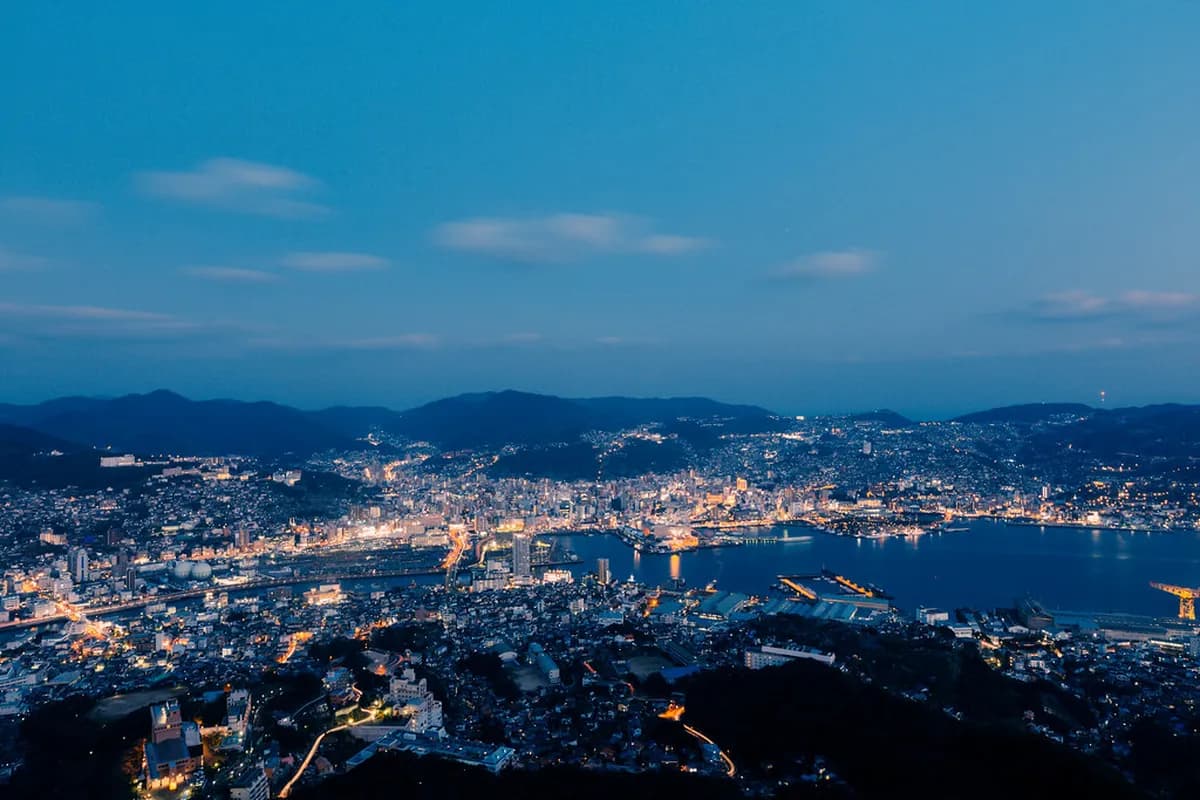
The dry winter air creates the clearest conditions for nighttime photography. Viewing the city lights from Mount Inasa is most rewarding on cold, clear January and February nights when visibility extends across the harbor to the Urakami valley. December is the city's quietest month — good for getting unhurried access to the Atomic Bomb Museum and the Hypocenter Park without the summer crowds.
Many visitors enjoy the festive atmosphere of Shinchi Chinatown during the Lantern Festival. Nearby Unzen Onsen, about 90 minutes by bus, is excellent for a winter day trip combining hot springs and occasional snow scenery on the Shimabara Peninsula. Winter winds near the water are biting, so bring a windproof outer layer for harbor-front walks.
Lantern Festival Night: What the Weather Actually Feels Like
The Lantern Festival is Nagasaki's most photographed event, but the evening temperatures surprise many first-time visitors. Official February averages show 4–11°C / 39–52°F, but the harbor-facing sections of Shinchi Chinatown and the Ohato pier area channel cold wind off the water. In practice, standing still to photograph the large floating lanterns at the waterfront feels noticeably colder than those numbers suggest — budget for full winter layers including a thermal base layer, not just a coat.
There is one useful thermal gradient to know: the lanterns inside Shinchi Chinatown's covered alleys and near the main stage at Suwa Shrine are heated from below by the paper frames and the densely packed crowd. Arriving at the outer Ohato waterfront displays last, after warming up in the Chinatown core, is a practical sequence. The main processions run from around 18:00 and finish before 21:00 on peak nights.
Book your hotel in Nagasaki city centre at least three months ahead for Lantern Festival dates — the event draws visitors from across Kyushu and accommodation sells out faster than any other time of year except Golden Week. The best rates appear in the October–November booking window before the February price spike.
The Lantern Festival runs for roughly 15 days aligned with Chinese New Year (2026: January 29–February 12). The thermal experience varies dramatically — Shinchi Chinatown's covered alleys are heated by crowds and paper lantern frames, while the outer Ohato waterfront pier channels cold harbor wind. Sequence your route wisely by warming up in Chinatown first, then heading to the outer displays.
Best Time to Visit Nagasaki Peace Park and Outdoor Sites
The Peace Park and Atomic Bomb Hypocenter Park are open year-round, but the season you choose changes the experience significantly. The park faces south and has no shade canopy over the central promenade — in July and August, midday temperatures on the exposed concrete can feel brutal. Arriving before 09:00 in summer gives you the memorial statues in soft morning light and near-empty pathways. The August 9 Peace Memorial Ceremony begins at 11:02 (the exact time of the bombing) and draws large crowds; arrive by 09:30 if you want a viewing position.
October and November are the most comfortable months for a full outdoor visit. The temperature, low humidity, and clear autumn skies make the walk between the Hypocenter Park, the Atomic Bomb Museum, and Urakami Cathedral (a 15-minute walk north) genuinely pleasant. Spring visits in late March and April pair well with the park's cherry trees that line the main approach.
For the historic hillside sites — Glover Garden, the Dutch Slope, Oura Cathedral — the same seasonal logic applies. Spring and autumn are easiest on foot. Winter visits are fine for the lower harbor sites but the exposed cliff paths above Glover Garden can be slippery when wet in December and January.
Navigating the Rainy Season (Tsuyu) and Typhoons
The Tsuyu rainy season runs from approximately June 1 to July 14 in Nagasaki — about a week earlier and slightly longer than Tokyo's season due to Kyushu's southern position. Persistent drizzle is more common than dramatic downpours, but monthly totals still reach 310 mm in June. Humidity remains above 80 percent even on dry days within this window. Check the Japan Meteorological Agency site for the official Tsuyu start and end declarations each year.
Typhoon season runs from August through October, with peak risk in September. Nagasaki faces the East China Sea directly, making it one of the more exposed cities on Kyushu. A direct typhoon hit typically causes 24–48 hours of transit disruption, including ferry cancellations to Hashima Island and possible suspension of the Nagasaki Electric Tramway. Monitor the JMA typhoon tracker and keep hotel cancellation policy in mind if you visit in September.
Indoor alternatives for rainy days include the Nagasaki Atomic Bomb Museum (open 08:30–17:30, ¥200 adults), the Dejima Wharf indoor exhibits, and the covered Chinatown arcades. A 10 Essential Tips for Your Nagasaki Food Guide: What to Eat and Where is useful for the rainy season specifically — the city's Portuguese-influenced restaurants and champon noodle shops cluster in areas easily accessible from the tram stops without long outdoor walks.
Best Time to Visit Nagasaki for Fewer Crowds
If avoiding crowds is your priority, January is the quietest month. The period immediately after New Year's (January 5–20) sees very low domestic tourism before the Lantern Festival buildup. Mid-week visits in June are also unusually uncrowded — the rainy weather keeps many casual visitors away, which means shorter queues at the Atomic Bomb Museum and easy access to Glover Garden. Early December, before the year-end rush, is another reliable quiet window.
Avoid the first week of May (Golden Week) and mid-August (Obon holiday, August 13–16). Both windows see a heavy influx of domestic tourists from across Kyushu. Hotel prices during these periods can be 40–60 percent above the standard monthly rate. The Kunchi Festival dates of October 7–9 also bring significant local crowds to Suwa Shrine, though the rest of the city remains relatively accessible.
The city feels most authentic when the major sites are not at capacity. Walking the quiet Dutch Slope on a January weekday morning, or reaching the summit tram at Mount Inasa on a November Tuesday, gives you a very different experience from the peak crowd windows. Following basic Nagasaki Travel Tips Practical Guide: 3-Day Itinerary — including visiting popular sites before 09:00 — helps even during moderate crowd periods.
Best Time to Visit Nagasaki by Traveler Type
Different priorities point to different months. Photographers get the best conditions in October and November — clear low-angle autumn light, the city lights from Mount Inasa at their sharpest, and harvest-colored foliage at Kofukuji Temple. February offers a second window for photographers who want the theatrical reds of the Lantern Festival, though the cold and crowds require more patience.
Budget travelers should look at January (excluding Lantern Festival dates), June, and early December. Hotel rates in these three windows are typically 20–35 percent lower than the spring and autumn peaks. The tradeoff is either cold (January/December) or persistent rain (June), but the indoor cultural sites are world-class regardless of season.
Families with children generally find late April and early October the easiest months to manage — mild temperatures, lower humidity than May, and enough daylight for a full day of outdoor sites without the extreme heat of summer. First-time visitors who want the single best week of the year should target late October, when the Kunchi Festival has just finished, the foliage is turning, and hotel prices have not yet hit the November premium.
What to Pack for Nagasaki's Changing Weather
Comfortable walking shoes are the single most important item for any Nagasaki trip. The city's steep stone paths and irregular hillside stairs are hard on feet, regardless of season. Layering is the most effective strategy for the variable Kyushu climate — the temperature difference between the harbor level and the hillside neighborhoods above Glover Garden can be 3–4°C at night.
Summer visitors need light, moisture-wicking fabrics to handle humidity above 80 percent. A compact umbrella is necessary for the sudden Tsuyu downpours in June and July, and a portable fan is genuinely useful from late June through August. Winter travelers need windproof outer layers for any time spent near the harbor or at the Peace Park's exposed promenade. A thermal base layer is essential for Lantern Festival evenings in February.
- Spring (March–May): light waterproof jacket, UV-protection layer, compact umbrella, comfortable walking shoes
- Summer (June–August): moisture-wicking shirts, portable fan, high-SPF sunscreen, electrolyte drinks
- Autumn (September–November): cardigan or light fleece, compact umbrella for September rain, evening layer from late October
- Winter (December–February): thermal base layer, windproof coat, warm gloves for harbor evenings
Sun protection is important in spring and summer at the Peace Park and on the exposed hilltop areas. Leave room in your bag for food souvenirs — castella cake and Nagasaki champon noodle kits are common finds at the Chinatown shops and Glover Garden gift stores.
Nagasaki Month-by-Month: Quick Reference Guide
Use this quick-reference table to compare temperature, rainfall, and primary attractions across all 12 months. This complements the detailed weather table earlier in the guide and helps you weigh the pros and cons of visiting at different times of year.
| Month | Temp (°C) | Rainfall (mm) | Festival/Event | Best for |
|---|---|---|---|---|
| January | 3–10 | 65 | Lantern Festival prep | Quiet exploration; planning ahead for Feb |
| February | 4–11 | 75 | Lantern Festival (Jan 29–Feb 12, 2026) | Nighttime photography; festival atmosphere |
| March | 7–14 | 110 | Cherry blossom emergence | Early hanami; still fewer crowds than April |
| April | 11–19 | 155 | Peak sakura season | Cherry blossoms; busy but iconic |
| May | 16–24 | 165 | Golden Week (Apr 29–May 5) | Green foliage; brief rainy spells |
| June | 20–27 | 310 | Tsuyu rainy season begins | Museums; indoor attractions; budget rates |
| July | 24–31 | 265 | Fireworks displays; Obon prep | Avoid midday; use trams; sunset views |
| August | 25–32 | 190 | Obon holiday; Peace Memorial (Aug 9) | Early mornings; cultural events; crowds |
| September | 22–28 | 195 | Typhoon risk; late summer heat | Avoid or plan indoor backup days |
| October | 15–23 | 85 | Kunchi Festival (Oct 7–9) | Ideal weather; festivals; autumn light |
| November | 9–17 | 80 | Autumn foliage peak | Best month for outdoor hiking; low crowds |
| December | 5–12 | 60 | Year-end quiet period | Contemplative visits; uncrowded sites |
Frequently Asked Questions
What is the rainiest month in Nagasaki?
The rainiest month is June, which marks the start of the Tsuyu rainy season. Expect heavy downpours and high humidity during this time. Indoor attractions like the Atomic Bomb Museum are great alternatives.
When is the Nagasaki Lantern Festival?
The Nagasaki Lantern Festival usually takes place in late January or February each year. It aligns with the Chinese New Year celebrations and lasts for two weeks. Temperatures during this event hover around 5–10°C / 41–50°F.
Is Nagasaki colder than Tokyo in winter?
Nagasaki is generally warmer than Tokyo during the winter months. Its southern location on Kyushu island keeps average highs around 11°C / 52°F. However, the harbor winds can make it feel quite chilly at night.
Nagasaki rewards visitors who plan around its unique climate rather than guessing. Whether you are chasing cherry blossoms in April, the Kunchi drums in October, or the lantern glow in February, picking the right week changes the experience dramatically. Pack your walking shoes, check the JMA forecast, and prepare for an unforgettable Kyushu adventure.
The combination of history, harbor scenery, and layered cultural festivals makes every season worth considering. By following this guide, you can enjoy Nagasaki in any weather. Safe travels as you explore one of Japan's most distinctive port cities.
Free: The Nagasaki Essentials guide
Top things to do, where to stay, a perfect day plan, getting around, and the best time to go — a Nagasaki mini-guide you can take offline.
You might also like

Continue reading
More guides you'll find useful


