

Yoshida Udon Near Kawaguchiko: Where to Eat It and How to Make It in 2026
Where to find real Yoshida udon near Kawaguchiko: Hinoki's cash-only bowls, FUJIYA's udon-making class, suridane heat, hours, and 2026 prices.
On this page
Last updated August 2026, Yoshida udon near Kawaguchiko means choosing between a fast, cash-only bowl at a family-run house restaurant and a hands-on noodle-making class that takes about ninety minutes. This guide separates the dense, square-cut Fujiyoshida original from the softer hoto noodle found on most Kawaguchiko menus. It also covers where to eat, how to make your own bowl, and what the suridane seasoning on the table actually does.
What Is Yoshida Udon? The Hardest Noodle in Japan
Yoshida udon is a regional noodle style from Fujiyoshida City, near the base of Mt. Fuji. Local shops and food writers call it Japan's hardest udon. These noodles back up the name: thick, high-gluten, and cut into a dense, almost square cross-section instead of thin round strands found elsewhere in Japan. That firmness isn't a mistake in the kitchen. It's the entire point of the dish. Mt. Fuji spring water is naturally soft and mineral-rich, and that mineral content helps high-gluten flour bond tightly during kneading, which builds the noodle's signature resistance.
This style traces back to Fujiyoshida's textile industry. Men traditionally made the dough so women working the silk looms could eat a fast, filling meal without softening their hands on gentler food. Kneading like that carried straight into noodle-making, which is why the dough gets worked with body weight rather than hands alone. Fujiyoshida is still home to more than 40 dedicated Yoshida udon restaurants, though only a couple sit close enough to Lake Kawaguchi to reach without a special trip into town.
Before you taste a bowl anywhere in the region, look at the noodle. A true Yoshida udon cross-section looks like a small square rod, not a round strand. That shape alone signals the traditional method.
- Cross-section: thick and nearly square, not round like typical udon
- Bite: firm and high-gluten, chewy well after boiling
- Water: Mt. Fuji spring water, naturally soft and mineral-rich
- Cut width: hand-cut strips, roughly 4-6mm wide
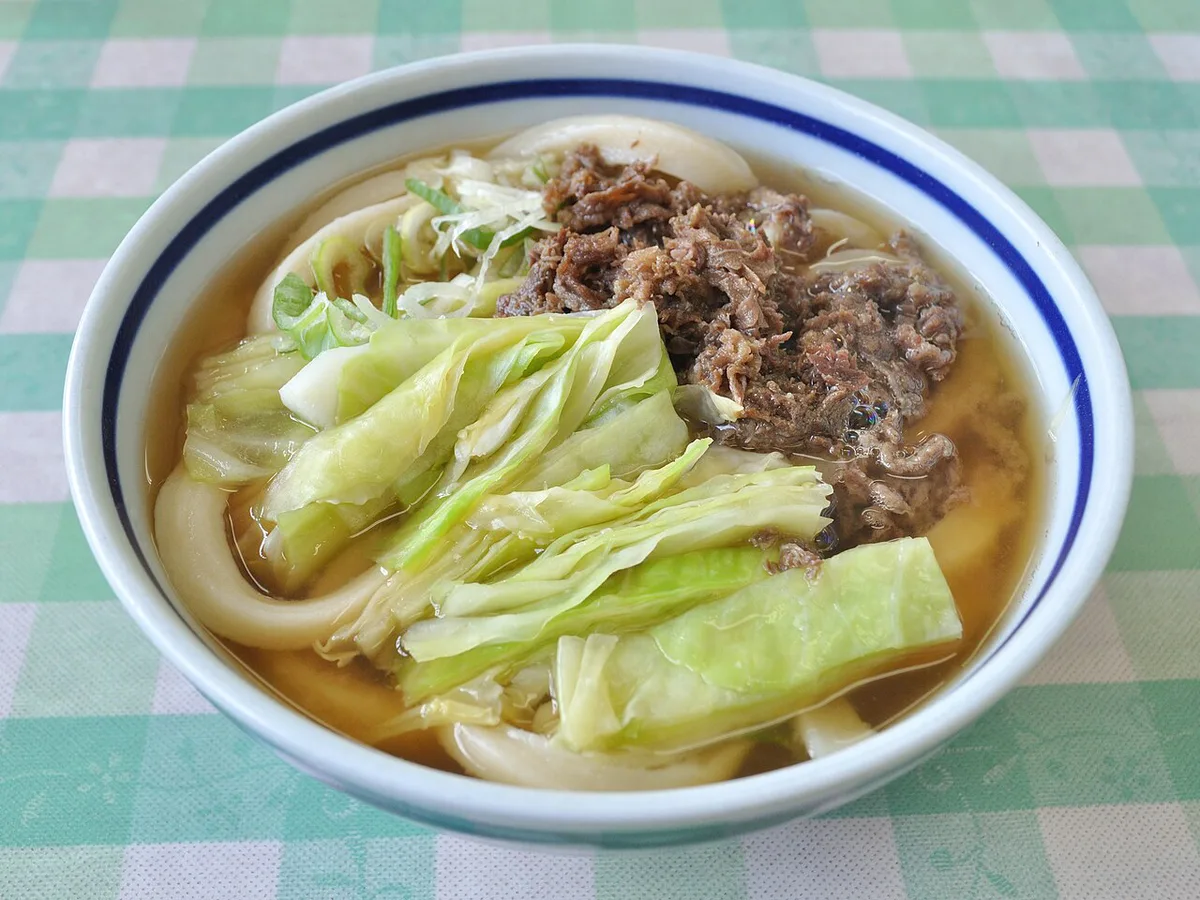
Where to Eat Yoshida Udon Near Kawaguchiko: Yoshida Udon Hinoki
Yoshida Udon Hinoki sits in Fujikawaguchiko Town, Minamitsuru District, about 2km from Kawaguchiko Station. Reviewers describe it as a hideout-style house restaurant rather than a storefront, so a taxi or short drive works better than a casual walk-by. The dining room holds 17 seats: five at the counter and twelve across three tables. The five counter seats suit solo diners, while the three four-person tables work better for small groups. It's non-smoking, and parking is limited to five cars, so skip driving if you're in a large group. Tabelog lists the restaurant as family-friendly and solo-dining-friendly, and it welcomes children of all ages, including babies.
Ordering runs through a food ticket machine at the entrance, standard practice at Yoshida udon shops. Choose a bowl and toppings, pay at the machine, then hand the ticket to staff. Take off your shoes at the door, another house-restaurant custom here. Hinoki takes cash only: no credit cards, electronic money, or QR payments. A bowl typically runs under ¥1,000, among the cheapest hot meals near the lake. If you want a beer with your noodles, the shop keeps bottled Asahi Super Dry on hand. Hinoki has operated at this address since January 2019.
Hinoki keeps lunch-only hours and often closes the moment it sells out. Posted hours can shift at a small, family-run shop like this, so confirm the closed days by phone before making the trip out. The ticket-machine setup suggests most guests walk in rather than book ahead.
- Open Monday, Tuesday, Thursday, Friday, Saturday, and Sunday, 11:00 AM-2:00 PM
- Closed every Wednesday, plus the first Sunday of each month
- Frequently sells out before 2:00 PM, so arrive close to opening
- Reservations are listed as available by phone at 0555-72-9272
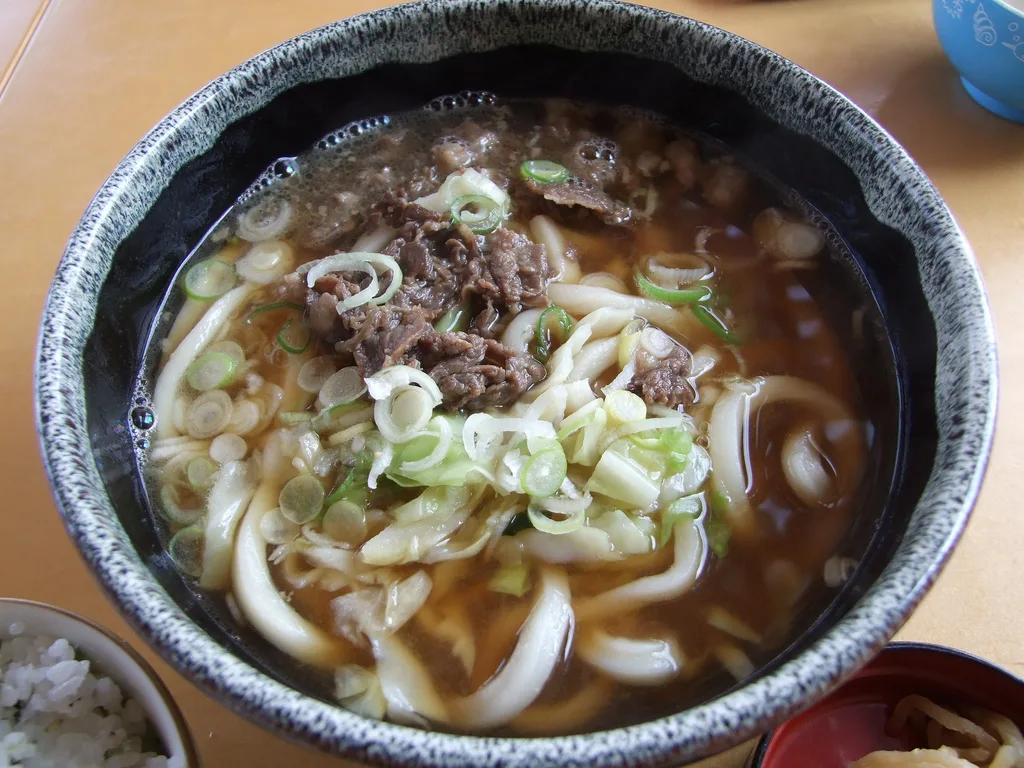
Hands-On: The FUJIYA Yoshida Udon-Making Experience
FUJIYA runs a hands-on Yoshida udon class in Funatsu, a 12-minute walk from Kawaguchiko Station on the Fujikyuko Line. It suits families, rainy-day plans, and anyone who wants more than a fast bowl and a receipt. The standard course costs ¥3,500 per person and takes 90 to 120 minutes, meal included. Instructors explain each step before you begin, and printed instructions back up the spoken guidance for anyone who wants to double-check a step.
For a longer visit, FUJIYA's Yamanashi Full Immersion Course runs ¥6,800 and adds Suridane blending, Koshu Wine Beef, and a Yamanashi wine tasting to the same noodle-making base. The venue also runs separate hoto, soba, and ramen noodle-making classes, each from ¥3,500, useful if your group can't agree on one noodle style. If you only want the seasoning, not a full noodle class, FUJIYA's Spice Making Experience runs ¥1,700 and lets you blend and bottle your own suridane. Groups as large as 80 are welcome, which makes the venue workable for tour groups, school trips, and multi-family travel parties booking a single shared session.
Full English instruction runs throughout the class, and no Japanese ability is needed. Walk-ins are welcome, but book ahead for groups of four or more, or during Golden Week (late April into May), summer holidays, and the October-November foliage season. Parking is free for up to 10 cars, and the venue is open 9:30 AM-8:00 PM, with the last walk-in entry at 3:00 PM.
FUJIYA does not serve horse meat. Its protein option is Koshu Wine Beef, locally raised beef, for guests who want more than cabbage and fried tofu.
The trade-off comes down to time versus depth. A bowl at Hinoki is fast: order at the machine, eat, and move on. FUJIYA trades that speed for around two hours of instruction and a clearer sense of why the texture is what it is. Neither is more authentic than the other. It comes down to how much time you want to spend on lunch.
- Mix and knead high-gluten flour with Mt. Fuji spring water
- Work the dough with body weight until it turns smooth and firm
- Roll the dough to chopstick thickness with a rolling pin
- Hand-cut it into 4-6mm strips, using a chopstick as a width guide
- Boil the noodles for about 10 minutes
- Eat the finished bowl in soy-miso broth with cabbage, aburaage, and green onion
The Flavor Profile: Broth, Toppings, and Suridane
A hearty soy-based broth built from soy sauce, dashi, and local ingredients is standard across Fujiyoshida's udon shops, and FUJIYA describes its own version as a soy-miso blend. Standard toppings are cabbage, aburaage, and green onion, kept simple so the broth and noodle texture stay the focus. Some Fujiyoshida shops also offer kinpira gobo, sautéed burdock root, or kakiage, mixed vegetable tempura, as extra toppings, so menus vary more than the standard three suggest.
FUJIYA produces more than 100 handmade varieties of suridane, yet also offers a separate ¥1,700 class to blend and bottle your own, letting heat-sensitive diners customize the spice level without committing to a full noodle-making experience.
Horse meat, called baniku, is the traditional topping in Fujiyoshida. It is lean and umami-rich, served either simmered or lightly seared, and reflects a horse-raising tradition with deep roots in the area. Not every kitchen serves it, so ask before you order if baniku is what you came for.
Suridane is what separates a memorable bowl from a forgettable one: a chili, sesame, and sansho pepper paste built in oil. It's spicy, but strength varies by shop and by batch, so add it a small spoonful at a time rather than all at once. FUJIYA alone produces more than 100 handmade varieties, including versions made with habanero and ghost pepper, and sells bottles to take home. Ask staff which blend is mild before committing to a full spoonful, especially if you're ordering for kids.
Planning Your Visit: Hours, Trade-offs, and Dietary Notes
Both stops work well around a lunch schedule, but they solve different problems. Hinoki gives you a fast, cash-only bowl close to the authentic Fujiyoshida style. FUJIYA turns the same dish into an activity, with instruction, a finished bowl, and about two hours accounted for. The table below lines up the trade-offs.
Hinoki's 11:00 AM-2:00 PM window and frequent early sellouts demand punctual arrival despite its 2km distance, while FUJIYA's 9:30 AM-8:00 PM hours and 12-minute walk provide greater scheduling flexibility for the same noodle style.
Fujiyoshida City, a short drive from the lake, is the birthplace of this noodle and home to more than 40 dedicated shops. Staying in Kawaguchiko doesn't require that detour. Hinoki and FUJIYA are the two most accessible options without leaving the lake area, and both use the same high-gluten dough and Mt. Fuji spring water found across Fujiyoshida. Both work well as a lunch stop before or after sightseeing at Kawaguchiko's lake and Fuji viewpoints.
Travelers coming from Tokyo typically reach the area by direct highway bus from Shinjuku Station, a ride of about 90 minutes, or by train on the Fujikyuko Line. From most lakeside hotels, plan on a taxi or rental car for Hinoki, since its 2km distance and residential setting make it awkward on foot. FUJIYA is the easier walk at 12 minutes from Kawaguchiko Station, which itself sits close to the lake's main tourist strip.
Traditional Yoshida udon broth often includes dashi, a fish-based stock, and the noodles are wheat, so this isn't a naturally vegan, vegetarian, or halal dish. Broth ingredients aren't guaranteed allergen-free, so check with the shop directly before ordering. For options built around clearer ingredient lists, see Kawaguchiko's budget vegan and halal guide.
This bowl fits into the wider Kawaguchiko food scene, not just a standalone stop. Pair it with a pour from the area's sake, wine, and craft beer venues. Save room afterward for something sweet at a lake-view cafe.
| Feature | Yoshida Udon Hinoki | FUJIYA Cooking Class |
|---|---|---|
| Best for | A fast, authentic bowl | Hands-on class, families, rainy days |
| Cost | Under ¥1,000 | ¥3,500 per person |
| Time on site | Order, eat, and go | 90-120 minutes |
| Hours | 11:00 AM-2:00 PM, closed Wed and 1st Sun | 9:30 AM-8:00 PM, walk-in last entry 3:00 PM |
| Payment | Cash only | Walk-in or advance booking |
| From Kawaguchiko Station | About 2km | 12-minute walk |
Frequently Asked Questions
Is the FUJIYA udon-making class good for kids?
Yes. Kneading the dough is a physical, hands-on step that most kids enjoy, and staff assist younger participants as needed. The dough contains wheat flour, so mention any allergies when booking.
How is Yoshida udon different from hoto?
Hoto uses flat, wide noodles simmered directly in a pumpkin-based miso broth until soft. Yoshida udon is the opposite: thick, square-cut noodles boiled separately, then served firm in a soy-miso broth. For the flat-noodle version, see the hoto noodle guide.
Do you need horse meat to try authentic Yoshida udon?
No. Cabbage, aburaage, and green onion are the standard toppings at most shops. Horse meat, or baniku, is a traditional option in Fujiyoshida, but it isn't universal. FUJIYA's cooking class, for example, doesn't serve it.
Do you need a reservation for Yoshida Udon Hinoki?
Reservations are listed as available by phone at 0555-72-9272, but the ticket-machine ordering system suggests most guests just walk in. Arrive close to the 11:00 AM opening, since the shop often sells out before its 2:00 PM close.
How much suridane should you add?
Start with a small spoonful and taste before adding more. Suridane is oil-based, and its heat varies by shop and by batch, so a spoonful that feels mild at one restaurant might not be mild at another.
Can you fit both Hinoki and FUJIYA into one day?
It's possible on paper. Hinoki's window runs 11:00 AM-2:00 PM, and FUJIYA is open 9:30 AM-8:00 PM with walk-in entry until 3:00 PM. A tight schedule works best as lunch at Hinoki first, then the FUJIYA class in the afternoon, or the reverse order on a following day.
Is Yoshida udon vegetarian or halal-friendly?
Not by default. Traditional broth usually includes dashi, a fish stock, and some shops add horse meat as a topping. Check ingredients with the shop directly, or look at dedicated vegan and halal listings for the area instead.
Free: The Kawaguchiko Essentials guide
Top things to do, where to stay, a perfect day plan, getting around, and the best time to go — a Kawaguchiko mini-guide you can take offline.
You might also like


Continue reading
More guides you'll find useful


