

Osaka in Autumn: Peak Foliage Dates, Festivals & Local Guide
Plan Osaka in autumn with peak foliage dates for Minoo Park, Osaka Castle, and Katsuoji Temple, plus festival dates, seasonal food, and 2026 transit logistics.
On this page
Last updated September 2026. Osaka in autumn runs from the Kishiwada Danjiri Matsuri's float races in mid-September through peak maple color in late November and early December, with typhoon risk easing by mid-October. Afternoon highs drop from a humid 28°C (82°F) in early September to a crisp 14°C (57°F) by late November, so the season rewards travelers who plan around both weather and foliage timing. This guide covers when to go, which parks turn color first, and how to build time around Osaka Castle Park, Minoo Park, and day trips like Arima Onsen.
Osaka in Autumn: Timing, Weather, and the Season at a Glance
Autumn in Osaka unfolds over roughly three months, opening with the Kishiwada Danjiri Matsuri's float races in mid-September and closing as the last maples drop in early December. Early September still carries summer humidity, and the region sits in typhoon season, so afternoon storms can disrupt outdoor plans through late September. October brings drier air and milder daytime highs. Color starts at higher elevation ahead of the city center: Minoo Park and Katsuoji Temple, both set in hills north of Osaka, typically turn about a week before Osaka Castle Park and Midosuji Boulevard downtown.
This three-month arc also means access trade-offs shift depending on when you visit. Early in the season, city-center spots like Osaka Castle Park stay green while Minoo and Katsuoji get color first, so a September trip favors the hill parks if any autumn color matters most. By the season's peak in late November, that gap closes and every spot on this list is worth the trip, which is also when crowds are largest everywhere.
Peak color across most of the city lands in late November and stretches into early December. Mornings in that window can dip to 6°C (43°F) even when afternoons reach a comfortable 14°C (57°F), so layering matters more than the calendar date. Osaka in November: Weather, Autumn Leaves, and Festival Guide breaks that peak month down week by week. For the shoulder month before it, Osaka in October: Weather, Festivals, and Autumn Planning Guide covers the transition in more detail. Travelers weighing September against November across the whole year can compare seasons in Osaka's best time to visit guide.
| Period | Avg. High | Avg. Low | Foliage Status | Crowd Level |
|---|---|---|---|---|
| Early autumn (Sept-early Oct) | 28°C (82°F) | 20°C (68°F) | Still green; Danjiri Matsuri season | Moderate, concentrated around festival dates |
| Mid-autumn (mid-Oct-mid-Nov) | 20°C (68°F) | 12°C (54°F) | Ginkgo turning at elevation (Minoo, Katsuoji) | Light to moderate |
| Peak autumn (late Nov-early Dec) | 14°C (57°F) | 6°C (43°F) | Maple and ginkgo peak citywide | Heavy on weekends at Osaka Castle and Minoo |
Top Fall Foliage Spots in Osaka, Ranked by Access and Reward
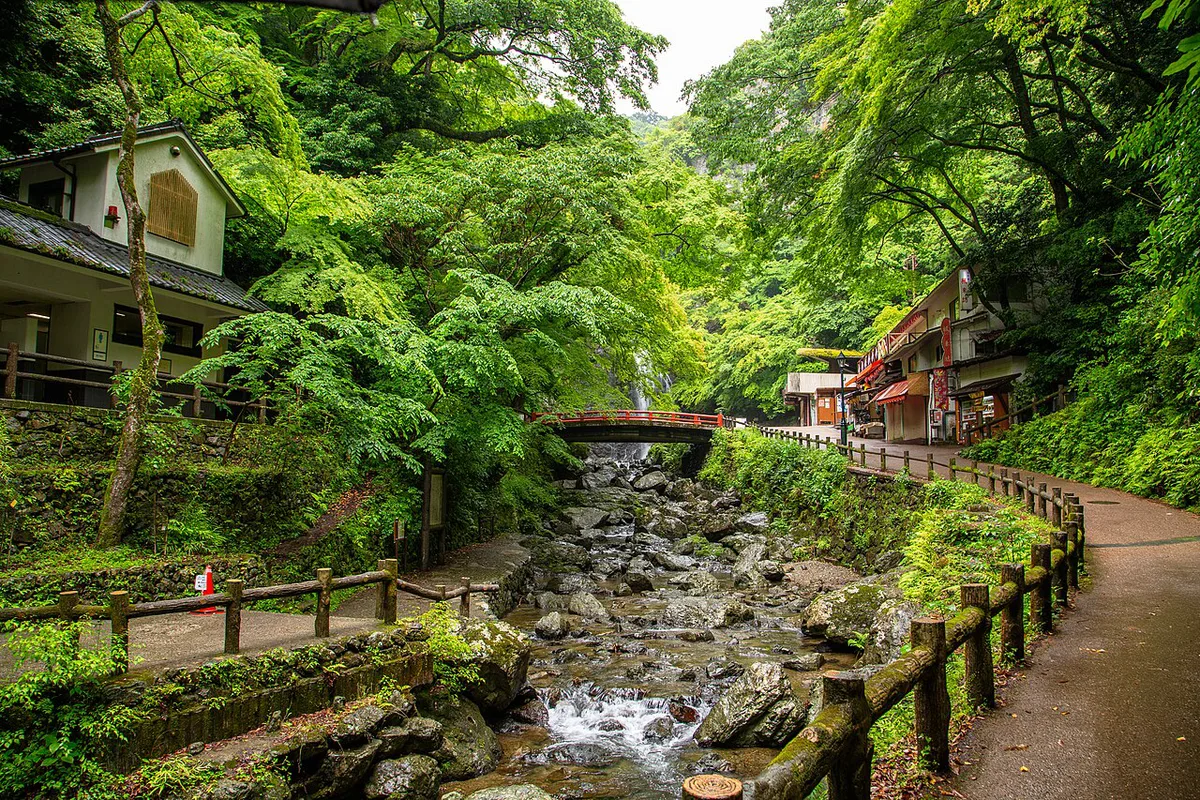
Osaka's autumn color spots split into two groups: convenient city-center parks and quieter sites that take extra time to reach. Osaka Castle Park anchors the first group, and it also ranks among Osaka's top attractions year-round. A roughly 1-kilometer ginkgo-lined path frames the castle's green roof in gold. JR trains reach Osakajo-Koen Station in about 15 minutes from Umeda, making the park an easy add-on to a half-day in the city center. From the castle's observation floors, the ginkgo path reads as a single gold line through the park's green lawns. At ground level near the moat, the castle tower sits framed against the same color.
A 45-minute walk from Minoo Station rewards early starters; plan to begin before 9:00 AM on weekdays to beat crowds.
Midosuji Boulevard needs no transit at all. About 900 ginkgo trees line the avenue between Umeda and Namba, turning bright yellow through late November. Midosuji's ginkgo display lasts only a few weeks each year, centered on late November, before the trees drop their leaves and the boulevard returns to its usual pace.
Minoo Park sits in the second group, about 30 to 40 minutes from Umeda by train. From Minoo Station, a 45-minute walk along the river leads to Minoo Waterfall. Maple trees, small shrines, and food stalls line the trail, including vendors selling momiji tempura, deep-fried maple leaves coated in a light batter. Katsuoji Temple asks for more effort. It's about 20 minutes by subway from Umeda to Senri-chuo Station, then 35 minutes by bus to the temple gate. Hoshida Park, in Katano, is the outlier of the group. A 280-meter suspension bridge called Hoshi no Buranko crosses a forest valley, reachable in 45 to 60 minutes by train and on foot. Views from the bridge stretch across a forest canopy with no comparable overlook among Osaka's other four autumn spots.
A dedicated foliage-spot guide ranks all five in more depth. Minoo Park's full logistics cover trail timing and stall locations.
| Location | Peak Window | Access from Umeda | Vibe / Crowd |
|---|---|---|---|
| Minoo Park | Mid-Nov to early Dec | 30-40 min by train, then a 45-min walk to the falls | Nature and hiking; heavy on weekends |
| Osaka Castle Park | Late Nov | About 15 min by JR or subway | Iconic and urban; very high crowds |
| Katsuoji Temple | Mid-Nov to early Dec | 20 min subway to Senri-chuo, then 35 min by bus | Spiritual and photogenic; moderate crowds |
| Midosuji Boulevard | Late Nov | City center; no transit needed | Urban illumination; high foot traffic |
| Hoshida Park | Mid to late Nov | 45-60 min by train and on foot | Suspension-bridge views; moderate crowds |
Evening Illuminations: Midosuji Boulevard and Katsuoji Temple After Dark
Two autumn light displays extend Osaka's foliage season into the evening. Midosuji Boulevard's ginkgo trees, already bright yellow by day, feed into the Midosuji Illumination after sunset, with light installations running along the boulevard's median through the peak color weeks. Katsuoji Temple runs its own evening illumination during the same late-November-to-early-December window, lighting the maple canopy around the main hall.
Katsuoji Temple's 55 to 60 minutes travel distance from Umeda requires careful late-bus timing for evening illumination visits, especially on busy weekends in late November.
The temple's official site notes the grounds are also home to hundreds of small daruma dolls, left behind by visitors after reaching a goal. Because Katsuoji sits roughly 55 to 60 minutes from Umeda by subway and bus, an evening visit means timing the last bus back carefully. Both illuminations draw their heaviest attendance on weekend evenings during the last two weeks of November, when the color and the lighting overlap most closely.
Katsuoji Temple's full guide covers current illumination hours and the return bus schedule. Check current lighting hours before visiting, since both displays shift their exact start and end dates each year with the pace of the foliage.
Beyond the Leaves: Autumn Culture and Food in Osaka
Autumn in Osaka extends past parks and foliage into food and craft traditions tied to the season. Sakai, just south of central Osaka, is the birthplace of tea master Sen no Rikyu. Tsuboichi Seicha Honpo, a tea shop operating out of a 340-year-old building, runs a tea culture experience that includes roasting tea leaves, tasting different varieties, and a tea-based lunch. It's priced from around ¥20,000 per person for a session that runs about two hours.
Private workshops push further into the season's craft side. A seasonal wagashi confectionery workshop at the Toyosaki Kusano Private Villa teaches guests to shape two nerikiri sweets inspired by autumn, starting around ¥88,000 per group. An aroma-design evening at Garden Oriental Osaka, between Osaka Castle Park and Sakuranomiya Park, pairs a private garden tour with a custom essential-oil blend and a wagyu dinner course, starting around ¥94,000 per person. Group sizes stay small across all three: up to six for the tea experience, up to twelve for the wagashi workshop, and up to six for the aroma-design evening, so advance booking matters more than for a standard restaurant reservation. That range, from ¥20,000 to over ¥90,000, shows how much the season's cultural experiences vary by exclusivity and group size.
Street-level eating stays simpler and cheaper. Roasted sweet potato (yaki-imo) and roasted chestnuts appear at stalls near the parks from October. Pacific saury (sanma) shows up on izakaya menus as the season's signature fish.
Autumn Festivals in Osaka: September Through November
Autumn events in Osaka start well before the leaves turn. Osaka's official tourism site lists the Kishiwada Danjiri Matsuri from mid-September into early October. Teams race multi-ton wooden floats through the streets of Kishiwada, Kaizuka, and Tadaoka. Danjiri floats are known for fast, sharp turns at intersections, part of what draws crowds from outside Osaka Prefecture each year. Shitennoji Temple holds its Fall Higan-e in mid-to-late September, a Buddhist observance marking the autumn equinox.
Autumn closes with the Shinno-sai, or Medicine Festival, at Sukunahikona Shrine on November 22 and 23. Crowds come for blessings tied to health and healing. None of these events need foliage color to be worthwhile. They work as anchors for a trip built around late-September or early-October travel, before the peak leaf crowds arrive. Osaka's full events calendar tracks exact dates as organizers confirm them each year.
Regional Day Trips for Autumn Color and Onsen
As a base, Osaka works well for day trips that pair autumn color with hot springs. Arima Onsen, in the hills above Kobe, is about one hour from Osaka by direct highway bus. Arima's hot springs come in two distinct types, locally called kinsen (gold) and ginsen (silver). Nearby Zuihoji Park peaks in color mid-to-late November, close to the same window as Osaka Castle Park.
Mount Koya, the mountain temple complex south of Osaka, turns earlier than the city because of its altitude. Color there typically peaks in mid-November. Reaching it takes about 90 minutes: a Nankai Limited Express from Namba Station to Gokurakubashi Station, followed by a cable car up to Koyasan Station. Elevation gain during the cable car ride is part of why color arrives so much sooner than in central Osaka.
Awaji Island offers a different kind of autumn scene. Hanasajiki, a flower-field lookout above the sea, blooms from early October into early November, so it doesn't depend on maple color at all. It sits roughly 90 minutes from Osaka by a combination of train, bus, and a short taxi ride.
Pairing Foliage Spots Into a Day
A few combinations make the most of limited time. Osaka Castle Park and Midosuji Boulevard sit close enough to cover in one afternoon, connected by a short subway ride through the city center. Save the walk to Minoo Waterfall for a dedicated half-day, ideally starting before 9:00 AM on a weekday to beat both the crowds and the midday light.
Katsuoji Temple works best as a late-afternoon-into-evening trip, timed to catch the illumination before the last bus back to Senri-chuo. Pairing the Sakai tea experience with a morning at Osaka Castle Park also works well, since Sakai sits a short train ride from central Osaka and the tea session runs about two hours.
Travelers with a full free day can combine Hoshida Park's suspension bridge with a return through central Osaka for dinner, since the trail and bridge crossing take a half-day on their own. Fitting more than two of these five spots into a single day usually means rushing at least one, given that Katsuoji and Minoo each need roughly half a day round-trip.
Planning Your Osaka Autumn Trip: Transport, Crowds, and Costs
A few practical choices make autumn travel in Osaka smoother. An ICOCA IC card covers trains, subways, and buses across the region with a single tap, avoiding ticket-machine lines at each station. For a day of heavy sightseeing, the Osaka Amazing Pass bundles transit with discounted or free entry to a number of attractions, worth comparing against a simple pay-as-you-go IC card balance if the day's plan covers only one or two stops.
Weekday mornings before 9:00 AM are the quietest window at both Minoo Park and Osaka Castle Park. Weekend afternoons in late November draw the heaviest crowds of the year, heavier than what spring's cherry blossom season brings to the same paths.
Cash still matters more than in central Tokyo. Temple entry fees, food stalls near Minoo and Katsuoji, and small vending carts often don't take cards, so carry coins and small bills for the day. Rain gear matters through late September too, when the tail end of typhoon season can still bring sudden downpours strong enough to pause outdoor illumination events for the evening. For a month-by-month breakdown of temperatures and what to pack, Osaka's weather-by-month guide covers layering choices in more detail.
Explore in autumn in other cities
Frequently Asked Questions
When is the best time to see autumn leaves in Osaka?
Peak color across most of Osaka lands in late November and runs into early December. Higher-elevation spots like Minoo Park and Katsuoji Temple turn about a week earlier, typically mid-November. Aim for the last ten days of November for the widest window of color across the city.
Is Minoo Park or Osaka Castle Park better for fall foliage?
Osaka Castle Park wins on convenience, since it sits about 15 minutes from Umeda with no walking beyond the park itself. Minoo Park takes longer, with a 30-to-40-minute train ride followed by a 45-minute walk to the waterfall. The maple color along that trail runs denser, and crowds thin out once you're past the first stalls near the station.
How do you get to Katsuoji Temple from central Osaka?
From Umeda, take the subway about 20 minutes to Senri-chuo Station, then transfer to a bus for the 35-minute ride to the temple gate. Total travel time runs 55 to 60 minutes each way, so budget at least half a day for the visit.
What should you pack for Osaka in autumn?
Layer for a swing that can run from a 20°C (68°F) afternoon high in October down to a 6°C (43°F) morning low by late November. A light jacket, a scarf, and comfortable walking shoes cover most of the season. Add a compact umbrella for early September, when typhoon season can still bring sudden rain.
Are there autumn festivals in Osaka besides foliage viewing?
Yes. The Kishiwada Danjiri Matsuri runs from mid-September into early October, with float races through Kishiwada, Kaizuka, and Tadaoka. Shitennoji Temple holds its Fall Higan-e in mid-to-late September. The Shinno-sai, or Medicine Festival, closes the season at Sukunahikona Shrine on November 22 and 23.
Which day trip pairs best with Osaka's autumn colors?
Arima Onsen is the simplest pairing, about one hour from Osaka by direct bus, with hot-spring bathing to follow a day of leaf viewing. Mount Koya turns earlier, usually mid-November, so it works well as an early-season add-on before Osaka's own peak arrives.
Is Osaka in autumn more expensive than cherry blossom season?
No published figures compare the two seasons directly, but late-November weekends see demand spikes similar to peak cherry blossom dates, so accommodation books up just as fast. Cultural experiences like the Sakai tea session run from about ¥20,000 per person regardless of the exact week. The bigger cost swing comes from lodging demand rather than activity pricing.
Explore Osaka in Autumn
Plan a September-to-November visit with month-by-month guides, the city's best koyo spots, and links to Osaka's year-round essentials.
Month-by-Month Autumn Guides
- Osaka attractions hub: tickets, hours & maps
- Osaka in October: Weather, Festivals, and Autumn Planning Guide
- Osaka in November: Weather, Autumn Leaves, and Festival Guide
Best Foliage Spots
- Osaka Autumn Leaves 2026
- Katsuoji Temple Guide: Daruma Dolls, Access & Hours (2026)
- Minoo Park Osaka
Plan Your Osaka Trip
- 20 Top Osaka Attractions
- Osaka Events 2026
- Osaka Weather By Month Travel Guide
- Best Time to Visit Osaka: Seasonal Guide & Monthly Weather
Compare Seasons
Free: The Osaka Essentials guide
Top things to do, where to stay, a perfect day plan, getting around, and the best time to go — a Osaka mini-guide you can take offline.
You might also like


Continue reading
More guides you'll find useful


