Minoo Park Osaka: Waterfall Hike & Momiji Tempura Guide
Plan a Minoo Park visit: the 33-meter waterfall walk, momiji tempura fried maple leaves, and 2026 transit costs from Umeda.
On this page
Last updated July 2026. Minoo Park sits roughly 30 minutes from Umeda, making it the closest forest valley to central Osaka for a half-day walk. A paved trail follows the Minoo River to a 33-meter waterfall, passing temple buildings, an insectarium, and stalls selling the region's fried maple leaf snack. This guide covers the walk difficulty, transit costs, seasonal timing, and where Minoo Park fits alongside other Osaka attractions.
What Is Minoo Park? Osaka's Forested Waterfall Valley
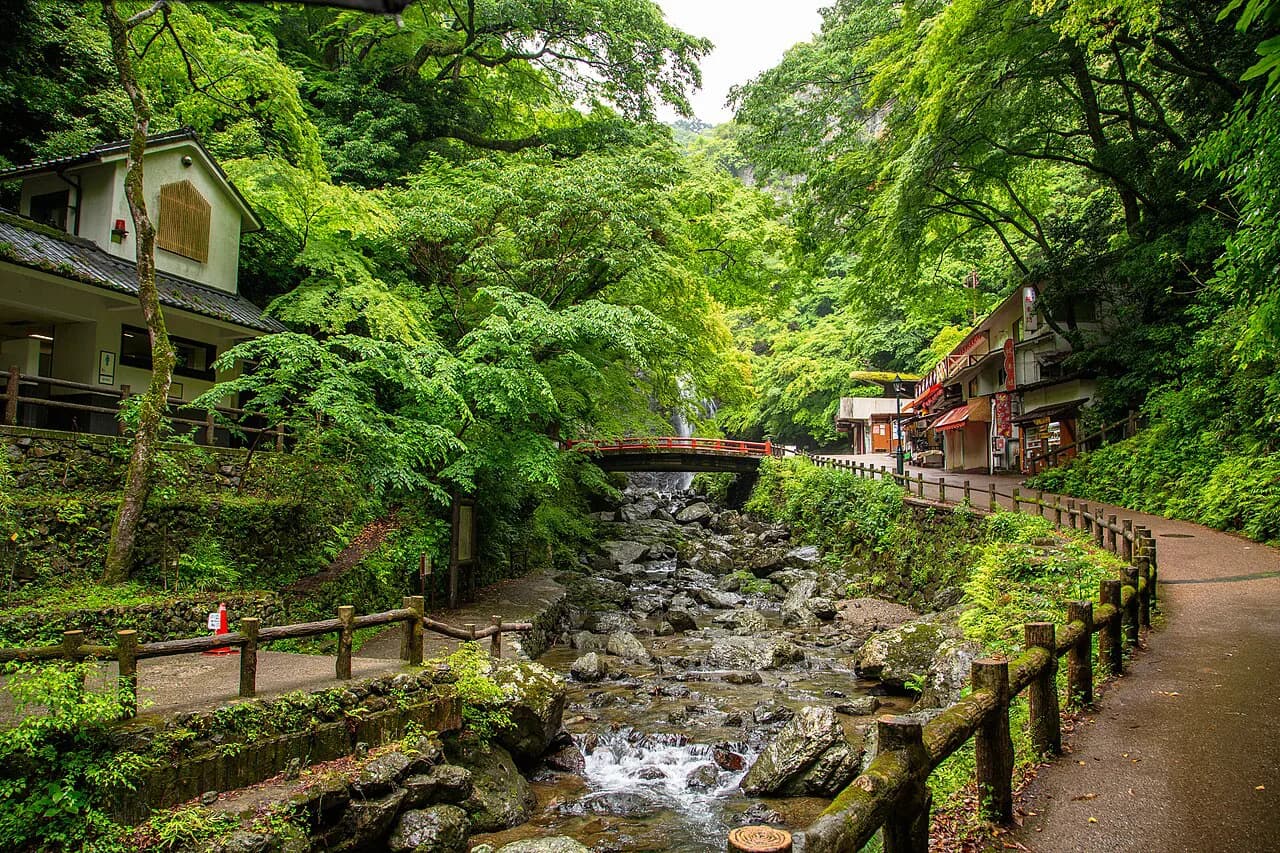
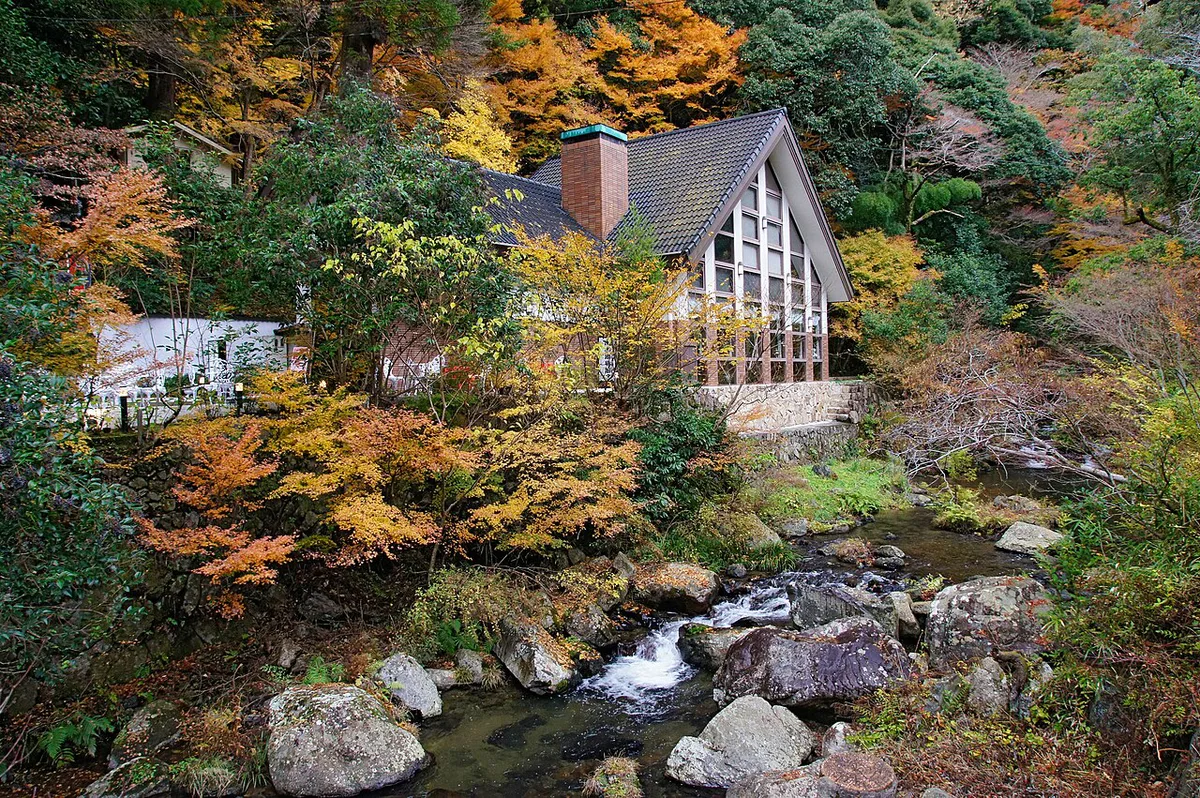
Minoo Park is a forested valley on the northern edge of Osaka, inside the Meiji no Mori Minō Quasi-National Park. The park earned that designation in 1967, the same year as Tokyo's Mount Takao, and the two spots are often compared as the nearest natural escapes to their respective metropolises. The main trail follows the Minoo River upstream to the 33-meter Minoo Waterfall, the park's central landmark. Unlike temple gardens elsewhere in Kansai, the setting here is a river gorge rather than a landscaped courtyard, which is why it draws a different crowd during autumn color season.
The Takimichi Path: Walking to Minoo Waterfall
The walk to the waterfall runs about 2.7 kilometers one-way, with some trail markers listing it closer to 3 kilometers. It takes about 45 minutes to walk at a steady pace, and the surface is paved for its entire length. The incline is gentle for most of the route, though the second half steepens slightly as it enters denser forest. This makes the path workable for strollers and less experienced walkers, even though it is still a real out-and-back hike rather than a short viewpoint stroll.
- Trailhead: begins a short walk north of Hankyu Minoo Station
- Ryuanji Temple: roughly at the midpoint, tied to the Shugendo mountain worship tradition
- Minoo Insectarium: a short family stop along the first half of the trail
- First half: lined with shops and temple buildings; second half: steeper and forested
- Destination: the 33-meter Minoo Waterfall at the trail's end
Best Time to Visit Minoo Park: Seasonal Highlights
Autumn is the busiest season at Minoo Park, and mid-to-late November is when the maple foliage along the valley typically peaks. Crowds build fastest on weekends during that window, and the momiji tempura stalls do their heaviest trade at the same time. Summer brings kawatoko riverbed dining platforms set up over the river in some years; availability is seasonal, so confirm current dates with the Minoo City Tourism Association before planning a visit around it. Winter and spring are the quiet months, with a cooler valley walk and easier access to Ryuanji Temple without the autumn foot traffic.
Base your stay in Umeda for direct morning access from Hankyu Umeda Station. This becomes particularly valuable during November, when the valley loses daylight earlier than city streets, making an early start essential.
| Season | What to Expect | Notes |
|---|---|---|
| Autumn (mid-late Nov) | Peak maple foliage, busiest crowds | Momiji tempura stalls at full operation |
| Summer | Kawatoko riverbed dining platforms | Seasonal; confirm dates locally |
| Winter | Quiet valley, cool air | Fewer stalls open |
| Spring | Green canopy, light foot traffic | Good for temple visits |
Momiji Tempura: Minoo Park's Fried Maple Leaf Snack
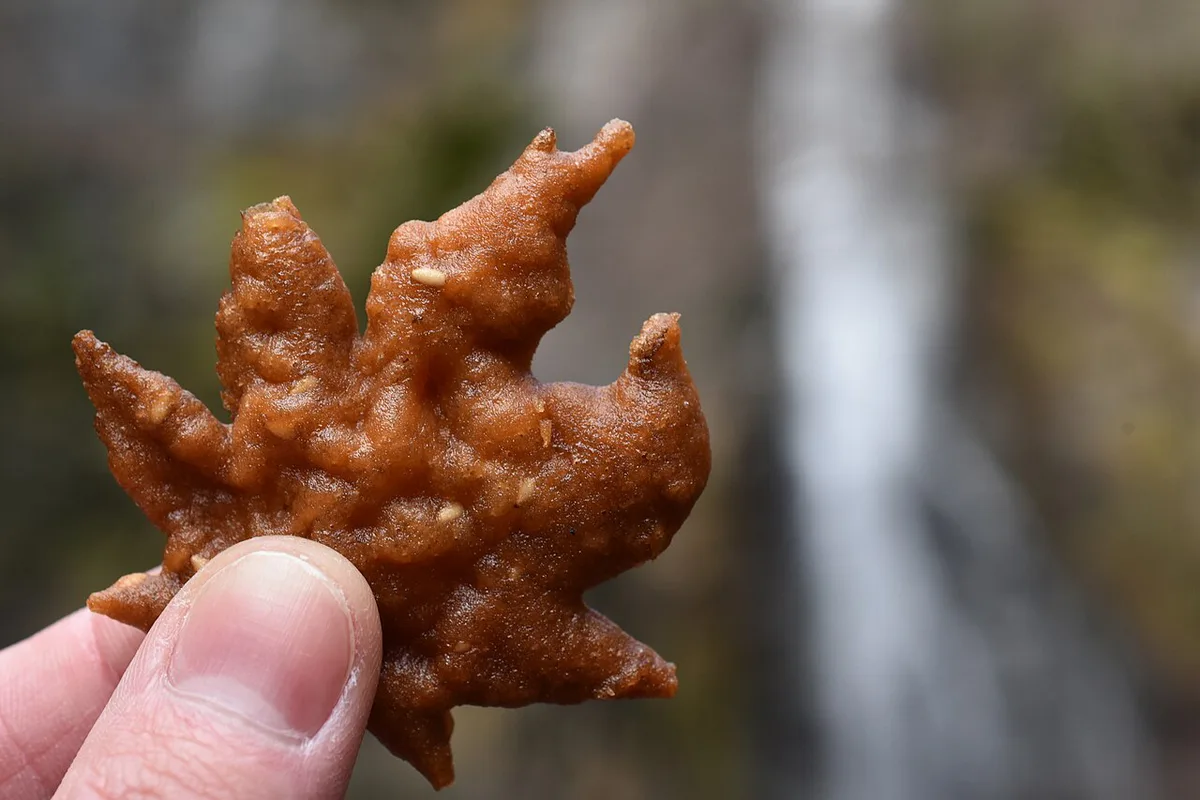
Momiji tempura is maple leaves preserved in salt for about a year, then coated in a sweetened batter and deep fried. That preservation step removes bitterness from the raw leaf before it ever reaches the fryer, which is why the finished snack tastes sweet rather than grassy. Shops lining the first half of the trail between the station and Ryuanji Temple sell it, most often in small paper bags meant to eat while walking. The texture is crunchy from the batter with a light sweetness underneath, and it is specific to this valley rather than a general Kansai snack.
Momiji tempura availability is seasonal: stalls operate at full capacity during peak November foliage season but scale back significantly outside that window, which affects access to the signature snack for off-season visitors.
Getting to Minoo Park From Osaka: Transit and Costs
The standard route runs from Hankyu Umeda Station on the Hankyu Takarazuka Line to Ishibashi handai-mae Station, then a transfer to the Hankyu Minoo Line for the final leg into Minoo Station. Trains run frequently on both segments, so waits between connections are short. Minoo Park is not covered by the Japan Rail Pass, since the entire route runs on Hankyu Railway rather than JR lines. IC cards such as ICOCA, Suica, or Pasmo work for both legs and are the simplest option for JR Pass holders; a standard paper ticket also works if preferred.
| Leg | Line | Time |
|---|---|---|
| Hankyu Umeda to Ishibashi handai-mae | Hankyu Takarazuka Line | About 15 minutes |
| Ishibashi handai-mae to Minoo Station | Hankyu Minoo Line | About 5 minutes |
- Park entry: free, open 24 hours
- Waterfall access: always open, no separate fee
- One-way fare from Umeda: 280 yen (2026)
- Total one-way journey time: about 25 minutes
Where to Stay for a Minoo Park Day Trip
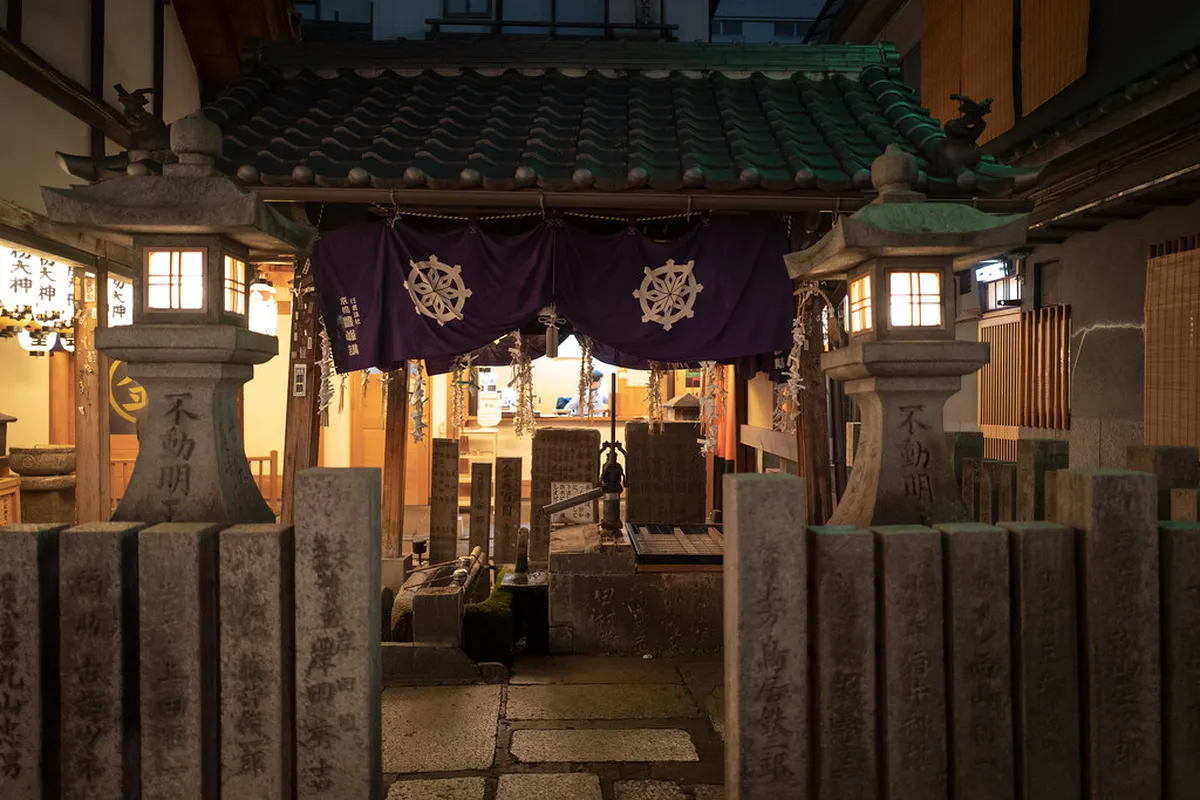
Umeda (Kita) is the practical base for a Minoo Park morning, since the trip starts directly from Hankyu Umeda Station without an extra transfer into the subway system. Namba and Shinsaibashi work better if the evening plan includes nightlife or dining after the hike, but staying there means a subway transfer to reach Hankyu Umeda before the trip even begins. For travelers splitting time between nature and city districts, it is worth comparing Minoo Park's morning logistics against an evening in the Namba shrine district, which sits on the opposite end of that subway transfer.
Mistakes to Avoid at Minoo Park
A few planning errors show up repeatedly for first-time visitors to Minoo Park.
- Wearing high heels or thin sandals: the trail is paved, but the round trip runs close to 6 kilometers
- Arriving after early afternoon in November: the valley loses direct light earlier than open city streets
- Expecting an unpaved wilderness hike: the entire Takimichi path is developed and paved
- Assuming every stall is open year-round: some momiji tempura shops scale back outside peak season
Combining Minoo Park With Other Osaka Attractions
Minoo Park works best as a morning or early-afternoon block, since the walk and waterfall visit typically take a few hours round trip. After returning to central Osaka, tired legs pair well with a soak at Spa World Osaka, one train ride from Umeda. For a skyline view to close the day, the observation floors at Abeno Harukas offer a city-wide contrast to the valley walk. Travelers who want a second nature-themed stop without leaving Osaka proper can add the teamLab Botanical Garden to the same trip. For the full range of stops around the city, the broader Osaka attractions guide lays out how these pieces fit into a multi-day itinerary.
Should You Combine Minoo Park With Katsuo-ji Temple?
Katsuo-ji is the nearby temple many visitors pair with Minoo Park, but it is not a simple add-on to the waterfall walk. The temple sits farther into the hills north of central Minoh and is best known for rows of red daruma dolls placed around the grounds as symbols of perseverance and good luck.
If you want to visit both places in one day, treat Katsuo-ji as a separate second stop rather than an extension of the Takimichi path. The practical options are to use a taxi or check current local bus routes from the Minoh area, especially around Minoh-Kayano Station, because service patterns can be less straightforward than the train ride to Hankyu Minoo Station. Walking between Minoo Waterfall and Katsuo-ji is possible only as a more serious mountain route, not the paved family-friendly path described above.
For trip-planning details, see Minoo Park - Wikipedia and Osaka - Wikivoyage.
Frequently Asked Questions
Is Minoo Park worth visiting from Osaka?
For a half-day nature break close to the city, yes. The park sits about 30 minutes from Umeda and combines a paved forest walk with a 33-meter waterfall, which is a different experience from Osaka's temple gardens and city parks.
How long does the walk to Minoo Waterfall take?
The one-way walk runs about 45 minutes over roughly 2.7 kilometers of paved trail. Plan closer to 1.5 hours round trip if stopping at Ryuanji Temple or the shops along the way.
Is Minoo Park covered by the Japan Rail Pass?
No. The route from Umeda runs entirely on Hankyu Railway lines, not JR, so the Japan Rail Pass does not apply. An IC card like ICOCA, Suica, or Pasmo covers the fare instead.
When is the best time to see autumn colors at Minoo Park?
Mid-to-late November is when the maple foliage in the valley typically peaks. That window also draws the heaviest weekend crowds and the busiest momiji tempura sales.
Is the trail to Minoo Waterfall stroller-friendly?
The trail is paved for its full length with a gentle incline through most of the route, which makes it workable for strollers. The final stretch before the waterfall steepens slightly, so expect more effort on that last section.
Free: The Osaka Essentials guide
Top things to do, where to stay, a perfect day plan, getting around, and the best time to go — a Osaka mini-guide you can take offline.
You might also like

Continue reading
More guides you'll find useful