Namba Yasaka Shrine: Osaka's Giant Lion Head Stage Guide
See the 12-meter lion-head stage in under an hour: walking times from Nankai Namba and Daikokucho stations, plus the January tug-of-war festival.
On this page
Last updated July 2026, Namba Yasaka Shrine remains one of the fastest cultural stops to fold into a day in Namba, built around a 12-meter lion-head stage that dominates its small courtyard. The grounds are compact, so most visitors clear the site in well under an hour rather than the half-day a sprawling complex like Sumiyoshi Taisha demands. This guide covers the walk from Nankai Namba and Daikokucho stations, the January tug-of-war festival, photo etiquette around the lion head, and how the shrine office's hours differ from grounds access.
Namba Yasaka Shrine at a Glance
Namba Yasaka Shrine sits in the Motomachi district of Naniwa-ku, a few streets back from the Namba Parks shopping complex. The site is small: one courtyard, a honden (main hall), and the lion-head stage known as the Ema-den. Sources disagree slightly on opening hours, so the table below flags both the commonly cited window and the grounds-access caveat worth checking before you go.
| Detail | Information |
|---|---|
| Admission | Free |
| Grounds access | Reported as accessible around the clock; some listings cite a 6:00-17:00 window instead |
| Shrine office / Goshuin | Roughly 6:00-17:00, when staff are on-site |
| Time needed | 15-30 minutes |
| Address | 2-9-11 Motomachi, Naniwa-ku, Osaka-shi, Osaka-fu 556-0016 |
| Nearest stations | Nankai Namba (about 8-min walk), Daikokucho (about 7-min walk) |
The Lion Head Stage (Ema-den): Scale and Architecture
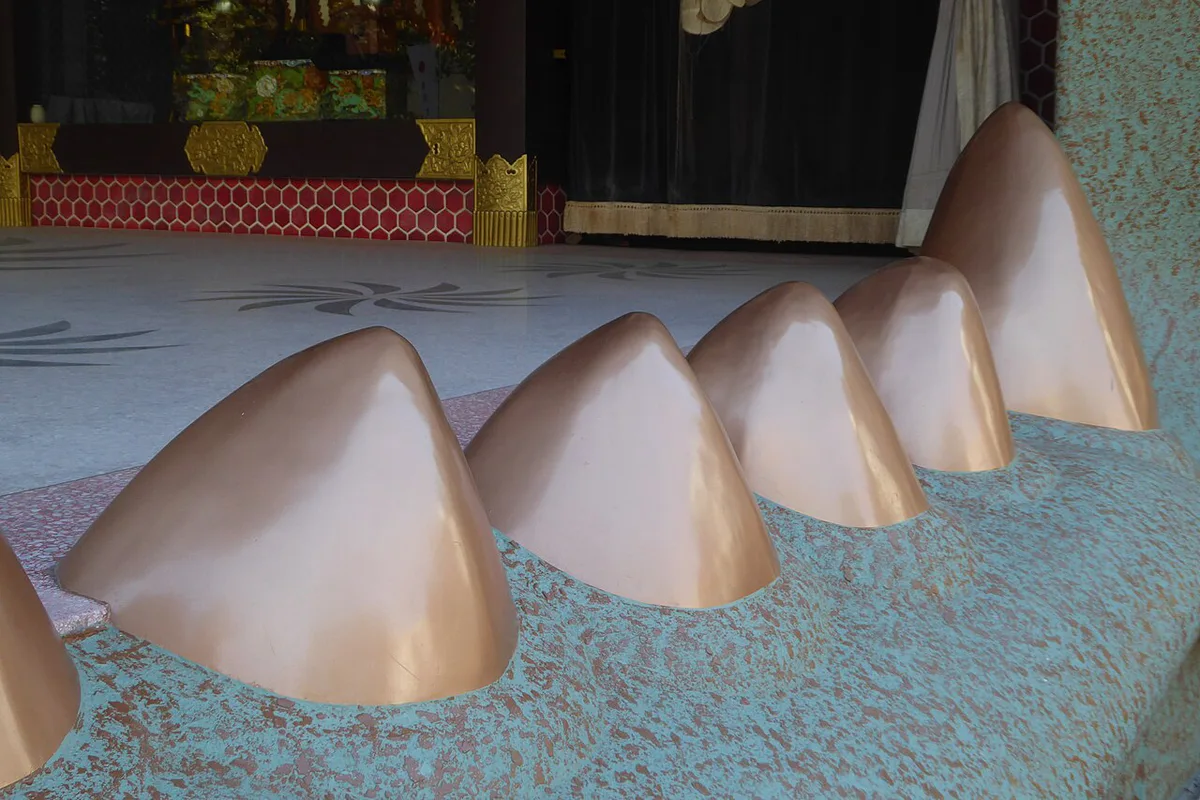
The building everyone comes to see is the Ema-den, a stage shaped like a giant lion's head with its mouth thrown open. It stands roughly 12 meters tall. Reported width and depth vary by source: one account lists 11 meters wide, another lists 7 meters deep, so treat either figure as approximate rather than a fixed spec. The current structure dates to 1975, a postwar rebuild. The shrine's earlier buildings, along with a wider Buddhist temple complex that once stood on the same site, were destroyed in wartime air raids. What survived is this single, theatrical stage, built beside a plainer honden from the same reconstruction era. The contrast between the two buildings is part of the appeal: a retro, theme-park-style facade standing a few meters from a conventional wooden shrine hall.
Why a Lion Swallows Evil Spirits
The lion's open mouth is meant to swallow bad luck and misfortune before it reaches you, leaving good fortune in its place. That framing explains why the shrine draws a specific crowd beyond sightseers: students heading into exam season and businesspeople marking the start or close of Japan's fiscal year. Both groups treat a stop at the lion head as a way to clear obstacles before a high-stakes period, rather than a generic wish for luck. It is a narrower, more specific piece of symbolism than most neighborhood shrines advertise, and it is a large part of why the Ema-den became a recognizable image well beyond Naniwa-ku.
The Third-Sunday-of-January Tug-of-War Festival
Namba Yasaka Shrine holds its main annual festival on the third Sunday of January, centered on a large-scale tug-of-war ritual. The event reenacts the shrine's founding myth: the god Susano-ono-Mikoto killing the serpent Yamato-no-orochi to free the people of the area from the snake's harm. The tug-of-war stages that victory as a communal contest rather than a scripted reenactment. If a festival scene is the goal, plan for a crowded courtyard and limited space near the Ema-den that Sunday. For a quieter visit, a weekday morning outside festival season gives the clearest run at photos and a few minutes of relative quiet in front of the stage.
Cherry Blossom Season and Crowd Patterns
Cherry blossom trees are planted around the shrine grounds, and the site gets a modest bump in visitors during bloom season each spring. Beyond that window, Namba Yasaka Shrine stays quieter than Osaka's larger shrine and temple sites, since it is easy to walk past without noticing on the way toward Dotonbori's restaurants and arcades. That quieter baseline is worth remembering: outside of festival Sundays and peak bloom, this is a stop most visitors clear with room to spare, even though it circulates constantly on social media.
Getting to Namba Yasaka Shrine From Namba Station
Namba Yasaka Shrine sits inside a residential-and-commercial grid, which makes a fixed landmark more useful than turn-by-turn directions through the surrounding blocks.
- From Nankai Namba Station: about an 8-minute walk, the most direct route for anyone arriving on the Nankai line from Kansai Airport.
- From Daikokucho Station: about a 7-minute walk, often a quieter approach than the Nankai Namba side.
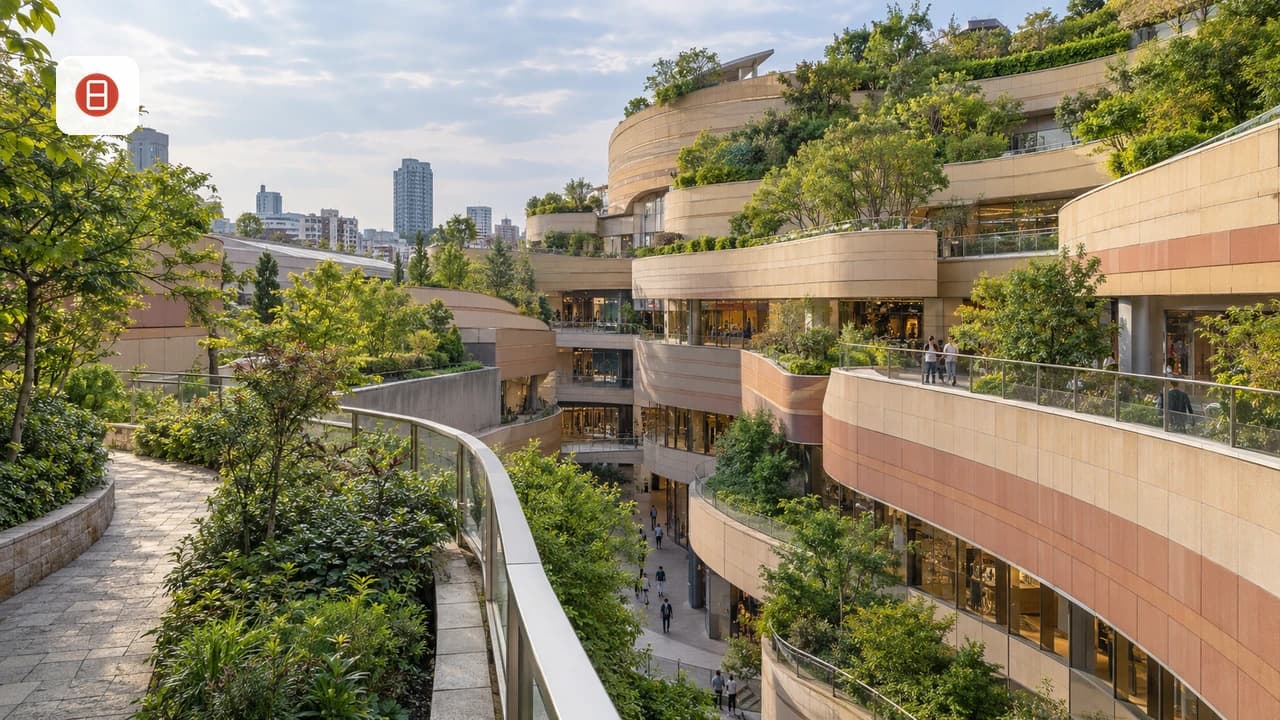
- Landmark to aim for: Namba Parks shopping complex, roughly a 5-minute walk from the shrine, useful when the surrounding streets start to look repetitive.
- Address for maps: 2-9-11 Motomachi, Naniwa-ku, Osaka-shi, Osaka-fu 556-0016.
How Much Time to Budget: The 15-Minute Reality Check
Namba Yasaka Shrine is not a sprawling complex, and treating it like one leads to disappointment. Budget 15 to 30 minutes: enough time to view the Ema-den from a few angles, read the posted history, and step into the honden to pay respects. Compare that to Sumiyoshi Taisha, which spans multiple halls and gardens and easily fills half a day. Namba Yasaka works better as a short detour bolted onto a longer Namba itinerary than as a standalone destination. Most visitors combine it with nearby shopping or food rather than building a morning around it alone.
Weekday mornings deliver the clearest photos of the Ema-den, while the third Sunday of January draws festival crowds. Outside both these windows, the 15-30 minute visit remains efficient; the shrine stays quieter than comparable Osaka shrine complexes like Sumiyoshi Taisha.
Photo Etiquette and the Best Angles for the Lion Head
The Ema-den photographs well from a straight-on angle a few meters back, low enough to capture the full mouth and the top of the head in one frame. Crowds cluster directly in front during midday and on weekends, so timing matters as much as angle.
- Weekday mornings, before tour groups arrive, give the clearest sightline to the stage.
- Step back toward the courtyard's edge for a full-height shot instead of a close crop that cuts off the top of the head.
- Avoid climbing on the stage structure or crossing into roped-off sections for a photo.
- Keep voices down and give space to anyone approaching the honden to pray; the shrine is an active place of worship, not a photo set.
Pairing Namba Yasaka Shrine With Other South Osaka Stops
Namba Yasaka Shrine's small footprint makes it easy to fold into a longer loop rather than a dedicated trip. Most visitors treat it as the start of a South Osaka afternoon, pairing the shrine with shopping, a skyscraper view, and a soak, or swapping the whole afternoon for a nature-focused day instead.
- Namba Yasaka Shrine: the Ema-den lion-head stage and honden, 15-30 minutes.
- Namba Parks: a shopping complex about 5 minutes from the shrine.
- Abeno Harukas observation deck: a rooftop view over the district you just walked through.
- Spa World Osaka: a multi-floor bathing complex in Shinsekai, a good way to close out the loop.
Evening and Nature Alternatives
For an evening extension, teamLab Botanical Garden is designed for after-dark viewing, so it pairs naturally with a loop that runs into the evening. For a contrast to Namba's density on a different day, some travelers head north to Minoo Park's waterfall trail, trading the shrine's urban block for a forested valley.
Where to Stay Near Namba Yasaka Shrine: Motomachi vs Dotonbori
Motomachi, the shrine's home neighborhood, is quieter than Dotonbori but still close enough to walk into the entertainment district in minutes. Dotonbori itself is louder and more central, better suited to travelers prioritizing nightlife and food over quiet mornings. Motomachi fits foodies and travelers using the Nankai line, since it sits a short walk from Nankai Namba Station. The table below lists sample per-night rates from properties within a few hundred meters of the shrine.
| Hotel | Sample Rate (per night) | Distance from Shrine |
|---|---|---|
| Monday Apart Premium Osaka Namba West | ¥46,963 - ¥61,494 | 0.1 km |
| WellStay Namba | ¥14,400 - ¥37,000 | 0.1 km |
| Hotel WBF Namba Motomachi | ¥8,190 - ¥11,691 | 0.1 km |
| Unito Hotel Residence Namba Motomachi | ¥7,120 - ¥11,900 | 0.1 km |
| Hotel Relief Namba Daikokucho | ¥5,900 - ¥12,350 | 0.2 km |
The Goshuin: A Collectible Stamp at Namba Yasaka Shrine
Namba Yasaka Shrine issues its own Goshuin, a hand-stamped and hand-written seal that collectors gather across shrines and temples in Japan. The stamp is available at the shrine office during its staffed hours, which is one reason to avoid arriving right at closing time. Because the Ema-den draws a heavier social-media following than most neighborhood shrines its size, the Goshuin window can queue up faster than the courtyard itself during peak weekend hours. Arriving earlier in the day improves the odds of a quick stamp without a wait.
Common Mistakes to Avoid at Namba Yasaka Shrine
A handful of avoidable mistakes account for most disappointing visits.
Shrine grounds are reported as accessible around the clock, but the Goshuin office closes at 17:00. Peak weekend queues can form at the stamp window faster than in the courtyard, so arriving early maximizes chances of collecting a Goshuin without waiting.
- Arriving right before 17:00 and finding the shrine office and Goshuin window already closed.
- Treating the visit purely as a photo stop and skipping basic shrine etiquette: a small bow at the entrance, quiet voices, and standing aside for anyone praying at the honden.
- Expecting a large park-style complex; the site is a single courtyard, not a multi-hall precinct like Sumiyoshi Taisha.
- Ignoring the third-Sunday-of-January festival window entirely if a livelier atmosphere is the goal, or not planning around the crowd it brings if quiet photos are the goal.
For trip-planning details, see Osaka - Wikivoyage and Osaka - Wikipedia.
Pair this with our broader Osaka tourism attractions guide for the full city overview.
Frequently Asked Questions
Is Namba Yasaka Shrine free to visit?
Yes. Admission to the grounds is free. The only optional cost is a Goshuin stamp from the shrine office if you want a collectible record of the visit.
How much time do you need at Namba Yasaka Shrine?
Plan on 15 to 30 minutes. The site is a single courtyard built around the Ema-den lion-head stage and a honden, not a sprawling complex.
What is the best time to visit the Lion Shrine in Osaka?
Weekday mornings give the clearest photos with the fewest people in frame. For festival atmosphere, visit on the third Sunday of January for the tug-of-war ritual, though expect a crowded courtyard that day.
Can you take photos at Namba Yasaka Shrine?
Yes, photography is welcome around the Ema-den. Keep a respectful distance from anyone praying at the honden, avoid climbing on the stage structure, and stay back from roped-off sections.
How do you get to Namba Yasaka Shrine from Namba Station?
From Nankai Namba Station, it's about an 8-minute walk. From Daikokucho Station, it's about a 7-minute walk, often the quieter approach. Namba Parks shopping complex is a useful landmark along the way.
What is a Goshuin, and can you get one at Namba Yasaka Shrine?
A Goshuin is a hand-stamped, hand-written seal collected as a record of a shrine or temple visit. Namba Yasaka Shrine issues its own, available at the shrine office during its staffed hours.
Free: The Osaka Essentials guide
Top things to do, where to stay, a perfect day plan, getting around, and the best time to go — a Osaka mini-guide you can take offline.
You might also like

Continue reading
More guides you'll find useful