Gujo Ayu Sweetfish: Season, Yana Fishery, and Where to Eat
Gujo ayu sweetfish guide: best months to visit, Yana fishery traps on the Nagara River, top restaurants, and how to eat shioyaki like a local.
On this page
Last updated August 2026: Gujo ayu sweetfish comes straight from the Nagara River, whose fishing traditions carry international recognition. Visitors choose between watching bamboo Yana traps work the current, booking a multi-course restaurant meal, or grabbing a salt-grilled skewer at a roadside stop. That choice depends on timing, since tender, tempura-ready fish arrive in June and fat, roe-filled ochi-ayu take over by October.
What Makes Gujo Ayu Sweetfish the Queen of Clear Water?
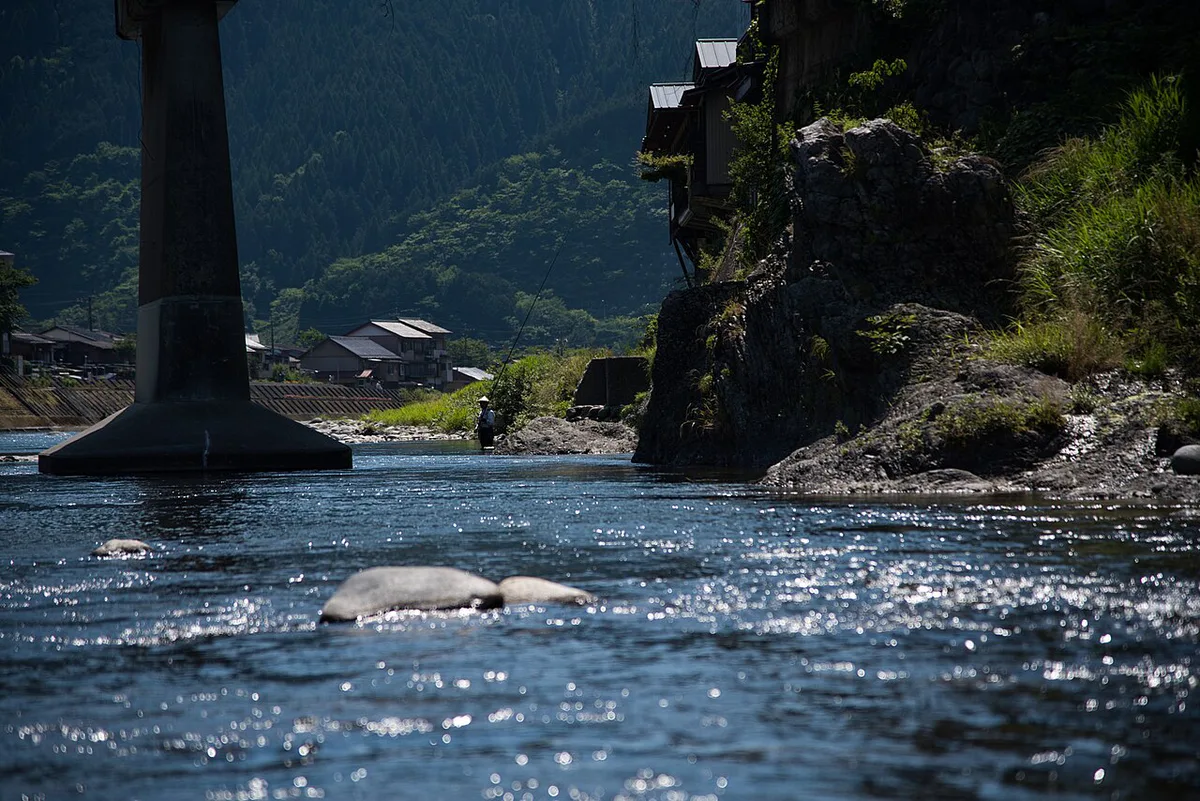
Sweetfish caught in the Nagara River basin running through Gujo Hachiman carry the name Gujo Ayu. They're prized for a slender shape and a clean, mellow scent. Fish from the separate Wara River, in the eastern part of the city, carry the distinct Wara Ayu brand and a fuller, faintly bitter flavor. Both varieties owe their character to algae growing on the clear riverbed. That diet gives adult ayu the fragrance locals call kougyo, or fragrant fish, often compared to watermelon or cucumber. In 2015, Ayu of the Nagara River System earned Globally Important Agricultural Heritage System status from the UN's Food and Agriculture Organization. The designation recognizes traditional fishing methods and the forest stewardship that keeps the water this clear. Locals nickname the fish seiryu no jouou, or queen of the clear rivers. The same water system supports roughly 100 other fish species and the Japanese giant salamander, a protected natural monument. That same designation cites roughly 860,000 residents living across the wider river basin. Fishers, foresters, and residents work together on a tree-planting project near the river's source to keep nutrients flowing into the water. Local governments also monitor water quality, and community cleanup days help protect the same clarity that gives Gujo Ayu its reputation. Downstream in Gifu City, the river is known for ukai cormorant fishing, but Gujo's own tradition centers on Yana traps instead. Ayu anchors Gujo Hachiman's food scene from June through October.
The Ayu Calendar: When to Visit for Each Flavor
Ayu season in Gujo Hachiman runs from around mid-June through October, and the ideal preparation changes as the fish matures. Early-summer waka-ayu are small and soft enough to eat whole, which is why many kitchens batter and fry them as tempura. Because waka-ayu are small, cooks batter and fry them whole, bones included, so the fish disappears in a couple of bites. August is peak season for shioyaki, the salt-grilled style most visitors picture. It's also when the greatest number of restaurants and Yana traps operate at once. Many visitors assume summer is the best time, but locals often wait for the ochi-ayu run in late September and October. These spawning fish carry roe and more fat, giving miso-simmered dengaku a richer finish than a midsummer fillet. More than 200 fish can descend the river together during a single run, though the exact week shifts each year with sunlight hours and water temperature. Prices aside, waka-ayu tempura sets are typically the lightest meal of the ayu season, while August shioyaki plates and autumn dengaku courses run heavier and more filling. Restaurant menus follow the same rhythm across the season. Expect fried waka-ayu in June, salt-grilled shioyaki through August, and miso-based komochi-ayu once the autumn run begins. Because the run's timing varies, regular customers often call ahead in September to ask which restaurants have started serving it. Anglers who fish for sport, rather than eat at a restaurant, can try Tomoduri. Locally called ayu-kake, this decoy method exploits the fish's territorial habit of ramming intruders, and runs from mid-June to October.
Yana traps run from August through October, so June's tender waka-ayu tempura exists only on restaurant menus, not at trap-side dining where other seasonal preparations are available.
| Season | Fish stage | Typical dish | Notes |
|---|---|---|---|
| June – July | Waka-ayu (young fish) | Tempura | Tender enough to eat whole, bones included |
| August | Peak adult ayu | Shioyaki (salt-grilled) | Busiest month for restaurants and Yana traps |
| September – October | Ochi-ayu (spawning run), Komochi-ayu (roe-bearing) | Dengaku, kanroni, miso-based stews | Richer and fattier; many locals prefer this window |
Yana Fishery: Watching or Catching Ayu on the Nagara River
Yana fishery uses a saw-toothed scaffold of wood or bamboo, called a Yanaba, built across the current to intercept ayu as they swim downstream. The technique originated in China centuries ago, but Gujo is where most visitors now experience it as a sightseeing activity rather than a working fishery. This catching season runs for three months, from August through October, to protect fish populations the rest of the year. When the current is strong, hundreds of fish can hit the collection box at once, a moment that surprises many first-time visitors. Restaurants that hold Yana rights also follow local rules on how the catch can be used, part of the broader effort to keep the fishery sustainable. At some Yana sites you simply watch the trap and eat what it caught. At Shirotori Seiryu Nagaragawa River Ayu Park, you can wade in and catch ayu by hand instead. For a hands-on souvenir that doesn't involve eating, book a wax food sample workshop, where you mold a replica ayu plate to take home. The Yamato-area Sugigase Yana serves only naturally caught ayu, so its operating days shift with river conditions, and some days yield very few fish.
- Gujo Hachiman Yana (Hachiman-cho Inari) sits closest to the castle town. Its current listing gives barbecue service from April through late October, natural-ayu cuisine from July 25 through late October, and Yana fishing from August 1 through October 31. Hours are 11:00-15:00 (last order 14:30), Tuesdays are closed, and parking is listed for 20 cars. Seasonal dates can move, so check the official Gujo tourism listing before traveling.
- Miyachika (Minami-cho Kamita) is another Yana dining option. Its service dates, parking arrangements, terrace rules, and catch availability should be confirmed directly before making a special trip, because those operator details can change with the season and river conditions.
- Nagomiya Seseragi (Shirotori-cho Oshima) pairs Yana dining with an overnight log cottage and barbecue area. It's open 11:00-18:00 from August to October, closed Wednesdays, with parking for 40 cars.
Where to Eat: Choosing the Right Venue
Gujosanbo serves a Japanese-cuisine course inside a mansion once home to the writer Mushanokoji Saneatsu, with each of its four rooms booked for one group per day. Wara Ayu appears on the Gujosanbo menu only from June to July, and phone reservations are taken from 15:00 to 18:00, up to the day before your visit. Minokin, also in the Hachiman area, is another high-end option built around a full ayu course. Across the luxury tier, expect to book by phone rather than online, and expect a set course rather than an à la carte menu. Yamato's Kinsho-kan and Shirotori's Darumaya round out the area's other full-course options. For something different, Ristorante Suzumenoiori pairs Italian technique with whole natural ayu, serving confit, aglio olio, and baked preparations from mid-June to late September. At the casual end, Road Station Kokondenjuno Sato Yamato grills skewered ayu over what staff call a distant, strong fire, a slower method meant to cook the bones through. Its service period runs early May to late November, and a free footbath is available on-site while you wait. Hachiman's town center also holds smaller sit-down options such as Uotora, Shinbashi-tei, and Daihachi for a straightforward ayu lunch without a Yana view. None of these restaurants publish fixed menus online. Treat the Road Station's salt-grilled skewer as the cheapest single item, a Yana lunch set as the mid-range choice, and a multi-course Gujosanbo dinner as the top of the local price range. Travelers watching costs can also check the budget dining options guide for non-ayu meals nearby. For a different local protein, see the grilled keichan chicken guide. Vegetable-forward eaters can browse mountain miso cooking instead.
| Traveler type | Best pick | Why it fits |
|---|---|---|
| Families with kids | Shirotori Seiryu Nagaragawa River Ayu Park | Hands-on catching, not just watching a trap |
| Couples wanting something different | Ristorante Suzumenoiori | Italian-style ayu course, mid-June to late September |
| Solo or budget travelers | Road Station Kokondenjuno Sato Yamato | Grilled skewers, no reservation needed, free footbath |
| Special-occasion diners | Gujosanbo | One-group-per-room course, reservation required |
How to Eat Ayu Like a Local
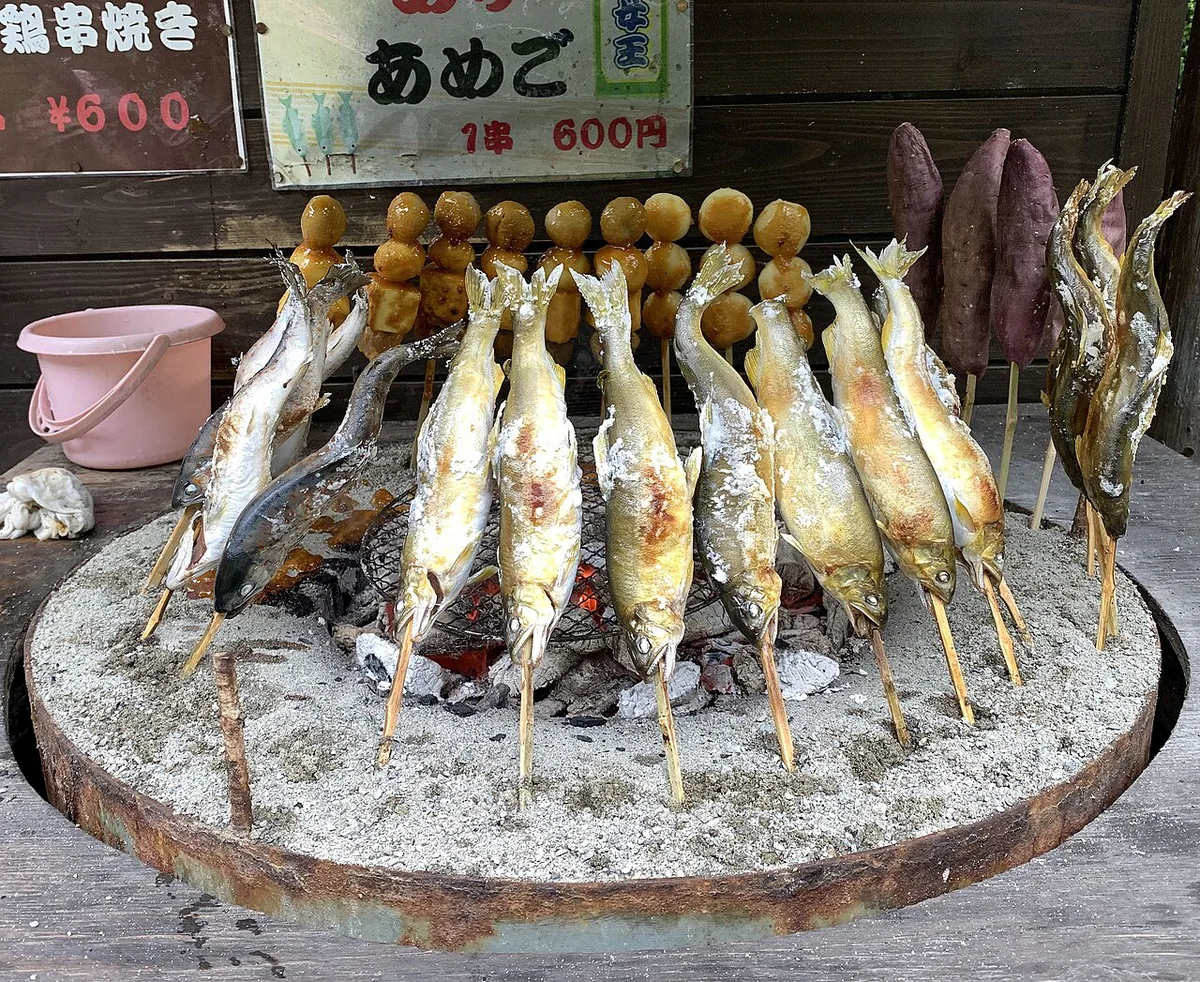
Shioyaki starts with a light coat of salt over the whole body. After the fish rests for five to six minutes, cooks pack extra salt onto the fins and tail so they crisp instead of burning over the coals. To eat it, hold the head steady and use chopsticks to loosen the flesh along the spine from head to tail. Then lift the backbone out in one motion, from the tail end up, leaving the two fillets behind. Spring waka-ayu need no bone removal at all, since the whole small fish is eaten in one or two bites. Bones, head, and tail are all optional, and many diners eat the whole fish, though the organs can taste bitter and some skip them. Ikizukuri, sashimi cut from a still-live fish, appears on some luxury menus, but Japan's Food Safety Commission advises against eating ayu raw because of a parasite the fish can carry. Shioyaki, which is fully cooked, remains the more common and lower-risk way to order it. The Yamato-area Yana also sells uruka and ichiyaboshi, salted dried ayu, as take-home souvenirs. Uruka ranges from mild to intensely fermented depending on the maker, so first-timers often order a small portion before committing to a larger dish.
- Uruka: the fermented internal organs, salty and something of an acquired taste.
- Kanroni: ayu simmered slowly in soy sauce and sugar until the bones soften.
- Ayu-zohsui: a rice porridge finished with grilled or simmered fish.
- Ayu-meshi: rice cooked in a clay pot with a whole grilled fish on top.
- Ayu nare-zushi: an older fermented-sushi style using salted, aged fish and rice.
Planning Your Visit: Reservations, Access, and Pairings
Reservations make or break a visit to the higher-end spots. Gujosanbo takes phone bookings only from 15:00 to 18:00, and only up to the business day before, with one group seated per room per day. Ristorante Suzumenoiori and the Wara-area restaurant Nakasa also require advance reservations, and Nakasa opens only when a booking is confirmed. The casual Road Station stop and most Yana restaurants are more flexible, though calling ahead during peak August weekends is still worthwhile. Driving from the Tokai-Hokuriku Expressway's Gifu-Yamato interchange to Road Station Kokondenjuno Sato Yamato takes about 7 minutes. Without a car, the Nagaragawa Railway's Gujo-Yamato Station is roughly a 10-minute walk from the same Road Station. Trains on this rural line run at limited daily frequency, so checking the timetable before you go is worth the extra minute. Pair the meal with a stop at local sake pairings for the water-and-rice side of Gujo's food story. Combine it with a castle town itinerary so the walk to and from Gujo Hachiman Castle bookends the food stop. A simple half-day plan combines castle town sightseeing in the morning with a reserved Yana lunch, then a walk back before dinner.
Gujosanbo accepts reservations only during 15:00 to 18:00, which constrains booking options when targeting late September and October's ochi-ayu runs, whose timing shifts unpredictably with water temperature.
How This Guide Was Verified
Food availability, access details, seasonal rules, and the time-sensitive claims in this guide were checked on August 22, 2026 against the official sources below. Independent restaurant menus, prices, opening days, and sell-outs can change, so confirm the operator's same-day notice before making a special trip.
Frequently Asked Questions
When is the best time to eat ayu in Gujo?
August is peak season for salt-grilled shioyaki and the busiest month for restaurants and Yana traps. Many locals actually prefer late September and October, when spawning ochi-ayu carry roe and more fat.
What's the difference between Gujo Ayu and Wara Ayu?
Gujo Ayu comes from the Nagara River basin and has a slender shape with a mellow, clean scent. Wara Ayu comes from the separate Wara River and carries a fuller, faintly bitter flavor that some diners rank even higher.
Do I need a reservation to eat ayu at a Yana restaurant?
It depends on the venue. Gujosanbo and Ristorante Suzumenoiori require advance booking, and Gujosanbo only takes calls between 15:00 and 18:00. Casual spots like the Road Station stop in Yamato are more flexible, though calling ahead on August weekends is still a good idea.
Can visitors catch ayu by hand?
Yes. Shirotori Seiryu Nagaragawa River Ayu Park offers a hands-on catching activity rather than only a view of a trap. Check the park's current participation rules and fish charges before visiting; do not assume that other Yana dining sites allow guests into the water.
Is it safe to eat ayu raw?
Some high-end menus serve ikizukuri, sashimi cut from a live fish, but Japan's Food Safety Commission advises against eating ayu raw due to a parasite risk. Salt-grilled shioyaki, which is fully cooked, is the more common and lower-risk way to order it.
How do I reach the ayu restaurants without a car?
Nagaragawa Railway trains connect several towns in the valley, and Gujo-Yamato Station is about a 10-minute walk from the Road Station stop in Yamato. Restaurants further from a station, such as the Yana sites in Minami and Wara, are easier to reach by car or taxi.
Is parking available at the ayu restaurants?
Parking varies by venue. The current official listing for Gujo Hachiman Yana shows 20 spaces, while other restaurants and roadside facilities set their own arrangements. Confirm the specific venue's current listing before relying on parking during peak ayu season.
Free guide: Japan's Hidden Gems
12 under-the-radar places beyond Tokyo & Kyoto — with the best season to visit each and a local tip you won't find in the guidebooks.
You might also like


Continue reading
More guides you'll find useful