

Momochi Seaside Park and Fukuoka Tower Itinerary: 8 Stops
Explore Fukuoka's waterfront with our 1-day Momochi Seaside Park and Fukuoka Tower itinerary. Includes the PayPay Dome, Marizon, and expert travel tips.
On this page
The Seaside Momochi district is Fukuoka's most photogenic waterfront, and it packs eight distinct stops into a compact, walkable area. This itinerary covers all of them in a single day, moving from east to west so you finish near the PayPay Dome for an evening game or concert. Whether you are on your first trip or returning for a deeper look, this guide gives you the exact timing, costs, and local details to make the day count.
The district was built on reclaimed land for the 1989 Asia Pacific Expo, which is why the streets are wide, the utilities are underground, and the architecture looks unlike anything else in Japan. You won't see a single overhead cable — a deliberate design choice that makes the skyline feel unusually clean. Our Fukuoka 1-day itinerary gives context for where this district fits into a broader city visit.
Before heading out, understand how to use Fukuoka public transport — it will save you time navigating from Hakata to the waterfront. Check the Fukuoka City Guide "YOKA NAVI" for any seasonal waterfront events in 2026 that might affect your timing.
At a Glance: 1-Day Seaside Momochi Itinerary
This quick overview shows the full sequence and helps you budget your time. All eight stops are within walking distance of each other, so you will not need a taxi between them. The route runs roughly north to south along the waterfront, then cuts inland to the Dome and mall at the end.
- 09:30 — Fukuoka City Museum (history, gold seal, Street of World Architects route; ~90 min)
- 11:15 — Fukuoka City Public Library (optional quiet stop; ~20 min)
- 11:30 — Fukuoka Tower observation deck (~45 min)
- 12:30 — Momochihama Beach, Marizon Pier, beach sports or ferry option (~90 min)
- 14:00 — Robosquare at TNC TV Building (~45 min)
- 15:00 — PayPay Dome, Oh Sadaharu Baseball Museum, Hawks shop (~60 min)
- 16:00 — Hilton Fukuoka Sea Hawk lobby (~20 min)
- 16:30 — MARK IS Fukuoka Momochi for dinner and shopping (~90 min)
- Optional evening — return to Fukuoka Tower for night illumination (same-day ticket)
Fukuoka City Museum: History and Culture
Start at the Fukuoka City Museum when it opens at 09:30. The permanent collection traces Fukuoka's role as East Asia's gateway port, with trade artifacts, Hakata Gion Yamakasa festival floats, and a replica of the medieval trading ship that connected Japan with China and Korea. The centerpiece is the national treasure gold seal — a tiny Han-dynasty relic that authenticated diplomatic exchanges between Fukuoka's rulers and the Chinese emperor over two thousand years ago.
Entry costs 200 JPY for adults and 100 JPY for high school students. University students and younger visitors enter free on permanent exhibitions. Plan ninety minutes for a comfortable walk through, or sixty if you skip the video room. The building itself has a dramatic open atrium that is worth photographing even if you rush the exhibits.
Directly adjacent to the museum is the Fukuoka City Public Library. This is a detail most itineraries overlook entirely: the library shares the museum plaza and is a genuinely pleasant, free space to sit for twenty minutes before heading to the tower. It is air-conditioned in summer, warm in winter, and gives you a quiet moment before the crowd at the observation deck builds up.
Fukuoka Tower: The Iconic Landmark
Walk five minutes south from the museum to reach the base of Fukuoka Tower. At 234 meters, it is the tallest seaside tower in Japan, and its exterior is covered in 8,000 half-mirror panels — the design that earned it the nickname "Mirror Sail." On a clear morning, the tower reflects the blue of Hakata Bay from every angle as you approach across the plaza.
The observation deck sits at 123 meters and provides 360-degree views of the bay, the mountains behind the city, and on clear days the islands in the Genkai Sea. Entry is 800 JPY for adults, 500 JPY for junior high and high school students, and 500 JPY for seniors over 65. The tower opens at 09:30 and stays open until 22:00 (last admission 21:30), which makes it the best place in the district to watch a sunset slide into city lights — a single ticket covers both.
Arrive before 11:00 on weekdays to avoid tour groups. On weekends, the sunset and evening slots (18:00 onward) are the most sought-after, and they often sell out. If you are visiting in 2026 between November and February, look up the winter illumination theme — the tower's lighting program changes each season and the night view from Hakata Bay is consistently rated among Japan's 100 best nightscapes.
A single Fukuoka Tower ticket (¥800 adults) covers both the daytime observation deck visit and the evening illumination — you can re-enter the same day. Time your first visit for morning, then return around 19:00 for the night view without paying again.
Momochi Seaside Park and Marizon Pier
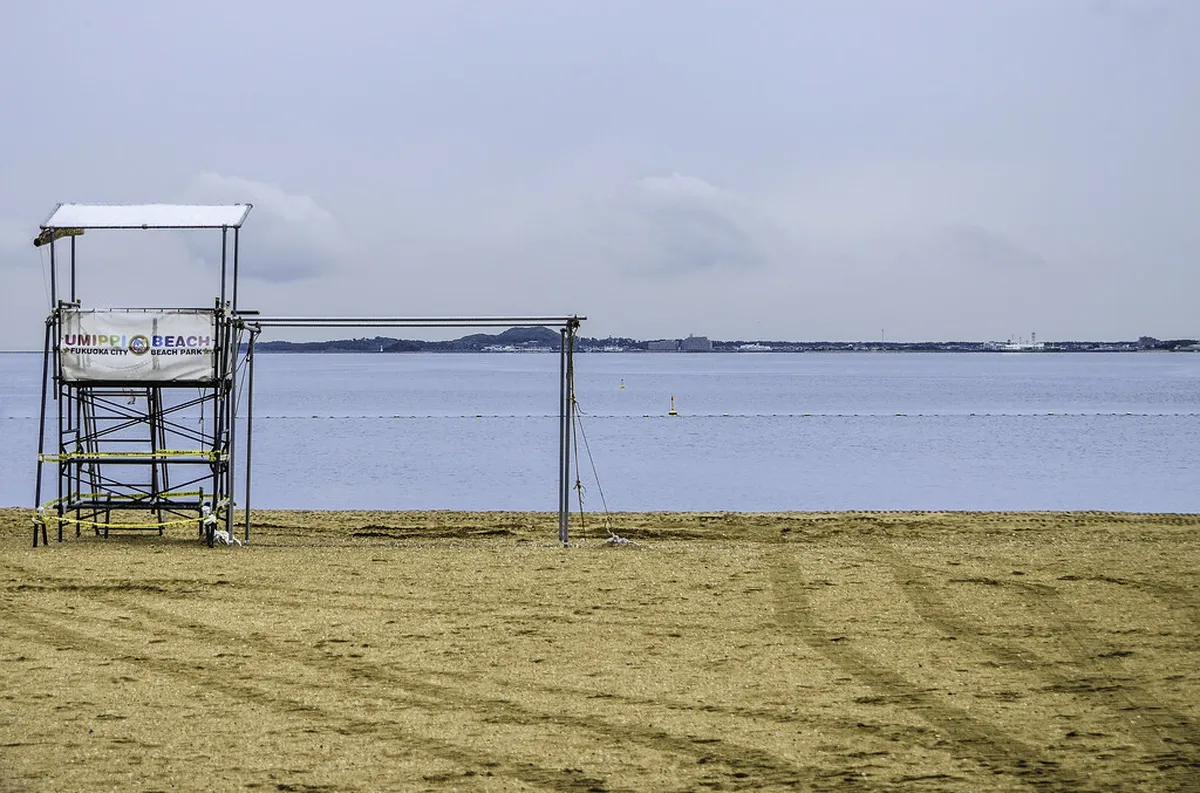
From the tower's base, walk two minutes west to the beach. Momochihama Beach is entirely man-made — the sand was imported and the bay here has no tidal surge — which is why visitors often notice the beach lacks the typical salt-and-seaweed smell of a natural coastline. The absence of that smell is not a sign something is wrong; it is simply what a reclaimed urban beach feels like, and the trade-off is pristine sand and calm, swimmable water in summer. The beach stretches for roughly one kilometre and is one of the few urban beaches in western Japan where you can swim without travelling far from a major train station.
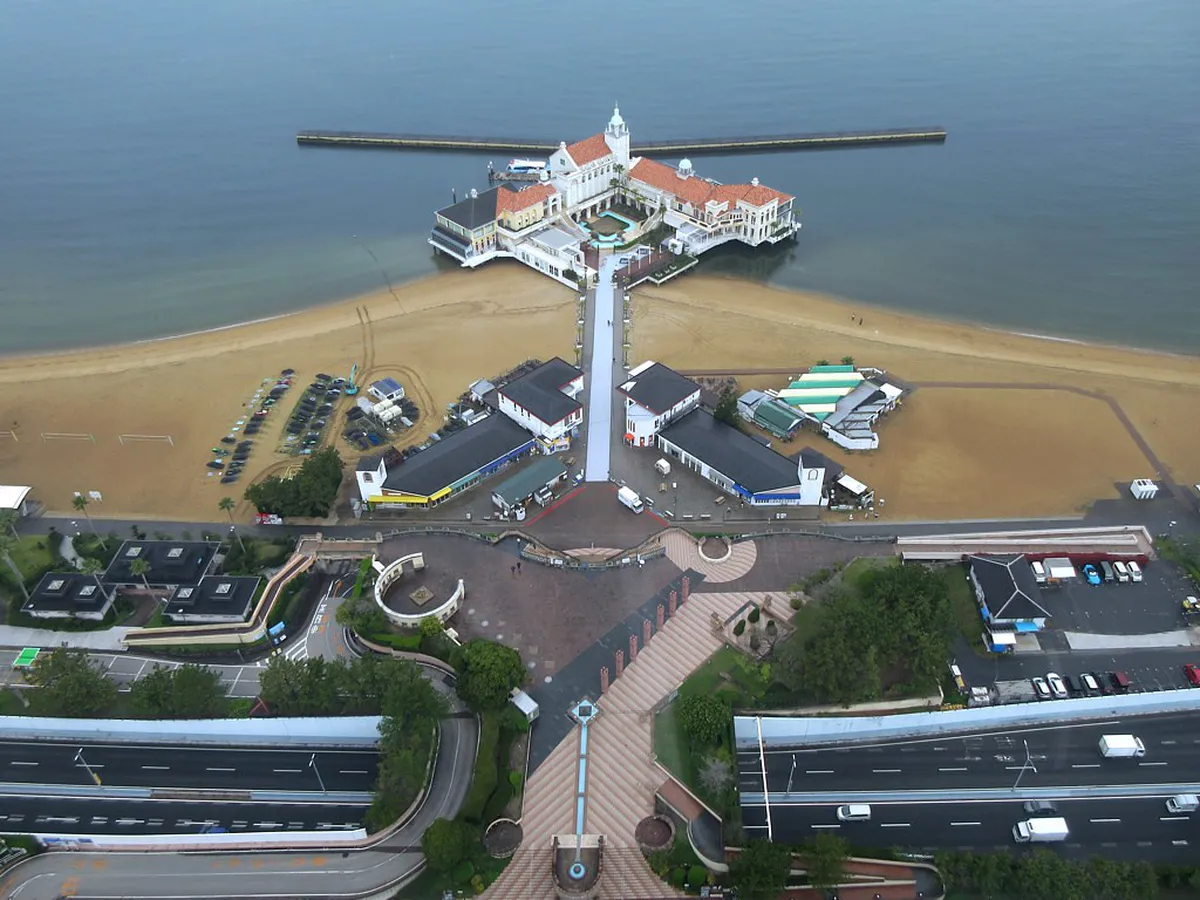
At the eastern end of the beach, Marizon is a Mediterranean-style pier that extends into the bay and houses a wedding hall, two restaurants, and a handful of food stalls. The takoyaki and yakisoba stall near the entrance is the busiest food stop in the whole district — the same counter also sells karaage and fries, and it is a reliable and inexpensive lunch option before you move on. Grab a table on the pier's outer deck if the weather is clear.
Marizon is also the departure point for the Uminaka Line ferry to Uminonakamichi Seaside Park. The high-speed vessel runs approximately every two hours and takes 20 minutes to cross Hakata Bay; the fare is 1,100 JPY one way. If you want to add Uminonakamichi to your day, check the departure schedule before you commit — the boat fills quickly on weekends. Our Uminonakamichi Seaside Park: The Ultimate Fukuoka Day Trip Guide covers what awaits on the other side.
Beach Sports and Summer Activities at Momochihama
Momochihama is not just a scenic walk — in summer it operates as a full beach sports venue. Beach volleyball courts are set up along the central stretch, and jet skiing and stand-up paddleboarding (SUP) are available from rental operators at the western end of the beach, typically from late April through September. Rental prices vary by season, but expect to pay around 3,000–5,000 JPY per session for SUP and higher for jet ski slots. Book jet ski time early on weekend mornings as slots sell out by 10:00.
If you are visiting as a family, the beach is one of the safest swimming spots in the Fukuoka area in July and August — there are no rip currents because it is a sheltered bay, and a lifeguard patrol operates during peak season. Changing rooms and outdoor showers are available near the Marizon end. Bring a towel if you plan to swim; there is no equipment hire for casual swimming gear at the beach itself, though the 7-Eleven near Fukuoka Tower stocks basics.
In the evening from late autumn through winter, the beach transforms into a completely different place. The high-rises of Hakata reflect in the flat bay water, and the area around Marizon becomes one of the most-photographed sunset spots in Fukuoka. The sunset view from the pier looking back toward the Hilton and the Dome is the classic shot — face west, arrive 30 minutes before local sunset time for the best light.
Rainy Day Alternative for the Momochi Itinerary
Fukuoka's rainy season runs mid-June through July, and scattered showers are also common in spring and autumn. Because roughly half of this itinerary is outdoors, it is worth resequencing the day toward indoor stops if the forecast looks wet.
Start at Fukuoka City Museum as scheduled — the ninety-minute visit and the atrium work just as well under grey skies. From there, go straight to Fukuoka Tower. The 123-meter observation deck is fully enclosed, though visibility over Hakata Bay drops noticeably in fog or heavy rain, so it is worth checking conditions before paying the 800 JPY admission if a clear view matters to you.
Skip the beach and Marizon pier on a wash-out day — there is no shelter along the sand, and the food stalls at Marizon are open-air counters with no seating cover. Head instead to Robosquare, a fully indoor, 45-minute stop inside the TNC TV Building that is unaffected by weather.
Close the day early at MARK IS Fukuoka Momochi, where the food court and shops absorb the ninety minutes you would otherwise have spent at the beach. The 7-Eleven near Fukuoka Tower, already useful for beach basics, also stocks umbrellas and ponchos for around ¥500–¥700 if you get caught between stops.
Robosquare: Hidden Gem for Tech Lovers
Walk back from Marizon and take the pedestrian path south toward the TNC TV Building, which sits immediately next to Fukuoka Tower. On the second floor, Robosquare is a free exhibit of over 250 robots developed by Fukuoka-based companies and universities. Unlike a museum, the exhibit is interactive — robots demonstrate movement, answer simple questions, and can be controlled by visitors through guided stations. Admission is free and the space is fully air-conditioned.
This stop is consistently overlooked in general guides. It takes about 45 minutes if you engage with the demonstrations. Families with children especially benefit: the hands-on format holds attention far better than the typical display case, and the staff explain the technology in accessible English via bilingual panels. Even if robotics is not your main interest, the sheer variety of machines — from agricultural drones to humanoid models — is genuinely surprising.
If the weather turns rainy during your afternoon, Robosquare is the best indoor fallback in the district. It is free to re-enter and the building has a cafe on the ground floor where you can wait out a shower before continuing to the Dome.
PayPay Dome and the Oh Sadaharu Baseball Museum
Walk ten minutes southwest from the TNC TV Building to reach the PayPay Dome, home of the Fukuoka SoftBank Hawks. The stadium seats nearly 40,000 and has a retractable roof that opens for evening games in fair weather. The Hawks are one of the most successful teams in Japanese professional baseball, and attending a home game is one of the best value-for-money live sports experiences in Japan — upper-level tickets start around 1,900 JPY and the atmosphere is loud and festive from the first pitch.
Inside the Dome complex, most visitors miss the Oh Sadaharu Baseball Museum. Sadaharu Oh is Japan's most celebrated home-run hitter — his 868 career home runs remain the all-time world record — and he managed the Hawks from 1995 to 2008. The museum holds his original equipment, trophies, and personal memorabilia, and explains his career in bilingual displays. Admission is included in some Dome tour packages; confirm current pricing at the concourse entrance. It is a compact exhibit, roughly 30 minutes, but gives the Dome visit real context even for visitors who know little about Japanese baseball.
Even on non-game days, the Hawks shop inside the Dome concourse is open most days and sells exclusive regional merchandise. For the 2026 SoftBank Hawks regular season (March to October), buy prime weekend tickets two to four weeks in advance. The Dome is a five-minute walk from MARK IS Fukuoka Momochi, making it easy to combine a game with dinner at the mall afterward.
Hilton Fukuoka Sea Hawk: Architectural Highlight
Adjacent to the Dome, the Hilton Fukuoka Sea Hawk is worth a brief stop even if you are not staying there. The lobby atrium is one of the largest interior spaces in Fukuoka — a fifteen-story glass-and-steel void that floods with natural light and creates a sense of scale that photographs poorly but impresses immediately in person. The hotel has over a dozen restaurants and bars, including a lobby lounge that serves afternoon tea with bay views.
As a place to stay, the Sea Hawk is the premier waterfront option in the district. Rooms on the bay-facing side overlook the Dome and the beach, and the location puts you five minutes on foot from the tower and the museum. It is the right base if your Fukuoka itinerary centres on this neighbourhood rather than Hakata or Tenjin. The hotel's location next to the Dome also means Hawks game nights bring genuine energy to the surrounding streets — not just inside the stadium.
MARK IS Fukuoka Momochi: Retail and Dining
MARK IS Fukuoka Momochi is the commercial anchor of the western end of the district. The mall opened in 2018 and is directly connected to the Dome plaza, making it a logical final stop before heading back to Hakata. It has six floors of shops, restaurants, and a cinema. The dining floor on the upper level covers everything from ramen and tonkatsu to steakhouses — a good place to end the day with a proper sit-down meal without retracing your steps toward the city centre.
The mall is also the most practical place to buy Fukuoka regional food souvenirs. Mentaiko (spicy pollock roe), Hakata ramen kits, and local confections are all well represented in the ground-floor food hall. If you are travelling onward to the airport from here, stock up before leaving — Fukuoka Airport carries similar items but at higher prices and with less selection. The Nishitetsu bus stop outside the mall connects directly to Tenjin and Hakata stations in under 25 minutes.
The Street of World Architects: A Walking Route Worth Knowing
Seaside Momochi was developed under a master plan that invited internationally recognised architects to design individual buildings. The resulting "Street of World Architects" runs through the heart of the district and is one of the few places in Japan where you can walk past seven landmark buildings — each by a different name architect — in under twenty minutes. The buildings include works by Arata Isozaki, Rem Koolhaas, and several others whose names appear in design history textbooks.
None of the standard Momochi itineraries pause to explain this, which is why most visitors walk past extraordinary buildings without realising what they are looking at. The Fukuoka-now.com local guide calls it "the most architecturally dense stroll in Fukuoka." The route runs roughly parallel to the beach between the museum and the Dome. You won't detour far; it overlaps naturally with the east-to-west path this itinerary already follows.
Look for the distinctive low-rise structures with unusual facades near the museum plaza, and note the contrast between these early 1990s statement buildings and the later commercial architecture around the Dome. The district's underground utilities policy (no overhead cables) gives you clean sightlines for photography that most Japanese urban streets don't permit.
Logistics: Transport and Timing for Your Itinerary
The easiest way to reach Seaside Momochi from Hakata Station is the Nishitetsu bus number 306, which runs direct to Fukuoka Tower in about 25 minutes and costs 240 JPY. From Tenjin Station the same journey takes 10 to 20 minutes. Alternatively, take the Kuko Subway Line to Nishijin Station — from there it is a 15-minute walk east along a pleasant residential street toward the museum. The walk is flat and well-signed.
If you take the subway option, the walk from Nishijin Station along what locals call Sazae-san Avenue passes through a lively shopping arcade with udon shops, bakers, and neighbourhood stalls aimed at local residents rather than tourists. It is a genuinely different texture from the tourist-facing amenities around the tower. Plan an extra 20–30 minutes if you want to stop for a local snack before the main itinerary starts. The Horaku Manju stall — selling steamed buns with sweet bean paste — is a reliable find along this stretch.
Parking is available near Fukuoka Tower for drivers, but the district is compact enough that a car is unnecessary once you arrive. The entire itinerary is walkable with no backtracking if you follow the east-to-west sequence described above. Total walking distance across the full day is about 4 kilometres.
| Route | Duration | Cost |
|---|---|---|
| Nishitetsu Bus #306 from Hakata Stn | ~25 min | 240 JPY |
| Bus from Tenjin Stn | 10–20 min | 240 JPY |
| Subway to Nishijin + walk east | ~25 min total | Subway fare |
| Uminaka Line ferry (Marizon to Uminonakamichi) | 20 min | 1,100 JPY one way |
| Return bus (MARK IS Momochi to Hakata) | ~25 min | 240 JPY |
Budget a full day — 09:30 to 19:00 covers all eight stops comfortably, or 09:30 to 22:00 if you stay for a game at the Dome and the night view from the tower. Most visitors find 6 to 8 hours covers the core sights, but the Dome game option easily extends that to 10 or 12 hours. One day is sufficient for this district; if you have more time, add a morning at Fukuoka's other top attractions before heading to the waterfront.
The summit parking lot at Fukuoka Tower is closed on weekends and public holidays for private vehicles. On those days, use the Nishitetsu bus from Hakata or Tenjin instead of driving — the bus drops you directly at the tower entrance.
Accessibility and Family Facilities in Seaside Momochi
Seaside Momochi is one of the more accessible districts in Fukuoka for wheelchair users and parents with strollers. Because the area was built on reclaimed land for the 1989 Asia Pacific Expo, the paths are wide, flat, and free of the narrow, stepped sidewalks common in older parts of the city.
Fukuoka Tower and Fukuoka City Museum both have elevators serving every public floor, and the tower's observation deck is fully step-free. Robosquare, on the second floor of the TNC TV Building, is also reached by elevator rather than stairs.
MARK IS Fukuoka Momochi has nursing rooms and accessible restrooms on multiple floors and is the most reliable stop in the district for diaper changing during the day. PayPay Dome provides accessible seating and family restrooms near the main concourse for anyone staying on for a game or concert after the itinerary.
The one uneven surface in the district is the beach itself — the sand at Momochihama makes stroller and wheelchair travel difficult beyond the paved promenade. Plan to take in the view from the boardwalk near Marizon rather than crossing onto the sand directly, especially with a stroller in tow.
Frequently Asked Questions
How much time should you spend at Fukuoka Tower and Momochi Seaside Park?
It takes about 4 to 6 hours to see the main sights. This includes the museum, the tower, and a beach walk. Add more time if you plan to shop at the mall.
Is there a ferry from Momochi Seaside Park to Uminonakamichi?
Yes, the Uminaka Line ferry runs between Marizon and Uminonakamichi. The trip takes 20 minutes across Hakata Bay. It is a scenic way to travel between attractions.
What is the best way to get to Seaside Momochi from Hakata Station?
Take the Kuko Subway Line to Nishijin Station. From there, it is a 15-minute walk to the tower. Alternatively, take a direct bus from the Hakata Bus Terminal.
This Momochi Seaside Park and Fukuoka Tower itinerary covers eight stops in a single, walkable day on Fukuoka's waterfront. From the gold seal at the City Museum to the night view from Japan's tallest seaside tower, the district delivers more depth than most first-timers expect. Follow the east-to-west route to avoid backtracking and finish at MARK IS with a proper Fukuoka meal before heading back to Hakata.
Check the weather forecast before you go — the tower observation deck is at its best on clear days, and the beach loses much of its appeal in heavy rain. Safe travels as you explore one of Japan's most thoughtfully designed coastal districts.
For related Fukuoka deep-dives, see our Tenjin shopping guide and Hakata tonkotsu ramen tour.
Pair this with our broader Fukuoka attractions guide for the full city overview.
Free: The Fukuoka Essentials guide
Top things to do, where to stay, a perfect day plan, getting around, and the best time to go — a Fukuoka mini-guide you can take offline.
You might also like


Continue reading
More guides you'll find useful


