
Fukuoka Tonkotsu Ramen Tour Guide: 8 Essential Sections
Master the art of the Fukuoka ramen crawl. Our guide covers the top 8 tonkotsu shops, Yatai stall etiquette, and local secrets like the 'Tonkotsu Cappuccino.'
On this page
Fukuoka Tonkotsu Ramen Tour Guide: 8 Essential Sections
Fukuoka is the ultimate destination for anyone who loves rich pork bone broth and thin noodles. This coastal city serves as the historic birthplace of the world-famous tonkotsu style. A proper fukuoka tonkotsu ramen tour guide helps you navigate the crowded alleys and hidden stalls. You will discover why locals take their slurping so seriously in this culinary capital.
The city offers a mix of legendary institutions and modern shops pushing flavor boundaries. Planning a food crawl requires knowing which districts hold the best secrets. From the bustling Hakata Station to the neon lights of Nakasu, every corner has a story. Prepare your appetite for an unforgettable journey through Japan's most iconic soup.
The Birthplace of Tonkotsu: Fukuoka's Ramen History
The story of tonkotsu began in the 1930s as a cheap and filling meal for laborers. Chefs originally simmered pork bones over low heat to create a clear broth. A kitchen accident eventually led to the milky, cloudy soup we recognize today. This mistake transformed the region's food scene and created a global phenomenon.
You will often hear the terms Hakata and Fukuoka used interchangeably during your visit. Hakata was traditionally the merchant district where the food culture flourished most. Today, Hakata Ward remains the central hub for ramen enthusiasts. Understanding this local history adds depth to every bowl you enjoy.
The thin, straight noodles were designed for fast-paced workers who needed quick service. Thin dough cooks rapidly, allowing shops to serve hundreds of customers per hour. This efficiency gave birth to the kaedama system of ordering noodle refills. The combination of heavy broth and light noodles defines the Kyushu soul.
Fukuoka's Three Ramen Styles: Hakata, Nagahama, and Kurume
Most visitors arrive thinking Fukuoka has one type of tonkotsu. In reality the city is home to three distinct sub-styles, each with its own history, noodle spec, and broth philosophy. Knowing the difference changes how you approach your crawl.
Hakata ramen is the style most tourists encounter first — ultra-thin straight noodles, creamy white broth, and the kaedama refill system. The broth is boiled aggressively and finished the same day, giving it a bright, clean pork flavor. Most shops near Hakata Station and Tenjin fall into this category.
Nagahama ramen originated at the old wholesale fish market on the Naka River. Because fishermen and market workers needed food fast, the noodles were made even thinner than the Hakata standard so they cooked in seconds. Portions are small by design — the idea was always to add a kaedama rather than order a larger bowl. The broth tends to be lighter and faster to prepare than the deep Hakata style.
Kurume ramen is the oldest and richest of the three. Shops in the Kurume tradition use the yobimodoshi method — they never fully empty the pot. A portion of the aged broth remains at the bottom, and fresh bones and water are added on top each day. Over weeks and months this produces a layered, funky depth that cannot be replicated by a freshly-started batch. If you want to understand why the best old-school Fukuoka shops taste different from modern chains, the yobimodoshi method is the reason.
What's in the Bowl: Broth, Noodles, and Toppings
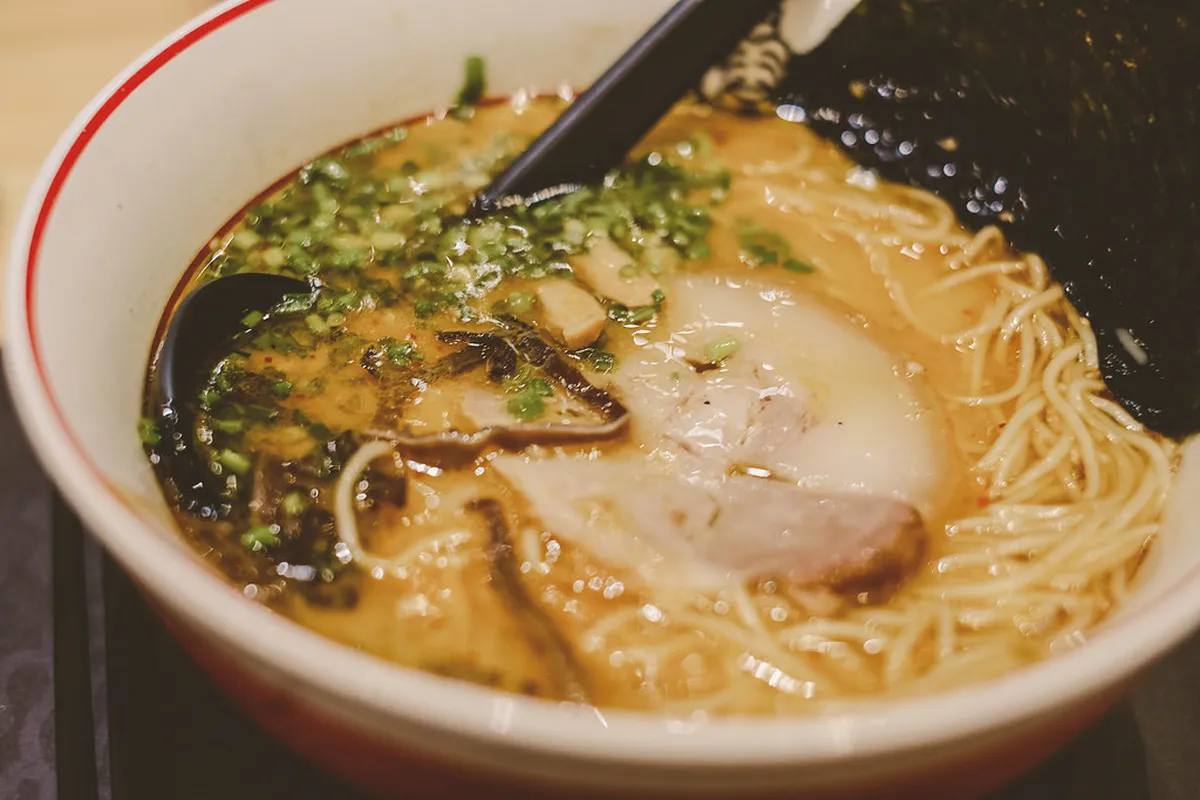
Tonkotsu broth is made by boiling pork bones — typically the femur and neck — at a rolling boil for 12 to 20 hours. The high heat extracts collagen and marrow, turning the liquid from clear to an opaque, creamy white. The resulting soup carries a deep, fatty umami with a slight mineral edge. Top shops like Hakata Issou use two to three times the bone-to-water ratio of ordinary recipes, which is why the smell hits you half a block away.
The noodles in Hakata-style ramen are thinner and straighter than almost any other regional style in Japan. They are made with low water content, which gives them a firm snap even after sitting in hot broth. You can specify your preferred texture when you order: "barikata" for extra firm, "kata" for firm, and "futsuu" for regular. Most serious ramen eaters in Fukuoka order "kata" on the first bowl and "barikata" for the kaedama refill.
Standard toppings are minimal by design: thin slices of chashu pork belly, a sheet of nori seaweed, a sprinkle of green onion, and a spoonful of pickled red ginger (benishouga). Some shops also include kikurage (wood ear mushrooms), which add a pleasant chewiness against the silky broth. A soft-boiled marinated egg (ajitsuke tamago) costs around 100 yen extra at most shops. The seasoning base, called tare, is almost always a soy-based blend unique to each house — these small variations in tare are what make each shop taste distinctly different despite sharing the same core broth style.
Top 8 Tonkotsu Ramen Shops in Fukuoka
The variety of ramen in this city can feel overwhelming for first-time visitors. Some shops focus on a light, clean finish while others offer intense funk. The following list represents the gold standard of the local ramen scene, covering shops near Hakata Station, Tenjin, and beyond.
Hakata Issou (博多一双) is famous for its "Tonkotsu Cappuccino" — a frothy, bubbly layer created by high-pressure boiling that sits on top of the broth like espresso foam. The chefs use two to three times more pork bones than the average shop, producing an intensely aromatic soup. Expect a line outside the Hakata branch almost any time of day. A basic bowl with egg and chashu runs about 950 yen.
Hakata Genki Ippai!! (博多元気一杯!!) is a hidden gem with no signage outside whatsoever. Look for a small blue bucket hanging by the door to know you have found the right place. Their broth is strikingly mild and almost milky smooth — some regulars say drinking it reminds them of warm whole milk. This shop sits near Gofukumachi and prices top out around 1,100 yen for a full bowl.
Shin Shin (博多らーめん ShinShin) in Tenjin is the best introduction for first-timers. The chefs blend chicken bones into the pork stock, producing a gentler, more balanced soup than the intense Hakata Station shops. English menus are available, and the lunch special includes gyoza and rice. A standard bowl costs 700 yen, making it one of the best-value meals in the district.
Ichiran (一蘭) deserves mention for its uniquely solo-friendly dining format. Each diner sits in a private booth separated by wooden partitions — you submit your order via a paper form specifying broth richness, garlic level, noodle firmness, and spice level. A sliding bamboo screen opens briefly for the server to deliver your bowl without conversation. It is ideal for travelers eating alone or anyone who wants to focus entirely on the ramen rather than the room. The Fukuoka locations near Tenjin and Canal City are open 24 hours.
Akanoren Setchan (元祖 赤のれん 節ちゃんラーメン) opened in 1946 and is the oldest shop on this list. The kitchen cooks pig skin, backbone, trotters, and head together for 16 hours, then seasons the broth with soy sauce from Shodoshima island. The result is rich but surprisingly refined. At around 650 yen a bowl, it remains one of the most affordable legacy shops in the city.
- Hakuryuken (博龍軒) — operating since 1952 near Hakata, known for flat noodles and a soy-laced silky broth that is lighter than most tonkotsu. Around 700 yen.
- Hacchan Ramen (八ちゃんラーメン) — a greasy, old-school 100% pork bone broth opened in 1968, served with a bucket of benishouga on the counter. Cash only, around 650 yen.
- Fukuchan Ramen (ふくちゃんラーメン 田隈本店) — third-generation family shop that simmers pig heads for 48 hours, then combines the aged base with a fresher daily broth. Thicker noodles than the Hakata standard. Around 800 yen.
Ramen Stadium and Canal City: The Easy Entry Point
Canal City Hakata's Ramen Stadium (ラーメンスタジアム) sits on the fifth floor of the shopping complex and houses eight different ramen shops under one roof. The lineup rotates roughly every six months, drawing in regional chains from across Japan alongside Fukuoka local names. It is not where locals go for their regular fix, but it provides a useful low-pressure environment for first-timers to sample two or three styles back-to-back without navigating scattered neighborhoods.
The practical advantage is access: Canal City is a ten-minute walk from Hakata Station, open until 23:00, and all shops accept IC cards and credit cards — a rarity in the standalone shop world where cash-only is common. English menu support is strong here. If your group includes someone nervous about the solo ordering machines at traditional shops, Ramen Stadium removes that friction entirely.
The trade-off is atmosphere. The climate-controlled food court setting lacks the steam, noise, and cramped counter energy of the real Hakata experience. Use it as a sampler on arrival day, then graduate to the independent shops for the rest of your visit.
How to DIY Your Own Fukuoka Ramen Tour
Creating your own food crawl works best when you group shops by walking distance rather than popularity. Near Hakata Station, Hakata Issou and Hakuryuken are within ten minutes of each other on foot, making them a natural morning pairing. Check the Fukuoka city subway pass to save money on transit between clusters. A day pass lets you ride between Hakata and Tenjin stations for a flat fare.
In the Tenjin district, Shin Shin, Akanoren Setchan, and Hacchan Ramen are all within a fifteen-minute walk of one another. This cluster is ideal for a mid-afternoon crawl between the lunch and dinner rushes. Try to arrive at popular shops before 11:30 or after 14:00 to avoid the longest waits. Evening tours in Tenjin flow naturally into the yatai stalls once shops close.
Try to visit no more than two or three shops per day. Tonkotsu broth is heavy, and the kaedama system makes it easy to over-eat if you are not paying attention. Walk between stops when the distance is under two kilometers — the exercise helps and the neighborhoods are worth exploring. If you prefer a structured experience, book a small-group Fukuoka food tour for expert route planning and language support.
Yatai Culture: Slurping Ramen at Open-Air Stalls
No food tour is complete without visiting the iconic yatai street stalls. These mobile kitchens appear at dusk and serve as social hubs for locals. You can learn how to visit Fukuoka yatai to avoid common tourist mistakes. Space is very tight, so be prepared to sit close to your neighbors.
The Nakasu area offers the most scenic stalls along the riverside. Tenjin stalls often cater more to local office workers and offer lower prices. Ordering a drink is usually expected when you take a seat at a stall. Many stalls also serve grilled skewers and local seafood alongside ramen.
Eating at a yatai is about the atmosphere as much as the food. The steam from the pots creates a magical glow under the night sky. Check the weather before heading out, as some stalls close during heavy rain. Most stalls accept cash only, so keep small bills ready for payment.
Beyond the Bowl: Motsunabe, Mentaiko, and Local Sides
While ramen is king, Fukuoka offers other legendary dishes you must try. Motsunabe is a savory hot pot made with beef or pork offal and leeks. It is considered a healthy and collagen-rich meal by many local residents. You can find many of the 12 Best Restaurants and Food Experiences in Fukuoka (2026) that specialize in this dish near the city center.
Torikawa, or crispy chicken skin, is another local obsession found in izakayas. The skin is wrapped tightly around skewers and grilled multiple times for texture. This process removes excess fat while leaving a deep, smoky flavor. It pairs perfectly with a cold glass of Japanese lager or highball.
Mentaiko, or spicy cod roe, is the city's most famous edible souvenir. You will see it served on top of rice or even inside ramen bowls at more adventurous shops. The salty and spicy kick provides a great contrast to rich pork broth. Pair ramen with a small side of mentaiko rice for a combination that no other city in Japan can match.
Ramen Without Pork: Options for Mixed Groups
This is the detail no other guide tends to mention: what do you do when one person in your group cannot eat pork? Authentic tonkotsu broth is entirely pork-based and cannot be made vegetarian by substitution. Most traditional shops in Fukuoka do not offer a pork-free alternative — the broth is the bowl, and there is no version without it.
That said, a few practical options exist for 2026. Ippudo, which has branches near both Hakata Station and Canal City, now maintains a chicken-based shio (salt) ramen on the menu at select locations. It is lighter and much milder than tonkotsu and suits guests who want to avoid pork but still want a proper Japanese ramen experience. Some newer cafe-style ramen shops in the Daimyo neighborhood of Tenjin have introduced mushroom and soy-milk based broth as part of a broader health-food trend — check recent Google Maps reviews before visiting, as menus change.
If the pork-free member of your group is happy to skip the ramen entirely, Fukuoka's broader food scene has plenty of alternatives. Mentaiko rice sets, fresh sushi at the Yanagibashi morning market, and chicken-based mizutaki hot pot all provide a satisfying alternative to the bowl. Planning one yatai stop and one non-ramen restaurant per day keeps everyone at the table without splitting the group.
Essential Ramen Etiquette and Key Phrases
Ordering ramen in Japan follows a specific set of unwritten rules. Most shops use a vending machine system where you buy a ticket first. Hand your ticket to the staff and specify your preferred noodle firmness. Common choices include "kata" for firm and "futsuu" for regular texture.
If you are still hungry, ask for "kaedama" to get a noodle refill. Make sure you leave enough broth in your bowl to cover the new noodles. Adding the refill to a dry bowl is a common mistake for travelers. The staff will bring the fresh noodles directly to your seat in seconds.
Slurping your noodles is not only allowed but encouraged by the chefs. Slurping helps cool the noodles and enhances the aroma of the soup. It also signals to the cook that you are enjoying the meal. Finish your bowl quickly to make room for the next person in line.
Neighborhood Guide: Where to Base Your Food Tour
Choosing the right area to stay in can make your food tour much easier. Hakata Station is the best choice for those arriving by Shinkansen or plane. You can browse the best Fukuoka hotels to find a room near the ramen tracks. The station basement houses a dedicated Ramen Street with six shops in a single corridor, a useful fallback when your top targets are closed.
Tenjin is the city's fashion and nightlife hub with a high density of stalls. Staying here puts you within walking distance of the best evening yatai. The Daimyo area nearby offers trendy cafes and smaller, artisanal ramen shops with a younger, experimental approach to the classic bowl. It is the neighborhood to explore if you want to see where Fukuoka ramen is heading next, not just where it has been.
Nakasu is ideal if you want to be in the heart of the neon district. The island is famous for its river views and late-night dining options. Be aware that this area can get very crowded on Friday and Saturday nights. Early morning walks here offer a quiet look at the city's nightlife architecture before the ramen shops open for the day.
Practical Tips: Timing, Apps, and Avoiding Lines
Planning for Fukuoka travel costs in 2026 helps you manage your food budget. Most ramen bowls cost between 650 and 1,100 yen depending on toppings. Keep a stash of 1,000 yen notes for the ticket machines at most shops. Many smaller establishments still do not accept credit cards or mobile pay.
Use Google Maps to check real-time "busyness" levels for popular restaurants. If a line looks too long, there is almost always another great shop nearby. Fukuoka is a compact city, so walking between districts is often quite pleasant. Check out night-time food experiences for curated evening tours that combine yatai, ramen, and izakaya stops in a single route.
Always verify opening hours on official social media pages before making a trip — many Fukuoka ramen shops close on Sundays or observe irregular rest days with little advance notice. The Fukuoka City official site publishes seasonal closure notices and updated venue information in English. Ganso Nagahamaya near Akasaka station is a useful backup: it opens at 04:30 and closes at 01:30, making it genuinely all-day and one of the rare shops that accommodates both very early and very late visitors.
Frequently Asked Questions
Which Fukuoka tonkotsu ramen shops are best for first-time visitors?
First-time visitors should start with Shin Shin or Ippudo for a balanced and accessible flavor. These shops offer English menus and a less aggressive pork aroma than traditional spots. They provide a perfect introduction to the style before you try more intense 'cappuccino' broths.
How do I order a noodle refill (kaedama) in Fukuoka?
Wait until you have eaten most of your noodles but still have plenty of soup left. Raise your hand and say 'kaedama kudasai' to the staff. You can also specify the firmness of the refill noodles, such as 'kata' for firm. See our Fukuoka restaurant guide for more tips.
What is the difference between Hakata ramen and Nagahama ramen?
Hakata ramen typically features a very rich, creamy broth and ultra-thin noodles. Nagahama ramen originated near the fish market and is often lighter and faster to serve. Both styles use the kaedama system, but Nagahama noodles are sometimes even thinner to accommodate busy fishermen.
Are the Nakasu yatai stalls worth the wait?
Yes, the Nakasu yatai are worth visiting for the unique riverside atmosphere and social experience. While they can be touristy, the feeling of eating outdoors under neon lights is quintessential Fukuoka. Go early or late to avoid the longest queues during peak dinner hours.
What is the Tonkotsu Cappuccino style of ramen?
This style features a frothy, bubbly layer on top of the pork broth created by high-heat boiling. It results in an incredibly creamy mouthfeel and a deep, concentrated umami flavor. Hakata Issou is the most famous shop for this specific and modern technique.
Fukuoka remains the undisputed king of pork bone broth for good reason. The city combines deep tradition with a constant desire to innovate the bowl. Using this fukuoka tonkotsu ramen tour guide will ensure you find the best flavors. Your journey through the streets of Hakata will be defined by every delicious slurp.
Remember to explore beyond the famous names to find your own favorite stall. The best bowl is often the one you discover by following your nose. Fukuoka's food culture is welcoming, unpretentious, and always satisfying. Enjoy your adventure in Japan's most vibrant and tasty culinary destination.
Pair this with our broader Fukuoka tourism attractions guide for the full city overview. For related Fukuoka deep-dives, see our Fukuoka mentaiko tasting guide and Tenjin shopping guide.


