
Sapporo Fushimi Inari Shrine: Access, Hours & What to Expect
Visiting Sapporo Fushimi Inari Shrine? See how to get there by tram, bus or car, opening hours, goshuin, seasons, and if it's worth your time.
On this page
Last updated October 2026. Sapporo Fushimi Inari Shrine is a small shrine in Chuo Ward with a short vermilion torii approach. It is not a Kyoto-scale experience, and it suits a quiet half-day trip. This guide covers access, hours, etiquette, seasons and what to pair it with.
Is Sapporo Fushimi Inari Shrine Worth Visiting?
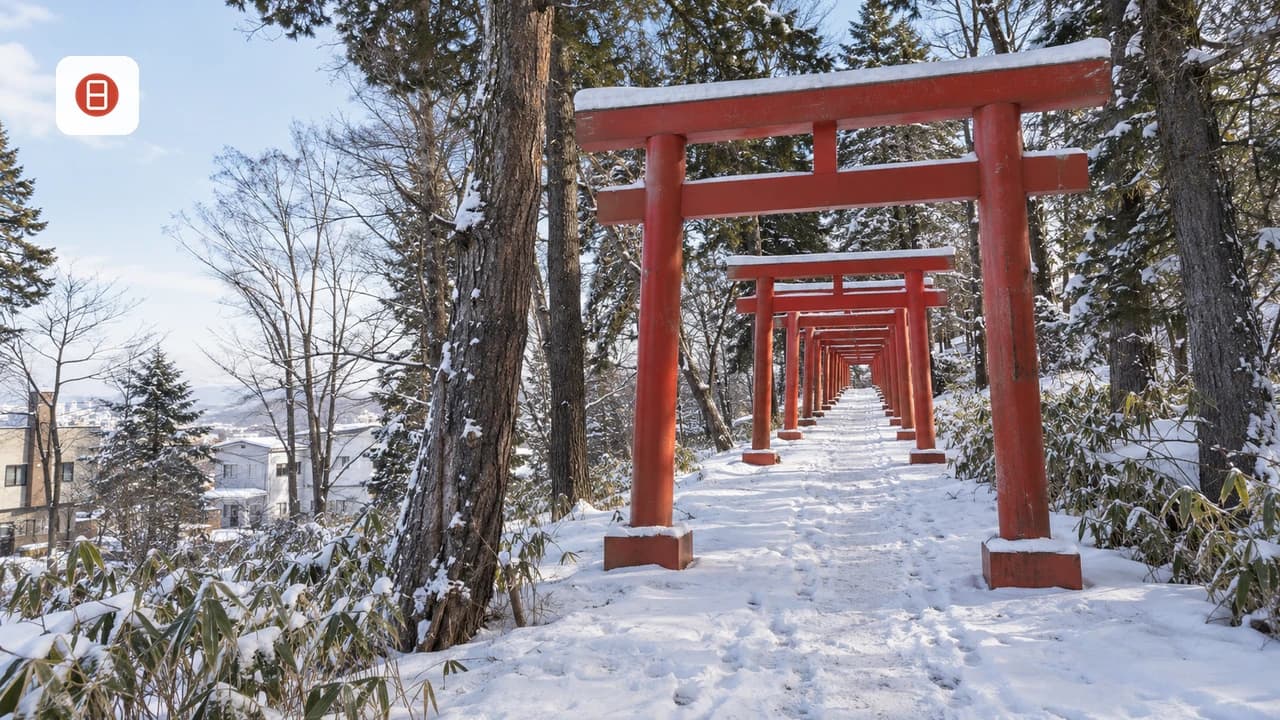
Yes, if you expect a modest shrine and a photogenic approach. Many search results mix this place up with Fushimi Inari Taisha in Kyoto. They are different shrines. This one sits in Chuo Ward, Sapporo, at the foot of Mt. Moiwa. Kyoto's version has a long mountain path of gates. Sapporo's has a short run of vermilion torii leading to a quiet hillside shrine. Plan for roughly 1–2 hours on site, based on traveler estimates. Check the shrine's own channels before you go, because hours and events can change.
- Go if you like quiet shrines, torii photography, or want a Kyoto-style look on a short Sapporo stay.
- Go in winter if you want red gates against snow.
- Skip it if you want big crowds, food stalls or a long hiking route.
- Skip it on a tight day if you have no appetite for an uphill walk or a bus transfer.
Quick Facts: Address, Hours and Admission
Admission is listed as free by travel sources. Costs come from transport, amulets and goshuin. Grounds access and office hours are different things, so do not mix them up. Confirm everything on the shrine's official website before you travel. Hours below come from third-party listings and need that check.
| Item | What sources list | Check before you go |
|---|---|---|
| Address | 2 Chome-2-17 Fushimi, Chuo Ward, Sapporo, 064-0942 | Use the official form in your map app |
| Grounds | Listed as open around the clock, but dark at night | Confirm; take care on uneven ground after dark |
| Shrine office | 9:00–16:00 | May close at times; check the day |
| Goshuin (red seal) | 10:00–16:00 | One source says to call the office first |
| Admission | Free | Confirm on the official site |
| Typical visit | 1–2 hours | Planning estimate only |
How to Get to Sapporo Fushimi Inari Shrine
Sources disagree on the tram walk, so treat every time here as an estimate. One source lists a walk of 20–25 minutes, about 1 km uphill, from Nishisen 14-jo tram stop. A traveler account describes about 15 minutes from a stop it calls Nishisen-Jurokujo. Station names and times conflict, so check the route in a map app before leaving. If you start downtown, our guide to starting from Sapporo Station covers the first leg.
| Mode | Effort | Weather risk | Best fit |
|---|---|---|---|
| Tram + walk | Moderate to hard (uphill) | High in ice and snow | Fit walkers with a day pass |
| Bus from Maruyama | Low (short final walk) | Moderate | Most visitors without a car |
| Taxi or car | Lowest | Low, but roads may be icy | Families, winter visitors, limited mobility |
| Combined route | Moderate | Varies | Travelers pairing several stops |
- Bus: one source lists JR Hokkaido Bus loop routes En10 and En11 from Maruyama Bus Terminal, stopping at Jikei-kai-mae. It then lists about 3 minutes (roughly 230 m) on foot. Confirm routes and stops with the bus operator.
- Tram plus walk: cheapest if you already hold a day pass, but uphill and slippery in ice.
- Car or taxi: about 20 minutes from downtown according to one source. The shrine reportedly has its own free lot for roughly 10–15 cars. The lot is reportedly behind the shrine, so follow signs rather than the map pin alone.
- Combined trip: use bus out and tram back, or the reverse, if the route fits your day.
What to See: Torii Approach, Grounds and Wishing Stone
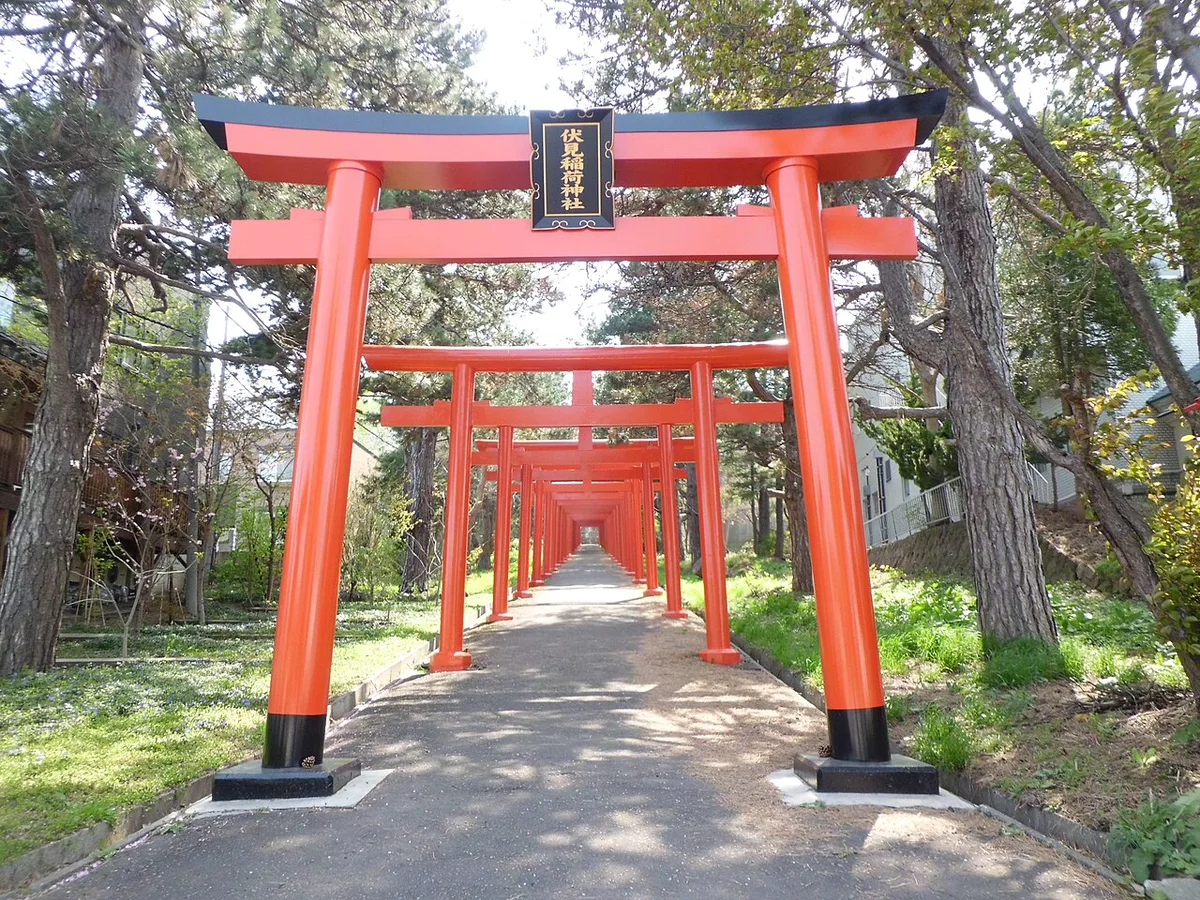
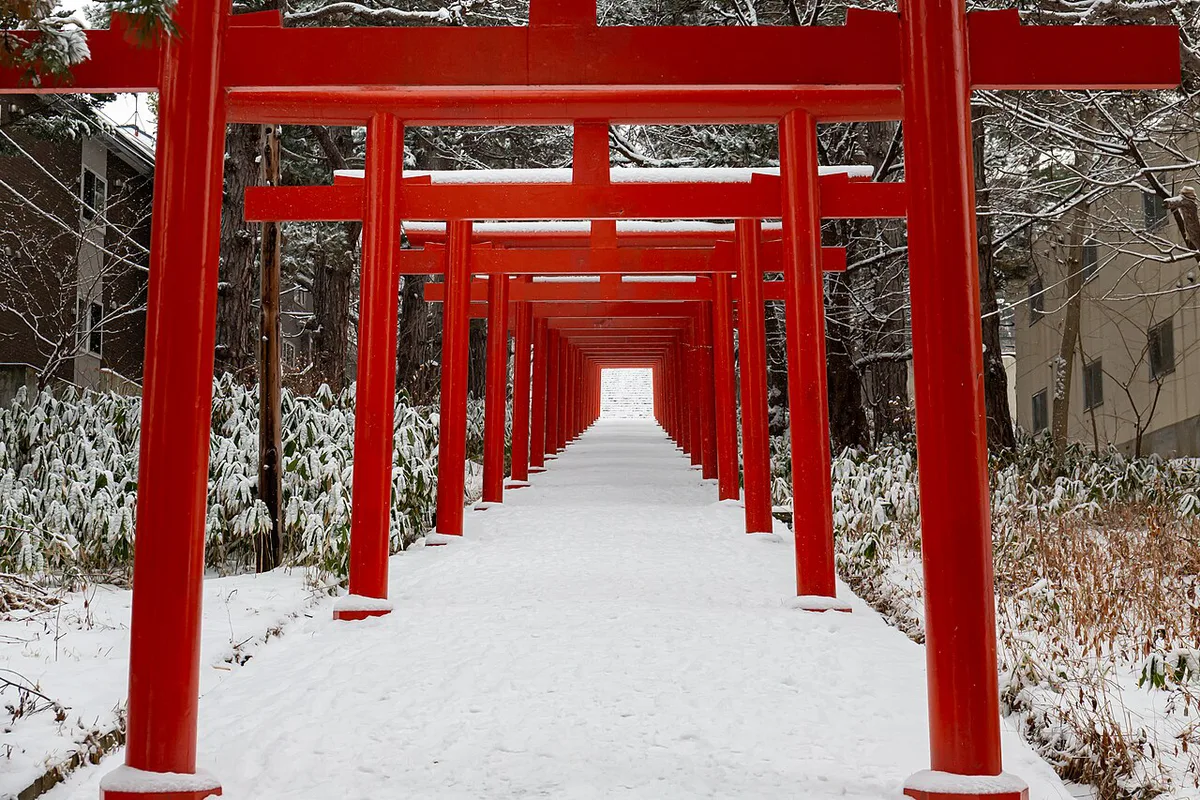
The torii approach is the main draw. One source counts 27 vermilion gates. Another says only dozens, so describe it as a short run of gates and do not rely on an exact count. Gates sit along a gentle slope against forest. At the top you reach the purification pavilion and the main hall. Seasonal flowers sometimes fill the basin. Near the grounds you will also find a wishing stone, which one source describes as a place to tie a written wish. Rules for wishes vary, so follow posted signs. A small shop sells amulets and souvenirs. Chinese zodiac designs were popular with one traveler.
Best Time to Visit Sapporo Fushimi Inari Shrine by Season
Winter suits photographers who can handle snow, with red gates against white ground. Early June brings wisteria, according to one source. Autumn adds color around the approach. Early May may bring Hanachozu, when flowers fill the water basins. The 9th Hanamoude ran May 1–6, 2026, with 19 Sapporo shrines taking part. Dates for the next round were not announced in the sources. A September festival is also listed: Yoimiya Matsuri on September 8 and the main festival on September 9 at 11:00. Treat both as recurring events and confirm yearly.
| Season | What to expect | Worth it? |
|---|---|---|
| Winter | Snow on the approach; possible ice; basin water may be off | Yes, with grippy shoes and warm layers |
| Early May | Possible Hanachozu flower basins; dates vary | Yes, if the event runs |
| Early to mid June | Wisteria per one source | Good for a quiet green visit |
| September | Yoimiya Matsuri (Sept 8) and main festival (Sept 9, 11:00) | Quiet and ritual, not a street fair |
| Autumn | Fall color around the gates | Good for photographers |
How Much Time to Plan and What to Pair It With
Allow 1–2 hours, plus transit time. Pair it with Mt. Moiwa or the Maruyama area for a half day. One traveler itinerary rode the tram to this shrine, then visited Hokkaido Shrine, then walked to Maruyama Zoo. Zoo hours were listed as 9:30 in that account. Check the city zoo page for current hours. Our Maruyama Zoo trip guide covers that stop in more detail. Hokkaido Shrine is the major shrine in the city. This one is smaller and more photogenic. For more stops, see our wider Sapporo sightseeing guide. Do not assume walking distances between stops. Check them on a map.
| Pairing | Why it works | Watch for |
|---|---|---|
| Hokkaido Shrine | Major shrine plus this smaller one | Check walking or transit link on a map |
| Maruyama Zoo | Same general area per traveler itineraries | Zoo hours differ from shrine hours |
| Mt. Moiwa | Shrine sits at the mountain's foot | Ropeway hours and weather |
Etiquette, Photography and Goshuin
Use standard shrine manners. Rinse at the basin if water is running. Winter freezes may switch it off. At the hall, bow twice, clap twice, then bow once. A ¥5 coin is a common offering, according to one traveler account. Photography rules exist. Sources say commercial shoots are not allowed, and one visitor saw a sign saying so. Do not block the approach for long portraits or tripods. Personal photos are common, but read posted signs. For goshuin, expect the office to list 10:00–16:00. One source says to call ahead. Amulet prices were not verified, so ask at the office.
Grounds open around the clock but goshuin (red seal) service runs 10:00–16:00 only—night visitors miss this souvenir service entirely.
Mistakes to Avoid at Sapporo Fushimi Inari Shrine
Most problems come from planning, not from the shrine itself.
Free shrine parking holds 10–15 cars situated behind the building, not where the map pin suggests—verify with the shrine.
- Confusing it with Kyoto's Fushimi Inari Taisha when you search maps or book transport.
- Assuming the shrine office is always open, especially for goshuin.
- Wearing smooth soles in winter on the uphill approach.
- Trusting a car navigation pin without checking where the lot sits.
- Arriving on festival or event days without checking the shrine's channels.
Where to Stay for an Easy Visit
Stay central and travel by tram or bus. Our guide to choosing a base area compares neighborhoods. For options near transit, see central hotel options. Families can start with family-friendly hotels. A central base makes the trip a simple half day. You do not need to sleep near the shrine.
Frequently Asked Questions
Is Sapporo Fushimi Inari Shrine free?
Admission is listed as free. Costs come from transit, amulets and goshuin. Confirm on the shrine's official site.
How long do you need?
Plan 1–2 hours on site. Add transit time. Pair it with a nearby stop for a half day.
Is it the same as the Kyoto one?
No. Kyoto's Fushimi Inari Taisha is far larger. Sapporo's shrine has a short torii approach and a quiet setting.
Can you visit at night?
Sources list the grounds as open all day, but footing is dark at night. Check with the shrine, and avoid icy slopes after dark.
Is the walk steep?
The tram walk is uphill, and sources disagree on its length. Take a bus or taxi in winter or if you prefer an easier approach.
Can you get a goshuin?
Yes, at the shrine office. Listed hours are 10:00–16:00. One source says to call first, so confirm before you go.
Free: The Sapporo Essentials guide
Top things to do, where to stay, a perfect day plan, getting around, and the best time to go — a Sapporo mini-guide you can take offline.
You might also like

Continue reading
More guides you'll find useful


