10 Best Areas and Tips for Staying in Sapporo (2026)
Discover the best area to stay in Sapporo with our 2026 guide to top neighborhoods, hotel tips, and advice on navigating the underground city and Snow Festival.
On this page
After my fourth trip to Hokkaido last winter, I realized that choosing the right base in Sapporo changes your entire experience. The city layout is a grid, but the biting winter wind makes every block feel much longer than it actually is. Our editors have vetted each district so you can find the right balance of transit access, local food, and price point for your trip in 2026.
Most visitors end up choosing between three central zones: Sapporo Station, Odori Park, and Susukino. Each sits on the same north–south subway corridor, separated by just one or two stops. The differences in atmosphere, price, and proximity to attractions are significant enough to matter — this guide breaks down exactly who each area suits.
When deciding on the 8 Best Areas Where to Stay in Sapporo question, proximity to the subway lines and the underground walkway network is the single most important factor, especially in winter. Staying one subway stop outside the central corridor saves 10–20% on accommodation but costs time and comfort in heavy snow.
Sapporo Station Area: Best for Transit and Day Trips
JR Sapporo Station is the city's main rail hub, connecting directly to New Chitose Airport in 37 minutes on the Rapid Airport Express (¥1,150 reserved, ¥1,070 unreserved). From the same platforms you can board trains to Otaru in 35 minutes, Niseko in about 2 hours, and Hakodate in under 4 hours. Staying within five minutes of the station means you spend almost no transit time on day trips.
The neighborhood north of the station (Kita Ward) is calmer than the south side and tends to offer better hotel value. Business hotels here charge ¥8,000–¥16,000 per night for a standard double room outside peak season. The JR Tower Mall and Stellar Place shopping complex occupy the station building itself, so there is no shortage of dining even at 22:00.
This area suits first-time visitors, those doing a multi-city Hokkaido itinerary, and anyone arriving late or departing early. The main downside is that Susukino's nightlife and the Sapporo Snow Festival guide Odori site both require a short subway or underground walk from here. That commute is comfortable in the underground city but adds five to ten minutes each way.
Odori Park Area: Best for First-Timers and Festivals
Odori Station sits at the exact centre of Sapporo's subway network, where all three lines intersect. From here you can walk underground to both JR Sapporo Station (north) and Susukino (south) without stepping outside. This is the strongest single reason to stay in the Odori area: in February or January, "without stepping outside" is not a minor convenience, it is a meaningful comfort upgrade. For more details on Odori's geography and history, check the official guide.
The park itself runs east–west for 1.5 kilometres from the TV Tower to the botanical gardens. In February it hosts the main Snow Festival ice sculpture venues; in July it fills with the Sapporo Beer Garden Festival and outdoor live music. Hotels with park-facing rooms charge a premium — expect ¥12,000–¥25,000 per night at mid-range properties, rising to ¥30,000+ during Snow Festival week.
For first-time visitors who want to see the major sights with minimal navigation, Odori is the clearest recommendation. You are within walking distance of the Clock Tower, the TV Tower observation deck (¥800 admission), Tanukikoji Shopping Street, and multiple ramen corridors. Book a room on a higher floor to avoid street-level noise during festival periods.
Susukino: Best for Nightlife, Late-Night Food, and Solo Travelers
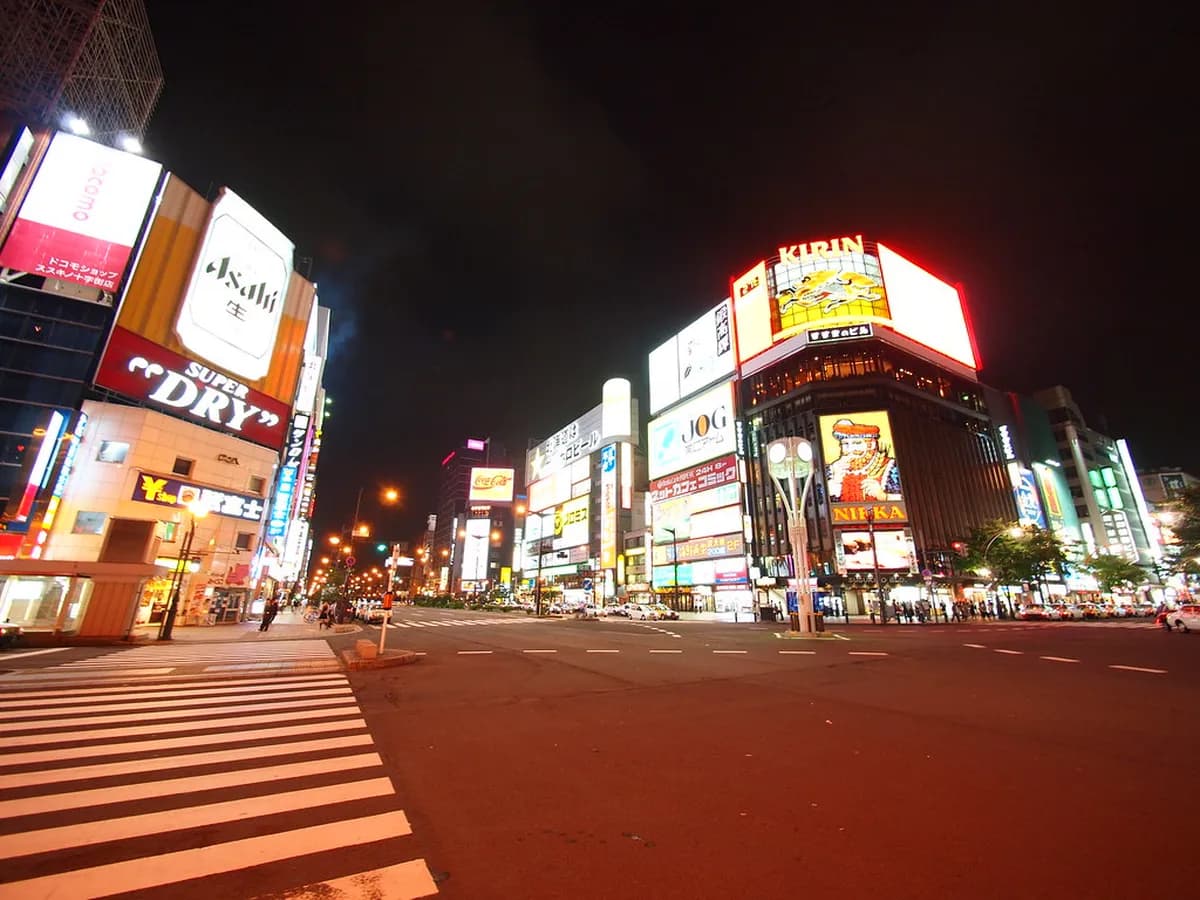
Susukino is Japan's largest entertainment district north of Tokyo. The area spans roughly eight blocks centred on Susukino Station (Namboku Line) and contains more than 4,000 restaurants, bars, and izakayas. Most are open until 02:00–03:00, and ramen shops stay open even later — the Sapporo Ramen Republic in the Stellar Place basement is open until midnight, while street-level shops in Susukino itself often run 24 hours.
Budget business hotels here are competitive: clean, modern rooms for ¥6,000–¥13,000 per night. The trade-off is room size — many standard rooms run 12–14 square metres, which is tight for two people with large winter luggage. Look for hotels on the southern or eastern edge of the Susukino grid to get quieter streets while staying within three minutes of the main strip.
Solo travelers and food-focused visitors get the most value from Susukino. The density of affordable counter-dining — miso ramen, jingisukan lamb BBQ, fresh Hokkaido crab — makes it easy to eat extremely well without planning. Families or light sleepers should consider Odori instead, particularly if travelling with children who need earlier bedtimes.
Nakajima Park and Maruyama: Quiet Stays with Local Character
Nakajima Park sits two subway stops south of Susukino on the Namboku Line, roughly 10 minutes from Odori. The area is predominantly residential, with the park's pond, birch trees, and the historic Hasso-an teahouse setting a very different tone from the central tourist corridor. Hotels here average ¥7,000–¥14,000 per night and tend to be quieter and slightly larger than central equivalents.
Maruyama, to the west of the city centre on the Tozai Line, is the neighbourhood most Sapporo residents nominate as their favourite. The area clusters around Maruyama Park, the city's oldest and most atmospheric green space, and the adjacent Hokkaido Shrine. Trendy cafes, bakeries, and a weekly farmers' market give it a feel closer to a European residential quarter than a tourist zone. Boutique accommodation here ranges from ¥10,000 to ¥22,000 per night.
Neither Nakajima Park nor Maruyama are ideal for visitors with tight itineraries and heavy sightseeing plans — the subway connection works well, but you add 10–15 minutes to every city-centre trip. They suit repeat visitors, couples on longer stays, and anyone who wants to experience Sapporo as a city rather than just its landmark corridor.
Near Hokkaido University: An Underrated Budget Base
The area between Kita 12-jo and Kita 18-jo stations on the Namboku Line rarely appears in accommodation guides, but it is one of the most practical budget bases in Sapporo. Both stations are a direct 3–4 minute subway ride from JR Sapporo Station, and from there the underground walkway connects you to Odori and Susukino without ever going outside. The commute to the city's main sights is genuinely short — not just "manageable," but competitive with paying twice the price near Odori.
Accommodation in this zone runs ¥5,500–¥10,000 for a standard room, with guesthouses and small hotels catering largely to visiting academics and families of students at Hokkaido University. The university campus itself is a remarkable place to walk: the main avenue of silver elms turns gold in October and the botanical garden section near the south gate is free to enter. An on-campus cafeteria serves full hot meals for under ¥600.
The practical downside is that late-night dining options thin out north of the station. By 22:00 your choices narrow to convenience stores and the occasional ramen shop near the subway entrance. This area works well for budget-focused solo travelers, couples on stays of four nights or more who want to Getting Around Sapporo: 10 Essential Transport Tips systematically, and visitors who prioritize sleep quality over proximity to nightlife.
Navigating the Underground City: Pole Town and Aurora Town
Sapporo's underground pedestrian network is one of the most practical urban features in Japan for winter travelers. The Chi-Ka-Ho passage connects JR Sapporo Station directly to Odori — a distance of nearly two kilometres — in climate-controlled comfort. From Odori, Aurora Town branches east toward the TV Tower, while Pole Town heads south to Susukino Station. The entire walk from the JR station to Susukino underground takes about 15 minutes at a normal pace. For detailed maps and navigation, Sapporo's official tourism site provides current underground walkway information.
Shops in the underground network open at 10:00 and close by 20:00 on most days. The passages themselves remain open during subway operating hours, which run roughly from 06:00 to 24:00. Even after the shops close, the corridors are a warm and well-lit route for getting between hotels and restaurants on cold evenings.
Use the numbered exit signs at each intersection to orient yourself. Every major junction has a digital map showing street-level landmarks — these are more reliable for navigation than phone GPS, which can drift slightly underground. The 10 Best Sapporo Neighborhoods & Districts: A Local Guide markers along the tunnels also indicate which hotels and attractions sit directly above each exit, which saves a lot of trial-and-error in heavy snow.
Summer vs Winter: How the Season Changes Which Area to Pick
In winter (December to March), the underground network is the dominant factor in choosing where to stay. Proximity to the Chi-Ka-Ho corridor — ideally within one stop of Odori on any of the three subway lines — matters more than any other variable. Sapporo's snow accumulation averages 6 metres per season, the highest of any major city in the world, and even a five-minute outdoor walk through heavy snowfall at -10°C is genuinely unpleasant with luggage.
In summer (June to August), the calculation shifts. Temperatures sit between 20°C and 27°C, outdoor walking becomes comfortable, and the Beer Garden at Odori, the Lavender Festival timing in nearby Furano, and the Yosakoi Soran Festival in mid-June all pull crowds to different parts of the city. The Susukino area becomes less about warmth-seeking and more about evening dining density. Nakajima Park and Maruyama become distinctly more attractive in summer due to their green spaces and café culture.
For ski-focused visitors in winter, note that Sapporo has three ski areas within the city limits: Mt Teine (bus from Sapporo Station, 40 min), Bankei Ski Area (bus from Maruyama, 25 min), and Sapporo Kokusai (bus, 75 min). Staying near Sapporo Station or the Maruyama area cuts the morning commute to the slopes. Bankei and Sapporo Olympic Museum visitors specifically benefit from the Maruyama location. Check the Sapporo Weather By Month: A Complete Seasonal Guide page for typical snow conditions when planning your ski dates.
Snow Festival Booking, Room Sizes, and What to Budget
During the Snow Festival (held annually in early February, with 2026 dates running 4–11 February), hotel prices in the Odori area triple or quadruple. A room that costs ¥10,000 in November will frequently list at ¥28,000–¥45,000 during festival week. Hotels within 500 metres of Odori Park often sell out nine to twelve months in advance. Book by April at the latest for the following February.
Standard business hotel rooms in Sapporo run 12–16 square metres for a single or semi-double. This is tight by Western standards. If travelling with a partner or family, check the room dimensions before booking — "double" in a Japanese business hotel means two people in a small room, not a large bed in a spacious room. Apartment-style hotels and tourist-class ryokan offer significantly more floor space but cost ¥15,000+ per night even outside peak season.
Japan charges an accommodation tax at the city level. Sapporo's rate in 2026 is ¥200 per person per night for rooms priced ¥10,000–¥20,000, and ¥500 for rooms above ¥20,000. This is collected at check-in and is separate from the 10% national consumption tax. Always confirm whether the quoted room rate is tax-inclusive before booking — Booking.com and Jalan often display pre-tax prices that look lower than the actual total.
Pair this with our Sapporo attractions guide for the complete overview.
Frequently Asked Questions
What is the best area for first-time visitors in Sapporo?
The Odori Park area is ideal for first-timers because it sits at the intersection of all three subway lines. You will be within walking distance of major landmarks, the shopping district, and the famous Snow Festival site.
How far in advance should I book a hotel for the Snow Festival?
You should book at least six to nine months in advance to avoid massive price hikes. Hotels near Odori Park often sell out nearly a year before the February event begins.
Are hotels in Sapporo expensive compared to Tokyo?
Generally, Sapporo hotels offer better value for money than those in Tokyo or Kyoto. Outside of festival dates, you can find high-quality mid-range rooms for significantly lower prices than in Japan's other major hubs.
The best area to stay in Sapporo depends on how you plan to spend your time. Odori Park covers almost every need for a first-time visitor. Sapporo Station edges ahead if you are doing multi-day day trips around Hokkaido. Susukino wins for food-first and nightlife-focused travelers. The Nakajima Park, Maruyama, and Hokkaido University zones are the right choice for repeat visitors and anyone who wants lower prices without a long commute.
Regardless of which area you choose, staying within one subway stop of the underground walkway network is the most consistent advice across every type of trip. Sapporo rewards early planning — particularly for winter visits — and the city's hospitality and seafood make almost any well-located base a genuinely enjoyable one.
Free: The Sapporo Essentials guide
Top things to do, where to stay, a perfect day plan, getting around, and the best time to go — a Sapporo mini-guide you can take offline.
You might also like

Continue reading
More guides you'll find useful