Hokkaido Shrine Festival Guide: Dates, Parade Route & Tips
Plan your visit to the Hokkaido Shrine Festival, held June 14 to 16 in Sapporo. Get the parade route, Nakajima Park stall guide, and subway directions between venues.
On this page
Last updated September 2026, the Hokkaido Shrine Festival brings three days of Shinto ritual and street celebration to Sapporo from June 14 to 16. Locals call it the Sapporo Matsuri, a tradition with a history of over 100 years centered on a mikoshi procession through the city. This guide covers the schedule at Hokkaido Jingu and Nakajima Park, the June 16 parade route, and the subway connections between venues.
What Is the Hokkaido Shrine Festival? (The Fast Answer)
The Hokkaido Shrine Festival is a three-day Shinto and street celebration in Sapporo, held every year from June 14 to 16. Local residents call it the Sapporo Matsuri, and the event traces its roots back over 100 years. Two venues host the celebration: Hokkaido Jingu in Maruyama Park handles the Shinto rituals, while Nakajima Park in central Sapporo carries the festival-fair atmosphere. On June 16, more than 1,000 participants dress in Heian-period costume (794-1185) and carry four portable shrines and eight floats through the city streets. Both venues run for the same three days, so a single trip to Sapporo in mid-June covers the ceremonial and the celebratory sides of the event. Maruyama Park itself is a stop on many Sapporo attractions itineraries, thanks to the adjacent zoo and cherry-blossom grounds.
| Detail | Info |
|---|---|
| Dates | June 14-16 annually |
| Main venues | Hokkaido Jingu (Maruyama Park) and Nakajima Park |
| Key event | Mikoshi procession on June 16 |
| Entry cost | Free to watch at both venues |
| Nearest stations | Maruyama Koen (Tozai Line) and Nakajima Koen (Namboku Line) |
The Three-Day Schedule: June 14 to 16
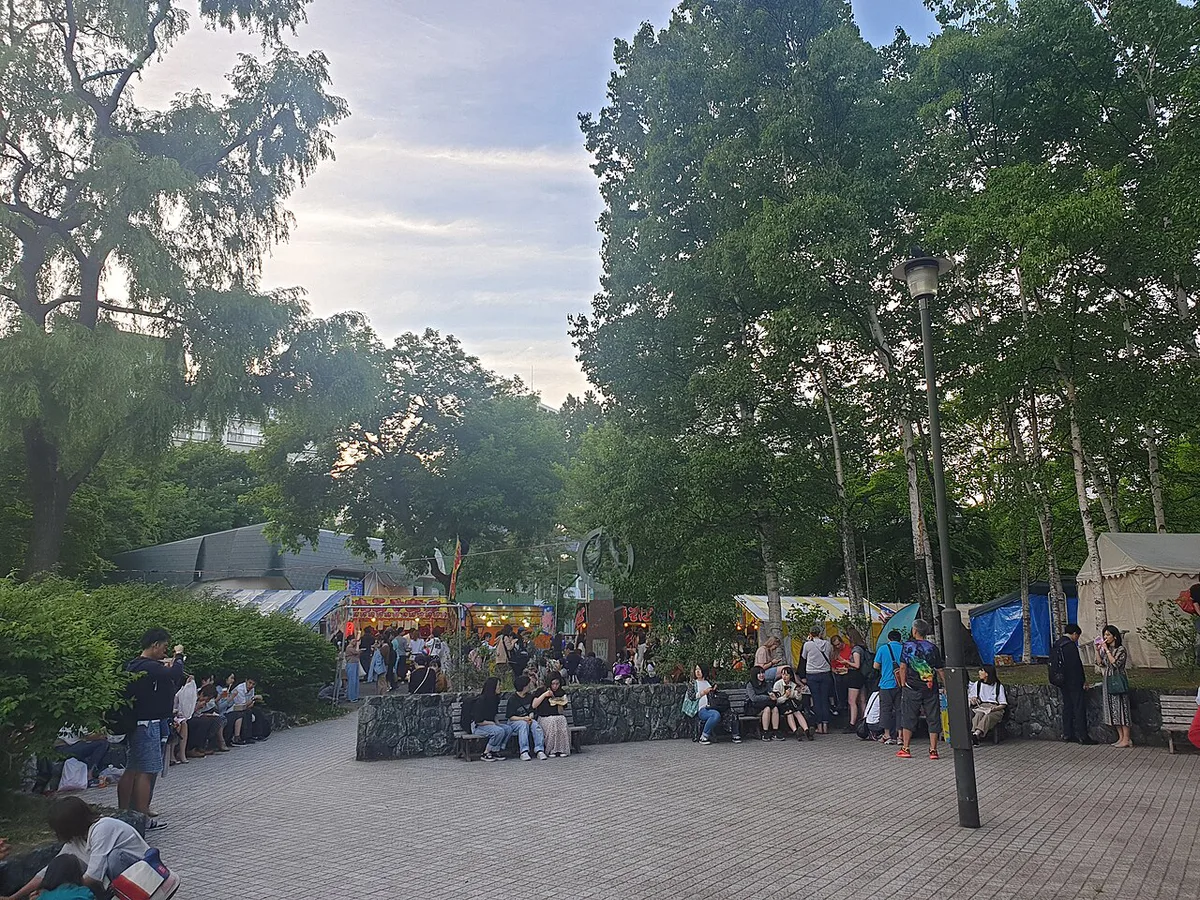
Sapporo Matsuri unfolds across three distinct days, and each has a different rhythm at the two venues. Evening light and early stalls define June 14, known locally as Yoiyama, when Nakajima Park's vendors start setting up. Formal dedication ceremonies take place at Hokkaido Jingu on June 15, including the Shinto offerings and performances described below. Everything builds toward June 16, when the mikoshi procession departs the shrine and crowds pack both venues. Attendance builds noticeably across the three days, since June 16 combines the procession with peak stall traffic at Nakajima Park. Dates have held steady at June 14-16 for years, but confirm the current year's calendar via the City of Sapporo's official site before finalizing travel plans. Planning around this build-up helps decide which day best matches your tolerance for crowds.
- June 14 (Yoiyama): evening atmosphere builds at both venues as stalls open and lanterns go up.
- June 15 (Main Festival Day): Hokkaido Jingu holds formal dedication ceremonies, including Gagaku court music and Shinto offerings.
- June 16 (Mikoshi-Togyo): the procession of four portable shrines and eight floats moves from the shrine into central Sapporo.
Hokkaido Jingu vs. Nakajima Park: Which Venue Fits Your Afternoon
Two venues run at the same time during the festival, and they reward different kinds of visits. Hokkaido Jingu keeps the tone traditional, with Gagaku court music, Kyogen theater, and Shinto rituals unfolding under the shrine's forest canopy in Maruyama. Nakajima Park trades ritual for carnival energy, packing in more than 400 food stalls alongside haunted houses (obake yashiki) and game tents. Choose Hokkaido Jingu if hearing Gagaku and watching Shinto ritual matters more to you than crowds and food. Choose Nakajima Park if the priority is atmosphere, snacks, and games, especially before the evening crush described later in this guide. Families with only one afternoon free should lean toward Nakajima Park before early evening, since crowd density there builds quickly once the workday ends.
Nakajima Park's more than 400 food stalls attract evening crowds; plan visits before 6:00 p.m. when paths remain navigable.
| Venue | Atmosphere | Highlights |
|---|---|---|
| Hokkaido Jingu (Maruyama Park) | Traditional, ceremonial | Gagaku music, Kyogen theater, Shinto offerings |
| Nakajima Park (central Sapporo) | Festival-fair, high-energy | 400+ food stalls, haunted houses, game tents |
How to Watch the June 16 Mikoshi Procession
The procession leaves Hokkaido Jingu in Maruyama and moves toward central Sapporo over the course of June 16. Marchers dressed in Heian-period robes carry four portable shrines that enshrine the deity of Hokkaido Jingu, escorted by eight accompanying floats. Ritual prayers and offering dances take place partway along the route, near the Sapporo Mitsukoshi and PARCO department stores close to Odori Park. Positioning yourself along Odori Park in the late morning or early afternoon gives a clear view of the costumes and shrine-bearers. Crowd density downtown builds later in the day, so an earlier viewing spot feels less crowded. Photographers often prefer the stretch near Odori Park, where the procession's pace slows enough for a clear shot of the portable shrines. Arriving well before the procession reaches central Sapporo secures a spot without the pushing that happens once the crowd fully forms.
Getting Between Venues: Subway Lines and Taxi Reality
Sapporo's subway network connects both festival venues, though it takes a transfer. From Sapporo Station, ride the Namboku Line to Odori Station. Switch to the Tozai Line there and get off at Maruyama Koen Station for Hokkaido Jingu. Plan on a further 15-minute walk from Maruyama Koen Station to the shrine grounds. Nakajima Park sits at Nakajima Koen Station on the Namboku Line, so no transfer is needed if you head there directly from Sapporo Station. A taxi from Sapporo Station to Maruyama covers the same distance in about 15 minutes when roads are clear. June 16's parade route closes city-center streets to traffic, though, so budget extra time or skip taxis that afternoon. A one-day subway pass covering the Tozai and Namboku lines can be worth it if you plan to shuttle between the shrine and the park more than once. Single-ride fares and pass pricing are posted at station ticket machines, so confirm the current amount before you tap in.
The 15-minute walk from Maruyama Koen feels longer when more than 1,000 costumed shrine-bearers gather at the grounds during the June 16 procession.
Costs and Budgeting for Festival Stalls
Watching the procession and walking the shrine grounds costs nothing at either venue. Budget instead for food and games, since Nakajima Park's more than 400 stalls charge item by item rather than through a single admission fee. Haunted houses (obake yashiki) and game tents collect a small fee directly at the tent, so keep cash on hand; many festival vendors in Japan don't accept cards. For a sense of scale, stall pricing runs similar to Sapporo's other outdoor gatherings, such as the Sapporo Beer Garden festival. Food and drink there are also paid per item instead of bundled into one ticket.
- Transit: subway fares to Maruyama Koen or Nakajima Koen stations, plus a one-day pass if you're visiting both venues.
- Food and drink: paid per item at Nakajima Park's yatai stalls rather than through one admission fee.
- Games and haunted houses: small per-attraction fees collected at each tent.
- Souvenirs: sold at stalls near both venues, priced individually like the food stalls.
Packing and Weather Considerations for June
Early summer temperatures in Hokkaido typically run cooler than in central Japan, and conditions can shift across the festival's three days. A light jacket works for evenings at Nakajima Park, even if afternoons feel warm enough for short sleeves. Comfortable, closed-toe shoes matter as much as layers, since the walk from either subway station adds 15 minutes or more before you reach the festival grounds. Pack a compact umbrella regardless of the forecast, since afternoon showers can appear with little warning during early summer in Hokkaido. For a fuller month-by-month breakdown, the Sapporo Weather by Month: Complete Seasonal Guide to 6m Snow guide covers precipitation and temperature trends across the year. For year-round comparison, the Best Season to Visit Sapporo: 9 Essential Seasonal Insights guide weighs mid-June against the snow-festival months in February.
Mistakes to Avoid and Local Etiquette
A few planning missteps repeat every June at this festival. Arriving at Nakajima Park after 6:00 p.m. is the most common one, since paths turn dense and slow-moving from that point on. Most of the rest are easy to avoid once you know the festival's rhythm across its three days.
- Arriving at Nakajima Park after 6:00 p.m., when paths become dense and slow-moving.
- Wearing dress shoes or sandals, when both stations require 15 minutes or more of walking to reach the festival grounds.
- Assuming card payment works at yatai stalls; carry cash instead.
- Skipping the trash-carry habit, since public bins are rare at yatai stalls; carry wrappers until you find one or return to your accommodation.
- Booking a cross-town taxi on June 16 without accounting for parade-route street closures.
Other Summer Festivals Around Hokkaido
Just before the shrine festival, downtown Sapporo fills with dance teams for the Yosakoi Soran Festival. This event is built around synchronized choreography rather than Shinto ritual. Team schedules and route maps are posted on the Yosakoi Soran Festival official site. Outside Sapporo, Noboribetsu Onsen hosts a Demon Fireworks show, where performers in oni costume set off hand-held fireworks on a staircase starting around 8:30 p.m. Reaching the venue takes about 1 hour 20 minutes from Sapporo by limited express train on the JR Hakodate Main Line. Chitose City's Lake Shikotsu Festival closes out the season in late June, with roughly 400 fireworks launched over the water on its opening night. Scheduling a visit that captures two or three of these events in the same trip is possible if travel dates align, since several sit within the same early-summer window. If winter interests you more than June crowds, Sapporo's cold-season identity centers on the Sapporo Snow Festival guide. The Susukino ice festival runs alongside it each February with illuminated ice sculptures in the entertainment district. A companion guide, the Sapporo events guide, rounds up the full year of festival dates. Spring brings the Sapporo Lilac Festival 2026: Odori Park vs. Kawashimo Park Guide, timed to the city's cherry and lilac bloom. The Sapporo Autumn Fest 2026: The Ultimate Foodie Guide to Odori Park covers the other end of the calendar with harvest-season food events.
Frequently Asked Questions
When is the Hokkaido Shrine Festival held?
The festival runs June 14 to 16 every year, with the mikoshi procession taking place on June 16. Confirm the exact current-year schedule through the shrine or city's official listings, since minor date shifts do occur.
Is the Hokkaido Shrine Festival free to attend?
Yes, both Hokkaido Jingu and Nakajima Park are open to the public at no charge. Food stalls, games, and haunted houses at Nakajima Park are priced item by item, so bring cash for those extras.
Which venue should you visit if you only have one afternoon?
Choose Nakajima Park for atmosphere, food, and games, or Hokkaido Jingu for the quieter ceremonial side with Gagaku music and Shinto ritual. Visiting Nakajima Park before 6:00 p.m. also avoids the densest evening crowds.
How do you get between Hokkaido Jingu and Nakajima Park?
Take the Namboku Line to Odori Station, transfer to the Tozai Line, and get off at Maruyama Koen Station for Hokkaido Jingu, then walk about 15 minutes. Nakajima Park sits directly at Nakajima Koen Station on the Namboku Line, so no transfer is needed from Sapporo Station.
What should you wear and bring to the festival?
Wear comfortable walking shoes, since both stations require a walk of 15 minutes or more to reach the festival grounds. Carry cash for stalls and haunted houses, and pack a light layer, since Sapporo's June weather can shift quickly.
Can you visit both venues in one day?
Yes, many visitors combine a morning at Hokkaido Jingu with an afternoon or evening at Nakajima Park. Budget about 15 minutes of transit time between them via the Tozai and Namboku subway lines, plus the walk from Maruyama Koen Station.
Do you need tickets to watch the procession?
No tickets are required to watch the procession or visit either venue, and sight lines along Odori Park are open to anyone. Arrive early for a clear view, since standing room narrows as the crowd builds through the afternoon.
Is the festival suitable for young children?
Nakajima Park's daytime hours work well for families, with games and food stalls that are easy for kids to enjoy. Keeping the visit before 6:00 p.m. avoids the densest crowds and works better with strollers.
Free: The Sapporo Essentials guide
Top things to do, where to stay, a perfect day plan, getting around, and the best time to go — a Sapporo mini-guide you can take offline.
You might also like


Continue reading
More guides you'll find useful