Sapporo Lilac Festival 2026: Odori Park vs. Kawashimo Park Guide
Plan the 2026 Sapporo Lilac Festival: dates for Odori and Kawashimo Park, Wine Garden hours, parking, and the Lilas Chill packing tip.
On this page
Last updated September 2026, the Sapporo Lilac Festival turns Odori Park and Kawashimo Park into two distinct spring events. One leans into food and wine; the other offers quiet walks past 1,700 lilac trees. Both venues sit an easy subway ride or short drive apart, in Chuo Ward and Shiroishi Ward, so a single trip can cover both festival sites.
What Is the Sapporo Lilac Festival?
Sapporo's Lilac Festival began in 1959, when local cultural figures pushed for a dedicated cultural event during the lilac bloom. Sapporo officially designated the lilac as its city tree in 1960, one year after that first festival. That same year the city also named the lily-of-the-valley and the cuckoo as symbols, marking Sapporo's population passing 500,000 and its sister-city tie with Portland, Oregon. Sarah C. Smith, founder of what is now Hokusei Gakuen Girls' Junior and Senior High School, brought lilac seedlings from her own garden in the United States in 1890. She planted them at the school and at the Hokkaido University Botanical Garden, and those trees seeded much of the lilac population across the city. Hokkaido University Botanical Garden still holds one of the city's oldest lilac trees, believed to share Smith's original strain. Odori Park later hosts the YOSAKOI Soran Festival each June. Winter turns the same park into the site for Sapporo's winter Snow Festival each February. A companion event at the Susukino satellite site runs during the same week. Together, these events anchor Sapporo's year-round festival calendar. This guide compares Odori and Kawashimo directly, using a food-focused-versus-nature-focused framework, so you can match the festival to your itinerary instead of trying to cover everything. Two venues carry the lilac celebration each May. Odori Park sits downtown, and Kawashimo Park sits in Shiroishi Ward.

2026 Festival Dates and the Lilas Chill Warning
Odori Park's 2026 festival runs May 20 through May 31, a 12-day stretch across Nishi 5-chome to Nishi 7-chome in Chuo Ward. Kawashimo Park's venue opens later and closes sooner, running only May 30 and 31. That short window is easy to miss if you plan only around the Odori dates. The Sapporo Tourist Association organizes both venues and lists any date changes on its own channels. Confirm exact 2026 hours before finalizing plans, since weather can push the bloom earlier or later. Novelist Junichi Watanabe coined the term Lilas Chill in his novel The City of Lilas Chill, describing the sudden temperature drop that often arrives as the lilacs open. Pack layers instead of light spring clothing for either venue. Sapporo's month-by-month weather is worth checking before you pack. Cross-reference Sapporo's best travel season if you are building a longer Hokkaido itinerary around the bloom.
Odori Park: The Urban Heart of the Festival
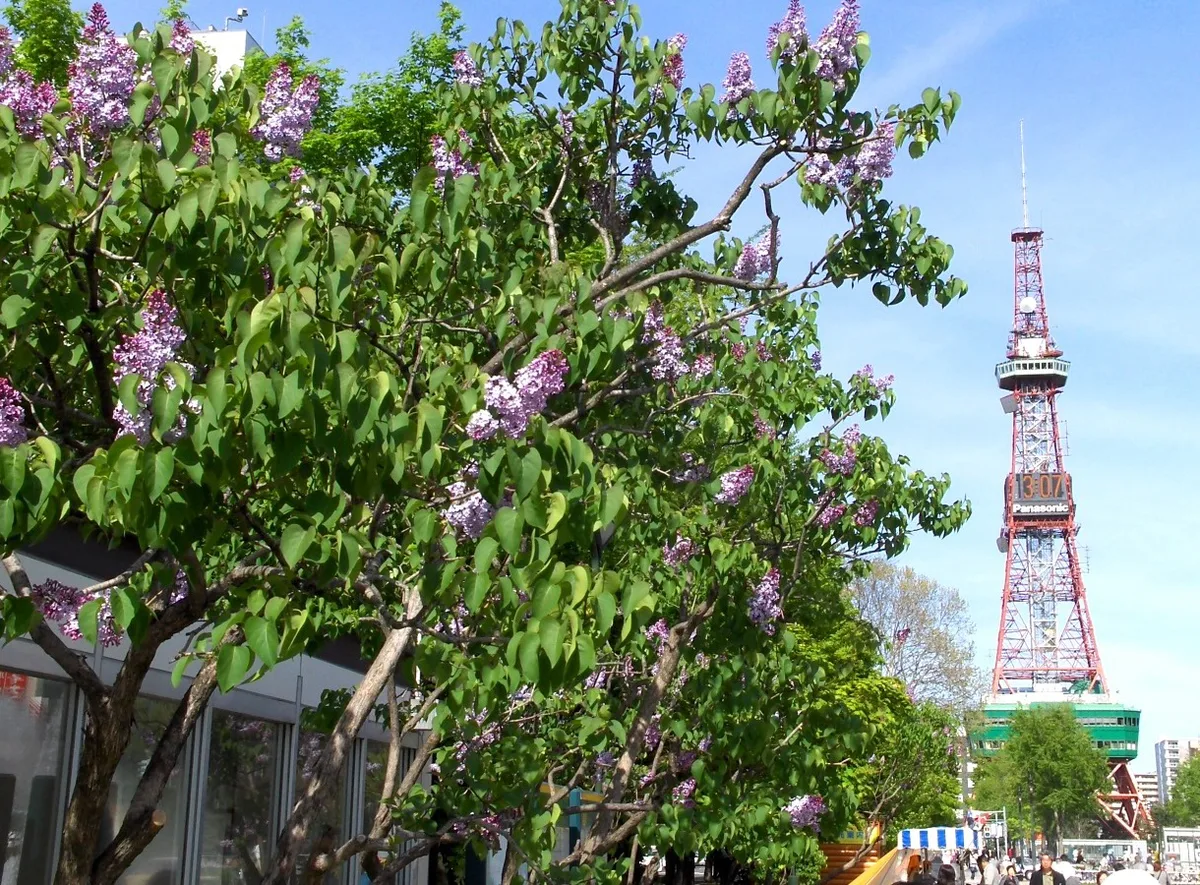
Odori Park runs 1.5 km through central Sapporo and holds roughly 400 lilac trees along its Nishi 5- to 7-chome stretch. Festival organizers split that stretch into three activity zones, each with a different focus. Nishi 5-chome also runs a free antiques appraisal corner and a handmade goods market alongside the lilac-growing advice booth, rounding out the craft-focused side of the festival. Musicians take the Nishi 6-chome stage roughly 10:00 AM to 5:00 PM most festival days, adding a live soundtrack to the international food court's menu. Wine Garden tastings are the festival's signature draw for oenophiles. Recent editions have poured more than 200 Hokkaido wines from over 50 wineries and vineyards, organized around a pairing concept locals call Lilas Mariage. Hokkaido's wine industry has grown fast, with winery and vineyard counts roughly tripling over the past decade to 71 as of February 2025, and the region has since gained Geographical Indication status. That growth is part of why the Wine Garden reads as a serious tasting event rather than a festival sideshow. Staff wine guides work the tasting counters to help narrow down the options. A larger autumn food program follows later in the year, and Sapporo's autumn food festival makes a useful comparison point for portion sizes and crowd levels. Seedling giveaways happen only on opening day at Odori Park, so arrive early on May 20 if you want one. Giveaways typically begin soon after gates open, and lines form fast, so check with the Sapporo Tourist Association at 011-281-6400 for the current year's exact timing.
- Nishi 5-chome: origami workshops, an outdoor tea ceremony, kimono dressing, and a lilac-growing advice corner, typically 10:00 AM to 4:00 PM.
- Nishi 6-chome: an international food court and open-air music stage, with food service typically running 10:00 AM to 9:00 PM.
- Nishi 7-chome: the Wine Garden and Hokkaido food stalls, typically open 11:00 AM to 9:00 PM.
Kawashimo Park: The Lilac Forest
Kawashimo Park, in Shiroishi Ward, holds Japan's largest lilac collection: 1,700 trees across more than 200 varieties. Because Kawashimo's varieties bloom in succession rather than all at once, the park often shows fresher blossoms than Odori even late in the festival window. Open lawns replace Odori's food-court crowds, which makes close-up photography of individual blooms easier here. Free sapling giveaways also run during Kawashimo's two-day window, supply and hours permitting. Many of Kawashimo's varieties trace back to stock from Canada's Royal Botanical Gardens. Additional specimens came from the United States, China, and Germany, propagated locally by grafting. The collection also includes lilac varieties associated with Dr. William S. Clark, the American educator who helped found Sapporo Agricultural College, the school that later became Hokkaido University. Guides lead small groups through this origin story during the Lilac Forest tours. On-site parking totals 263 free spaces, including roughly 200 in a temporary lot for the festival. That is a real advantage if you are driving, since Odori Park's venue has no dedicated parking at all. Plan on roughly a 15-minute drive from Shiroishi Subway Station to reach Kawashimo Park. Taxis and buses both cover that route if you would rather skip renting a car.
- Guided Lilac Forest tours, typically 11:00 AM to noon and again 2:00 to 3:00 PM.
- A lilac quiz rally for families, usually 10:00 AM to 3:00 PM.
- The Kids' Liladeco flower-decorating activity, which has run 9:00 AM to 9:00 PM on festival days.
More Sapporo Spots to See Lilacs
Four more parks extend the lilac season beyond the two festival venues. Sosei River Park, opened in 2011 next to Odori Park, has a dedicated Lilac Walk lined with public art and riverside benches. Maeda Forest Park pairs lilac plantings along its central parkway with wisteria blooming at the same time, so both flowers are visible on one walk. Nakajima Park sets its lilacs against a Mt. Moiwa backdrop and sits near the Junichi Watanabe Literature Museum, the source of the Lilas Chill term. Yurigahara Park adds a fourth option: a 25-hectare botanical garden with about 6,400 plant species and a 650-meter lilac-lined avenue near its entrance. All four parks are free to visit year-round, so a lilac-focused day can extend well beyond the ticketed festival footprint. Hokkaido University Botanical Garden, where some of Smith's original lilacs still grow, is open to the public separately from the festival and rewards a slower, self-guided walk. For a fuller list of nearby sights, check Sapporo's attractions guide.
Odori vs. Kawashimo: Which Venue Should You Choose?
Pick Odori Park if your schedule is tight: covering all three chome takes about 2 hours, and the subway drops you 3 minutes from the gates. Choose Kawashimo Park instead if you have half a day free and want fewer crowds among 1,700 trees. Covering Kawashimo properly, including a guided tour and the quiz rally, easily fills a half-day once travel time is factored in. Photographers should aim for Kawashimo on a weekday morning, when the Lilac Forest lawns stay open and uncrowded. Families traveling with strollers may find Kawashimo's open lawns easier going than Odori's denser festival crowds. Both venues are free to enter, though Wine Garden tastings and other activities are paid separately.
Kawashimo's May 30 and 31 window is brief, yet exploring 1,700 trees and tours there easily consumes a half-day.
| Category | Odori Park | Kawashimo Park |
|---|---|---|
| Access | 3-minute walk from Odori Subway Station | 15-minute drive from Shiroishi Subway Station |
| Vibe | Food stalls, wine tasting, live music | Quiet lawns, botanical variety |
| Time needed | About 2 hours | Half a day |
| Best for | Foodies and wine tasters | Families and photographers |
| Parking | None | 263 free spaces (about 200 temporary) |
| 2026 dates | May 20-31 | May 30-31 |
Getting There and Where to Stay
Hotels near Odori Station put you within a few minutes of the festival gates. Sapporo Station itself is only one subway stop from Odori Station, so travelers staying near the main train station still reach the festival gates quickly. Both the Namboku and Toho subway lines stop at Odori Station, so most parts of the city connect in one ride. Susukino's hotels and restaurants sit within walking distance of Odori Park too, and the area stays lively well after the festival gates close for the night. Visit on a weekday or arrive before 11:30 AM to avoid the heaviest lunch crowds, especially around the Wine Garden. Visitors based near Sapporo Station or Susukino rarely need more than one subway transfer to reach either lilac venue. Once the lilacs fade, Sapporo's festival calendar keeps moving. See Sapporo's YOSAKOI Soran Festival guide for details on that June event. Hokkaido's shrine festival season also picks up in June. Sapporo's summer beer garden event follows a few weeks later, back in Odori Park.
Mistakes to Avoid at the Sapporo Lilac Festival
Do not assume both venues share one calendar. Kawashimo's two-day window in 2026, May 30 to 31, sits inside Odori's longer May 20 to 31 run, so confirm dates before planning a single day around both. Skipping a jacket is the second common mistake. Lilas Chill can drop temperatures fast even on a sunny afternoon, so keep a layer within reach. A third misstep is treating the Wine Garden as an all-day stop. Recent editions have run it from about 11:00 AM to 9:00 PM at Nishi 7-chome, so plan a couple of hours rather than camping at one table. A fourth mistake is driving to Odori Park expecting to park nearby. Odori's venue has no dedicated lot, so arrive by subway instead. Finally, do not leave without hunting for a Lucky Lilac. Standard lilac blooms have four petals, but a five-petal bloom counts as lucky. Local folklore says if you find one, swallow it without telling anyone and you will stay with the one you love forever.
Kawashimo offers 263 free spaces while Odori has none. For drivers, Kawashimo is the viable choice despite its longer travel time.
Lilac Culture Beyond the Festival
Lilac symbolism runs deeper in Sapporo than the festival calendar. Local flower-language traditions tie purple lilacs to first love, white lilacs to youthful joy, and pink lilacs to shared memories. Many Sapporo residents still reference these meanings when gifting flowers. The Hokkaido Shinkansen's cars carry a purple accent band inspired by the lilac color. A limited express service connecting Sapporo Station and Asahikawa Station has been known for years by the name Lilac, a detail long-time Hokkaido rail travelers recognize. The song Lilac, by the band Mrs. Green Apple, carries similar flower-language themes of youth and memory. None of this history is required reading before a festival visit, but it explains why Sapporo treats one flower with this much civic attention.
Exact Transit Routes for Each Festival Venue
For Odori Park, use Odori Station and follow signs for exits 2, 5, or 6. These exits place you near the Nishi 5- to 7-chome festival area. Sapporo Station is one stop north on the Namboku Subway Line, while Susukino is one stop south.
Kawashimo Park needs more planning. From Shiroishi Station on the Tozai Subway Line, use the bus terminal for a Chuo Bus service toward Kawashimo Park. Get off at Kawashimo Koen-mae, then walk into the park’s lilac area. Check the destination display before boarding, since not every bus from Shiroishi Station serves the park.
- Odori: subway is usually quicker than driving downtown.
- Kawashimo: allow extra time for the bus, or take a taxi from Shiroishi Station.
- Drivers should use Kawashimo’s festival parking, not Odori Park.
Frequently Asked Questions
When is the Sapporo Lilac Festival in 2026?
Odori Park's venue runs May 20 through May 31, 2026. Kawashimo Park's venue runs only May 30 and May 31, opening later and closing on the same day as Odori.
Is the Sapporo Lilac Festival free to attend?
Admission to both Odori Park and Kawashimo Park is free. Individual activities such as Wine Garden tastings, tea ceremony seating, or food stalls are paid separately.
What is the Lilas Chill everyone mentions?
Lilas Chill describes a temporary temperature drop that often coincides with the lilac bloom in Sapporo. Novelist Junichi Watanabe coined the term in his novel The City of Lilas Chill. Pack a light jacket or extra layer even if the forecast looks warm.
Should you visit Odori Park or Kawashimo Park?
Choose Odori Park for food stalls, wine tasting, and live music within 3 minutes of the subway. Kawashimo Park suits quieter walking among 1,700 lilac trees, with on-site parking that includes 263 free spaces.
What should you pack for the Sapporo Lilac Festival?
Bring layers rather than a single light jacket, since the Lilas Chill can drop temperatures quickly even on a sunny afternoon. Comfortable walking shoes help too, especially if you plan to cover both Odori and Kawashimo Park in one day.
Is there parking at the Sapporo Lilac Festival venues?
Odori Park's venue has no dedicated parking, so subway access is the practical choice downtown. Kawashimo Park offers 263 free spaces, including about 200 in a temporary lot, making it the easier venue for drivers.
What is the Lucky Lilac tradition?
Standard lilac blooms have four petals, but a five-petal bloom is considered a Lucky Lilac. Local folklore says swallowing one without telling anyone lets you stay with the one you love forever.
Free: The Sapporo Essentials guide
Top things to do, where to stay, a perfect day plan, getting around, and the best time to go — a Sapporo mini-guide you can take offline.
You might also like


Continue reading
More guides you'll find useful