

Toba Tekone-zushi Guide: Where to Eat Mie's Hand-Mixed Sushi in 2026
Toba tekone-zushi guide for 2026: origins, where to eat near the Marine Terminal, prices, hours, and how it compares with ordinary sushi in Mie Prefecture.
On this page
Last updated August 2026. Toba tekone-zushi is Mie Prefecture's marinated-fish rice bowl: soy-glazed bonito or tuna mixed by hand into vinegared rice. This guide shows you where to find it near Toba's fishing harbor, what a typical lunch set costs, and how it compares with standard sushi.
What Is Toba Tekone-zushi?
Tekone-zushi is a Mie regional dish made from thin slices of red-fleshed fish marinated in a soy-based sauce, then mixed into vinegared sushi rice. That name comes from tekone, meaning hand-kneaded. Cooks work the marinated fish through the rice by hand rather than laying pieces on top, which is what separates it from ordinary chirashi-zushi, where toppings sit arranged on the surface instead of being folded through the grains. According to the agriculture ministry's regional-cuisine catalogue, the dish's main ingredients are red-fleshed fish such as bonito or tuna, paired with vinegared rice. It lists the dish's home area as the Ise-Shima food culture area, a region that groups Ise, Shima, and Toba together in most local tourism material. Toba tekone-zushi, in that sense, is a coastal variation of a dish shared across the wider Ise-Shima area rather than something unique to one town. Even the texture differs from a typical sushi roll: because the rice absorbs some of the marinade during mixing, each grain carries a trace of soy and mirin rather than staying plain underneath the fish. For the wider picture of Toba's coastal menu, see the Toba Seafood Guide (2026): Ise-Ebi, Oysters & Ama-Hut Eats, which covers the full range beyond this one dish.
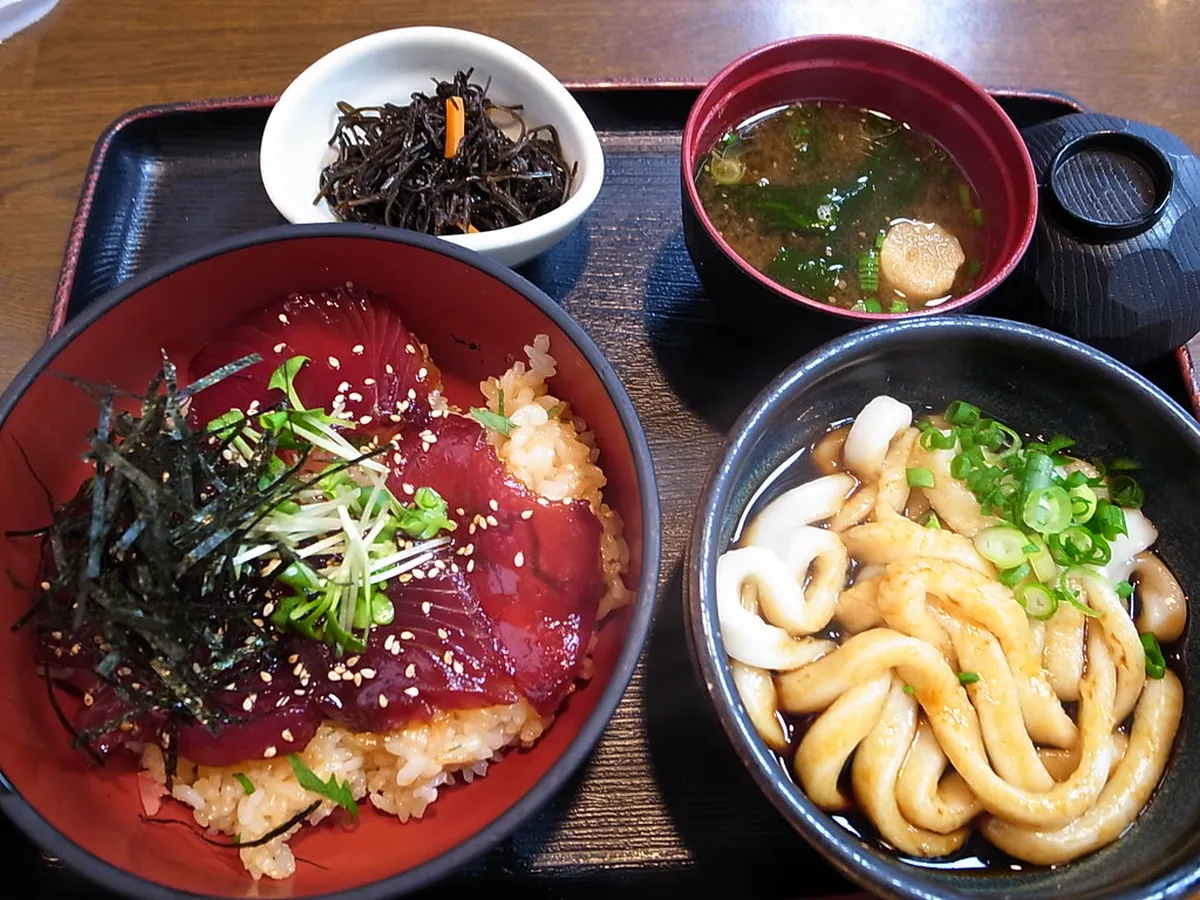
- Base: vinegared sushi rice
- Fish: katsuo (bonito) or maguro (tuna), traditionally red-fleshed only
- Technique: fish mixed into the rice by hand, not layered on top
- Garnish: shiso, ginger, and nori
From Fishing Boats to Family Tables: The Origin of Tekone-zushi
On the Shima Peninsula, tekone-zushi began as a fisherman's working meal. According to the agriculture ministry's regional-cuisine record, crews cut the bonito they had just caught and marinated it right on deck. They mixed the fish by hand into rice they had already brought from home, all while the boat kept working. Mie Prefecture has long recorded some of Japan's highest skipjack catches, which is why bonito prepared this way became a coastal staple rather than a rare treat. That same speed made the dish useful onshore, too. Ise-Shima's Ama divers, the region's free-diving fisherwomen, could put together a full meal between dives without a long break from the water. Because it needs little preparation and travels well, tekone-zushi also became a dish for gatherings. It's still served today at celebrations and family meals across the region, mixed in a large wooden tub and portioned out to everyone at the table rather than plated individually. That communal serving style is part of why it still feels different from a plated sushi order, even in a restaurant.
Where to Eat Tekone-zushi Around Toba
Start near the Toba Seafood Markets and Cheap Eats: A 2026 Budget Guide around the Marine Terminal for the most Toba-specific version. Simple counters there serve rice-bowl lunches without a ryokan-level bill, and the terminal itself is also a departure point for Toba Bay boat tours, so it doubles as a natural lunch stop. Many visitors also pair the meal with a stop at Toba Aquarium or Mikimoto Pearl Island. If that fits your day, build lunch around the 8 Best Things to Do in Toba (2026) you already plan to see. Most English-language guides to tekone-zushi point toward Ise's Okage Yokocho, the shopping street near Ise Jingu's inner shrine where the dish is sold as a signature street food. That's a reasonable stop if Ise is part of the itinerary, but it isn't Toba. The two are separate stops along the Ise-Shima coast, connected by local train and road, and travelers based in Toba don't need to make that trip just to try the dish. Versions served at Toba's own markets and casual restaurants use the same fish, marinade, and technique. Toba's own seafood restaurants lean toward shellfish rather than tekone-zushi. Maruzen Oyster Farm, a floating boathouse restaurant in Toba City, runs an 80-minute all-you-can-eat oyster course. That course costs ¥3,000 per adult and ¥1,500 per child, and typically runs from November to early May. For the oyster side of Toba's seafood calendar, the Toba oyster season guide covers timing in more detail. If you're combining a Toba day with an Ise Jingu visit, Tekone Chaya Honten in Isuzugawa is the landmark most guides cite for a full sit-down version of the dish. It sits in Ise City, near Ise Jingu's inner shrine, rather than in Toba itself, in a tatami room overlooking the Isuzugawa River. Further along the coast in Shima, some Ama hut dining experiences add tekone-zushi to the menu as a side dish alongside grilled abalone and scallops. These are reconstructed huts where retired Ama divers grill seafood over charcoal for visitors. Menus vary by hut and by season, so confirm what's on offer before you book.

- Weekday hours at Tekone Chaya Honten: 11:00 AM–3:00 PM (L.O. 2:30 PM) and 5:00–8:00 PM (L.O. 7:30 PM)
- Weekend and holiday hours: 11:00 AM–8:00 PM (L.O. 7:30 PM)
- Typical spend: ¥1,000–¥1,999 per person
- Getting there: about 20 minutes on foot from Kintetsu Isuzugawa Station, or 10 minutes by car from Ise-Nishi IC on the Ise Expressway
- Parking: 14 spaces on site
What's in the Bowl: Fish, Marinade, and Garnish
Katsuo (skipjack bonito) or maguro (tuna) is almost always the fish, sliced sashimi-style before it goes anywhere near the rice. This kind of pre-marination is a technique called zuke, a method with a long history in Japanese fish preparation, distinct from the wasabi-and-soy dip used at a nigiri counter. A home recipe published by Japan's agriculture ministry seasons the sushi rice with sugar, vinegar, and salt. It marinates the sliced bonito separately, in soy sauce and mirin. Marinating time runs five to thirty minutes, shorter for very fresh, fattier cuts, since the marinade can overpower delicate fish if left too long. Bonito supply follows the katsuo migration through Japanese waters, so quality and availability shift across the year. Ask which fish is currently featured, since menus switch between katsuo and maguro depending on what local boats bring in. A published home version for four servings uses the proportions below.
Fish marinates for 5–30 minutes depending on freshness, so sourcing at the Marine Terminal near working boats gives access to fresher catches that require less marinating and develop cleaner flavor.
| Element | What's in it |
|---|---|
| Base | Vinegared sushi rice, seasoned with sugar, vinegar, and salt |
| Fish | Katsuo (bonito) or maguro (tuna), sliced sashimi-style, traditionally red-fleshed only |
| Marinade | Soy sauce and mirin; fish marinates 5–30 minutes depending on freshness |
| Garnish | Shredded shiso (perilla), thin-cut ginger, torn nori |
- Bonito: about a quarter of a whole fish
- Sushi rice: 1½ cups (240g), cooked with a 10cm piece of kelp
- Marinade: 5 tablespoons soy sauce, 2 tablespoons mirin
- Rice seasoning: 3 tablespoons sugar, 4 tablespoons vinegar, 1 teaspoon salt
- Garnish: 8 shiso leaves, a sprig of ginger, half a sheet of nori
Planning Your Meal: Prices, Hours, and Practical Notes
Expect to pay ¥1,000 to ¥1,999 for a standard tekone-zushi set, usually served with miso soup and pickles on the side. Treat this as a lunch dish first. Many specialty restaurants, including Tekone Chaya Honten, take a break after the lunch last order and don't reopen until 5:00 PM for dinner. That kind of split schedule is common across regional Mie restaurants, not just for tekone-zushi, so check hours before planning a mid-afternoon meal anywhere in Toba or Ise. Tekone-zushi is meant to be eaten right after mixing, so treat takeaway as the exception rather than the rule. Market-style counters near the Marine Terminal are more likely to pack a rice bowl to go than a sit-down restaurant like Tekone Chaya Honten, which is set up for tatami and sunken seating rather than boxed orders. Ask at the counter if you need something portable, and expect the rice to taste best within a short window of being mixed, since the vinegar and marinade both mellow the longer the bowl sits. Tekone-zushi is built for a midday meal, not the multi-course seafood dinners served at Toba's ryokan. Save that appetite for the ryokan kaiseki seafood dinners in the evening, and treat tekone-zushi as the casual counterpart at lunch. Pairing the two across one day, a rice-bowl lunch followed by a formal seafood dinner, is a reasonable way to cover both ends of Toba's seafood scene without repeating a dish. Rice here carries vinegar and sugar, and the fish is raw or lightly marinated, dressed in a soy-based sauce. That combination rules the dish out for travelers avoiding raw seafood or soy. Toba's vegetarian and non-seafood dining guide covers alternatives that skip both.
| Detail | What to expect |
|---|---|
| Typical price | ¥1,000–¥1,999 per set, often with miso soup and pickles |
| Best time to go | Lunch; many specialty shops break roughly between 2:30 PM and 5:00 PM |
| Takeaway | Limited; most sit-down spots are set up for dine-in, ask at market counters |
| Dietary note | Contains raw or marinated fish and soy; rice includes vinegar and sugar |
Toba Tekone-zushi vs Ordinary Sushi: What to Expect
Toba tekone-zushi differs from the nigiri you may know from a sushi counter in almost every way except the rice. A chef shapes nigiri piece by piece and serves it immediately, in a quiet, focused setting. Tekone-zushi is mixed together in one bowl and shared, often in a busy cafeteria or a family-style tatami room rather than a formal counter. Neither style is more authentic than the other; they answer different questions about how a meal gets made and eaten. It also differs from ordinary chirashi-zushi, which typically piles a variety of raw fish, vegetables, and egg over the rice. Tekone-zushi keeps the palette narrow. It's one type of red-fleshed fish, pre-marinated in soy, worked through the rice rather than arranged on top. And it differs again from zuke-don, the soy-marinated fish bowls served in cities further from the coast, which are usually built on plain rice rather than the vinegared rice that puts tekone-zushi in the sushi family.
- Ordering it expecting white fish like sea bream or snapper: the traditional dish is strictly red-fleshed bonito or tuna, even though a few modern menus now add white-fish versions.
- Expecting a quiet sushi-bar setting: tekone-zushi is typically served in casual cafeterias or tatami rooms, not at a formal counter.
- Adding extra soy sauce by habit: the fish is already marinated and the rice already seasoned, so taste a bite first.
- Showing up for a late lunch: many specialty restaurants stop taking lunch orders in the early afternoon and don't reopen until 5:00 PM.
Frequently Asked Questions
What is tekone-zushi made of?
Traditional tekone-zushi is thin-sliced katsuo (bonito) or maguro (tuna), marinated in a soy-based sauce. It's then mixed by hand into vinegared sushi rice and topped with shiso, ginger, and nori. The mixing is what gives the dish its name, tekone, meaning hand-kneaded.
Where can travelers eat tekone-zushi near Toba?
Budget-friendly versions turn up at market counters near the Toba Marine Terminal. For the sit-down version most guides reference, Tekone Chaya Honten sits in Isuzugawa, part of Ise City near Ise Jingu's inner shrine, not in Toba itself. Some Ama hut dining experiences further along the Shima coast also list it as a side dish.
How much does a tekone-zushi set cost?
A standard lunch set typically runs ¥1,000 to ¥1,999, usually with miso soup and pickles included. That price range holds at both casual market counters and sit-down restaurants like Tekone Chaya Honten.
Is tekone-zushi different from regular chirashi-zushi?
Yes. Standard chirashi arranges a variety of raw toppings over rice. Tekone-zushi uses one red-fleshed fish, pre-marinated in soy, mixed by hand into the rice rather than laid on top.
Can travelers avoiding raw fish or soy eat tekone-zushi?
Not easily. Fish here is raw or lightly marinated and dressed in soy, and the rice itself carries vinegar and sugar. Travelers avoiding either are better served by dishes built around cooked or plant-based ingredients instead.
What time should travelers plan lunch for tekone-zushi?
Aim for an early lunch. Many specialty restaurants take their last lunch order around 2:30 PM and don't reopen until 5:00 PM for dinner, so a late-afternoon walk-in can mean an unplanned wait.
Is tekone-zushi served hot or cold?
Cold. Like other sushi styles, tekone-zushi is built on vinegared rice with raw or marinated fish, so it's served chilled or at room temperature rather than hot.
Free guide: Japan's Hidden Gems
12 under-the-radar places beyond Tokyo & Kyoto — with the best season to visit each and a local tip you won't find in the guidebooks.
You might also like


Continue reading
More guides you'll find useful


