
Toba Ise-ebi and Oyster Season: A Complete Winter Seafood Guide
A complete guide to Toba's Ise-ebi and oyster season: peak months, local prices, Uramura oyster huts, and where to book lobster dinners for 2026.
On this page
Last updated August 2026, Toba's Ise-ebi and oyster season covers two overlapping windows that define winter dining in Ise-Shima. Japanese spiny lobster runs October through April, while Uramura's oyster huts open November through March, and January-February brings both to peak quality together. This guide compares pricing, restaurant formats, and booking timelines so you can plan a Toba seafood trip around the calendar.
Seasonal Quick-Reference: Toba Ise-ebi and Oyster Season at a Glance
This seasonal breakdown expands on the Toba Seafood Guide (2026): Ise-Ebi, Oysters & Ama-Hut Eats, focusing on the two headline winter delicacies. Toba functions as the logistics hub for the wider Ise-Shima region. Toba Station anchors Ise-ebi dining, while Uramura, a short drive away, anchors the oyster-hut scene. Spiny lobster season opens in October and closes in April. A strict fishing ban runs from May 1 to September 30, protecting spawning stock in Mie Prefecture waters. Oyster season in Uramura runs November through March, overlapping with Ise-ebi season for the entire winter. During the January-February overlap, some kaiseki restaurants near Matoya Bay add Ise-ebi sashimi directly to an oyster-based course. A single meal can then cover both delicacies at once. Coastal Toba stays milder than inland Mie in winter. Early starts near the water still call for a warm layer, since mornings can sit near 5°C (41°F). Summer travelers still have alternatives. Iwagaki rock oysters and abalone fill the gap from roughly May to September, though neither replaces the winter specialties directly.
| Delicacy | Season Window | Peak Months | Typical Daytime Temps | Typical Price Range |
|---|---|---|---|---|
| Ise-ebi (Japanese spiny lobster) | October – April (banned May 1 – Sept 30) | December – January, extending into the Jan-Feb overlap | Autumn open near 18°C (64°F), dropping to about 9°C (48°F) by January | ¥4,000–¥8,000 sashimi; ¥10,000–¥20,000 full course |
| Winter oysters (Uramura) | November – March | January – February | Coastal winter days average about 10°C (50°F), mornings near 3°C (37°F) | ¥3,000–¥4,500 for a 90-minute all-you-can-eat session |
| Summer alternative (Iwagaki oysters, abalone) | Roughly May – September | No defined peak | Summer highs near 30°C (86°F) | Priced separately from winter set menus; ask each restaurant directly |
Ise-ebi: Toba's King of Luxury Seafood
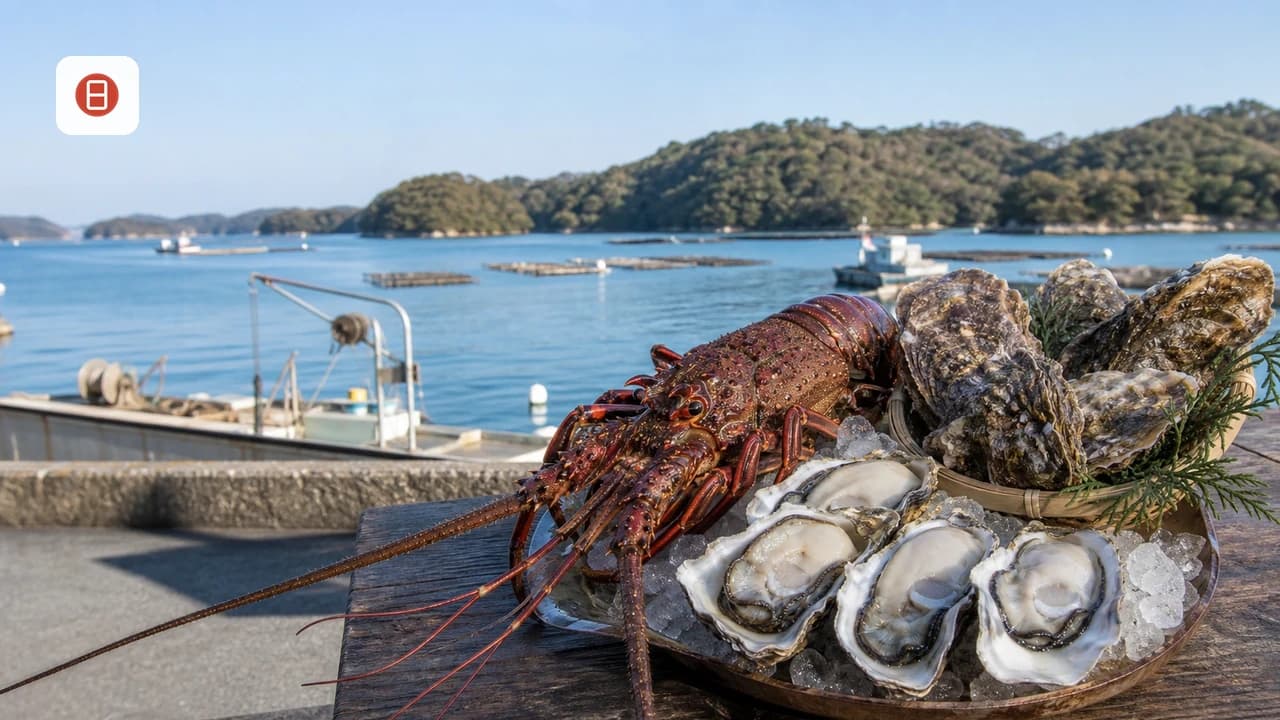
Ise-ebi carries cultural weight beyond its size and price tag. Ise-Shima, the wider region that includes Toba, has long carried the historical name Miketsukuni, meaning a province that supplied food to the Imperial court. Locally caught spiny lobster remains the centerpiece of that reputation. Meat stays firm and springy, with a natural sweetness that intensifies as winter water temperatures drop. A typical specimen measures about 20 to 30 cm (roughly 8 to 12 in) long. It has a hard shell and long antennae that make it easy to spot on a plate. Some Mie Prefecture catches carry an origin tag as part of local stock-management efforts. The lobster carries symbolic weight too. Locally, it has historically been offered to Ise Jingu as a sacred food offering and remains common on New Year tables. Kagetsu (華月), a specialist near Toba Station, focuses on steamed and sashimi preparations, with both full courses and lighter lunch sets. Onigara-yaki takes its name from the shell used as a natural grill vessel during cooking. For a more formal course built around the same ingredient, ryokan kaiseki seafood dinners pair Ise-ebi with a wider seasonal menu.
- Sashimi: thinly sliced raw, dipped in wasabi and soy; ¥4,000–¥8,000
- Onigara-yaki (grilled): split lengthwise and grilled, finished with soy sauce or butter
- Ise-ebi miso soup: broth built from the head and shell; ¥1,500–¥3,000
- Tempura donburi: crisp-fried lobster over rice; ¥3,000–¥6,000
- Shabu-shabu: thin slices briefly cooked tableside in hot broth
- Full multi-course kaiseki: ¥10,000–¥20,000
Fresh vs. Frozen: Sourcing Outside Peak Weeks
Sourcing shifts noticeably once the calendar moves away from peak weeks. Inside the October-April window, and especially during the December-February stretch, Ise-ebi on a Toba menu is more likely to be a live, local catch. Outside that window, particularly during the May 1-September 30 fishing ban, kitchens often switch to frozen lobster or lobster sourced from outside Mie Prefecture. Neither substitution is hidden information. Asking a server directly usually gets a straight answer about origin, and whether a dish is fresh or frozen that day. Oysters follow a similar pattern on a shorter clock. Uramura's November-March season means most huts source directly from local beds during winter. Shoulder-season menus may lean on stock from earlier in the run or from other growing areas. Matoya oysters carry sterilization and processing standards that differ from the standard Uramura harvest. That difference is part of why they are priced and marketed separately. For travelers prioritizing traceability over price, asking whether a dish is same-day catch is the simplest check. That question works at a Kagetsu-style specialist or a Uramura hut alike. October, the opening month for Ise-ebi, arrives a full month before oyster huts open in November, so early-autumn visitors get lobster season to themselves. April falls inside Ise-ebi season but outside oyster season. Oyster huts have typically closed for the year by then, so travelers visiting in April should plan around lobster, not oysters.
The May 1 to September 30 fishing ban forces restaurants to serve frozen or outside-region lobster during summer months. Fresh local ise-ebi is only available October through April.
Toba's Oyster Culture: The Uramura Experience
Uramura, on Toba's coast, functions as an informal oyster road each winter. Its coastline sits within Ise-Shima National Park, the same protected coastal zone that shapes most of Toba's scenery. Oyster huts, known as kaki-goya, line up along the shore from November through March. Several huts operate within a short stretch of coastline, so comparing a couple of menus before committing to one is realistic in a single visit. Most run all-you-can-eat sessions with a set time limit rather than open grazing. A typical tabehoudai session runs about 90 minutes, with oysters grilled tableside over charcoal or gas. Pricing for this format generally runs ¥3,000 to ¥4,500. For how that compares with other budget seafood options in Toba, see seafood markets and budget eats. Matoya oysters grow in Matoya Bay, not directly in Uramura. They are marketed as a premium, high-end line. They are also known for a milder smell than typical oysters, a trait that makes them a common recommendation for travelers who normally avoid oysters. Standard Uramura oysters, served at the coast's all-you-can-eat huts, are the everyday version most visitors eat.
- Grill and tongs provided at the table; shells go in a bucket, not on the floor
- Sessions typically run 90 minutes with a hard stop
- Reservations are strongly recommended for winter weekends
- Expect smoke and a strong oyster smell; skip the good coat
Ise-ebi vs Oysters: Which Winter Seafood Experience Fits Your Trip
Both delicacies peak in the same season, but they suit different trips. Ise-ebi dining leans formal, with ryokan and specialty restaurants built around a single showcase ingredient. Oyster huts lean casual, with DIY grilling, shared tables, and a much lower price floor. Shoulder-season menus in October and November tend to sit at the lower end of published ranges. Peak weekends in January and February push the same dishes toward the top of the range. Oyster hut AYCE sessions can climb from about ¥3,000 toward ¥4,500 or more as demand rises. Neither format requires advance seafood expertise; both restaurant staff and hut operators guide first-time visitors through preparation and etiquette. Travelers short on time but flexible on formality often default to an oyster hut lunch. They pair it with a lighter Ise-ebi dish at dinner, covering both without a full-day commitment to either. The table below lines up the trade-offs for quick planning.
| Feature | Ise-ebi (Spiny Lobster) | Winter Oysters |
|---|---|---|
| Budget | High: ¥4,000–¥15,000+ per dish | Mid: ¥3,000–¥5,000 for an all-you-can-eat session |
| Vibe | Formal, ryokan, fine dining | Casual, smoky, DIY grilling |
| Best for | Celebrations, dedicated foodies | Groups, budget-conscious travelers |
| Peak months | December and January | January and February |
Planning the Logistics: Getting to Toba and Uramura
Toba Station is the practical hub for both seasons. Both routes run on the Kintetsu Limited Express network, so a single reserved-seat ticket typically covers the journey. Uramura sits away from the station, and public transit there is limited, so plan transport before booking a hut. A rental car remains the most flexible option for reaching multiple oyster huts in one visit. Travelers wanting a cultural add-on can book Ama Hut Hachiman Kamado on Matoya Bay. Local ama divers grill shellfish tableside and describe their diving tradition there. Winter weekends fill fastest for both formats. Kagetsu and other Ise-ebi specialists near Toba Station often ask for reservations several days ahead during December and January. Oyster huts in Uramura keep their own booking windows; walk-ins can work on weekdays, though weekends are safer to book ahead.
Oyster hut sessions run 90 minutes with a hard stop, and Uramura sits a 25–30 minute drive from central Toba. Sequential reservations need padding: allow at least 3–4 hours between finishing an oyster session and a dinner reservation.
- Nagoya Station to Toba Station: Kintetsu Limited Express, about 1 hour 40 minutes
- Tsuruhashi Station (Osaka) to Toba Station: Kintetsu Limited Express, about 1 hour 40 minutes
- Uramura from central Toba: Can Bus or rental car; public transit is limited
- Ama Hut Hachiman Kamado: on Matoya Bay, roughly a 25–30 minute drive from central Toba; book ahead through the hotel's channel
A Two-Day Winter Seafood Itinerary for Toba
This pairing works well for a focused weekend built around both delicacies. Either day can run in reverse order if a specific reservation time works better.
- Day 1 morning: Toba Aquarium and Mikimoto Pearl Island, both within easy reach of central Toba. Mikimoto Pearl Island runs ama diving demonstrations roughly every hour from 9:30am to 4:30pm, skipping the 12:30pm slot. See 8 Best Things to Do in Toba (2026) for hours and access.
- Day 1 evening: an Ise-ebi dinner at a specialist near Toba Station. A full ryokan kaiseki seafood dinners course is the more formal alternative.
- Day 2 morning: Ise Jingu, visiting Geku (Outer Shrine) before Naiku (Inner Shrine), following local custom.
- Day 2 midday: an oyster hut tabehoudai session in Uramura. For a non-oyster option, the tekone-zushi guide covers the fisherman's-style raw-fish rice bowl served around Oharaimachi.
Common Mistakes to Avoid During Toba's Winter Seafood Season
A few planning mistakes repeat every winter, and each is easy to avoid with a little lead time.
- Chasing fresh Ise-ebi in summer is a common misstep. The fishing ban runs May 1 to September 30. Restaurants open in July typically serve frozen lobster, or lobster sourced from other regions, instead of the local fresh catch.
- Skipping reservations: both oyster huts and Ise-ebi specialists book out weeks ahead on winter weekends.
- Wearing good clothes to a kaki-goya: charcoal grilling makes the huts smoky, and the smell clings to fabric.
- Underestimating drive times: Uramura, Matoya Bay, and central Toba are separate stops, so pad the schedule instead of booking back-to-back reservations.
- Assuming every restaurant takes walk-ins: some Toba specialists operate reservation-only during peak weeks, even for lunch.
- Assuming every group wants seafood: for mixed groups, non-seafood dining options keep the day workable without splitting the itinerary.
Frequently Asked Questions
When is the best time to visit Toba for both Ise-ebi and oysters?
January and February are the strongest overlap. Ise-ebi and oysters both hit peak quality at once. Reservations fill fastest during exactly these weeks, so book restaurants and huts as early as you can.
Is there a closed season for Ise-ebi in Toba?
Yes. Mie Prefecture enforces a fishing ban from May 1 to September 30 to protect spawning lobster. Fresh, locally caught Ise-ebi is not available in summer, and restaurants open during those months typically serve frozen lobster instead.
How much does an oyster hut all-you-can-eat session cost in Uramura?
Typical tabehoudai pricing runs ¥3,000 to ¥4,500 for a 90-minute session. The higher end of that range is more common on peak winter weekends. Demand is highest then, and huts often add a wait list.
What's the difference between Matoya oysters and standard Uramura oysters?
Matoya oysters come from Matoya Bay and are marketed as a premium, high-end line with a notably milder smell. Standard Uramura oysters, served at the coast's all-you-can-eat huts, are the everyday version most visitors eat. The two are priced separately.
Can non-seafood eaters join a Toba winter food trip?
Yes. Mixed groups can pair a seafood outing with non-seafood dining options nearby, so no one has to skip the meal entirely. This works well when only part of a group wants to try Ise-ebi or oysters.
Do Kagetsu and Ama Hut Hachiman Kamado require advance booking for English-speaking guests?
Both fill quickly in winter, so reserve ahead regardless of language. Ama Hut Hachiman Kamado can be booked with an interpreter through the hotel's booking channel. Contact Kagetsu directly to confirm current English-language support before your visit.
What should you wear to an oyster hut in Uramura?
Skip anything you don't want to smell like charcoal smoke afterward. Casual, washable clothing works best, since grilling happens right at the table.
How far in advance should you book a winter seafood trip to Toba?
Aim for at least a few weeks ahead for January and February weekends. Weekday visits and shoulder-season dates in November or March are more flexible and often bookable with less notice.
Free guide: Japan's Hidden Gems
12 under-the-radar places beyond Tokyo & Kyoto — with the best season to visit each and a local tip you won't find in the guidebooks.
You might also like


Continue reading
More guides you'll find useful


