

Toba Ryokan Kaiseki Dinner Guide: Courses, Buffets & Booking Rules (2026)
Plan a Toba ryokan kaiseki dinner for 2026: course-by-course menus, kaiseki vs buffet, top ryokans, kids' plans, and booking rules for Ise-ebi upgrades.
On this page
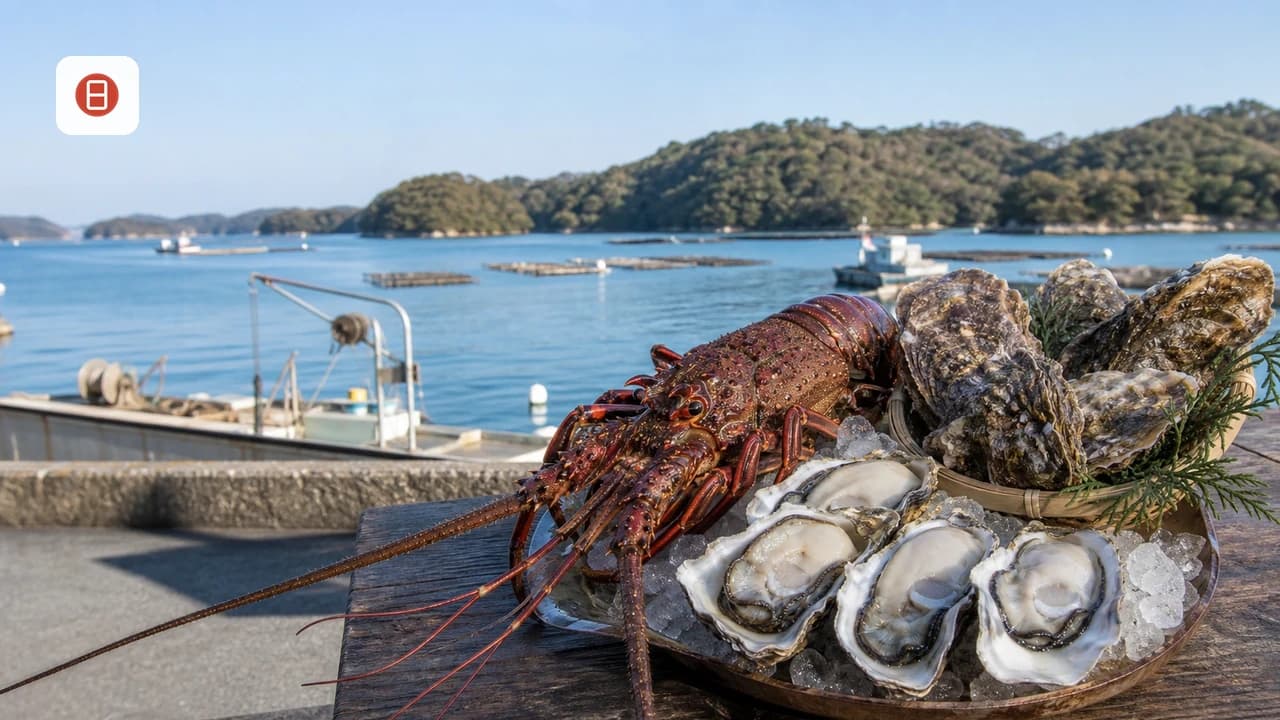
Last updated August 2026, a Toba ryokan kaiseki dinner puts Ise Bay's spiny lobster, abalone, and Matsusaka beef directly on the table, often in a private room rather than a shared hall. Toba anchors Mie Prefecture's seafood country, so the courses favor the day's catch over Kyoto's vegetable-forward menus. This guide breaks down what actually lands on the table, how to choose between kaiseki and a buffet, and which booking rules trip up first-time guests.
Toba Ryokan Kaiseki Dinner: What 'Toba Style' Means
Mie Prefecture has long been called Umashikuni, the Beautiful Country, a name Kamenoi Hotel Toba uses on its own dining page. Ise Bay supplies the three ingredients that define the local table: Ise-ebi (spiny lobster), awabi (abalone), and Matsusaka beef. Kyoto kaiseki leans toward vegetables and delicate broths. Toba kaiseki leans toward the day's catch, especially in the sashimi and hot-pot courses. Staying at a Toba ryokan gets you that catch at its freshest, plus a dining room set apart from other guests at many properties. For a wider view of what swims in local waters, see the Toba Seafood Guide (2026): Ise-Ebi, Oysters & Ama-Hut Eats.
The Course-by-Course Anatomy of a Toba Kaiseki Dinner
A Toba kaiseki dinner arrives in stages, not as one large plate. A nakai-san, a dedicated room attendant, brings each course as the last one clears. Expect six to seven stages across a typical evening.
- Sakizuke (appetizer): a small starter, often marinated seafood or a seasonal vegetable bite.
- Otsukuri (sashimi): a platter built around spiny lobster, paired with sea bream, amberjack, or squid.
- Wanmono (soup): a clear dashi-based soup, sometimes with turban shell or seasonal mushrooms.
- Yakimono (grilled dish): grilled abalone with butter and sea urchin soy sauce appears on Kamenoi Hotel Toba's kaiseki menu.
- Hot-pot course: Matsusaka beef sukiyaki or shabu-shabu, the centerpiece of most kaiseki plans.
- Shokuji (rice or noodle course): Ise udon or Toba's tekone-zushi, the soy-marinated tuna rice dish native to the region.
- Mizumono (dessert): a seasonal fruit or citrus sweet closes the meal.
After the Course List: Seasonal Menu Changes
Menus rotate with the season, and the sashimi and hot-pot courses change the most. Kamenoi Hotel Toba runs separate June-to-August and September-to-November menus for its kaiseki plans. Ise-ebi has its own season, so check the Ise-ebi and oyster season guide before booking if the spiny lobster course matters to you.
Kaiseki vs Seafood Buffet vs In-Room Dining: Choosing Your Style
Toba ryokans generally offer three dinner formats, and the right one depends on group size and pace. Traditional kaiseki suits couples who want quiet, paced courses. A buffet suits families who want variety and no fixed seating time. In-room dining suits guests who want privacy without a formal restaurant floor.

| Dining style | Best for | Example at Toba ryokans | What to expect |
|---|---|---|---|
| Traditional kaiseki | Couples, quiet pacing | Kochi to Umi (Todaya), Restaurant Hana (Kamenoi Hotel Toba) | Courses arrive one at a time in a private or semi-private room, paced by a nakai-san |
| Seafood buffet | Families, groups wanting variety | Ten-Chi-Kai (Todaya), Miyabi (Kamenoi Hotel Toba) | 90-minute all-you-can-eat service; Todaya's version includes a tuna-cutting show |
| In-room dining (heyashoku) | Privacy without a dining hall | Kishuntei wing (Todaya) | Dinner is served in your room; convenient, though dishes can sit out longer between courses |
Pacing a Kaiseki Dinner Without Overdoing It
Pace yourself. Blog accounts of Toba kaiseki describe course fatigue: dishes keep arriving well after guests feel full. Skip a heavy lunch before check-in so the multi-course dinner has room to land. If a full kaiseki plan is outside budget, compare it with the Toba Seafood Markets and Cheap Eats: A 2026 Budget Guide guide for stalls and set-meal counters near the port.
Kaiseki's six to seven stages arrive sequentially throughout the evening. Skip lunch beforehand—diners often feel full well before the final courses, so pacing intake prevents course fatigue.
Where to Book: Toba Ryokans Rated for Their Kitchens
These ryokans get named repeatedly for their dinner service, grouped here by what each does best.
- Luxury and sea views: Toba International Hotel Shiojitei, with hot spring baths and a garden overlooking the ocean, and Kisara Bettei TOKI, near Ichibe Shrine and about 17 km from Oharai-machi.
- Historic and central: Todaya, open since 1830 and a 3-minute walk from Toba Station, runs three separate dining formats under one roof.
- Seafood-centric stays: Sun Urashima Yuki no Sato and Hanano Koyado Jyu-bei, both under a 1 km walk from Chidorigahama Beach.
- Budget and accessible: KAMENOI HOTEL Toba, with two dinner restaurants and a free late-night noodle bar, and Toba Grand Hotel, with outdoor hot-spring baths, ocean views from every room, and a free shuttle about 5 minutes from JR/Kintetsu Toba Station.
Timing Dinner Around Sightseeing
Several central properties sit within a 6- to 10-minute walk of Toba Aquarium, useful if you want to sightsee before an evening seating. Plan the afternoon with the Toba attractions guide so you're back in time for a 17:30 or 18:00 dinner start.
Dining with Children: Kaiseki and Meal Plans for Kids
Kamenoi Hotel Toba splits kids' dining into two tracks, and the difference matters when you book. Children's Kaiseki serves a scaled-down version of the adult menu, aimed at elementary-school-age children and toddlers. It costs 70 percent of the adult plan fee for elementary-school children and 50 percent for infants, both excluding the ¥150 bathing tax. A separate Children's Meal option, built around Western-style fried dishes, suits kids who won't sit through a multi-course dinner. Tell the ryokan which track fits your child's age when you reserve, since the two aren't interchangeable at the table. Families juggling different ages sometimes prefer the buffet format instead. A 90-minute all-you-can-eat seating lets kids move around between courses rather than sit through a fixed sequence.
Booking Rules and Seafood Upgrades to Reserve Ahead
Most Toba ryokan dinners begin between 17:30 and 18:30. Kamenoi Hotel Toba runs both its dinner restaurants from 17:30 to 21:00, with last order at 20:30. Walk-in kaiseki is rare. Reserve your room, and your dinner plan, well ahead of arrival. Seafood upgrades need even earlier notice. Reservations open at least two days ahead for Kamenoi Hotel Toba's à la carte seafood add-ons:
Ise-ebi reservations pause between July 1 and August 15. Since lobster seasons define Toba's kaiseki menus, checking availability before booking ensures the seafood course features the region's signature catch.
- Grilled spiny lobster (half lobster): ¥5,500; not sold between July 1 and August 15.
- Assorted Ise lobster sashimi: ¥15,000; same July 1 to August 15 pause.
- Matsusaka beef grilled on a ceramic plate: ¥3,300.
- Live abalone grilled in its shell: ¥3,300.
- Grilled turban shell: ¥2,200.
Tattoo Policies and Allergy Requests to Handle Before You Arrive
Tattoos and public baths don't mix at some properties. Todaya does not allow tattoos in its public onsen areas, but its private baths, including a shell bath, a floating bath, and a kettle-style bath, need no reservation. Just check availability and lock the door from inside. Shellfish allergies deserve the same advance planning. Tell the ryokan when you book, not at check-in, so the kitchen can prepare a substitute course. In a town built around shellfish, that lead time matters. If a fully shellfish-free plan matters more than the traditional course, compare it against the Toba vegetarian and non-seafood dining guide.
After Dinner: Late-Night Noodles and Toba Omiyage to Bring Home
Dinner doesn't have to end at the dining room door. Guests get a complimentary late-night dandan noodle bar at Kamenoi Hotel Toba, served 21:00 to 22:30 with one bowl per person.
- Aka Jigoku: spicy Sichuan dandan noodles with roasted sesame and chili oil.
- Kuro Jigoku: black sesame dandan noodles with broad bean chili paste.
- Shiro Jigoku: creamy white sesame dandan noodles with Sichuan peppercorn.
Omiyage Worth Packing
Pack a few things for the trip home, too. Akafuku mochi, a rice cake covered in smooth red-bean paste, comes from nearby Ise. Shinto Beer is a regional brand with roots in the 1800s. Mikimoto sells oyster-shaped madeleines made with pearl calcium, sold near Mikimoto Pearl Island.
Frequently Asked Questions
What time do Toba ryokan kaiseki dinners typically start?
Most start between 17:30 and 18:30. Dinner at Kamenoi Hotel Toba, for example, runs from 17:30 to 21:00 with last order at 20:30. Plan sightseeing so you're back at the ryokan well before the seating.
Can you request a shellfish-free kaiseki dinner in Toba?
Yes, but tell the ryokan when you make the reservation, not at check-in. The kitchen needs advance notice to prepare a substitute course in a region where kaiseki is built around Ise-ebi and abalone. If shellfish-free dining matters more than the traditional format, the Toba vegetarian and non-seafood dining guide covers alternatives.
Is a kaiseki dinner or a seafood buffet better for families?
A buffet usually works better for families with young children. Formats like Kamenoi Hotel Toba's Miyabi run a 90-minute all-you-can-eat seating, so kids can move around instead of sitting through a fixed multi-course sequence. Todaya's Ten-Chi-Kai buffet adds a tuna-cutting show that keeps kids engaged.
Do you need to book seafood upgrades like Ise lobster in advance?
Yes. Advance notice of at least two days is required at Kamenoi Hotel Toba for à la carte add-ons such as grilled spiny lobster (¥5,500) and assorted Ise lobster sashimi (¥15,000). Both are unavailable between July 1 and August 15.
When is Ise-ebi (spiny lobster) in season around Toba?
Check the Ise-ebi and oyster season guide for current dates before you book. Kaiseki menus rotate with the catch, and the sashimi course changes accordingly.
Can guests with tattoos still use a ryokan's hot springs in Toba?
It depends on the property. Todaya, for instance, does not allow tattoos in its public onsen areas but offers private baths that need no reservation. Ask each ryokan about its specific policy before booking if this affects your stay.
Free guide: Japan's Hidden Gems
12 under-the-radar places beyond Tokyo & Kyoto — with the best season to visit each and a local tip you won't find in the guidebooks.
You might also like


Continue reading
More guides you'll find useful


