5 Best Tokyo Depachika Food Halls: A 2026 Guide to Basement Food Markets
Compare the best Tokyo depachika food halls, from Isetan's pastry counters to Daimaru's Shinkansen bento, plus 2026 discount timing and budget ranges.
On this page
Last updated August 2026, this guide narrows down the best Tokyo depachika food halls for travelers who want a fast meal or a gift-worthy souvenir. Depachika, meaning department store basement, pack bento, wagashi, and prepared dishes onto one underground floor near major stations. It ranks five stores by specialty and location, then covers discount timing, budget, and etiquette for a smooth first visit.
5 Best Tokyo Depachika Food Halls to Visit
Each depachika below has its own strengths, shaped by neighborhood and clientele. Match the specialty to whatever matters most this trip: a pastry souvenir, a Shinkansen bento, or a rooftop picnic spot. First-time visitors short on time should prioritize Isetan Shinjuku, Daimaru Tokyo, and Mitsukoshi Nihonbashi before adding the other two.
- Isetan Shinjuku: The Trendsetter for Global Pastry Brands
- Isetan's basement counters lean toward global pastry and confectionery brands, including a Jean-Paul Hévin outpost with an adjacent café for hot chocolate and cakes.
- The wagashi counters display mochi filled with sweet red bean paste on ceramic trays, with gift sets packed into woven bamboo baskets.
- Isetan is one of the depachika on this list with a rooftop area for eating, and the nearest station is Shinjuku-Sanchome.
- Mitsukoshi Nihonbashi: The Grand Dame for Traditional Wagashi
- Nihonbashi Mitsukoshi is Japan's oldest department store, opened in 1673 as a kimono shop and rebuilt as a department store in 1904.
- Two bronze lions mark the main entrance, and the Kayuan counter stocks regional confections from across Japan, with many pieces priced under ¥1,000.
- The shinkan annex building houses a branch of Eataly and a Club Harie counter selling baumkuchen cake, and the store has rooftop seating near Mitsukoshimae station.
- Daimaru Tokyo: The Commuter King for Shinkansen Bento
- Daimaru Tokyo sits inside Tokyo Station with direct access to the Shinkansen platforms, which makes it the easiest stop for a bullet-train bento.
- The store is open daily from 10:00 to 20:00, and its basement floors focus on ready-to-go bento rather than sit-down counters.
- Daimaru Tokyo has no rooftop garden, so plan to eat at a nearby park or on the train instead.
- Takashimaya Shinjuku: The International Deli Stop
- Takashimaya Shinjuku carries a retail counter from Kikunoi, the Kyoto kaiseki restaurant whose three locations have collectively earned seven Michelin stars.
- Confirm the current lineup in person, since depachika tenants rotate throughout the year.
- Peck, an Italian bakery from Milan, sells ciabatta and focaccia a few counters over, and the store has rooftop seating near Shinjuku Gyoen, with Shinjuku Station as the closest stop.
- Tobu Ikebukuro: The Massive Scale for Budget Variety
- Tobu Ikebukuro spans two basement floors, giving it more floor space than any other depachika on this list.
- The focus here leans toward regional Japanese specialties and prefecture pop-up counters rather than international brands.
- That regional focus tends to mean lower average prices, and the store has rooftop seating at Ikebukuro Station.
Quick Comparison: Which Depachika Fits Your Trip
Use this table to match a depachika to the trip at hand before reading the full breakdown above. Rooftop access matters most for travelers without a hotel room nearby, since eating on the sidewalk outside a depachika is not customary. The table below repeats the neighborhood context from the rankings above, in a format built for quick scanning.
| Department Store | Best For | Nearest Station | Rooftop Access |
|---|---|---|---|
| Isetan Shinjuku | Trendy pastries and global brands | Shinjuku-Sanchome | Yes |
| Daimaru Tokyo | Last-minute Shinkansen bento | Tokyo Station | No (use a nearby park) |
| Mitsukoshi Nihonbashi | Traditional Japanese sweets | Mitsukoshimae | Yes |
| Takashimaya Shinjuku | International delis and variety | Shinjuku | Yes |
| Tobu Ikebukuro | Budget variety and regional prefectures | Ikebukuro | Yes |
A Short History of the Depachika
Department stores in Japan have sold food for more than a century, but today's depachika format took shape after World War II. By the 1960s and 1970s, basement food halls had become a standard feature of major department stores. They gave busy shoppers a way to bring home restaurant-quality food without cooking, a role they still fill today. That shift mirrored broader postwar consumer culture, as department stores became one-stop destinations for both goods and food.
What to Buy in a Depachika: Bento, Wagashi, and Sozai
Depachika counters divide roughly into four categories, and most visitors leave with at least two of them. Every major style of Japanese cuisine appears somewhere in the basement, alongside Chinese, Korean, and Western sections. For a sense of what else Tokyo serves outside these basements, see the wider Tokyo food scene.
Luxury fruit boxes push past ¥10,000 and may qualify for tax-free purchase above ¥5,000 when gift-wrapped by staff. These require budgeting far differently than standard bento at around ¥1,500.
- Bento
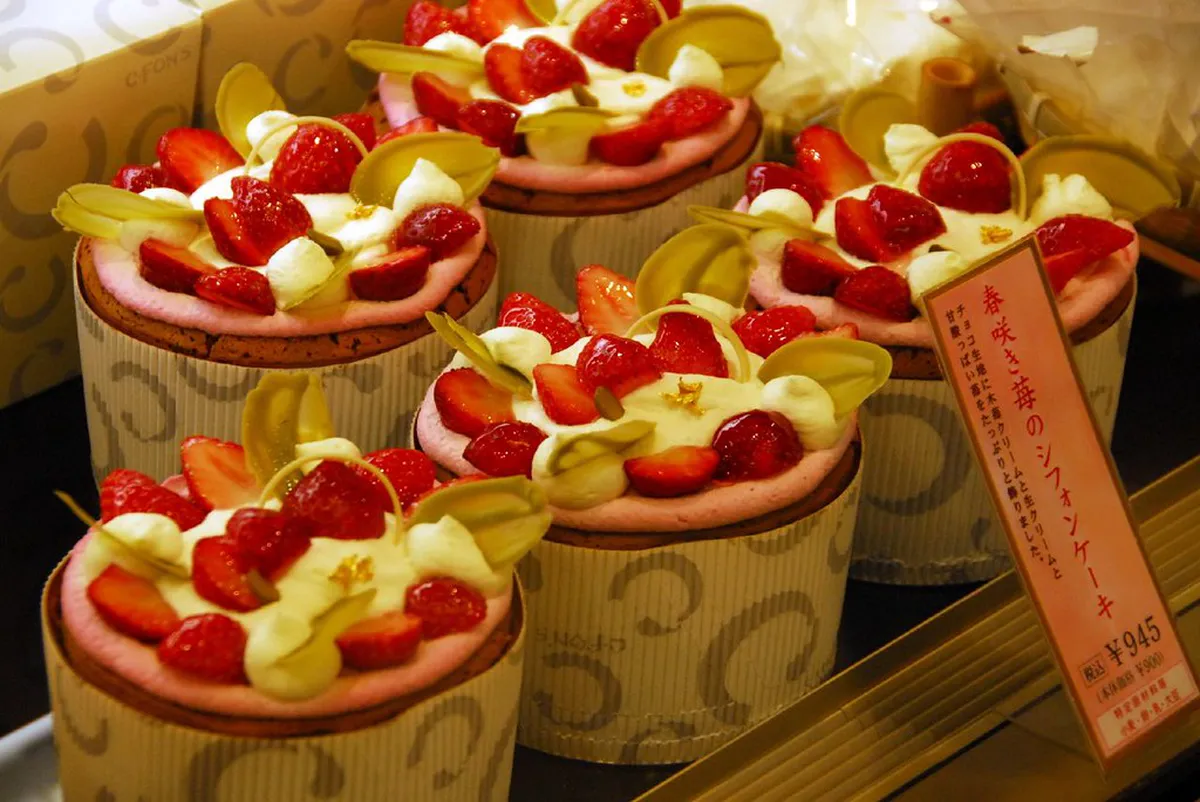
- Bento boxes change with the season and the region behind the counter, from Kyoto-style vegetable-forward sets to heartier Kanto-style boxes.
- Typical fillings include grilled salmon, karaage chicken, and simmered vegetables tucked into neat compartments.
- Bento counters typically include disposable chopsticks and paper napkins with each purchase.
- Wagashi vs. Yogashi
- Wagashi are traditional Japanese confections often made with sweet bean paste, shaped around a seasonal motif such as cherry blossoms or chestnuts.
- Yogashi cover Western-style cakes, pastries, and chocolates, including counters from French patisseries and boulangeries.
- European-style bakeries also sell croissants and baguettes alongside the Japanese sweets in the same aisle.
- Luxury Fruit
- Gift-boxed fruit, including mangos, cherries, grapes, and muskmelons, is sold in wooden boxes that start around ¥10,000.
- Fruit is a common omiyage gift in Japan, given during the summer and year-end gifting seasons or when visiting family.
- Staff can gift-wrap a fruit box or sweets on request, which is standard practice for omiyage bought for a host or coworker.
- Prepared Foods (Sozai)
- Yakitori, tempura, and prepared salads are typically sold by weight in 100-gram units, so portions scale to appetite.
- Counters also sell korokke, pickled vegetables, and onigiri rice balls, useful for rounding out a mixed plate.
- These counters are the fastest way to build a plate without committing to a full bento set.
Timing the Discount Stickers and Depachika Etiquette
Most depachika close around 8:00 PM. Flagship stores sometimes extend hours on weekends, so confirm exact closing times before a late visit. Discount stickers, called waribiki, typically start appearing 30 to 60 minutes before closing, often from around 6:30 or 7:00 PM. Staff mark down bento and prepared dishes that will not keep overnight, and locals build entire dinners around this window. Eating while walking is not customary in Japan, so plan to sit down instead of snacking on the move. Isetan Shinjuku, Mitsukoshi Nihonbashi, and Takashimaya Shinjuku all have rooftop gardens for this. Daimaru Tokyo does not, so use a nearby park instead. For more on Japan's broader dining norms, see the sushi counter etiquette basics. IC cards such as Suica and Pasmo work at most counters, alongside credit cards, which speeds up checkout during the evening rush. Go hungry, and go without a tight schedule, since it is easy to circle the counters more than once before deciding. Counters selling pickles, tea, and sweets often offer a small taste before you buy.
Planning Your Depachika Visit: Budget and Where to Eat
Budget from around ¥1,500 for a standard bento up to ¥5,000 or more for a formal gift set. Luxury fruit boxes push past ¥10,000, so treat those as a splurge gift rather than an everyday snack. Packaged gift sets may qualify for tax-free purchase above ¥5,000. Ask staff at the counter, since the exemption applies only to sealed items not meant to be eaten on site. Build a hotel-room picnic by buying sides and dessert first, then add the bento or sashimi last so it stays cold until eating. Tsukiji Outer Market's morning counters offer a faster-paced alternative to a department store basement. If a sit-down meal fits the day better, look at sit-down restaurants in Tokyo for reservation-worthy options. Between depachika visits, Tokyo's street food scene covers casual stalls and stands citywide for budget eating.
Common Depachika Mistakes to Avoid
A few small missteps account for most first-time frustration in a depachika. Each is easy to avoid once you know what to expect.
Discount stickers typically start appearing 30 to 60 minutes before closing, often from around 6:30 or 7:00 PM. Shopping during this window captures bento normally budgeted at ¥1,500, since staff mark down items that won't keep overnight.
- Hunting for seating inside the basement
- Seating rarely exists inside a depachika, since the floor is built for takeaway shopping rather than dining in.
- Head to a rooftop garden where available, or step outside to a nearby park, before opening any hot food.
- Skipping the ice pack request
- Ask for a hokoreizai, an ice pack, when buying sushi, sashimi, or cakes, since basement air alone will not keep them cold.
- This matters most in summer heat, when a short walk back to a hotel can otherwise spoil raw fish or cream-based cakes.
- Missing the regional pop-ups
- Prefecture fairs and regional pop-up counters rotate through upper floors or special basement corners.
- Ask the concierge desk what is running that week, since these events are not always listed online.
Frequently Asked Questions
What is a depachika?
A depachika is the basement food hall inside a Japanese department store. The name combines depāto (department store) and chika (basement). Expect rows of bento, wagashi, prepared dishes, and gourmet groceries under one roof.
What time do depachika discounts start?
Discount stickers usually begin appearing 30 to 60 minutes before closing, often from around 6:30 or 7:00 PM. Most stores close near 8:00 PM, though it is worth confirming weekend hours at flagship locations.
Is there anywhere to sit and eat inside a depachika?
Seating rarely exists inside the basement itself. Isetan Shinjuku, Mitsukoshi Nihonbashi, and Takashimaya Shinjuku all have rooftop gardens for eating, while Daimaru Tokyo does not and pairs better with a nearby park.
How much should you budget for depachika food?
A standard bento runs from around ¥1,500, while formal gift sets start near ¥5,000. Luxury fruit boxes can push past ¥10,000, so treat those as a gift purchase rather than a meal.
Can you pay by card at depachika counters?
Most counters accept IC cards such as Suica and Pasmo alongside credit cards. This makes the evening discount rush easier to navigate without needing exact cash.
What is the best time of day to visit a depachika?
Mid-afternoon works best for tasting samples at pickle, tea, and sweets counters. Early evening, from around 6:30 or 7:00 PM, works best for discounted bento just before closing.
How much time should you plan for a depachika visit?
Plan for extra browsing time before deciding, since the number of counters can make choosing difficult. Add more time near closing if the plan is to catch the discount window.
Free: The Tokyo Essentials guide
Top things to do, where to stay, a perfect day plan, getting around, and the best time to go — a Tokyo mini-guide you can take offline.
You might also like
Continue reading
More guides you'll find useful