
Oktoberfest Yokohama at the Red Brick Warehouse: 2026 Guide
Plan Oktoberfest Yokohama at the Red Brick Warehouse: typical dates, entry fees, the glass deposit system, station directions, and the best times to avoid crowds.
On this page
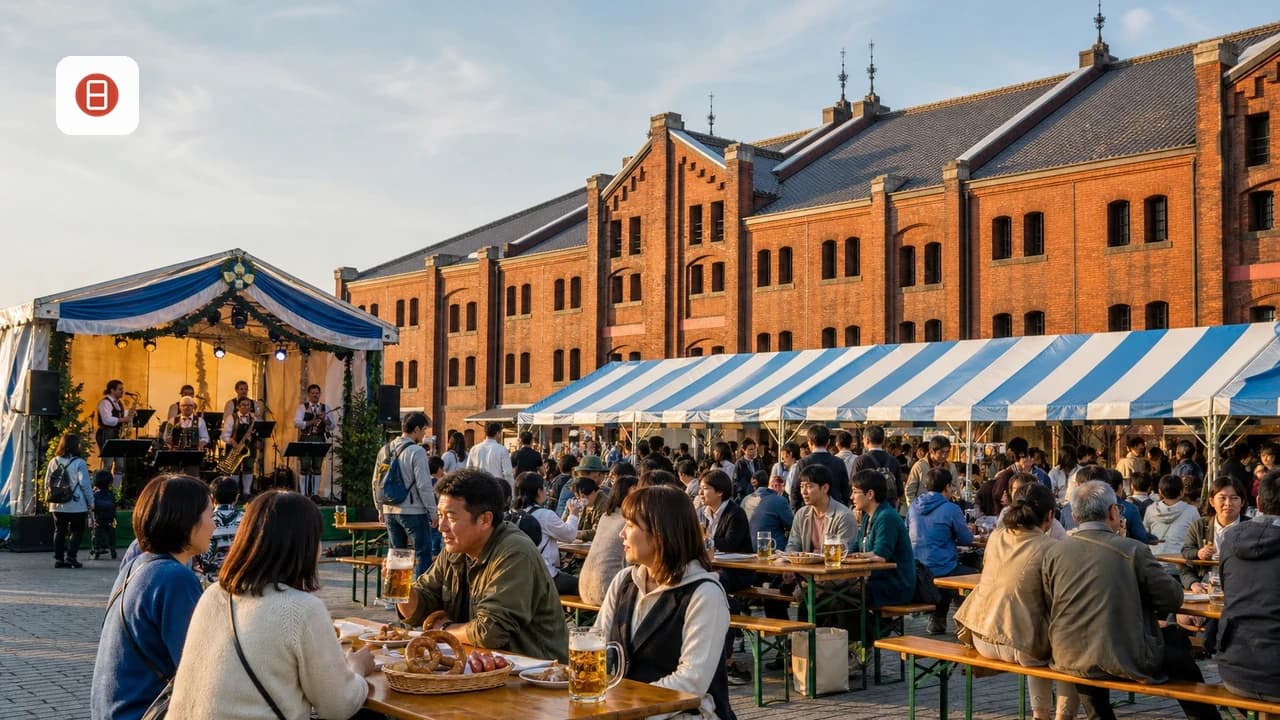
Last updated August 2026. Oktoberfest Yokohama fills the plaza at the Red Brick Warehouse each autumn with German beer tents, food stalls, and live oompah music set against the Yokohama Bay skyline. Expect imported draft beer, bratwurst, and pretzels served between the two Meiji-era brick buildings on the Minato Mirai waterfront.
Oktoberfest Yokohama at the Red Brick Warehouse: Dates, Times, and Entry
The festival takes over the open plaza between the two Red Brick Warehouse buildings in Minato Mirai, a venue locals also call Akarenga Soko. Some listings label the event Yokohama Akarenga Oktoberfest, using that Japanese name directly. Yokohama's Oktoberfest draws on the city's history as one of Japan's first treaty ports, opened to foreign trade in the 19th century and home to an early foreign merchant community. That backdrop is part of why the plaza pairs imported German beer and brass-band music with a working harbor and Meiji-era brick warehouses rather than a park lawn. Exact dates shift slightly every year, so confirm the current calendar on the official Red Brick Warehouse event page before booking travel. Weekend sessions typically run longer on the clock than weekday sessions. Three separate costs shape your budget for the day: the plaza entry fee, a glass deposit for your first beer, and the drinks and food themselves. That entry fee covers access to the plaza and tent seating only, and every food or drink order is billed separately at the counters inside. Pay the deposit once, at your first beer counter. You'll receive a glass or souvenir stein filled with your order. At the end of the night, return the glass at a designated counter for a partial refund, or keep it and skip the refund. Budget for at least two or three refills across a full evening, since festival pricing runs above a typical bar tab. For the full autumn-through-winter lineup at this venue, check the 10 Best Yokohama Events and Festivals for a 2026 Trip calendar. If you're still choosing which month to fly in, the Best Time to Visit Yokohama: 8 Essential Seasonal Tips guide compares weather and crowds season by season.
- Typical season: late September through mid-October, weather permitting.
- Entry fee: historically in the ¥300–¥500 range per visit; confirm the exact current price at the gate.
- Glass deposit: roughly ¥1,000 for your first beer, refunded when you return the glass or keep it as a souvenir stein.
- Beer pricing: priced at a premium compared to a standard izakaya pour, reflecting the imported breweries and festival operating costs.
Getting to the Red Brick Warehouse: Station-by-Station Directions
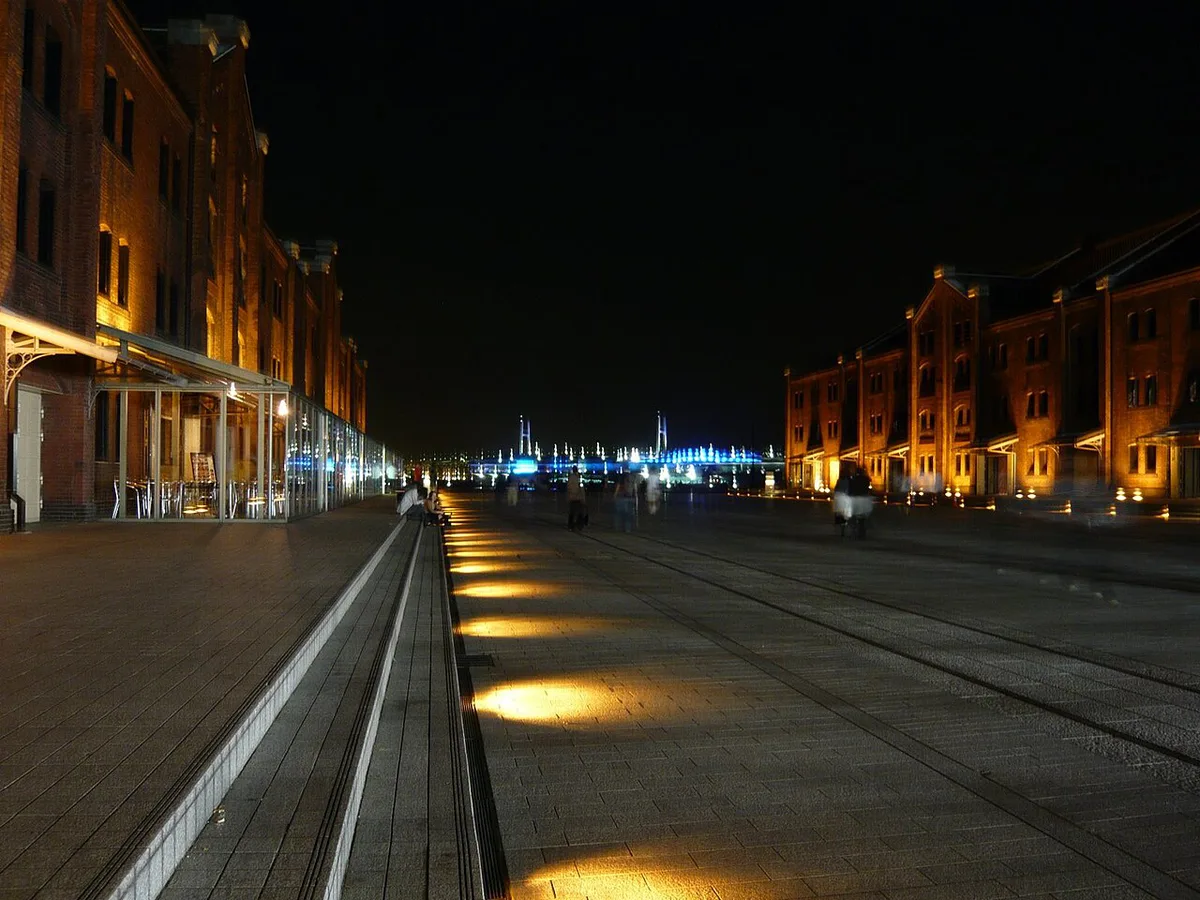
Three train stations serve the venue, each with a different walk and a different stretch of the city along the way. None of the three requires a transfer once you're already in central Yokohama. Comfortable shoes matter more than the exact station you pick, since every route ends with a walk across open plaza pavement. Staying near Minato Mirai keeps the commute short. The 10 Best Areas to Stay in Yokohama (2026): Neighborhood Guide guide compares neighborhoods close to the plaza. For transfer times and rail-pass options from further afield, see the 9 Essential Ways to Navigate Yokohama: A Transport Guide guide.
- Nihon-odori Station (Minatomirai Line): the shortest walk of the three to the festival plaza, best for a quick in-and-out visit.
- Bashamichi Station (Minatomirai Line): a longer, more scenic walk through the surrounding streets on the way to the water.
- Sakuragicho Station (JR): the most useful hub for travelers arriving from Tokyo or connecting through central Yokohama.
- Akai Kutsu loop bus: circles the main waterfront sights, including the Red Brick Warehouse, and also links toward Yamashita Park and Chinatown for visitors who'd rather skip walking between stops.
What to Eat and Drink at the Beer Tents
German breweries anchor the drink list, poured alongside Japanese craft-beer collaborations brewed specifically for the event. Live music runs through the tent for most of the session, with brass ensembles working through the same call-and-response songs that define beer-hall Oktoberfests elsewhere. Food stalls go well beyond the classic bratwurst, so save room for more than one plate before committing to a single order. Portion sizes at festival stalls tend to run smaller than a full restaurant plate, so plan on two or three stops around the tent rather than one large order. Festival pricing runs higher than a casual meal out. Weigh it against a sit-down dinner in the 12 Best Restaurants in Yokohama 2026: A Local Foodie Guide guide before deciding how many rounds and plates to budget for.
The ¥1,000 glass deposit is best paid in cash at your first beer counter, though most food stalls accept IC cards, so carry both payment methods.
| Category | What's on offer |
|---|---|
| Draft beer | Paulaner, Weihenstephan, and Hacker-Pschorr imports, plus Japanese craft-brewery collaborations |
| Mains | Bratwurst and schnitzel |
| Snacks | Soft pretzels |
| Local twist | Yokohama seafood-style dishes |
Practical Prep: What to Bring and Wear
Four practical choices make the visit easier, regardless of which session you pick.
- Layers: the plaza sits directly on the harbor, and the breeze picks up once the sun goes down.
- Footwear: comfortable, closed shoes matter more than festival costume, since most of the visit means standing or walking.
- Payment: carry both cash and an IC card. Cash covers the glass deposit cleanly, and an IC card handles most food and drink purchases.
- Bag: a light day bag works better than anything bulky, since tent seating runs tight along shared benches.
When to Go: Crowd Strategy for the Plaza
Saturday nights and public holidays draw the thickest crowds and the rowdiest tent atmosphere. Communal benches fill fast, brass sets run back to back, and lines form at the beer counters during those peak windows. Weekday afternoons trade that energy for open harbor views and easier seating, a better fit for a relaxed visit or a trip with young kids. Afternoon visitors also get first pick of the plaza's outdoor tables along the water, before the evening rush fills them. That same plaza feels like a beer hall in the evening and reads as a quiet waterfront square in the afternoon. Pick your slot based on which version of the event you actually want. Inside the main tent, seating runs as long communal benches rather than individual tables, the standard format for a beer hall. Solo travelers can usually find a spot at a shared table without trouble, since the long benches are built for mixing with strangers. Groups of four or more should arrive early to claim a full bench together, especially heading into a weekend evening. Reservations, if the festival offers them for larger groups, are best confirmed on the official event page rather than assumed.
Pairing the Festival with the Rest of Minato Mirai
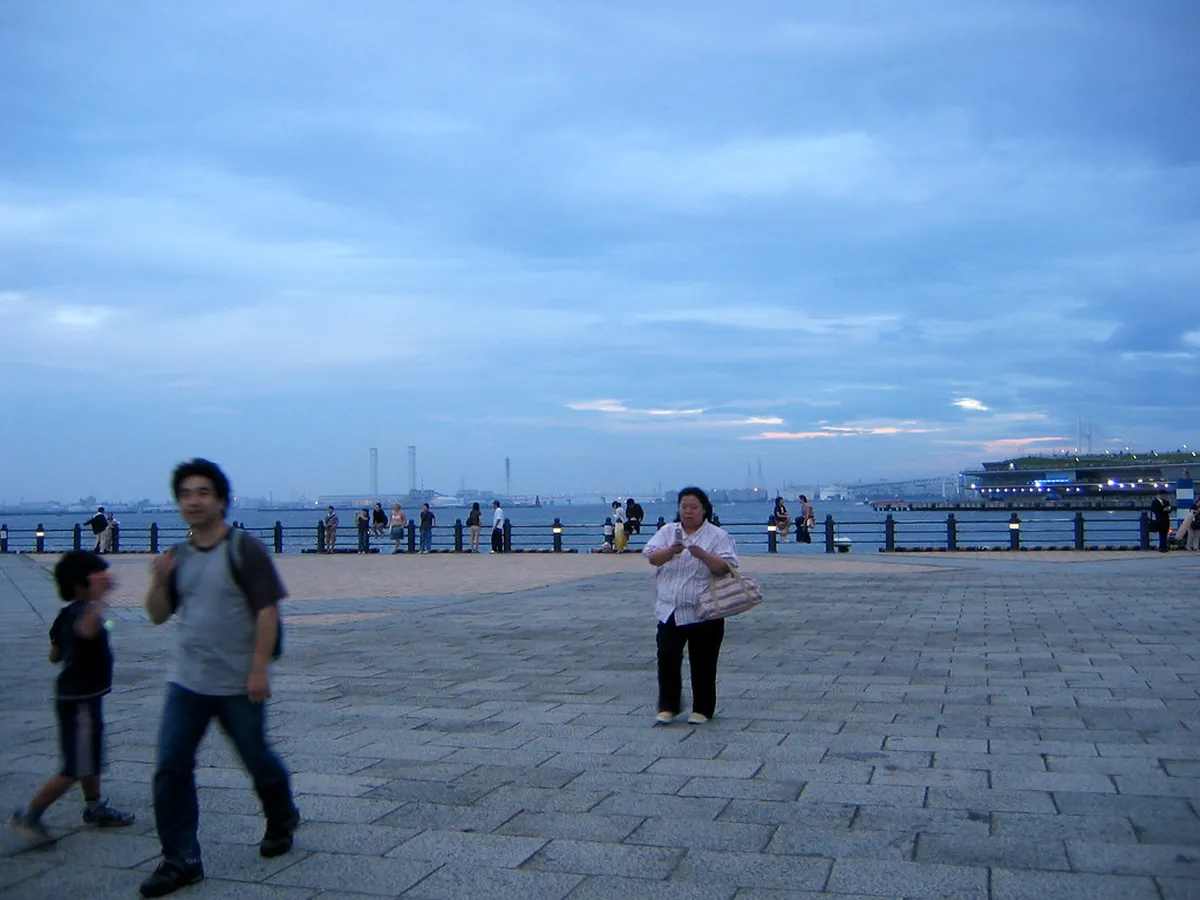
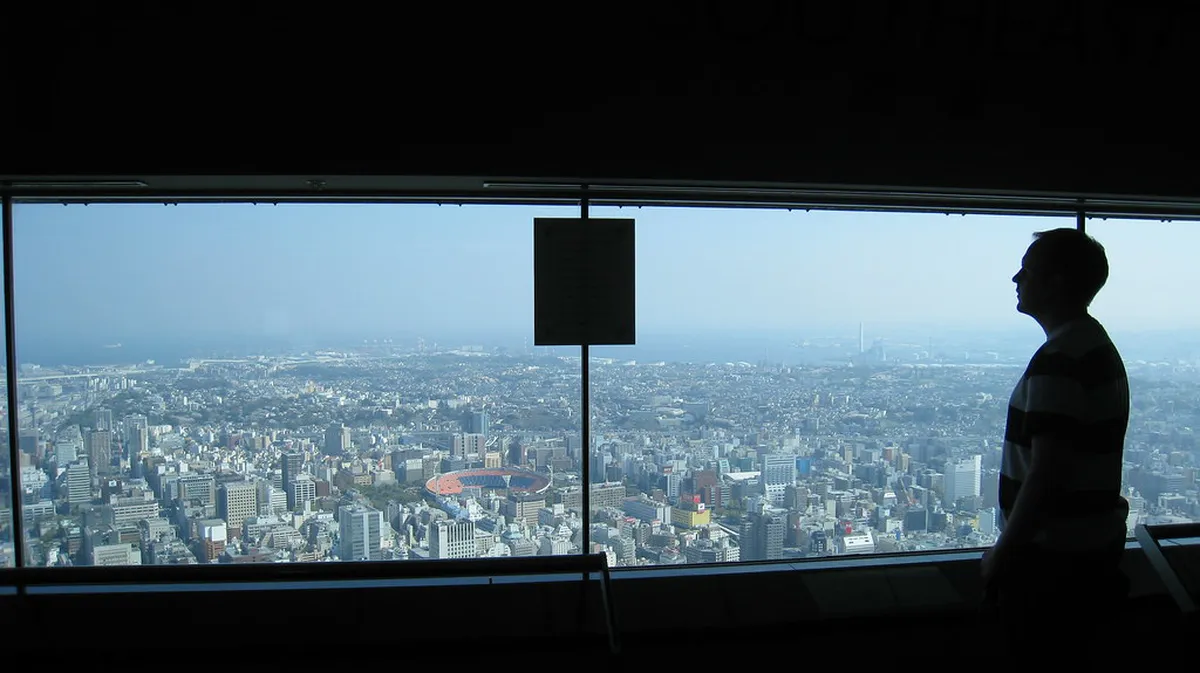
A short walk from the tents leads to Yamashita Park's waterfront promenade, an easy way to walk off a beer or two along the bay. For more no-cost stops nearby, the 12 Best Free Things to Do in Yokohama (2026) guide covers that route. Chinatown sits close enough for a second stop and keeps its own separate calendar, covered in the Yokohama Chinatown Festivals: 2026 Spring Festival Guide guide. If you're deciding whether the whole trip is worth planning around, the Is Yokohama Worth Visiting? Honest 2026 Travel Guide guide weighs the city's highlights against day-trip alternatives. Outside beer season, the same plaza hosts winter light displays covered in the Yokohama Winter Illuminations: Best Spots, Dates & Walking Map (2026 Guide) guide. Pairing an afternoon at the tents with an evening walk along the harbor turns one event into a full day out.
How Yokohama's Oktoberfest Compares to Other Japan Festivals
Tokyo hosts its own German-style beer festivals in Hibiya Park and Shiba Park each year, both set up as park-lawn events rather than a dedicated warehouse plaza. Yokohama's version stages directly on the Red Brick Warehouse plaza, working the harbor and the Meiji-era brick buildings into the setting instead of open grass. That distinction matters most in the evening, when brass sets and harbor lights give the plaza a different feel than a city-park lawn. Neither comparison is about which event is better, only which format matches the trip you're planning. Yokohama's official visitors guide covers the city's other seasonal draws too. Summer brings the Yokohama Fireworks Festival 2026: Night Flowers Schedule & Viewing Guide to the same waterfront. Spring shifts attention to Cherry Blossom Season In Yokohama 2026: 7 Essential Viewing Tips & Spots instead. Travelers extending the trip beyond Yokohama can check the Hiroshima Events 2026: Confirmed Dates and Festival Guide calendar. A 10 Unforgettable Kanazawa Festivals & Events (2026) guide covers another regional option for a longer Japan itinerary.
Frequently Asked Questions
Is Oktoberfest Yokohama cash-only?
No, most stalls now accept IC cards such as Suica or Pasmo alongside cash. Keep some cash on hand for the glass deposit, in case a card terminal is down.
Are children allowed at the festival?
Yes, the event runs family-friendly during the day, with the harbor plaza open for browsing outside the main tent hours. Evenings shift toward a livelier, adults-focused tent atmosphere with the brass bands and full benches, so daytime visits suit families best.
Can you bring your own food or drink?
Generally no. Outside food and drink are discouraged so the on-site vendors and breweries stay the focus of the event.
Is the festival covered if it rains?
Yes, the main large tent provides rain protection for seating and the beer counters. Some food stalls and overflow seating sit out on the open plaza, so pack a layer for cooler autumn evenings.
How much should you budget for a visit?
Plan for the plaza entry fee, historically in the ¥300–¥500 range, plus a refundable glass deposit of around ¥1,000 for your first beer. Add typical festival pricing for each additional drink and plate, which runs higher than a casual restaurant meal elsewhere in the city.
Do you need to reserve a table in advance?
The festival does not consistently publish an advance reservation option, so plan to arrive early on weekend evenings. Treat weekday afternoons as the reliable, low-effort choice for guaranteed seating. Check the official event page closer to your travel dates for that year's group reservation policy.
Is there anything for visitors who don't drink alcohol?
Yes. Non-alcoholic drinks are typically available at the same counters as the beer, so non-drinkers can still enjoy the food and the live brass music inside the entry fee area.
Free: The Yokohama Essentials guide
Top things to do, where to stay, a perfect day plan, getting around, and the best time to go — a Yokohama mini-guide you can take offline.
You might also like


Continue reading
More guides you'll find useful


