Hirosaki Yakitori Bars: Kajimachi's Best Izakaya, Skewers, and Senbero Guide
Plan a night at Hirosaki's yakitori bars, from Kajimachi's Tori Fuji to budget senbero spots, with 2026 prices, hours, and local etiquette.
On this page
Last updated July 2026, this guide maps Hirosaki's yakitori bars around the Kajimachi nightlife strip and Dote-machi, the street that ties the district together. Small standing izakaya cluster along these blocks near Chuo-Hirosaki Station, serving grilled chicken skewers alongside local sake drawn from Mount Iwaki's water. Chase the senbero drinking-for-under-1,000-yen tradition here, or opt for a refined skewer counter instead.
Kajimachi and Dote-machi: Hirosaki's Evening Food District
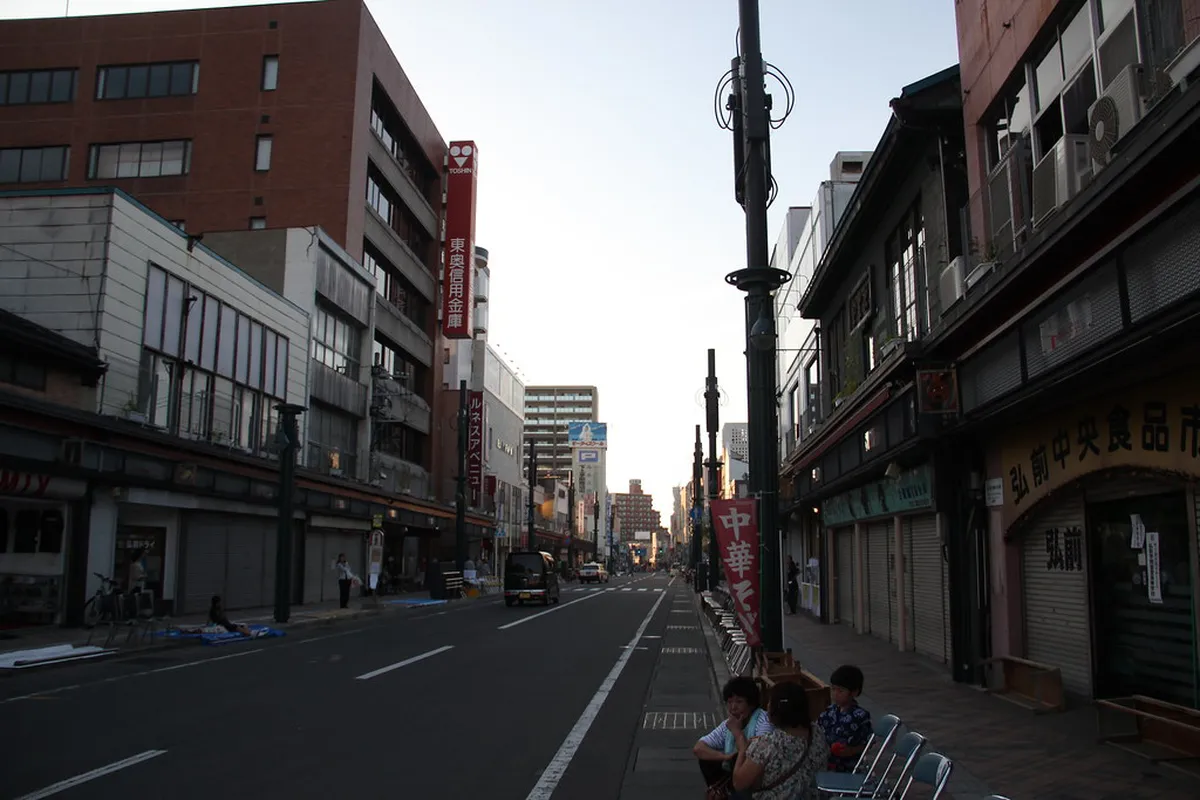
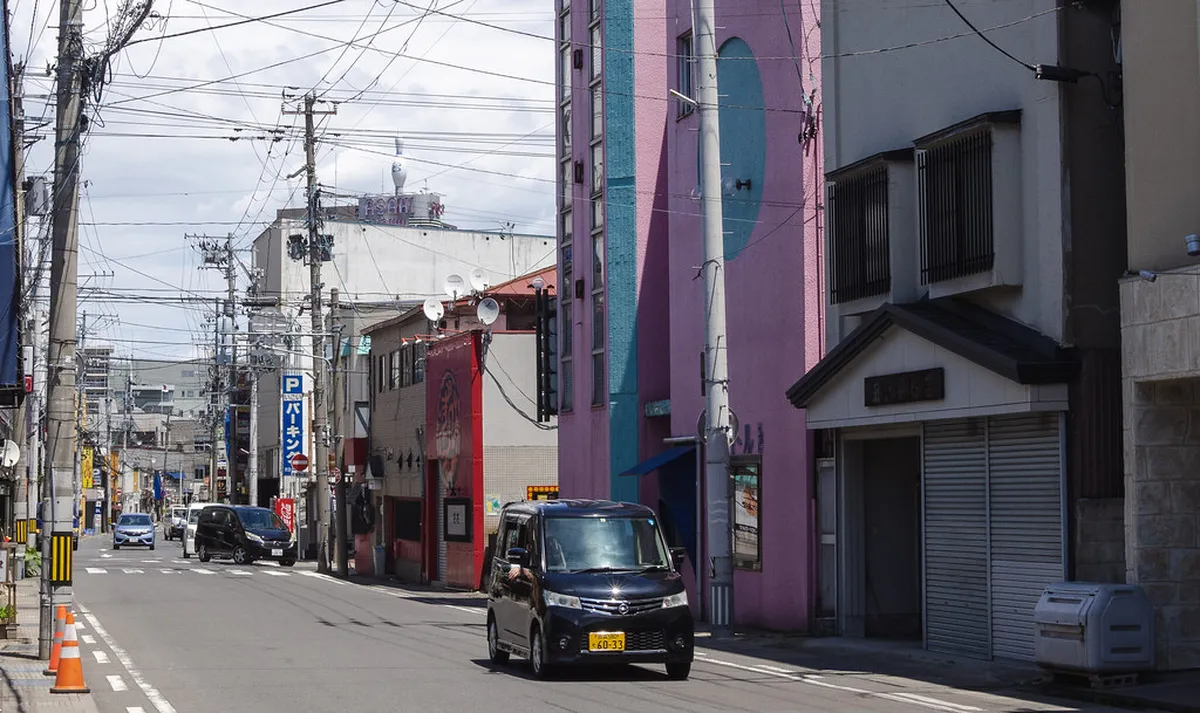
Kajimachi is the alley at the center of Hirosaki's evening food scene. Small yakitori bars and standing izakaya pack its narrow lanes, and many seat fewer than a dozen guests. Dote-machi runs alongside it as the main street that ties the district together. It links the bar-hopping routes back toward Chuo-Hirosaki Station and gives the area a clear main-street anchor. Shops and counters along both streets open in the early evening, once the daytime crowd thins out. Yakitori itself covers skewered, grilled chicken parts, from thigh and skin to cartilage and tsukune meatballs, though the exact lineup varies shop to shop. Local sake breweries draw water from Mount Iwaki and the Shirakami Mountains, and that water shapes the sake poured alongside grilled chicken skewers here. See the Hirosaki food overview for the wider dining scene. Dishes specific to the region get their own coverage in the Tsugaru cuisine guide. That Mount Iwaki water shows up again in the sake brewery tasting guide.
Where to Find Hirosaki's Best Yakitori Bars
Tori Fuji is the district's reference point for a refined skewer counter. Tabelog lists a 3.38 rating from 76 reviews, among the strongest marks for Hirosaki yakitori bars. It sits at 1-9 Oyakata-machi, about 400 meters from Chuo-Hirosaki Station. Its dining room is non-smoking, and it closes on Sundays. Budget ¥3,000 to ¥4,000 per person for skewers and drinks. There are no private rooms and no on-site parking, so plan to walk or take a taxi from lodging nearby. Yakitori Sankyu's Hirosaki Joto branch, inside the Joto district behind JR Hirosaki Station, takes the opposite approach with skewers starting at ¥39. It opened in November 2021, and the chain lists it as its only Tohoku location. Eight standard skewer varieties hold that ¥39 price, while premium cuts run ¥69 to ¥129. See the table below for hours and price signals across both spots, plus two more covered next.
| Spot | District | Price signal | Hours |
|---|---|---|---|
| Tori Fuji | Near Chuo-Hirosaki Station | ¥3,000–¥4,000 per person | 5:00 PM–11:00 PM, closed Sun |
| Yakitori Sankyu (Hirosaki Joto) | Joto district | Skewers from ¥39 | 3:00 PM–2:00 AM, open daily |
| Takoyaki and Akashiyaki Bonkura | Near JR Hirosaki Station | Senbero sets ¥1,100–¥1,300 | Tue–Sun 11:00 AM–9:00 PM, closed Mon |
| Cafe TOP | Near JR Hirosaki Station | Senbero set ¥1,000, Choi-nomi set ¥800 | Wed–Mon 7:00 AM–5:00 PM, closed Tue |
Tori Fuji or Yakitori Sankyu: How to Choose
Both bars serve grilled chicken skewers, but the experience differs sharply. Tori Fuji suits a quieter night with a non-smoking room and a strong Tabelog track record. Sankyu suits a louder night built around volume and cheap skewers. Its all-you-can-drink option covers sours, cocktails, whiskey, and shochu for ¥500 per hour, on top of a ¥300 appetizer charge.
- Choose Tori Fuji for a refined counter seat, a Tabelog-verified 3.38 rating, and non-smoking seating.
- Choose Sankyu for budget skewers from ¥39, an hourly all-you-can-drink option, and a close near 2:00 AM.
- Reservations: Tori Fuji accepts phone bookings; walk-ins are typical at casual senbero-style counters like Sankyu.
- Sankyu snacks: edamame, fried horse mackerel, or kimchi at ¥199; octopus with wasabi or crab paste at ¥299.
- Sankyu drinks: beer, Kaku Highball, or Konomori Sakaba Lemon Sour at ¥399.
- Sankyu set option: the Choizawa Set at ¥1,299, with three appetizers and two drinks.
Beyond the Skewer: Senbero-Style Izakaya Picks
Kajimachi is not only about chicken skewers. Two spots near JR Hirosaki Station round out a night of bar-hopping with different flavors entirely. Takoyaki and Akashiyaki Bonkura serves Osaka-style takoyaki and Akashiyaki, both rare finds in the wider Tohoku region. Its senbero-style sets keep the focus on casual grazing over several rounds rather than one long sit-down meal. Cafe TOP has served the same corner near the station since 1969, now run by its second-generation owner. Its senbero set is one of the cheapest full rounds covered in this guide. For a daytime pairing before the bars open, the apple pie and cider guide covers Hirosaki's other signature flavor. For a slower afternoon, check the cafes and western sweets guide. Build a full food itinerary around the soba noodle guide for a lighter meal option too.
Cafe TOP's 7:00 AM–5:00 PM hours let visitors do senbero-style drinking from morning through afternoon, before Kajimachi's evening yakitori bars open and crowds arrive.
- Takoyaki Set or Akashiyaki Set at Bonkura: ¥1,100, includes one drink, best for daytime drinking.
- Omakase Evening Drink at Bonkura: ¥1,300, includes one drink, a small side, takoyaki, akashiyaki, and yakisoba.
- Cafe TOP senbero set: ¥1,000 for two drinks plus two snacks chosen by staff.
- Cafe TOP Choi-nomi Set: ¥800 for one draft beer and three bite-sized snacks.
What Is Senbero? Drinking in Hirosaki on a Budget
Senbero combines sen, meaning 1,000, and bero, slang for drunk. Originally, the term meant getting fully drunk for ¥1,000. Its current, looser definition covers two or three drinks plus a snack for under ¥1,000. Hirosaki's senbero bars sit alongside a university population, and a wave of these cheap-drinking spots has grown around Kajimachi and the JR Hirosaki Station side of downtown in recent years. Sankyu, Bonkura, and Cafe TOP each fit this pattern with sets priced between ¥800 and ¥1,300. A quality yakitori bar like Tori Fuji runs higher, at ¥3,000 to ¥4,000 per person, since it is not built as a senbero spot. Hirosaki groups its cheap-drinking spots under an informal Aomori Senbero Bar Series, a loose local label rather than a single company. Use it as a search term when scouting beyond the four spots in this guide.
Tori Fuji's ¥3,000 to ¥4,000 per person makes it roughly four times costlier than senbero bars, explaining why budget-conscious night-crawlers gravitate toward the standing counters.
- Two drinks plus one snack, on top of any appetizer charge, for under ¥1,000.
- A set menu priced under ¥1,000, sometimes labeled a Senbero Set.
- Some guides stretch the definition to ¥1,500 and call it a higher-end senbero.
Planning Your Night: Districts, Hours, and Getting Back
Chuo-Hirosaki Station anchors the Kajimachi nightlife district, while the Joto district sits behind the main JR Hirosaki Station. Keep the two straight when mapping a route, since bars in each area cluster around a different station. Most Hirosaki yakitori bars open around 5:00 PM and close by 11:00 PM, though Sankyu runs later, until 2:00 AM. Many close on Sundays or Mondays, so check the day of the week before heading out. Walking between Kajimachi and the JR Hirosaki Station side takes some planning, since Tori Fuji alone sits roughly 400 meters from Chuo-Hirosaki Station, a separate hub from Joto. Cherry blossom season around Hirosaki Castle Travel Guide and the cherry blossom festival pulls heavy crowds into the evening. Neputa Festival in summer brings similarly heavy crowds. Arrive early during either event, since small counters like Tori Fuji seat only a handful of guests at a time. Coming straight from the airport, check the Hirosaki From Aomori: Complete Travel & Transport Guide route guide first. A base near 10 Best Things to Do and Where to Stay in Hirosaki (2026), close to Chuo-Hirosaki Station, keeps the walk back short after a night in Kajimachi. For a full day-to-night plan, pair the bar crawl with the Hirosaki attractions guide.
The Tsugaru Railway Stove Train: A Winter Grilled-Food Tradition
Each winter, Tsugaru Railway runs a stove train from December 1 through March 31. A coal stove sits inside the train between Tsugaru-Goshogawara and Tsugaru-Nakazato stations. It is not a bar, but it delivers the region's most direct grilled-food-and-drink experience outside Kajimachi. A ride costs ¥870 for the Tsugaru-Goshogawara to Tsugaru-Nakazato fare, plus a ¥500 stove train ticket. Onboard, sake and canned beer cost ¥350 each. Dried squid costs ¥500, and an attendant grills it on the coal stove and peels it for eating. The ritual of grilling and drinking on a moving train, in the middle of a Tsugaru winter, has no real equivalent among the Kajimachi bars. Plan a winter trip around this alongside evening yakitori, since the season also thins out crowds compared to cherry blossom or Neputa. Season-by-season comparisons, including cherry blossom and Neputa crowds, live in the best time to visit Hirosaki guide.
Etiquette and Mistakes to Avoid
Cash is king in Kajimachi. Tori Fuji accepts no credit cards, no electronic money, and no QR payments. Carry yen, and expect a similar policy at other small counters nearby, since card readers remain uncommon at family-run bars in this district. An otoshi, a small appetizer charge added automatically, is standard at most izakaya. It is not optional, and it is not a scam. Treat it as a cover charge that comes with a bite of food. Tipping is not expected at any of these bars, in keeping with standard practice across Japan. Smoking rules vary by spot. Tori Fuji is fully non-smoking, while older traditional counters in the district may still allow smoking. Ask before sitting down if this matters. Seating is tight at small counters, so large groups should call ahead or split across two spots rather than expect a table on arrival. Reservations help at Tori Fuji given its Tabelog following, and walk-ins work fine at the senbero-style spots.
Frequently Asked Questions
What does senbero mean in Hirosaki?
Senbero combines sen, for 1,000 yen, and bero, slang for drunk. In Hirosaki, that usually means two or three drinks plus a snack for under ¥1,000. Some spots stretch the definition to sets priced up to ¥1,500 and still call it senbero.
Is Tori Fuji cash-only?
Yes. Tabelog lists no credit cards, no electronic money, and no QR payments accepted at Tori Fuji. Bring cash for this spot, and check ahead at other small counters in Kajimachi, since the same policy is common in the district.
What's the difference between Kajimachi and Joto?
Kajimachi sits near Chuo-Hirosaki Station and holds the district's main cluster of yakitori bars, including Tori Fuji. Joto sits behind the main JR Hirosaki Station and includes Yakitori Sankyu's Hirosaki Joto branch. Treat them as two separate nightlife pockets rather than one continuous strip.
How much does a night of yakitori cost in Hirosaki?
A full round at a quality bar like Tori Fuji runs ¥3,000 to ¥4,000 per person. Senbero-style spots such as Cafe TOP or Bonkura charge ¥800 to ¥1,300 for a smaller set. Sankyu's skewers start at ¥39 each, so a night there can land close to either range depending on how much is ordered.
When does the Tsugaru Railway stove train run?
Tsugaru Railway's stove train runs every winter, from December 1 through March 31. It connects Tsugaru-Goshogawara and Tsugaru-Nakazato stations, with dried squid grilled to order onboard for ¥500.
Do Hirosaki yakitori bars get busy during festivals?
Cherry blossom season around Hirosaki Castle and the Neputa Festival both push evening crowds higher across Kajimachi. Small counters like Tori Fuji seat only a handful of guests, so arriving early or calling ahead matters more during either event.
Are reservations needed at Hirosaki yakitori bars?
Tori Fuji accepts phone reservations and carries a strong Tabelog following, so calling ahead helps on weekends or during festival season. Senbero-style spots like Sankyu, Bonkura, and Cafe TOP work well for walk-ins.
Free guide: Japan's Hidden Gems
12 under-the-radar places beyond Tokyo & Kyoto — with the best season to visit each and a local tip you won't find in the guidebooks.
You might also like


Continue reading
More guides you'll find useful