Tsukiji Outer Market Breakfast Guide 2026: Timing, Stalls, and Routes
Plan an early morning with this Tsukiji Outer Market breakfast guide: stall picks, queue timing, transport routes, prices, and market etiquette for 2026.
On this page
Last updated August 2026, this Tsukiji Outer Market breakfast guide covers what actually still works now that the tuna auction runs from Toyosu instead of Tsukiji. Roughly 400 stalls, sushi counters, and rice-bowl shops stay open from around 5:00 AM, so an early arrival still buys the freshest plate of the day. This guide breaks down the omakase queue culture, the street food crawl, and the timing that keeps either one from turning into a wasted morning.
Tsukiji Outer Market Breakfast Guide: Inner Market vs Outer Market in 2026
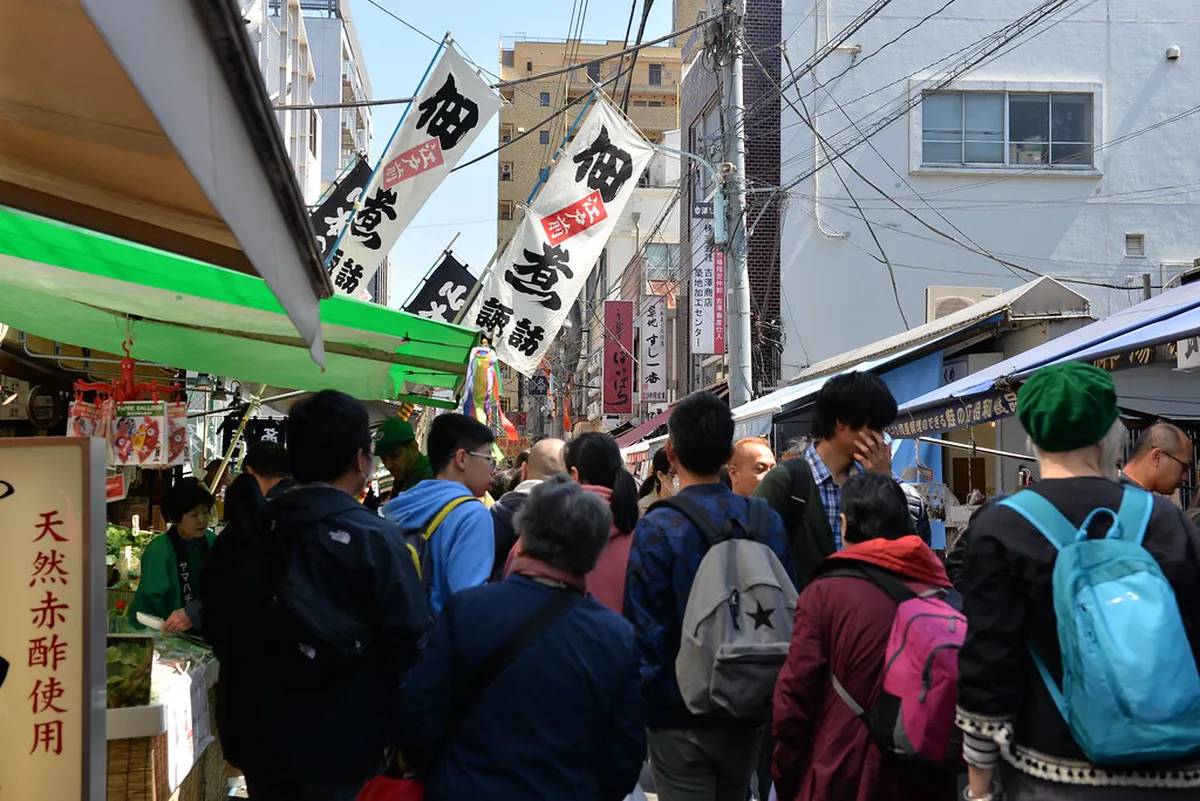
Tokyo's famous tuna auction left Tsukiji for Toyosu in October 2018, and that move still confuses first-time visitors. That wholesale auction hall now sits at Toyosu Market, several miles from the old site on Tokyo Bay. Tsukiji's Outer Market, known locally as Jogai Shijo, never moved and still runs its own early-morning food scene. Around 400 stalls fill the narrow lanes near Tsukiji Station, selling everything from sashimi bowls to cooking knives. Its Tsukiji Uogashi section alone packs in around 60 shops, where staff break down whole tuna in view of customers. Restaurants surrounding the stalls turn that same seafood into breakfast sushi and rice bowls a few steps away. For breakfast, the Outer Market wins: it opens earlier than most Tokyo food halls, serves food on-site, and sits a short walk from Ginza. Visitors chasing the old tuna-auction spectacle need Toyosu instead; visitors chasing breakfast belong here.
Omakase vs Street Food: Choosing Your Tsukiji Breakfast Style
Three breakfast styles work well at Tsukiji, and picking one before you arrive saves time in the queue. Purists want a formal counter meal from a single chef. Crawlers want variety across several small bites. Specialty diners want one hot bowl and an actual seat. Costs range from a few hundred yen for a single street bite to close to ¥4,000 for a full sushi-counter course, so budget follows the style you pick.
The recommended 8:00 AM street food crawl overlaps with the professional buyer priority window extending until 9:00 AM, so plan to yield the lanes to working merchants.
- Omakase purist: Sushi Dai's famous 13-seat counter, and the queue culture built around it, now belongs to Toyosu Market after the 2018 relocation, not the Outer Market. Purists line up by 3:00-3:30 AM for the first 5:00 AM seating, and a full chef's-choice course there runs close to ¥4,000. For a similar sit-down omakase feel without the trip to Toyosu, Outer Market visitors can try Sushi Zanmai; read the sushi counter etiquette guide before either seating.
- Street food crawler: Arrive around 8:00 AM and work the lanes stall by stall, sampling tamagoyaki, tuna skewers, and rice balls. Plan to eat standing at each counter, since walking while eating is discouraged throughout the market. This route costs less per bite and covers more ground than a sit-down meal.
- Specialty diner: Arrive between 7:00 and 9:00 AM for a seated bowl, kaisendon or oyakodon, at one of the market's small eateries. You trade some flexibility for a table and a hot dish, and the wait usually runs shorter than the sushi-counter lines.
Top Breakfast Bites at Tsukiji Outer Market
Five dishes define an Outer Market breakfast, and most stalls sell single pieces or small bowls, so trying several in one morning is easy. Most bites cost a few hundred to a little over a thousand yen each, cheaper than a full sit-down meal elsewhere in Tokyo. For broader context on Japanese stall food beyond Tsukiji, the Tokyo Street Food Guide 2026: 10 Essential Tips and Locations covers snacking etiquette citywide.
- Maguro (tuna): O-toro and other fatty cuts, sliced to order and usually eaten as a few pieces of sashimi or nigiri.
- Kaisendon (seafood rice bowl): Toppings typically include tuna, salmon, scallop, uni, and ikura over rice, with some counters serving it from 6:00 AM.
- Tamagoyaki (rolled omelet): A dashi-sweetened egg roll, sold plain by some shops and as a sandwich or custard-style dessert by others.
- Oyakodon (chicken and egg rice bowl): A non-seafood option of simmered chicken, scallion, and soft egg over rice, priced around ¥1,000 to ¥2,000 at specialty counters.
- Ramen and udon: Hot noodle bowls for anyone who wants a break from raw fish first thing in the morning.
Where to Eat: Maguroya Kurogin, Marukita-Don, Tsukiji Shouro, and Toritoh
These four stalls anchor most breakfast routes through the Outer Market, and each keeps different hours worth checking before you plan a stop. Maguroya Kurogin draws a fast-moving line most mornings; if it looks long, Miyake Suisan a few stalls over sells similar fresh tuna cuts with less wait. If Marukita-Don's main counter is full, its other nearby locations run the same menu. Toritoh sits toward the back of the market and gets less foot traffic than the tuna stalls, making it a reliable Plan B on a crowded morning. Across these four stalls, breakfast prices span roughly ¥1,000 to ¥2,500 for a full bowl, with individual tuna cuts priced separately by weight.

| Stall | Known For | Hours | Price |
|---|---|---|---|
| Maguroya Kurogin | Fresh-cut tuna and o-toro | Daily 7:30 AM-1:30 PM | Priced by cut |
| Marukita-Don | Omakase-don, an 11-topping seafood bowl | Daily 6:00 AM-3:30 PM | ¥2,500 |
| Tsukiji Shouro | Sweet-style tamagoyaki | Daily 6:00 AM-3:00 PM | Priced per piece |
| Toritoh | Oyakodon and karaage | Mon-Sat 5:00 AM-1:00 PM, closed Sunday | ¥1,000-¥2,000 |
Timing, Queues, and a Sample Morning Itinerary
Most Outer Market stalls open by 5:00 AM and wind down by 2:00 PM, with the heaviest breakfast crowd between 7:00 and 10:00 AM. Peak-hour crowding is worst around the tuna and rice-bowl stalls, so arriving on the earlier side of that window means shorter waits. The market closes on Sundays and national holidays, and individual shops often add their own Wednesday closures on top of that, so check the market calendar before an early trip. Arriving before 9:00 AM also matters for another reason: professional buyers get priority in the lanes until then, and stalls expect shoppers to make way.
- 8:00 AM: Arrive and get coffee at one of the retro cafes lining the outer lanes.
- 8:30 AM: Sample street food, tamagoyaki, tuna skewers, or onigiri, stall by stall.
- 9:30 AM: Browse for knives, ceramics, or dried goods to bring home.
- 10:30 AM: Sit down for kaisendon or oyakodon before the late-morning crowd thins out.
Shopping Beyond Breakfast: Knives, Ceramics, and Dried Goods
Outer Market shops sell more than food. Kitchenware stalls stock professional knives, Japanese tableware, and cookware, the kind of gear used in restaurant kitchens around the city. Other counters sell dried bonito flakes, seaweed, tsukudani preserves, and Japanese pickles, easy souvenirs that pack well for the flight home. Shopkeepers are used to browsing tourists and will often explain how a knife or ingredient is meant to be used, so ask before you buy. Prices for a single knife typically run well above a market breakfast, so treat it as a separate budget line from the food crawl. For a different kind of high-end food shopping later in the trip, the depachika food halls guide covers department-store basement markets.
Plat Tsukiji and Namiyoke Inari Shrine: Using the Market's Visitor Hub
Plat Tsukiji, the market's information center, works like a concierge desk for visitors. Staff hand out maps, point you toward specific stalls or ingredients, and rent coin lockers for bags too large to carry through the narrow lanes; strollers can be checked there for ¥500. Plat Tsukiji is a useful first stop right after you arrive, before the lanes fill with the peak breakfast crowd. A short stop at Namiyoke Inari Shrine, a few minutes from Plat Tsukiji, adds a quiet break between food stops. Look for the shrine's large lion-head carving near the entrance, a landmark most visitors stop to photograph.
After Breakfast: Hama-rikyu Gardens and Tsukiji Hongan-ji Temple
Once the market winds down, two nearby stops extend the morning without much extra walking. Hama-rikyu Gardens sits close to the market and offers strolling paths and a tea house beside its tidal ponds and seasonal flowers. Note that water bus service from the gardens to Asakusa is currently suspended, so plan a return route by train or on foot instead. Tsukiji Hongan-ji Temple, built in 1934 in a Buddhist temple design with Hindu-influenced architecture, sits within walking distance and stays open to visitors year-round. Both make a calmer contrast to the market's narrow, crowded lanes.
Getting to Tsukiji Outer Market: Transport Routes and Travel Times
Tsukiji Outer Market sits in Chuo City, close enough to Ginza to combine with a dinner reservation later the same day; for evening options, see the 10 Essential Chapters for Your Tokyo Food Guide 2026 or the 15 Best Restaurants In Tokyo 2026: The Ultimate Foodie Guide roundup. Several train lines reach the market directly, and the routes below cover the most common starting points. Higashi-ginza Station, served by the Hibiya and Asakusa lines, is another direct option a similar distance from the market entrance. Trains within central Tokyo typically cost between ¥180 and ¥280 one-way depending on distance and line.
| Starting Point | Route | Approx. Travel Time |
|---|---|---|
| Ginza | Walk | About 10 minutes |
| Shinjuku Station | Toei Oedo Line direct to Tsukijishijo Station | About 21 minutes |
| Tokyo Station | JR Yamanote Line to Yurakucho, transfer to Tokyo Metro Hibiya Line to Tsukiji Station | About 22 minutes |
| Shimbashi Station | Walk | About 20 minutes |
| Haneda Airport | Limousine bus to Ginza, then walk | About 35 minutes plus the walk |
Market Etiquette and Mistakes to Avoid
Tsukiji's alleys stay narrow and full of working buyers before 9:00 AM, so a few etiquette points matter more here than at a typical food hall. None of these rules are unique to Tsukiji, but the market's narrow lanes make them easy to break without noticing.
- Eat where you buy: finish food at the stall or its designated eating space, since walking while eating bothers other shoppers and staff.
- Carry cash: many stalls do not take cards, so bring yen in small bills and coins.
- Skip large luggage: store bags in a coin locker, or check strollers at Plat Tsukiji, instead of wheeling them through the lanes.
- Ask before photographing a shop or its products, and never touch raw seafood on display; some shops post no-photo signs.
- Give way to professional buyers in the morning hours, and do not bargain on posted prices.
Frequently Asked Questions
Is the tuna auction still happening at Tsukiji in 2026?
No. The wholesale tuna auction relocated to Toyosu Market in October 2018 and has stayed there since. Tsukiji's Outer Market kept its retail stalls, sit-down restaurants, and early-morning breakfast scene.
What's the difference between Tsukiji and Toyosu?
Toyosu Market, which opened in 2018, houses the wholesale tuna auction and the professional trading floor. Tsukiji's Outer Market kept its retail stalls, street food, and sit-down restaurants, and remains the better stop for a casual breakfast.
What time should you arrive at Tsukiji Outer Market for breakfast?
For street food or a seated bowl, arriving between 7:00 and 9:00 AM covers most stalls before the late-morning crowd. For a formal sit-down omakase at Toyosu's Sushi Dai instead, plan to line up by 3:00-3:30 AM for the first 5:00 AM seating.
Is Tsukiji Outer Market open on Sundays?
Most shops close on Sundays and national holidays. Some also take an extra Wednesday off each month, so check the market calendar before planning an early visit.
Can you eat breakfast at Tsukiji Outer Market without eating raw fish?
Yes. Toritoh serves chicken-based oyakodon, and several stalls sell tamagoyaki, ramen, and udon for anyone skipping seafood at dawn.
Do you need a reservation for breakfast at Tsukiji Outer Market?
Most Outer Market stalls and rice-bowl counters are walk-in only. Toyosu's Sushi Dai is also walk-in, filled by physically lining up rather than booking ahead, which is why arrival time matters more than a reservation.
Free: The Tokyo Essentials guide
Top things to do, where to stay, a perfect day plan, getting around, and the best time to go — a Tokyo mini-guide you can take offline.
You might also like
Continue reading
More guides you'll find useful