7 Best Places to Eat in Yoshino: Restaurants, Teahouses and Local Specialties (2026)
Where to eat in Yoshino, Nara: 7 spots for kakinohazushi, kudzu sweets, and tofu, mapped by elevation from Shimo Senbon to Naka Senbon. Updated for 2026.
On this page
Last updated July 2026, this guide to where to eat in Yoshino sorts meal options by elevation and by the hour. Food choices thin out fast above the main slope, so expect persimmon-leaf sushi, kudzu sweets, and tofu kitchens clustered in Shimo Senbon and Naka Senbon. Almost nothing stays open in Kami Senbon or Oku Senbon outside cherry blossom season, so plan lunch before you climb that high.
The Flavors of Yoshino: Kakinohazushi, Kuzu, and Ayu
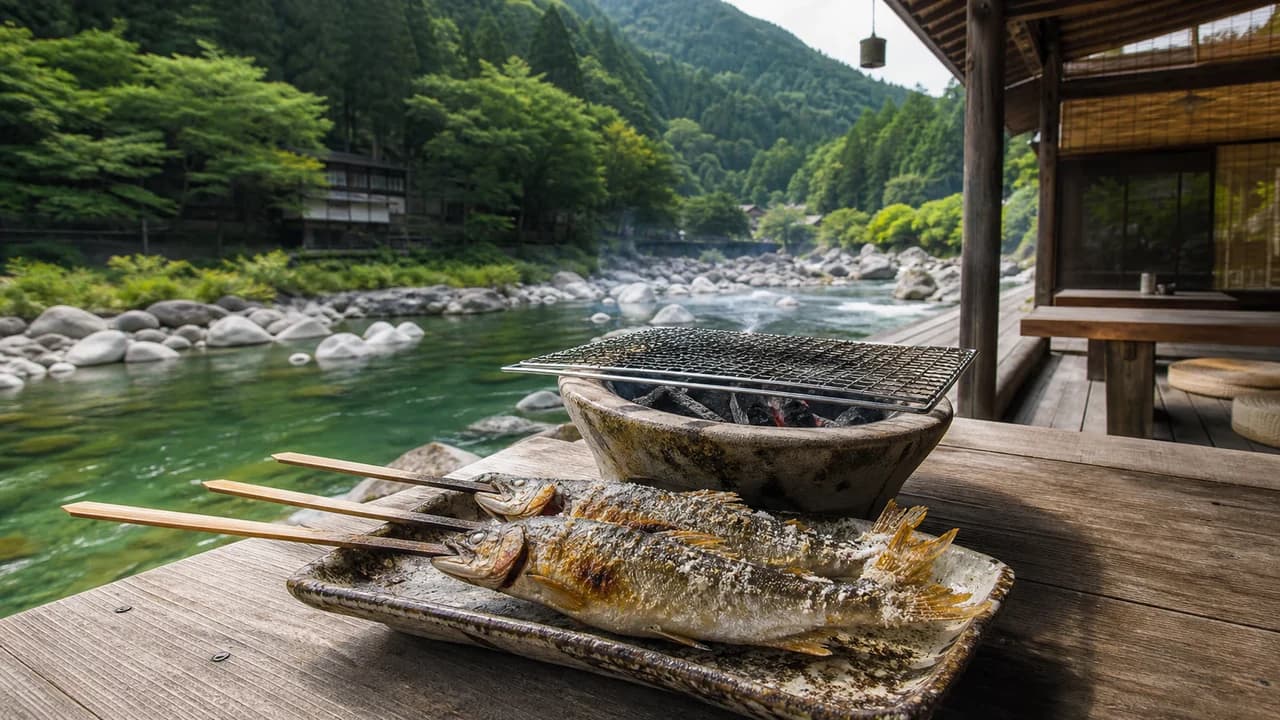
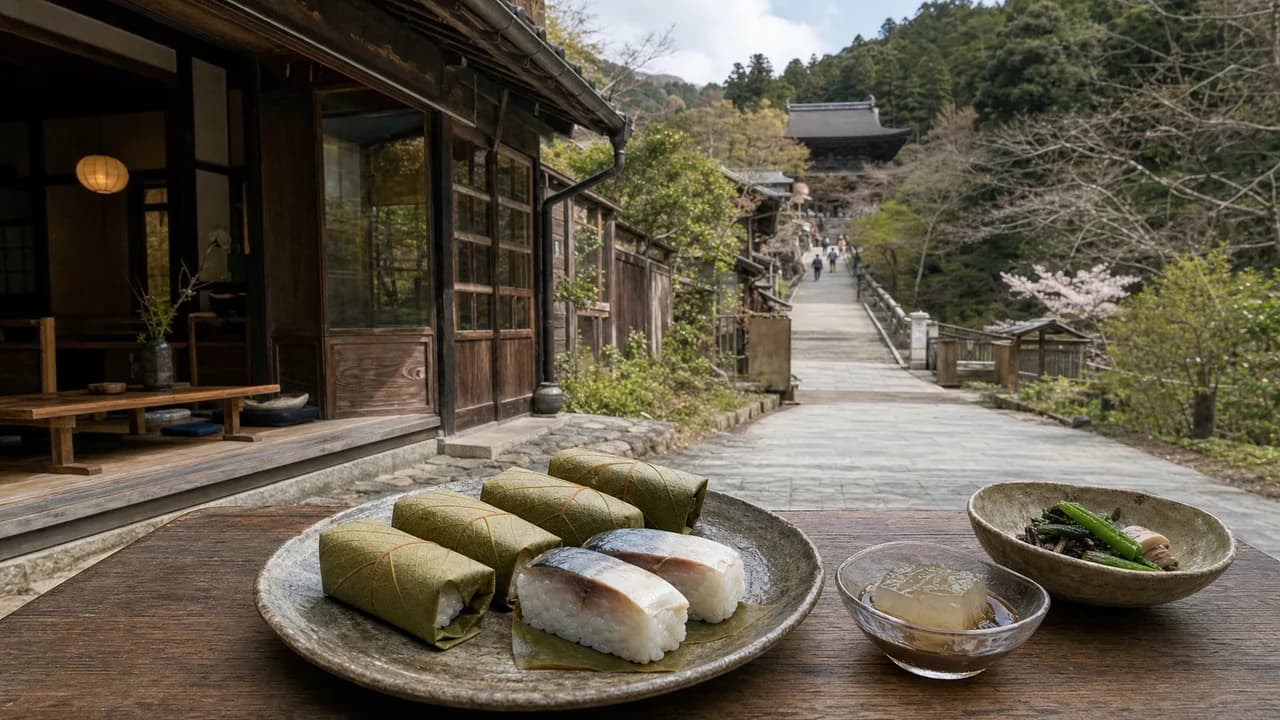
Three ingredients define what to eat in Yoshino, and knowing them first makes ordering easier. These three ingredients turn up on nearly every menu, from station bento counters to sit-down teahouses further up the mountain. Kakinohazushi wraps vinegared rice and cured fish in a persimmon leaf, a preservation method from before refrigeration. Unwrap the leaf before eating: it adds aroma to the rice but is not part of the meal. Kuzu, a starch made from kudzu root, turns into kuzukiri noodles or kuzumochi jelly, usually served cold with black sugar syrup. Hand-refined kudzu starch and the kuzukiri-making process get their own rundown in the Yoshino kuzu food guide. Ayu, or sweetfish, is grilled whole and salted, a summer specialty from the rivers around Nara. Expect it mainly through the warmer months, since ayu runs seasonally. Background on the fish itself lives in the Ayu Sweetfish in Yoshino: Where to Eat Nara's Summer River Fish. Some main-street restaurants also serve wild boar hot pot, another Nara specialty, though it turns up less often than kakinohazushi. Order kakinohazushi to go if the schedule is tight, and save the kudzu dessert for a seated break later. A wider ingredient list beyond these three sits in the pillar Yoshino food guide.
Eating by Elevation: Shimo, Naka, Kami, and Oku Senbon
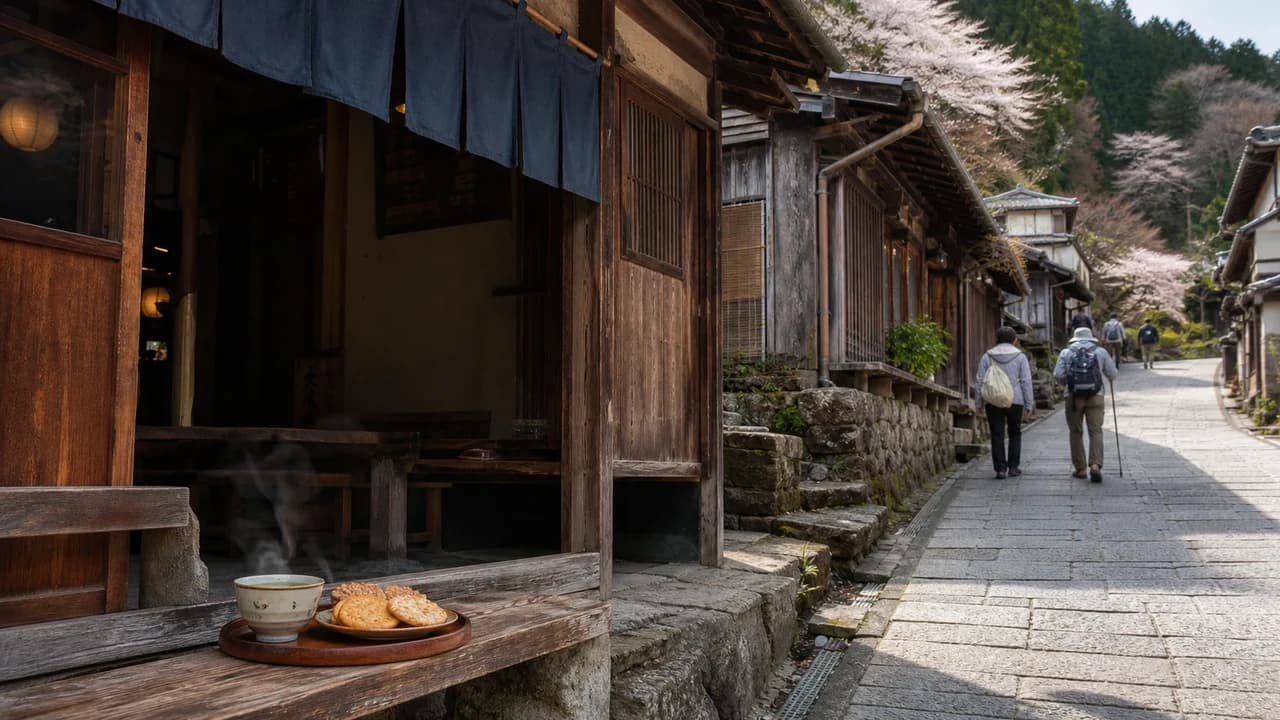
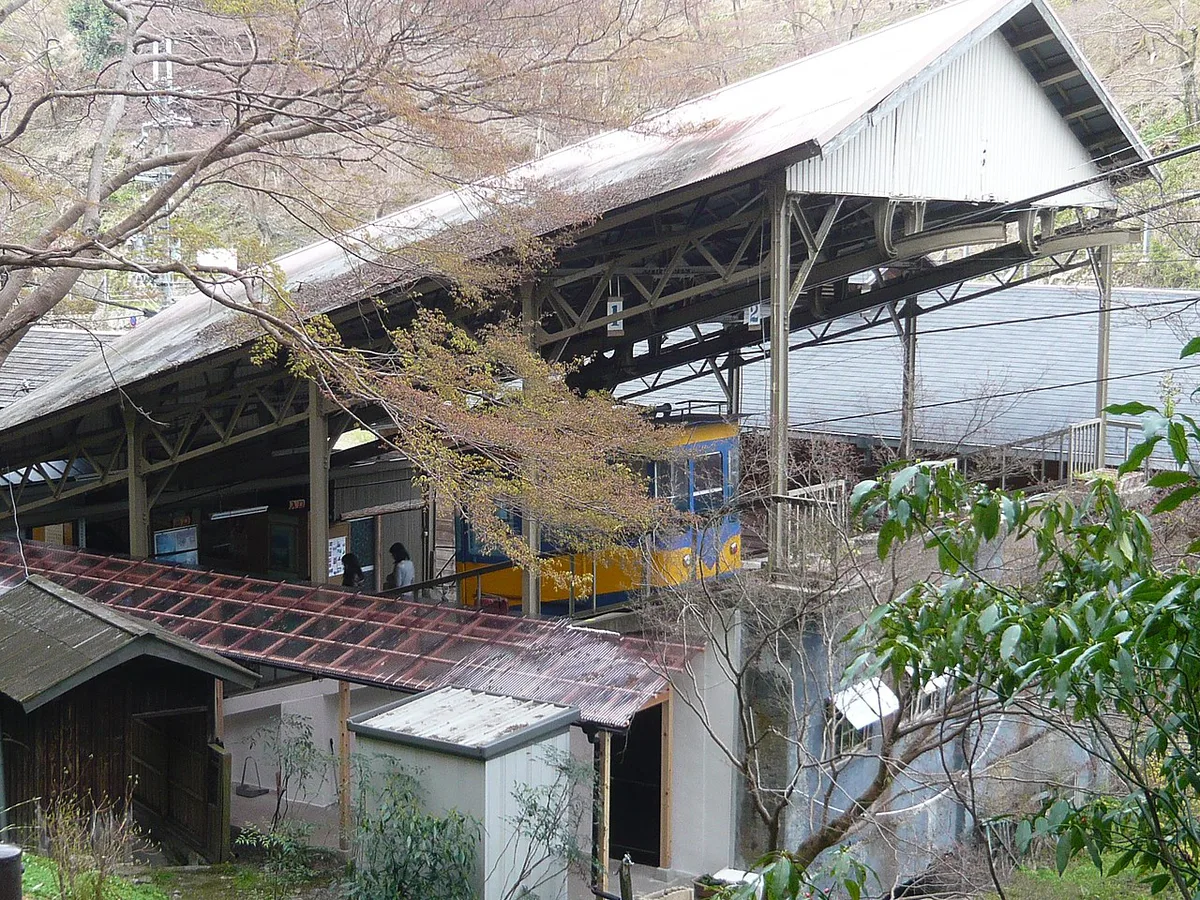
Yoshino divides into four dining zones that roughly match its four cherry-blossom tiers. Near Yoshino Station and Shimo Senbon at the base, quick soba, udon, and street-food counters cluster together for fast meals. Teahouses and rest stops line the walk up toward Naka Senbon, spaced out for hikers pausing between temples. The Yoshino's Four Cherry-Blossom Tiers Explained (2026) breaks down the full hiking layout; this section focuses on food. Naka Senbon, reached on foot or via the Yoshino Ropeway: Japan's Oldest Cable Car (2026), holds the teahouses and specialty kudzu shops near Kinpusen-ji Temple. Kami Senbon and Oku Senbon carry almost no restaurants outside peak cherry blossom season. Vending machines and small rest huts are the only fallback in Kami Senbon, and even those are not guaranteed. Hikers heading that high should buy food at the base first. Carry water and a packed snack past Naka Senbon regardless of the season. Shimo Senbon keeps the highest concentration of options even outside normal meal hours. Time lunch before the climb into Naka Senbon rather than after, since options thin out fast.
| Tier | What's There | Practical Note |
|---|---|---|
| Shimo Senbon (base, near Yoshino Station) | Soba, udon, street-food counters, quick bento | Densest cluster of fast options; good for early or late meals |
| Naka Senbon (near Kinpusen-ji Temple) | Teahouses, kudzu specialty shops, tofu restaurants | Best area for a proper sit-down meal near the temple |
| Kami Senbon | Very few options; mostly vending machines or closed stands | Reliable food mainly during peak cherry blossom season |
| Oku Senbon | Essentially no food | Pack supplies at the base before climbing this high |
7 Best Places to Eat in Yoshino, From the Station to the Temple
Most sit-down lunches in Yoshino run ¥1,000 to ¥2,500, while a full ryokan dinner costs significantly more and usually requires advance booking. The seven options below cover the mountain from the station up to Kinpusen-ji Temple, mixing quick counters with proper sit-down stops. Each entry notes roughly where it sits on the mountain, so build a route rather than backtrack for food. Work from the bottom up, since Shimo Senbon options open earliest in the day.
- Izasa Honten — Kakinohazushi Near the Station
- Izasa Honten is a long-running kakinohazushi specialist named across Yoshino restaurant listings, best known for persimmon-leaf sushi sold as bento or individual pieces.
- Tabelog lists typical spending here around ¥1,000 to ¥1,999 per person.
- Confirm ahead whether a given visit is take-out only or includes sit-down seating, since availability shifts by season.
- Funagata Ya — Traditional Sweets by Yoshino Station
- Funagata Ya sits about 536 meters from Yoshino Station and specializes in traditional Japanese sweets with an organic focus.
- Tabelog lists typical spending here under ¥999 per person, making it one of the cheaper stops near the station.
- It works well as a quick stop right after arriving by train, before heading further into Shimo Senbon.
- Aoki Saketen — Sake and Shochu Near the Station
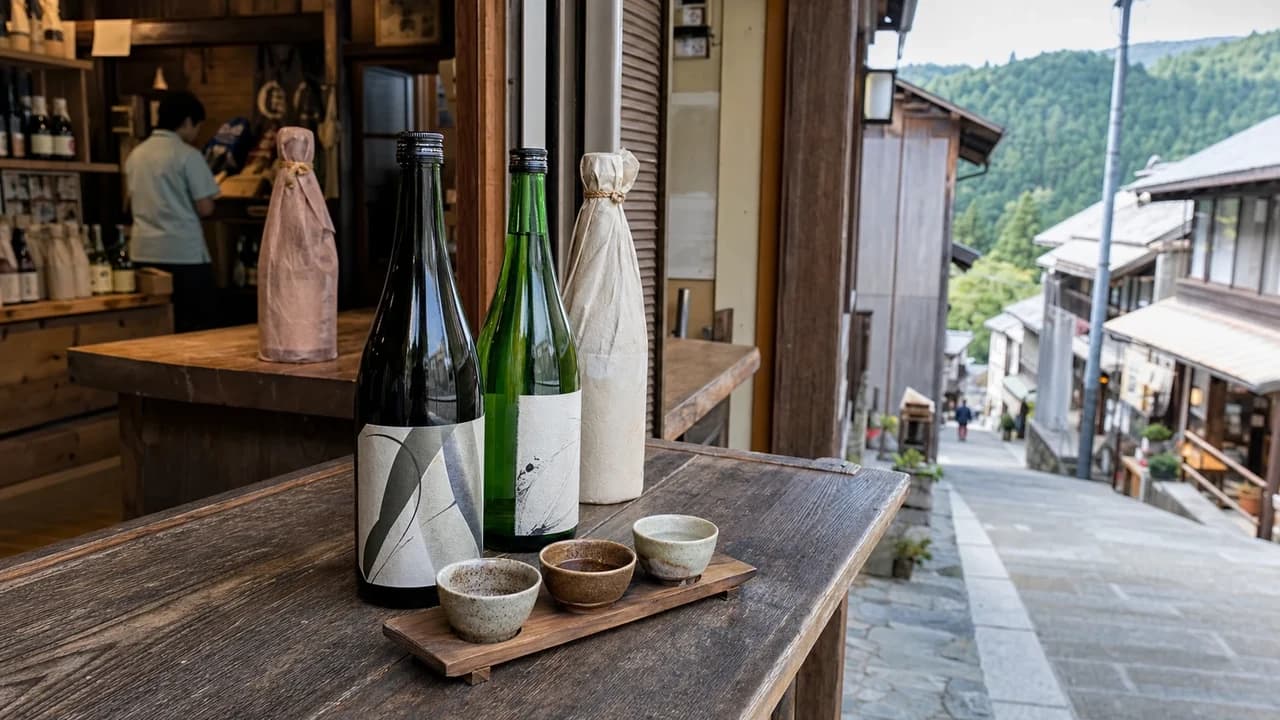
- Aoki Saketen is a sake and shochu bar roughly 935 meters from Yoshino Station, good for pairing a local pour with a light bite.
- Tabelog lists typical spending here under ¥999 per person for a simple round.
- Pair a stop here with the Yoshino Sake Breweries: A Visitor's Guide to Miyoshino and Hanatomoe (2026) for the wider regional brewing scene.
- Nakai Shunpudo — Kudzu-Making Demonstration and Tea
- Nakai Shunpudo is a kudzu specialist shop where staff hand-make kuzukiri, then serve the results with a cup of tea.
- Seating looks out over the mountain, and the demonstration is part of the draw, so confirm current demonstration times before visiting.
- It pairs naturally with the Yoshino teahouses and chaya guide for other tea-stop options nearby.
- Tofu Chaya Hayashi — Tofu Near Kinpusen-ji Temple
- Tofu Chaya Hayashi is a family-run restaurant near Kinpusen-ji Temple, serving fresh tofu dishes alongside meat options for other travelers.
- A nearby kitchen has run tofu-making demonstrations in the past; check current status before planning a visit around one.
- Its Naka Senbon location makes it a natural lunch stop for anyone visiting the temple.
- Yoshinokuzu Yasokichi — Teahouse Over the Valley
- Yoshinokuzu Yasokichi is a teahouse just past the Yoshino Ropeway, over the Yoshinoyama Ohashi bridge, with tables set above the valley.
- Order a simple matcha-and-sweets set and expect a 30 to 45 minute stop, the standard pace for a proper kuzu dessert here.
- The valley view makes it a natural break point between temple visits rather than a full meal stop.
- Hanasaka Organic Cafe — Vegetarian and Vegan Option
- Hanasaka Organic Cafe is the vegetarian and vegan option most cited in Yoshino restaurant coverage, built around organic produce.
- Confirm current hours and menu status before visiting, since small mountain cafes adjust offerings by season.
- It rounds out the list for travelers pairing a temple visit with a plant-based lunch.
Seasonal Dining: Cherry Blossom Season vs. the Off-Season
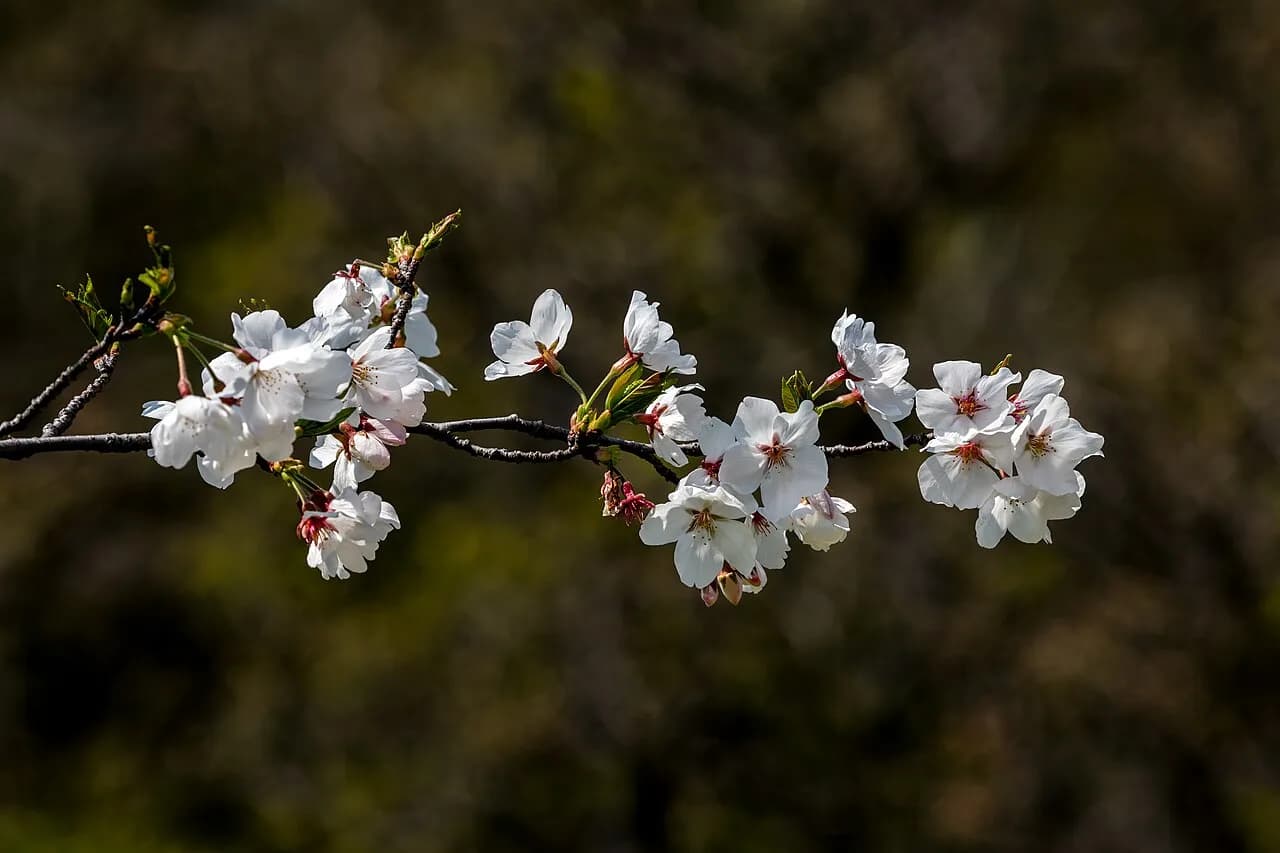
April brings the heaviest crowds, and temporary food stalls, called yatai, appear along the main slope for the bloom. The Yoshino Cherry Blossom Food: What to Eat on Mt. Yoshino covers what those stalls typically sell and where they cluster. During peak bloom, queues at popular kakinohazushi counters can run past 90 minutes. Buying a bento at the base before climbing avoids most of that wait. Autumn draws hikers for the fall foliage with lighter crowds than cherry blossom season, though the same early closing times still apply. Outside both peak windows, expect a quieter mountain with far fewer stalls and shorter restaurant hours. Check individual shop status ahead of a summer or winter visit, since some close for short stretches in the quietest months. Bloom timing itself sits in the Yoshino Cherry Blossoms: 2026 Viewing Guide. Shoulder-season comparisons for crowd levels live in the Best Time to Visit Yoshino (2026) guide.
During cherry blossom season, kakinohazushi queues can exceed 90 minutes, while most shops close by 4:00 PM or 5:00 PM—eating by 2:00 PM avoids both waits and the afternoon closing rush.
Practical Tips: Hours, Reservations, and Payments
Yoshino is not a nightlife destination, and most shops close by 4:00 PM or 5:00 PM, tracking the last ropeway and train departures. Do not expect a restaurant to stay open after 6:00 PM without a ryokan dinner reservation already booked. Family-run Ryokan Kato, close to the ropeway, and other Yoshino ryokan properties typically require dinner bookings arranged in advance as part of a stay. Card acceptance is inconsistent, particularly near the ropeway station, so carry cash as backup. Bring small bills, since some counters near the station and ropeway are not set up for large notes. Reservations are rarely needed for the counters and teahouses listed above. A ryokan dinner should be booked several days ahead during peak season. Trains from Osaka and Kyoto typically require at least one transfer to reach Yoshino Station. The Yoshino from Osaka Kyoto guide lays out routes and timing.
| Topic | What to Expect |
|---|---|
| Closing time | Most shops close by 4:00 PM or 5:00 PM, tracking the last ropeway and train departures |
| Dinner | Reliable only with a booked ryokan stay; walk-in dinner after 6:00 PM is not guaranteed |
| Payment | Carry cash; card acceptance is inconsistent, especially near the ropeway station |
| Reservations | Rarely needed for counters and teahouses; book a ryokan dinner several days ahead in peak season |
| Getting there | Trains from Osaka and Kyoto typically require at least one transfer to reach Yoshino Station |
Pairing Meals with a Yoshino Itinerary
A single day works well if lunch is timed around the walk from Shimo Senbon up to Naka Senbon. The Yoshino one day itinerary lays out a full schedule with lunch and temple stops included. Pair a mid-mountain meal with a stop at Kinpusen-ji Temple and the other sites on the Yoshino attractions guide. A sake stop at Aoki Saketen works well paired with a late lunch near the station before heading up the mountain. Morning visitors to Kinpusen-ji Temple can loop back down to Shimo Senbon for a later lunch instead. Save the ropeway ride for after eating, since lines build once the temple crowds move through midday. Building the day around one main sit-down meal, with grab-and-go bento for the rest, keeps pace with the mountain's early closing kitchens. Plan lunch before 2:00 PM when possible, since options thin out fast later in the afternoon.
Choosing Kakinohazushi: Izasa or Hiraso?
“Yoshino” on a shop label can mean Yoshino District, not the Yoshinoyama sightseeing slope. Izasa Honten is in Kamikitayama Village, far south of Yoshino Station. It suits drivers following Route 169 toward Odaigahara, rather than hikers walking between the ropeway and Kinpusen-ji.
Hiraso Yoshino Honten is in Iigai, Yoshino Town, beside the Yoshino River. It is about a 16-minute walk from Yoshino-Jingu Station or an 18-minute walk from Yamato-Kamiichi Station. The shop has takeout sales and a dining room serving local sushi. Its selections include kakinohazushi, ayu sushi, and assorted meals using regional ingredients.
For a Yoshinoyama hiking day, buy any chosen box before climbing beyond Naka Senbon. Mackerel is the traditional kakinohazushi filling, while salmon offers a milder alternative. Remove the persimmon leaf before eating. Soy sauce is usually unnecessary because the cured fish and seasoned rice are already flavorful. Follow the shop’s storage guidance, especially during warm weather.
For trip-planning details, see Yoshino – Wikivoyage.
Frequently Asked Questions
What is kakinohazushi and where should you try it in Yoshino?
Kakinohazushi is vinegared rice and cured fish wrapped in a persimmon leaf, a preservation method that predates refrigeration. Izasa Honten is one of the names most associated with it in Yoshino restaurant listings. Unwrap the leaf before eating; it is not part of the dish.
Can you find food near Kami Senbon or Oku Senbon?
Options thin out sharply above Naka Senbon. Outside cherry blossom season, Kami Senbon and Oku Senbon carry almost no restaurants. Buy a bento at the base in Shimo Senbon before climbing that high.
Are restaurants in Yoshino open for dinner?
Most shops close by 4:00 PM or 5:00 PM, timed to the last ropeway and train departures. A booked ryokan dinner is the reliable after-dark option. Confirm hours before planning a regular restaurant dinner.
Are there vegetarian or vegan options in Yoshino?
Hanasaka Organic Cafe is cited as a vegetarian and vegan option in Yoshino restaurant coverage. Tofu Chaya Hayashi near Kinpusen-ji Temple also serves tofu dishes alongside its meat options. Confirm current hours before visiting either, since small mountain cafes adjust seasonally.
How much does a meal in Yoshino cost?
Most sit-down lunches run ¥1,000 to ¥2,500. A full ryokan dinner costs significantly more and typically requires advance booking through the ryokan itself.
Do restaurants near Kinpusen-ji Temple get crowded at lunch?
Naka Senbon restaurants near Kinpusen-ji Temple get busiest around midday, especially during cherry blossom season. Arriving before noon or after 1:30 PM usually means a shorter wait. Outside peak season, the same restaurants are far quieter.
Do you need a reservation to eat in Yoshino?
Most counters, teahouses, and bento shops listed here take walk-ins. A ryokan dinner is the exception and should be booked in advance.
What should first-time visitors know about eating kakinohazushi?
Kakinohazushi arrives wrapped in a persimmon leaf that is meant to be removed, not eaten. It travels well, which makes it a practical lunch for a day of walking between temples.
What is the cheapest way to eat in Yoshino?
Grab-and-go bento and sweets counters near Yoshino Station are the cheapest options, several under ¥999 per person. A sit-down teahouse dessert costs more but still stays within the ¥1,000 to ¥2,500 range typical of Yoshino lunches.
Is Yoshino easy to visit as a day trip from Osaka or Kyoto?
Yes, Yoshino works well as a day trip if lunch is planned around the train and ropeway schedule. Trains from Osaka or Kyoto typically involve one transfer to reach Yoshino Station.
Free guide: Japan's Hidden Gems
12 under-the-radar places beyond Tokyo & Kyoto — with the best season to visit each and a local tip you won't find in the guidebooks.
You might also like

Continue reading
More guides you'll find useful