Ayu Sweetfish in Yoshino: Where to Eat Nara's Summer River Fish
Plan a trip around ayu sweetfish in Yoshino: where to eat salt-grilled river fish, the June-September season, and how to eat one without the bones.
On this page
Last updated July 2026, this guide covers ayu sweetfish in Yoshino, the salt-grilled river fish that defines Nara's summer table. Riverside stalls and ryokan around Yoshino grill it whole once the Yoshino River season opens each June. Locals compare its aroma to watermelon and cucumber, and the sections below cover where to eat it and how to handle the bones.
Ayu Sweetfish in Yoshino: The Queen of Clear Rivers
Ayu (Plecoglossus altivelis) carries a nickname in Japanese, seiryu no jouou, or queen of clear rivers, because the species only thrives in clean, fast-moving water. Cold, oxygen-rich currents from the Yoshino River keep conditions right for that growth, staying clean through the fishing season. Ayu graze on algae growing on submerged rocks, and that diet produces the fish's signature scent, often described as watermelon or cucumber. Unlike the ayu associated with Gifu's Nagara River or Kochi's Shimanto River, the Yoshino version is tied specifically to Nara Prefecture and the town's own river frontage. Nara is among the prefectures that have named ayu an official prefectural fish, alongside Gifu and Gunma. That designation points to how central the fish is to local food culture. Seasonal, region-specific eating is a theme Japan's official travel guide highlights across the country. Ayu sweetfish in Yoshino fits that idea closely: one dish tied to one river and one season.

What Is Ayu? Biology Behind the Sweetfish Name
Ayu is the only species in the genus Plecoglossus, related to smelt rather than salmon. Its flesh carries a natural sweetness, which is where the English name sweetfish comes from. The fish's teeth are shaped for scraping algae off submerged rocks, and that diet is directly responsible for the melon-like aroma. Adult ayu hold feeding territories and defend them aggressively, a trait anglers elsewhere in Japan exploit with a live decoy technique called tomozuri. Beyond the decoy method, ayu across Japan are also caught by fly fishing and by simple fish traps set in the current. These methods reflect just how territorial the fish becomes once it claims a patch of algae-covered rock. Most ayu live about a year, spawning once in the lower river before dying, though some individuals survive two to three years. Juveniles hatch in autumn, drift to the sea for winter, then swim back upstream each spring at about 2.5 inches long. By summer they typically reach 6 to 12 inches, the size most often served whole at Yoshino restaurants. Reports exist of ayu up to about 2 feet long, though the typical adult tops out closer to 1 foot. A landlocked relative, ko-ayu, lives year-round in Lake Biwa instead of migrating to the sea. Its spring migrants reach about 6 inches, while ko-ayu that move upstream later in the year, mostly in autumn, stay closer to 4 inches.
Wild Ayu vs Farmed Ayu
Wild ayu and farmed ayu turn up side by side on Yoshino menus, and the difference shows most in aroma and price.
| Attribute | Wild Ayu | Farmed Ayu |
|---|---|---|
| Aroma | Pronounced watermelon-cucumber scent from a wild algae diet | Milder scent, since the diet is controlled rather than river algae |
| Price | Higher, reflecting a limited river catch | Lower, and more consistent through the season |
| Availability | Limited to the June-through-September river season | Available more broadly, including outside peak months |
| Best for | Travelers chasing the full Yoshino River experience | Diners on a tighter budget or visiting outside season |
Why the Yoshino River Shapes the Flavor
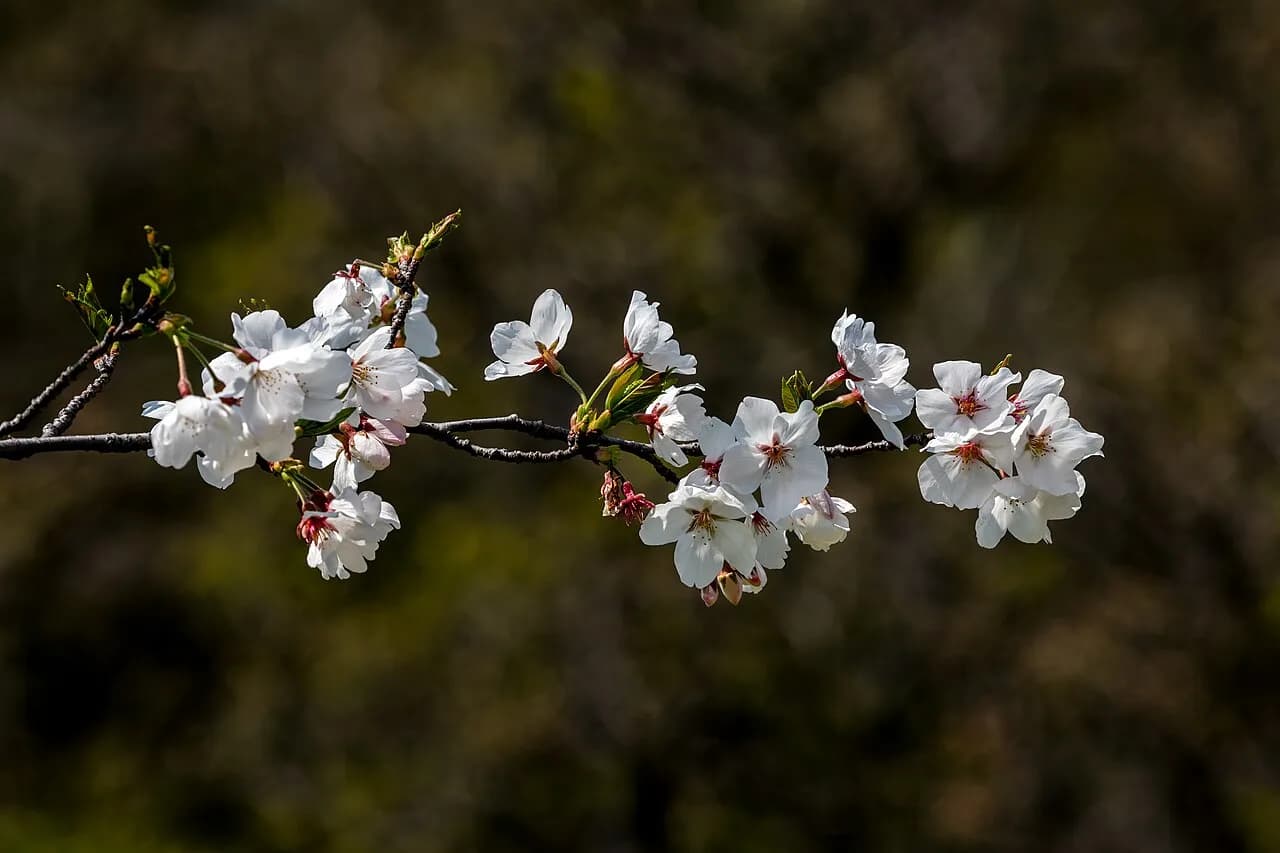
Yoshino sits within Nara Prefecture, and its river feeds the fish that ends up on local grills. Ayu need clean water to grow the algae they feed on, and clearer water produces a stronger version of that trademark watermelon-cucumber scent. The Yoshino River fishing season opens each June, matching the early-summer window covered in the Best Time to Visit Yoshino (2026) guide. August is generally considered the richest month for flavor, once the fish have spent a full summer feeding. By September the season is closing, and wild ayu disappears from menus until the following June. Checking current dates before a trip is still worth doing, since exact opening and closing days can shift slightly year to year. Ayu season sits opposite Yoshino's other big food moment. Spring travelers chasing cherry blossoms should look elsewhere instead. Yoshino's cherry blossoms guide covers that season in full, and it links from the Yoshino Cherry Blossoms: 2026 Viewing Guide. The cherry blossom food guide covers what to eat during it, since wild ayu will not be on the river yet.
Traditional Ways to Prepare and Serve Ayu
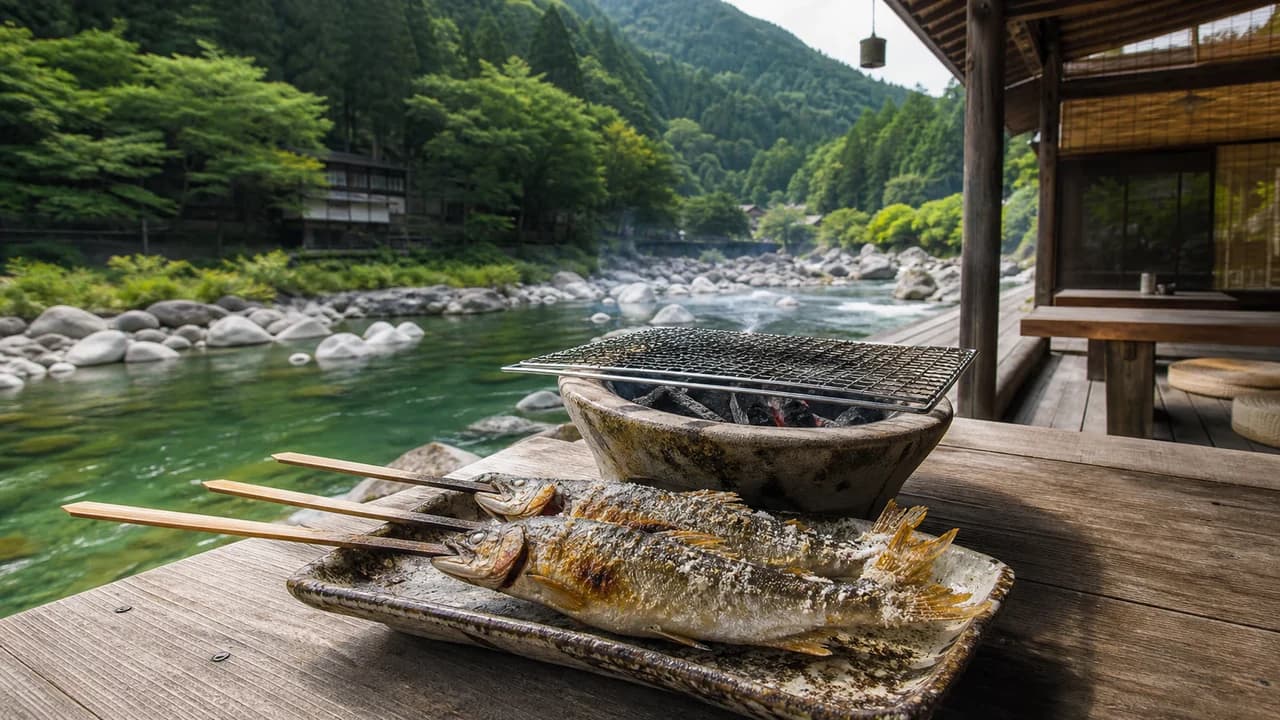
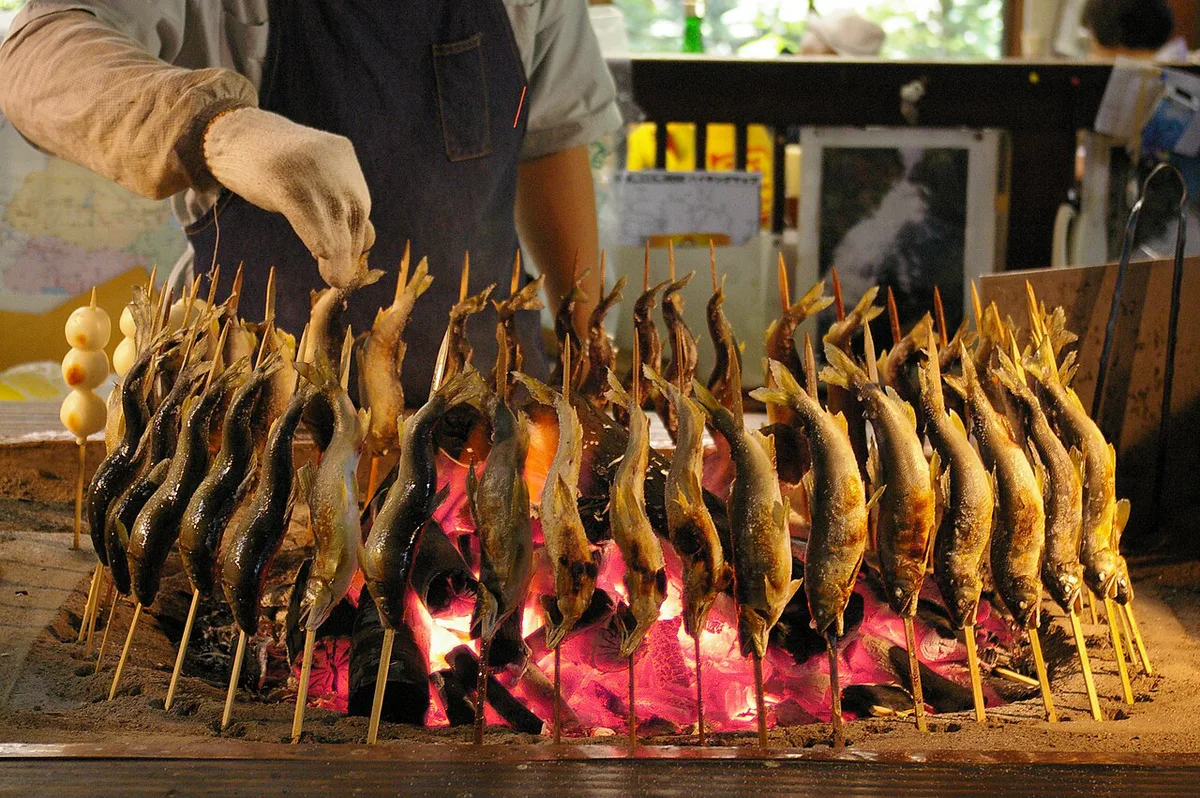
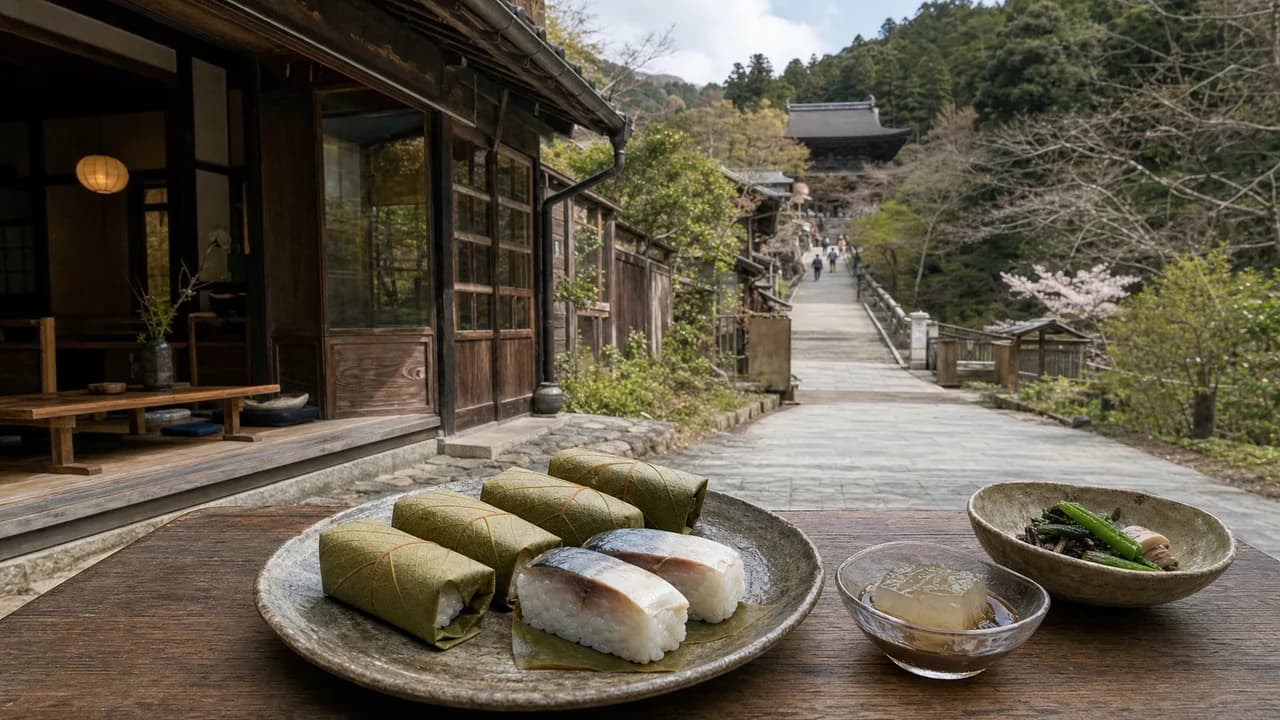
Ayu no shioyaki is the standard order around Yoshino. Cooks salt the whole fish, skewer it, and grill it slowly over charcoal. Before skewering, they bend the body into a wave shape, so the fish looks like it is still swimming when it reaches the grill. Vendors often stand a full row of these skewers upright around the coals, so the fish appear to swim in place while they cook. Salt-grilling keeps the preparation simple and lets the algae-fed flavor come through unmasked. Early-summer ayu, still small and soft-boned, sometimes go into tempura instead and can be eaten bone and all. Whole ayu also occasionally appears as sashimi, though shioyaki remains the far more common order. A cold beer or a glass of local sake is a common pairing with shioyaki, cutting through the richness of the skin. Riverside teahouses and chaya around Yoshino often serve shioyaki alongside tea and seasonal sides. The same table frequently carries Yoshino's other signature dish, kakinoha-zushi, covered in the Yoshino food guide.
Early-summer ayu, still small and soft-boned, suit tempura dishes where bones are edible. The 6 to 12 inches fish reached by summer gets salt-grilled whole, the standard order reflecting this size-based preparation choice.
Where to Eat Ayu Around Yoshino
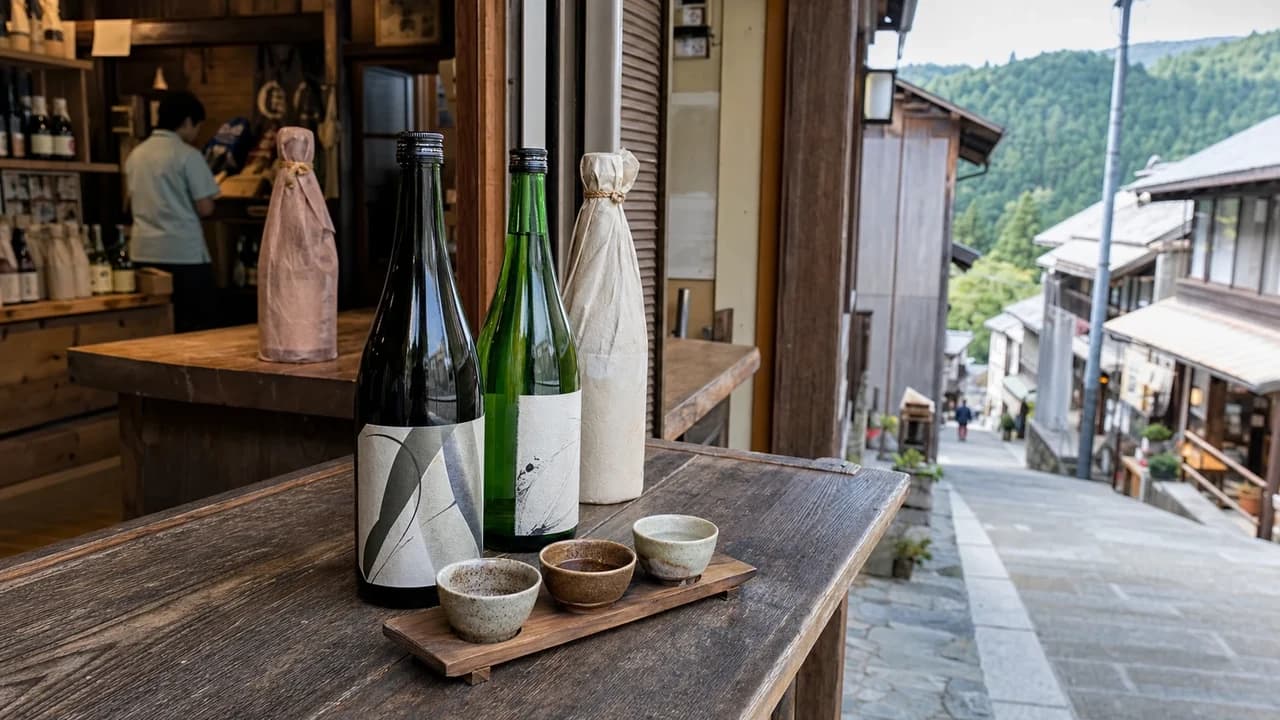
Grilled ayu shows up in two main settings around Yoshino. Riverside yatai stalls sell single skewers cooked to order, meant to eat standing by the water. Ryokan serve ayu differently, folding it into a set meal with rice, soup, and seasonal vegetables. Two areas are worth checking first: near Yamato-Kamiichi Station, and along the riverside stretch around Shimoichiguchi. Both sit at the lower elevations of town, close to the water. A typical stall order is one skewer per person, paid for on the spot, while a ryokan meal is usually reserved as part of a set course arranged in advance. For a fuller list of dining options beyond ayu season, see the 7 Best Places to Eat in Yoshino: Restaurants, Teahouses and Local Specialties (2026) guide. Travelers stopping at the Yoshino sake breweries often build one afternoon around both stops, pairing a skewer with a tasting flight.
What a Riverside Ayu Meal Looks Like
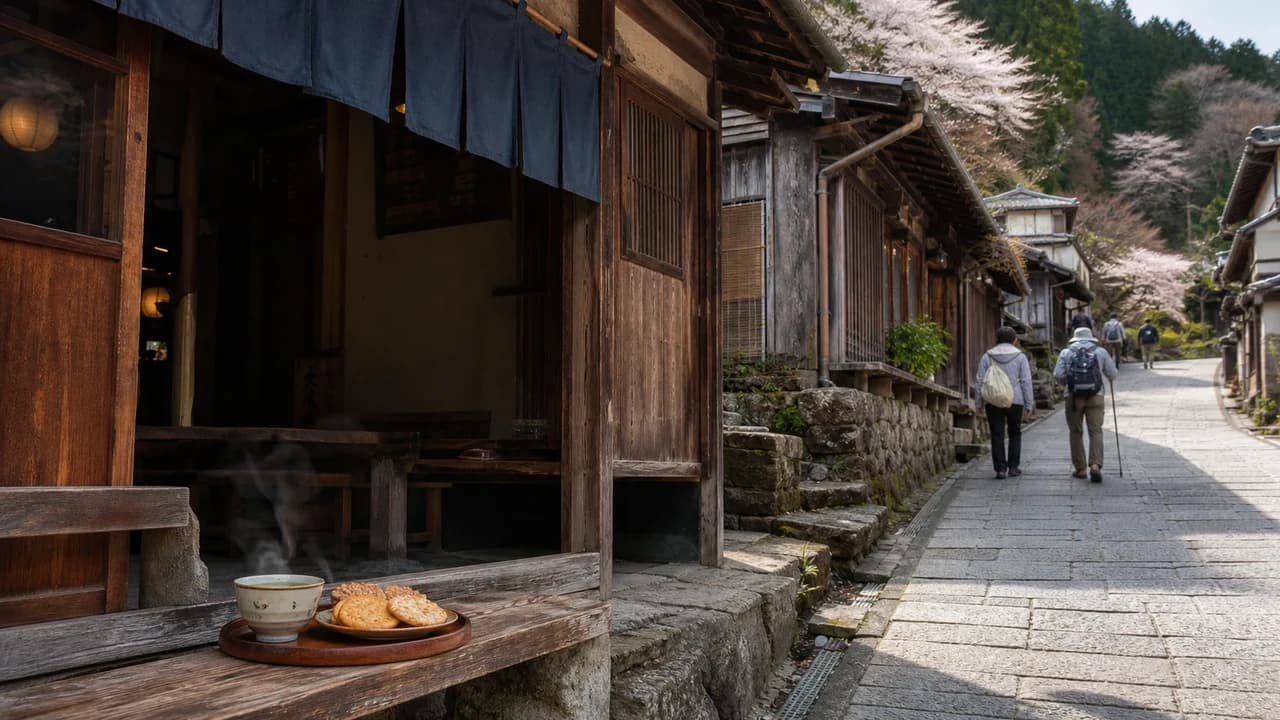
A riverside ayu meal usually starts with the fish already on the grill when you arrive, since shioyaki takes time over low charcoal heat. Servers bring the skewer whole, often still upright in a small stand, with a wedge of lemon or a shake of extra salt on the side. Rice, a light soup, and a few seasonal vegetables typically round out a ryokan set, while a stall meal may be just the fish and a cold drink. Expect to eat with your hands or chopsticks depending on the setting, since ayu is casual food even when served in a formal dining room. Conversation at the table often turns to the river itself, since diners can usually see or hear the same water the fish came from.
Cost, Timing, and Getting There
A single salt-grilled skewer from a riverside stall costs less than a full ayu-kaiseki course at a ryokan. The kaiseki bundles the fish with rice, soup, and several seasonal side dishes, which explains the gap. Menus and prices shift through the season, so it is worth checking current postings at the stall or ryokan directly. Getting to the riverside dining areas usually means a train ride plus some walking. Travelers coming from either city can check the how to get to Yoshino from Osaka or Kyoto guide for current routes. Many visitors also ride the Yoshino Ropeway to reach the upper part of town before heading back down for a meal. Travelers who skip the ropeway can still reach the lower riverside area on foot from the train station, which keeps the ayu portion of the trip simple. Those with extra time can also walk through the four tiers of Yoshino-yama before heading down to eat. A common pattern is an early train in, a ropeway ride up for views, sightseeing through the morning, and a riverside ayu lunch before heading back. An ayu lunch fits easily into a single day trip. Yoshino's own one-day itinerary guide is built around exactly that kind of pacing. Pairing the meal with a stop at one or two 9 Best Things to Do in Yoshino (2026) nearby keeps the day balanced between eating and sightseeing.
How to Eat a Whole Grilled Ayu
A whole grilled ayu looks intimidating on first approach, but the bones are simpler to manage than they appear. The head and innards carry a bitter edge that surprises some first-timers, since the liver and stomach hold onto whatever the fish has been grazing on. Many diners eat around them and stick to the fillets, and that is a normal choice, not a faux pas. Others consider the bitterness part of the point, an acquired flavor worth trying at least once. There is no single correct approach, and servers are generally used to both preferences among travelers. Wild ayu is strictly a warm-weather fish, sourced from the river roughly June through September. Outside that window, restaurants either drop it from the menu or fall back on frozen or farmed stock. Anyone planning a winter trip around fresh wild ayu should adjust expectations.
- Hold the head steady with chopsticks or your fingers.
- Insert the chopsticks just behind the head, along the top of the spine.
- Run the chopsticks toward the tail in one motion, loosening the backbone from the flesh.
- Lift the tail slightly and pull the spine straight out; it should come free in one piece.
- Eat the two loosened fillets first, then decide whether to try the head and organs.
For trip-planning details, see Ayu (sweetfish) – Wikipedia.
Frequently Asked Questions
When is ayu season in Yoshino?
Wild ayu fishing typically opens in June and runs through September, with August considered the peak month for flavor. Outside that window, expect farmed or frozen fish instead of fresh river catch.
What does ayu taste like?
Ayu has a delicate, slightly sweet flesh with an aroma many diners compare to watermelon or cucumber. The head and organs carry a bitter edge that some travelers skip and others consider part of the dish.
Is ayu safe or easy to eat with the bones in?
Most diners work the backbone free with chopsticks and eat the two fillets, leaving the head and spine behind. Very young, early-summer ayu are small and soft enough to eat whole, including the bones. If you would rather skip the technique entirely, ask staff to debone it before serving.
Where is the best place to eat ayu near Yoshino?
Riverside stalls near Yamato-Kamiichi Station and along the Shimoichiguchi riverside serve grilled skewers, while ryokan around town offer it as part of a set meal. The 7 Best Places to Eat in Yoshino: Restaurants, Teahouses and Local Specialties (2026) guide covers more options for meals beyond ayu season.
Can you find ayu in Yoshino in winter?
No, wild ayu is a warm-season fish tied to the June-through-September river run, so winter menus will not have fresh catch. Some restaurants may offer frozen ayu instead, but it will not be the same seasonal dish.
How is Yoshino's ayu different from ayu in Gifu or Kochi?
Both fish are the same species, but Yoshino's version comes from the Yoshino River rather than the Nagara River in Gifu or the Shimanto River in Kochi. Local water quality and algae growth shape the exact flavor in each river, so the fish carries a slightly different character depending on where it swam.
How much does ayu cost in Yoshino?
Exact prices vary by stall and season, so it is worth checking current menus in person or with the restaurant directly. As a rough guide, a single skewer from a stall costs less than a multi-course ayu-kaiseki meal at a ryokan.
What should first-time visitors order if they are unsure?
Start with a single shioyaki skewer from a riverside stall, since it is the simplest way to try ayu without committing to a full ryokan course. If the flavor works, a sit-down ayu-kaiseki meal is the natural next step on a later trip.
Free guide: Japan's Hidden Gems
12 under-the-radar places beyond Tokyo & Kyoto — with the best season to visit each and a local tip you won't find in the guidebooks.
You might also like


Continue reading
More guides you'll find useful