Yoshino Sake Breweries: A Visitor's Guide to Miyoshino and Hanatomoe (2026)
A 2026 guide to Yoshino sake breweries: find Nara's Miyoshino Sake Brewery, its Hanatomoe label, cedar-vat brewing, and practical visiting tips.
On this page
Last updated July 2026, a search for yoshino sake breweries pulls results from three unrelated towns, though only one sits in Nara's cherry blossom valley. That brewery is Miyoshino Sake Brewery, maker of the Hanatomoe label, founded in 1912 on organic rice grown by its own contracted Yoshino farmers. This guide separates the Nara brewery from its Toyama and Chiba namesakes, then covers the wild-yeast brewing, cedar vats, and practical visiting details.
Yoshino Sake Breweries: Three Towns Share One Name
Three separate sake houses use some version of the name Yoshino, and they sit in three different prefectures. Miyoshino Sake Brewery operates in Yoshino, Nara, the town known for its cherry blossom mountainsides. Yoshinotomo Sake Brewery is unrelated and sits in Fuchu-machi, Toyama City, founded in 1877. Yoshino Shuzo, maker of the Koshigoi brand, operates from Katsuura in Chiba Prefecture and traces back to the late Edo period, around 1830. Yoshino is a common place name in Japan, showing up as a town in Nara, a neighborhood in Toyama City, and a district near Katsuura in Chiba. All three breweries kept that local place name in their branding, which is exactly why the search results collide. If a Nara day trip is the goal, Miyoshino is the brewery to plan around.
- Miyoshino Sake Brewery: Yoshino-cho, Yoshino-gun, Nara Prefecture. Flagship brand: Hanatomoe. Founded 1912.
- Yoshinotomo Sake Brewery: Fuchu-machi, Toyama City. Flagship brand: Kisaki. Founded 1877.
- Yoshino Shuzo: Katsuura, Chiba Prefecture. Flagship brand: Koshigoi. Founded around 1830.
Nara's Deeper Role in Japanese Sake History
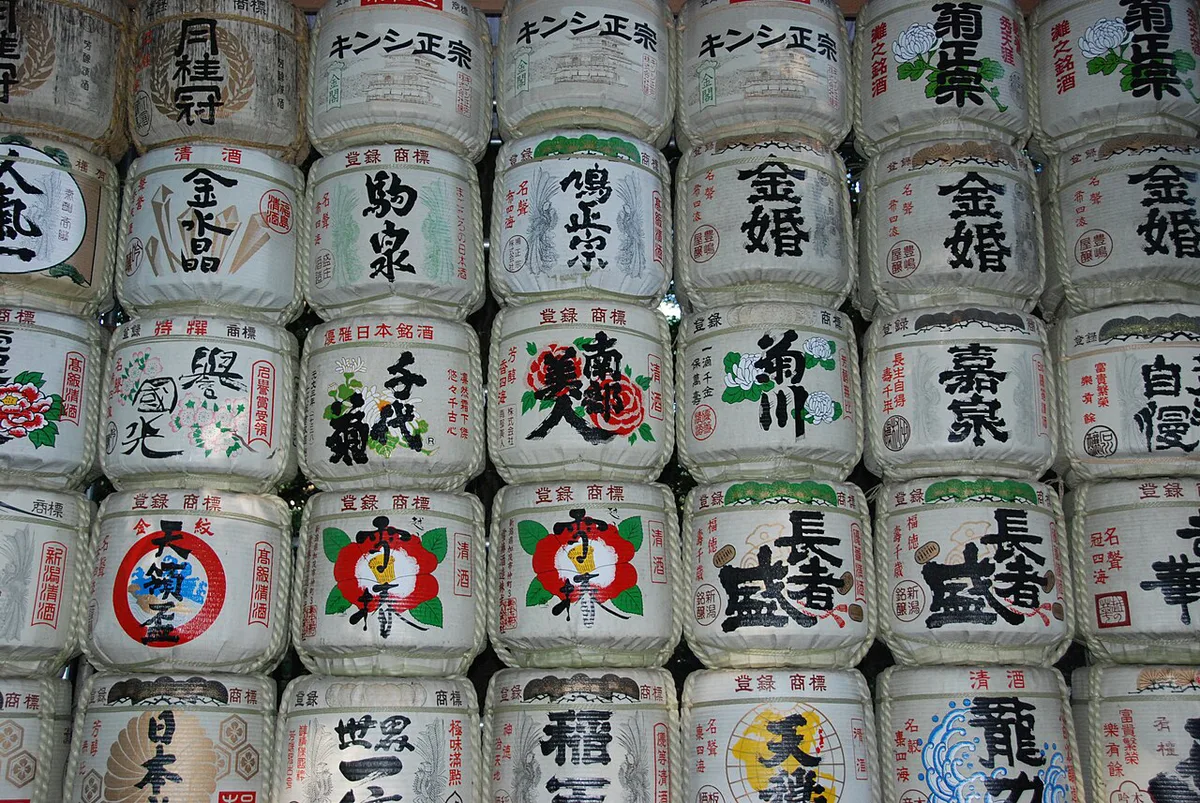
Nara Prefecture holds an outsized place in the history of Japanese sake, well beyond the town of Yoshino itself. Nara's temples, including Shoryaku-ji, are widely credited with developing the bodaimoto method, a pre-modern brewing technique that used rice soaked in water to cultivate natural lactic acid. That early method became the ancestor of the mizumoto starter still used at Miyoshino Sake Brewery today. Visiting a Yoshino brewery connects a modern tasting to a brewing lineage that runs back through the wider prefecture, not just the town.
Miyoshino Sake Brewery: Nara's Terroir-Focused House
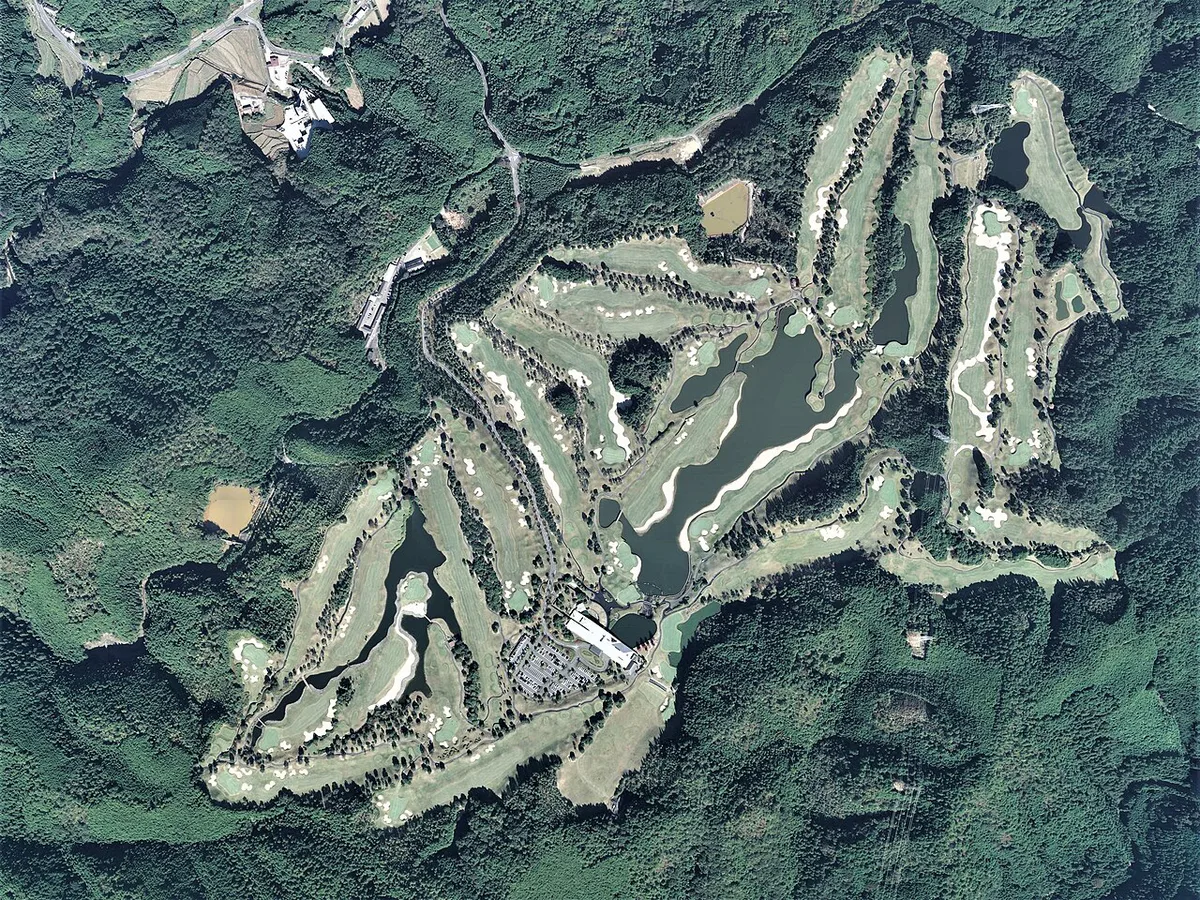
Miyoshino Sake Brewery was founded in 1912 in Yoshino, Nara Prefecture, and built its reputation on the Hanatomoe brand. Toji Teruaki Hashimoto, the brewery's executive director, returned to his hometown and rejected the industry trend toward clean, fruit-forward sake. Instead he pursued flavors that could only come from Yoshino itself. The brewery is affiliated with a local agricultural production group and sources organic rice exclusively from contracted Yoshino farmers. As of 2026, that link between the brewery and Yoshino's own rice fields still sits at the center of how it markets itself, rather than functioning as a side note. Rice is milled to a 70 percent polishing ratio, lighter than many premium Daiginjo styles. It ferments with so-haze koji to draw out the grain's natural umami. The brewery sits at Muda 1238-1 in Yoshino-cho, Yoshino-gun, in the same valley as the rest of the town.
Founded in 1912, Miyoshino is the newest of the three Yoshino breweries, yet pursues an old-school philosophy—emphasizing local rice, wild yeast, and pre-modern mizumoto techniques over the industry-standard clean, fruity profiles.
Wild Yeast, Cedar Vats, and the Mizumoto Method
Every Hanatomoe batch ferments with ambient yeast rather than the cultivated Kyokai strains most Japanese breweries rely on. Wild yeast native to the brewery drives fermentation on its own, which adds complexity and produces aromas a standard sake yeast will not. Because the process is left to nature, results shift from year to year. Vintage variation plays out closer to wine than to a mass-market brand. Fermentation happens in wooden kioke vats built from Yoshino cedar, the same tree species that covers the mountainsides in Yoshino's four-tiered cherry blossom areas. As of 2023, the brewery used three of these cedar vats. Cedar expands and contracts with temperature and humidity, which regulates fermentation heat naturally and adds tannin-driven texture that steel tanks cannot replicate. On top of ambient yeast and cedar, Miyoshino brews using yamahai and mizumoto, two pre-modern starter techniques. Mizumoto is one of the oldest recorded sake starter methods, using naturally soured rice to build lactic acid without added cultures. Standard yamahai relies on that same wild lactic acid but usually adds plain water to the starter. Miyoshino's version swaps in a small amount of finished mizumoto sake instead of water. The result is a fresh, yogurt-like acidity that's far more sour and savory than a typical supermarket bottle. The resulting flagship, Amarta, does not fit standard Junmai Ginjo or Daiginjo classifications, and the brewery treats that as a feature, not a gap.
Yoshino Sake Breweries Compared: Hanatomoe vs Kisaki vs Koshigoi
Landing on the wrong Yoshino brewery website is easy, so here is how the three brands differ side by side. Style, founding date, and location are the fastest way to confirm which one matches a trip to Nara. Hanatomoe is the one to seek out for a Yoshino, Nara itinerary, since it is the only brewery of the three actually located in the cherry blossom town. Junmai status is common ground for one competitor. Yoshinotomo brews Junmai-only across its range, while Miyoshino's Amarta series sits outside standard Junmai Ginjo and Daiginjo tiers entirely. Kisaki and Koshigoi are worth trying in their own right, but they belong to separate trips in Toyama and Chiba.
Kisaki offers some bottlings around 11% alcohol with smooth, fruity profiles. Miyoshino's Hanatomoe, using a 70% polishing ratio, takes a different path—wild yeast and mizumoto fermentation create bold, acidic results instead.
| Brewery | Location | Founded | Flagship Brand | Style Notes |
|---|---|---|---|---|
| Miyoshino Sake Brewery | Yoshino, Nara Prefecture | 1912 | Hanatomoe | Wild yeast, cedar kioke vats, yamahai and mizumoto brewing, 70% polishing ratio |
| Yoshinotomo Sake Brewery | Fuchu-machi, Toyama City | 1877 | Kisaki | Junmai-only, smooth and fruity, some bottlings around 11% alcohol |
| Yoshino Shuzo | Katsuura, Chiba Prefecture | 1830 | Koshigoi | Traditional Edo-era house, multiple sake competition gold medals |
Visiting Miyoshino Sake Brewery in Yoshino, Nara
Miyoshino Sake Brewery is located at Muda 1238-1 in Yoshino-cho, Yoshino-gun, on the Nara side of the valley. Yoshino-Jingu Station sits closer to the brewery than the main Yoshino Station on the Kintetsu line. Plan the walk from there rather than from the central station. Because the listed address sits within Yoshino-cho rather than in the main ropeway tourist core, build in extra walking time beyond a straightforward map estimate. Tour availability, tasting hours, and booking requirements shift from season to season. The brewery does not publish a fixed public tasting schedule. Confirm current details directly before building a visit around it. Bottle prices vary by size and by how limited a given Amarta release is. Expect a hand-brewed, cedar-vat bottle to cost noticeably more than a mass-produced supermarket sake. Treat that premium as the cost of the wild-yeast process rather than a fixed number to budget against.
Where to Buy and Taste Yoshino Sake Around Town
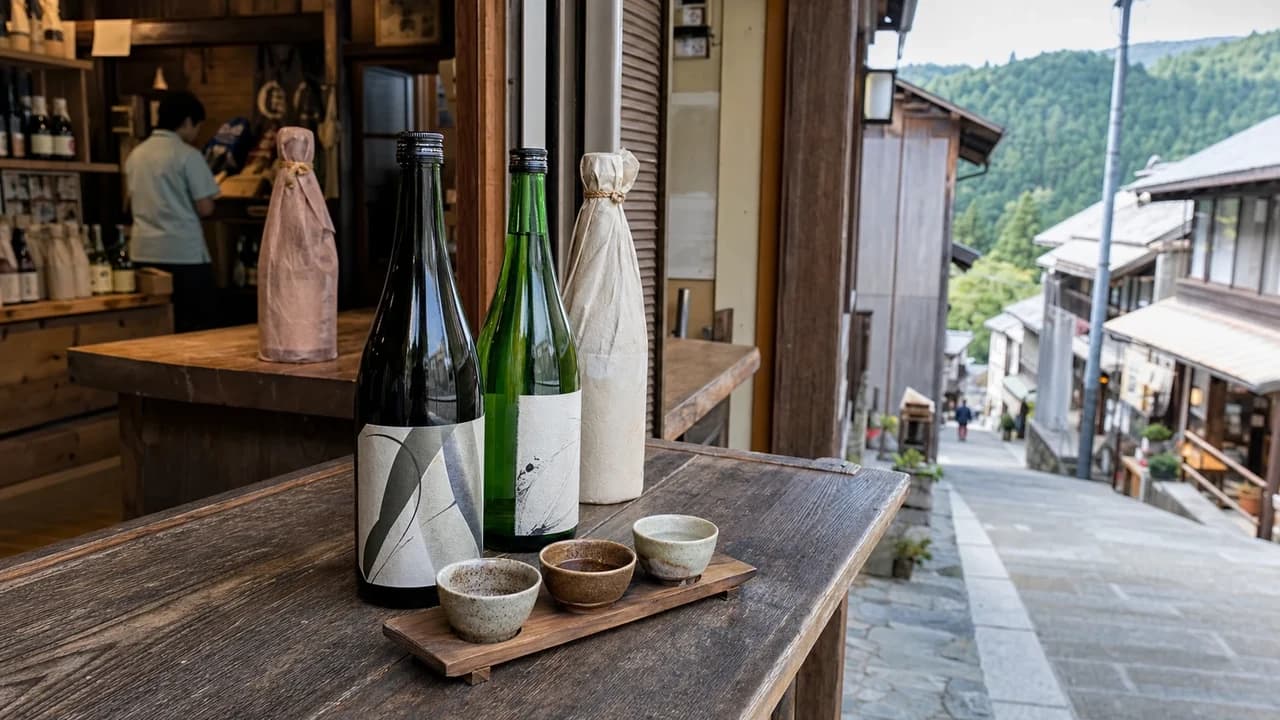
Souvenir shops near the upper town carry Hanatomoe bottles alongside other Nara sake, particularly around the base of the Yoshino Ropeway. Local chaya also pour sake by the glass, and Yoshino's teahouses and chaya are worth building into the same afternoon as a brewery stop. Pair a tasting with dinner, since several spots covered in the guide to 7 Best Places to Eat in Yoshino: Restaurants, Teahouses and Local Specialties (2026) pour Hanatomoe alongside their food menus. Buying a bottle locally also supports the same contracted-farmer network that grows the rice for it.
Pairing Hanatomoe with Yoshino's Local Dishes
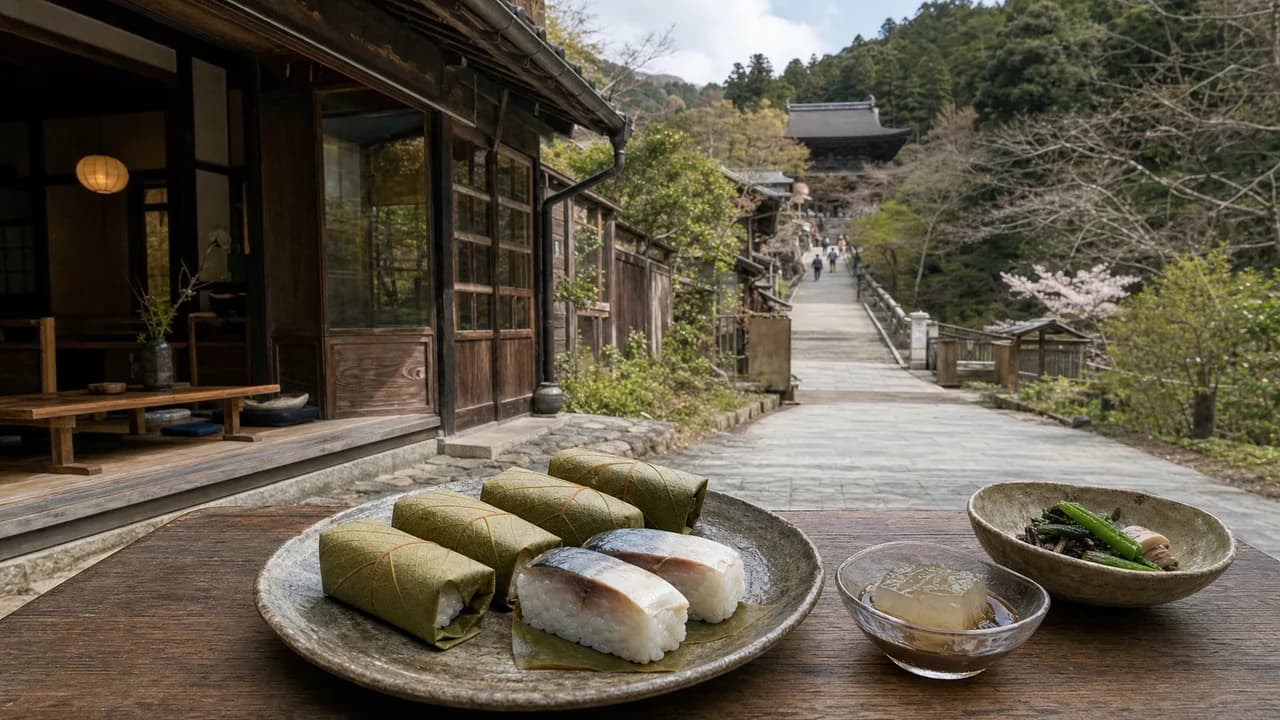
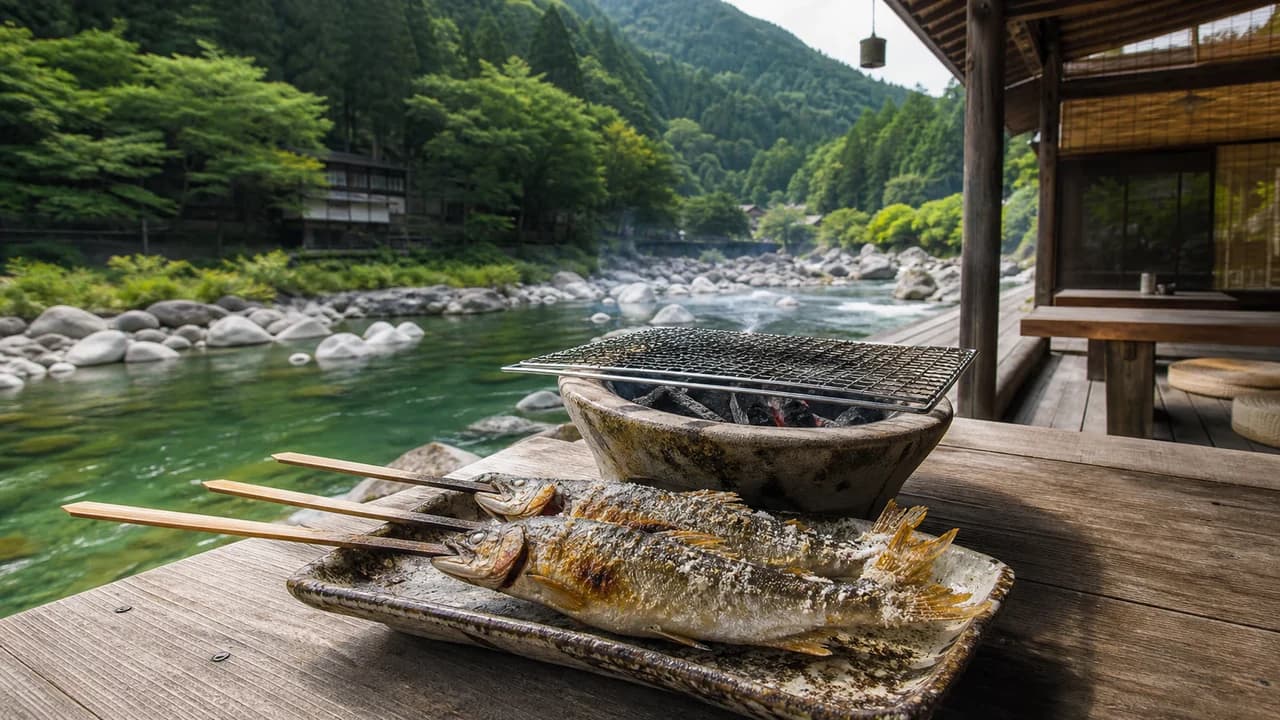
Hanatomoe's acidity and umami hold up well against Yoshino's signature dishes rather than fading next to them. Grilled ayu, the river sweetfish detailed in the ayu sweetfish guide, is a classic match for the brewery's bolder, less-polished styles. Kakinoha-zushi and other kuzu-based specialties, covered in the kuzu local food guide, work well against the sake's savory edge too. During cherry blossom season, the pairing gets a seasonal spin covered separately in the cherry blossom food guide. For the rest of Yoshino's food scene beyond sake, the wider Yoshino food guide rounds out where to eat and what to order.
Getting to Yoshino and Timing a Brewery Stop
Yoshino is reached from Osaka and Kyoto via the Kintetsu Railway. Full details on the route from Osaka or Kyoto are covered separately. A brewery stop fits naturally into a longer day out. See the one-day Yoshino itinerary for a full schedule built around a brewery visit. It also covers the town's temples and mountain trails, mapped out separately in the Yoshino attractions guide. Building in extra time near Yoshino-Jingu Station keeps the brewery stop from feeling rushed against the rest of the day.
Mistakes to Avoid and Pro Tips
A few adjustments make a Yoshino sake stop go smoother.
- Don't expect sweet, fruity sake. Hanatomoe's wild-yeast, yamahai-mizumoto brewing leans bold and acidic, closer to natural wine than to a typical supermarket ginjo.
- Check holiday closures before visiting. Sake breweries across Japan, including the Yoshino-name breweries in Toyama and Chiba, commonly close on weekends and public holidays.
- Time the trip around crowds, not just cherry blossom season. Spring weekends draw the heaviest foot traffic, and the best time to visit Yoshino guide breaks down quieter windows.
- Confirm shipping and customs limits before buying multiple bottles, since international alcohol rules and airline carry limits both change.
Step-by-Step Access from Yoshino-Jingu Station
On the Kintetsu Yoshino Line, leave at Yoshino-Jingu Station, one stop before the Yoshino terminus. This is the more practical stop for Miyoshino Sake Brewery.
Enter “Muda 1238-1, Yoshino-cho, Yoshino-gun, Nara” in your map application. Searching only for “Yoshino sake” can produce results for unrelated breweries in Toyama or Chiba.
The brewery lies outside the main sightseeing area around Yoshino Station and the Yoshino Ropeway. Do not follow signs for the ropeway when heading to the brewery. Save the brewery address offline because navigation can be less convenient in the valley.
After the visit, return to Yoshino-Jingu Station and continue one stop to Yoshino Station. From there, the ropeway base and routes toward the upper town are easier to reach. Confirm tour or shop access before traveling, since the brewery does not maintain a guaranteed public tasting schedule.
For trip-planning details, see Sake – Wikipedia.
Frequently Asked Questions
Is Yoshino sake the same as Miyoshino Sake Brewery?
Yes, in the context of Nara. Miyoshino Sake Brewery in Yoshino, Nara Prefecture, is the brewery most people mean when they search for Yoshino sake, and its flagship brand is Hanatomoe. Two other breweries share the Yoshino name but sit in Toyama and Chiba, far from Nara.
What does Miyoshino's Hanatomoe sake taste like?
Expect bold acidity and heavy umami rather than a light, fruity profile. Ambient wild yeast and traditional yamahai-mizumoto brewing give Hanatomoe a funkier, more food-driven character than typical supermarket sake, closer in spirit to natural wine.
Which train station is closest to Miyoshino Sake Brewery?
Yoshino-Jingu Station sits closer to the brewery than the main Yoshino Station on the Kintetsu line. Plan the walk from Yoshino-Jingu rather than the central station to save time.
Can visitors do a tasting or tour at Miyoshino Sake Brewery?
Tour and tasting availability changes by season, and the brewery does not publish a fixed public schedule. Confirm current hours and booking requirements directly before planning a visit around it.
Is Miyoshino sake sold outside Yoshino?
Some bottles reach retailers and restaurants elsewhere in Nara and beyond, but limited-production Amarta releases sell out quickly. Buying directly in Yoshino remains the most reliable way to get a specific bottling.
Free guide: Japan's Hidden Gems
12 under-the-radar places beyond Tokyo & Kyoto — with the best season to visit each and a local tip you won't find in the guidebooks.
You might also like


Continue reading
More guides you'll find useful