Nara Kakinoha Zushi Guide: Persimmon Leaf Sushi, History, and Where to Eat It
Learn what Nara kakinoha zushi is, why it's wrapped in persimmon leaves, and where to eat it in Gojo, Kintetsu Nara Station, and Nara Park in 2026.
On this page
Last updated August 2026, Nara kakinoha zushi remains one of the prefecture's signature souvenirs: pressed rice and cured fish tucked inside a persimmon leaf wrapper. The leaf looks edible but isn't, and unwrapping it correctly is the first thing first-time buyers get wrong. This guide covers the dish's Edo-era origins in Gojo, its main mackerel and salmon varieties, and where to buy or sit down for it today.
What Is Nara Kakinoha Zushi?
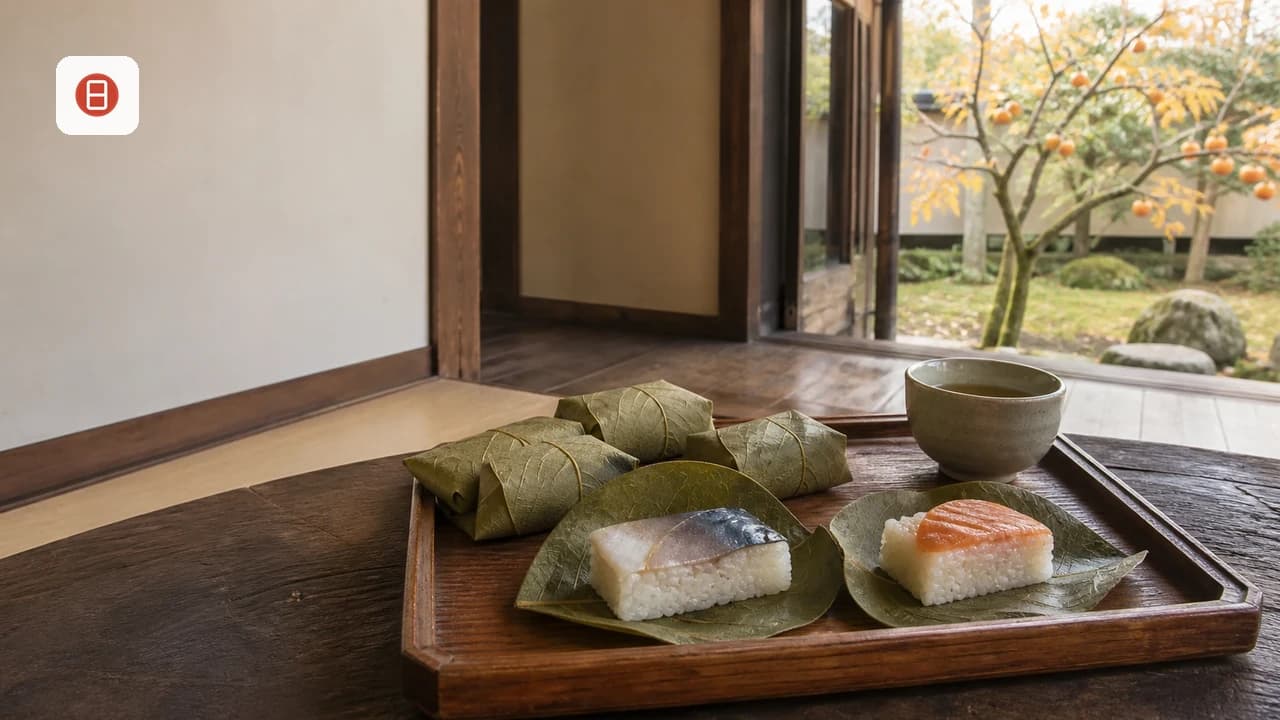
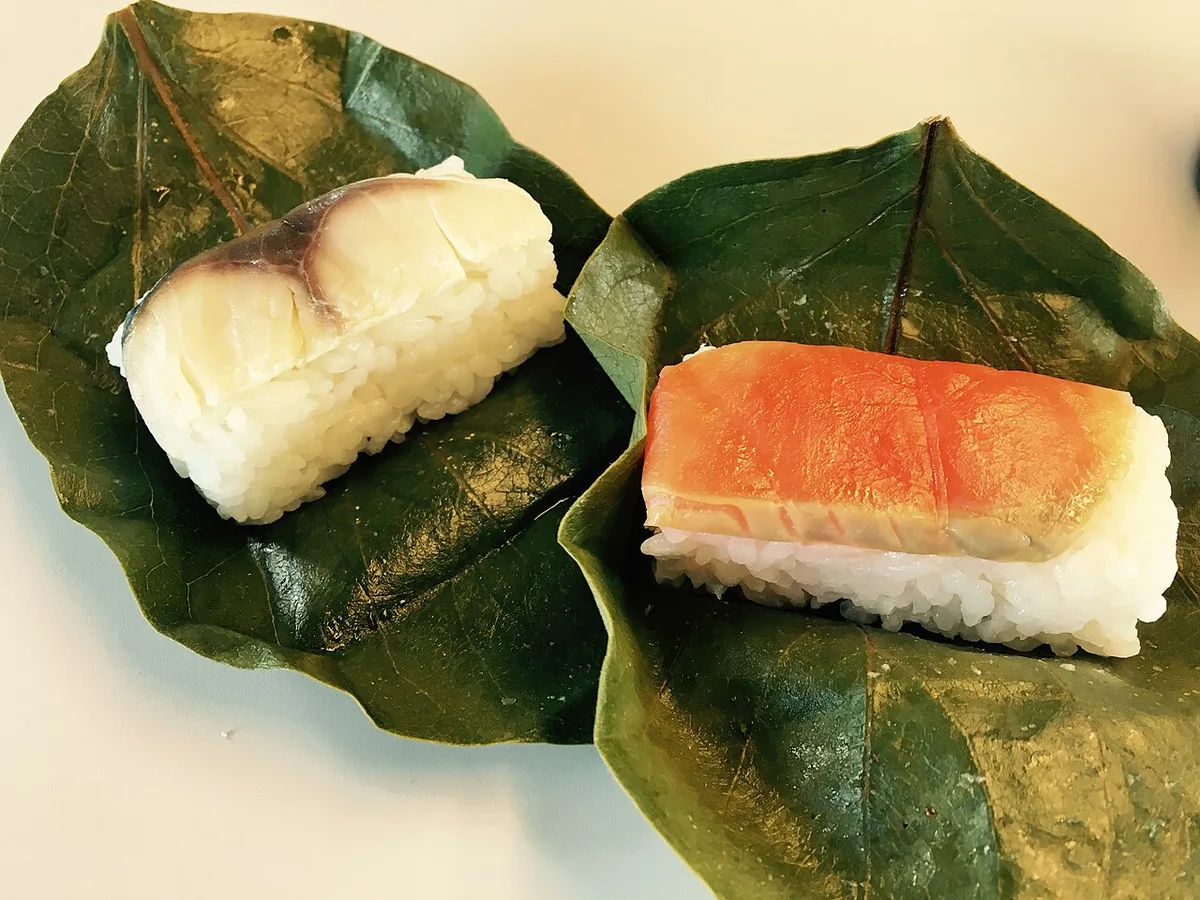
Kakinoha zushi is a pressed sushi, or oshizushi, associated with Nara Prefecture's Gojo and Yoshino areas. Each piece is a bite-sized rectangle of vinegared rice topped with a thin slice of cured fish. Shops wrap the whole piece tightly in a persimmon leaf and pack it into a wooden box, so a first look at the box shows rows of green parcels rather than visible sushi. Unwrap one and the first thing you notice is aroma, not flavor: a faint, slightly sweet scent from the leaf itself. Underneath, the taste is salty and acidic, closer to a preserved food than a delicate nigiri piece.
That's by design. This dish grew out of a preservation need, not a chef's plating choice, and the flavor still reflects that history. It's one of several dishes covered in Nara's regional specialties guide, but the where-to-buy logistics are different enough from most other local dishes to warrant their own planning notes. Visitors usually meet it in one of two forms: a restaurant lunch set in Gojo, or a takeout box bought near Nara Park or Kintetsu Nara Station.
The History: A Mountain Specialty Born of the Kumano Sea
The dish traces back to the Edo period, between 1603 and 1868. Fishermen in the Kishu region needed to pay a heavy annual tribute, so they salted summer mackerel caught in the Kumano Sea and carried it over mountain passes. Villages along the Yoshino River bought the salted fish and pressed it into rice to stretch the portions and offset the salt. Over time, the dish became a fixture of summer festivals in the Gojo and Yoshino area, where it was served at festive occasions and treated as an important food for celebrations. Rice-planting season had just finished by early summer, giving farming villages a break, and children traditionally helped prepare the sushi for festival days. What started as a preservation method for an inland region with no easy access to fresh seafood turned into a gourmet delicacy. Today it's sold at restaurants, at department store events nationwide, and as ekiben at train stations across the prefecture. A related regional variant, hakinoha-zushi, swaps the persimmon leaf for wild magnolia leaves and appears seasonally from around Boys' Festival in May through July.
Why the Persimmon Leaf: Function Before Flavor
Persimmon leaves are rich in tannin, which has a natural antibacterial effect. Wrapping the sushi tightly in a leaf helped keep salted fish safe to eat before refrigeration existed. Vinegar in the rice adds a second layer of preservation on top of the leaf. Beyond function, the leaf also scents the rice as it sits, taking the edge off the fish's saltiness and adding a faint green aroma. That aging effect is part of the appeal. Many shops press the sushi and let it rest overnight before selling it. The wait lets the tannins mellow the fish and settle into the rice. Unlike fresh nigiri, this is pressed sushi: it's often better a day after it's made, not on the same day. Despite the aroma, the leaf itself is not food. Unwrap each piece fully and set the leaf aside before eating. It's there to protect and flavor the rice, not to be chewed.
Mackerel, Salmon, and Other Varieties to Try
Two fish dominate the tradition. Mackerel, or saba, is the original filling and still the standard order at most shops. Salmon, or sake, arrived later and is now just as common, prized for a milder flavor and a brighter pink color against the white rice. Beyond those two, shops around Nara increasingly stock modern variations for travelers who want to compare flavors in one sitting.
If you're only buying one box, a mixed set with both mackerel and salmon shows the difference between the two in a single sitting.
- Mackerel (saba): the traditional filling, cured and salted; order this first for the classic version of the dish.
- Salmon (sake): milder and less assertive than mackerel, with a color that shows clearly through the rice.
- Sea bream (tai): a lighter, more delicate option offered at some modern shops.
- Eel (anago) and shrimp (ebi): newer additions aimed at travelers who want variety beyond the two classics.
Where to Eat: Gojo Flagship vs Nara Park and Kintetsu Nara Station
Nara offers two distinct ways to try the dish, and picking the right one depends on how much time is available. The flagship experience means traveling to Gojo for a sit-down meal. Alternatively, the convenience experience means buying a boxed set near Nara Park or Kintetsu Nara Station and eating on the move.
Kakinohazushi Yamato's Gojo store is the best-known flagship location. Its official Nara travel guide listing places it a 5-minute walk from JR Gojo Station, at 3-2-2 Gojo. It seats 182 and serves lunch sets that pair kakinoha zushi with udon or soba and local pickles. Restaurant hours run 11:00 to 21:00, with last orders at 20:30, while the storefront souvenir counter opens earlier, at 8:00. A kakinoha-zushi set at the Gojo dining room starts from around ¥1,500, based on local tourism listings for the restaurant.
Here's how the three most common options compare.
For a quicker option, Tanaka and Izasa are the two brands most visible near Nara Park and Kintetsu Nara Station. Both sell boxed kakinoha zushi that travelers eat while watching the deer or carry onto the train as an ekiben. Choose the Gojo restaurant if a half-day is free for a side trip and a full lunch set sounds appealing. Choose a takeout box near the station instead if time is short. It also suits a picnic lunch during a day exploring the Nara Park attractions. Because the sushi keeps well without refrigeration for a few hours, it also works as a pre-dinner snack before exploring Nara's nightlife scene. For sit-down options beyond Yamato, cross-check current listings in the 10 Best Restaurants In Nara Travel Guide (2026) guide before booking, since hours and set menus can change.
| Location | Best For | Hours & Price | Distance |
|---|---|---|---|
| Kakinohazushi Yamato (Gojo flagship) | Sit-down kaiseki and udon/soba lunch sets | Restaurant 11:00-21:00 (last order 20:30); storefront 8:00-21:00; set from ¥1,500 | 5-min walk from JR Gojo Station |
| Kintetsu Nara Station shops (Tanaka, Izasa) | Quick boxed sets for the train | Sold daily during station hours | Inside/adjacent to the station |
| Nara Park vendors (Tanaka, Izasa) | Picnic boxes to eat near the deer | Sold daily | Near Nara Park entrances |
Buying, Storing, and Reheating Kakinoha Zushi
A boxed set is the easiest Nara souvenir to carry home, and it doesn't need refrigeration right away. At room temperature, kakinoha zushi typically stays good for 2 to 3 days. Skip the fridge: cold temperatures harden the rice and dull its texture. If a box has already gone cold and the rice feels stiff, a brief warm-up in a microwave softens it again. In winter, some shops and locals reheat the sushi a different way instead. Leave the leaf wrapper on and roast the piece in a toaster oven for 3 to 4 minutes, until the leaf's surface just starts to char. Watch it closely, since a few extra minutes scorches both the rice and the fish inside. For souvenir logistics, boxes are light and pack flat in a day bag, but resist buying more than can be eaten within a couple of days. It's filling on its own, and a full box goes further than it looks.
The dish's Edo-era preservation design—salted fish wrapped in antibacterial leaves—remains so effective that it stays good at room temperature for 2 to 3 days without refrigeration.
Common Mistakes to Avoid
A few habits separate a good first try from a disappointing one.
Pair the sushi with narazuke pickles for the traditional side dish. At a sit-down restaurant, add a pour from one of Nara's sake breweries to round out the meal.
- Eating the leaf: it's meant to be discarded, not chewed. Unwrap fully before taking a bite.
- Over-ordering: a full box is filling on its own. Treat it as a meal, not a snack alongside a full restaurant lunch.
- Refrigerating it: cold rice turns hard and grainy. Store at room temperature and eat within 2 to 3 days instead.
- Mismatching the experience: a quick station box isn't the same trip as the Gojo flagship's sit-down lunch sets. Decide which one fits the day's plans before heading out.
Frequently Asked Questions
Can you eat the persimmon leaf on kakinoha zushi?
No. Unwrap the leaf and set it aside before eating. It's there for its antibacterial tannins and aroma, not as food.
How long does kakinoha zushi last without refrigeration?
It typically stays good for 2 to 3 days at room temperature. Refrigerating it hardens the rice, so most shops recommend against it.
What fish goes into traditional kakinoha zushi?
Salted mackerel (saba) and salmon (sake) are the two traditional fillings. Newer variations add sea bream, eel, or shrimp.
Where's the best place to try kakinoha zushi near Nara Park?
Tanaka and Izasa are the two brands most commonly sold near Nara Park and Kintetsu Nara Station for takeout boxes. For a sit-down meal, the Gojo flagship restaurant is the destination trip.
How do you reheat kakinoha zushi in winter?
Leave the persimmon leaf wrapped around the sushi and roast it in a toaster oven for 3 to 4 minutes. Stop once the leaf surface just starts to char, since extra time burns the rice.
Free: The Nara Essentials guide
Top things to do, where to stay, a perfect day plan, getting around, and the best time to go — a Nara mini-guide you can take offline.
You might also like


Continue reading
More guides you'll find useful