Chagu Chagu Umakko Horse Festival in Morioka: Dates & Route
Chagu Chagu Umakko: 70-100 bell-clad horses parade 14 km from Takizawa to Morioka each June. See the route, shuttle times, and best viewing spots.
On this page
Last updated September 2026, this guide walks through everything needed to plan a visit to Chagu Chagu Umakko, Morioka's June horse parade. Roughly 70 to 100 costumed horses cover 14 kilometers (8.7 miles) from Onikoshi Sozen Shrine in Takizawa to Morioka Hachimangu Shrine, each wearing over 700 bells that give the festival its rhythmic name. This guide breaks down the route, shuttle logistics, and the best places to stand along the way.
Chagu Chagu Umakko at a Glance
Chagu Chagu Umakko happens once a year, and the format rarely changes. Costumed workhorses walk from a rural shrine to an urban one, bells ringing the entire way. 2026's edition ran on June 13, following the tradition of the second Saturday in June. Iwate tourism authorities had not confirmed the 2027 date at the time of writing, so check closer to spring. Watching from any point along the route costs nothing, though you'll pay for the shuttle bus to the start. It sits on Morioka's annual festival calendar alongside the city's other major dates.
- Date: second Saturday of June (2026 edition: June 13)
- Route: 14 kilometers (8.7 miles) between Onikoshi Sozen Shrine and Morioka Hachimangu Shrine
- Schedule: departs Takizawa around 9:30 AM, reaches Morioka near 1:45 PM
- Cost: free to watch; festival-day shuttle from Morioka Station costs ¥500 one way
- Nearest hub: Morioka Station on the Tohoku Shinkansen line
What Is Chagu Chagu Umakko?
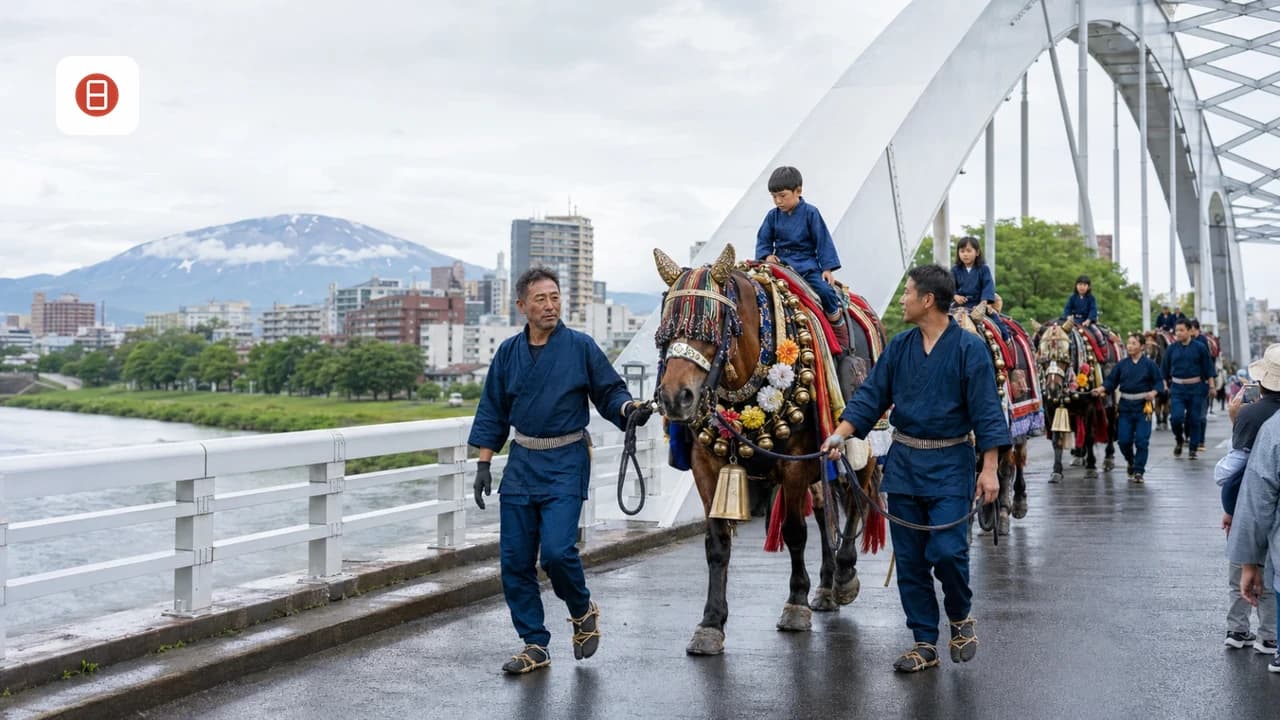
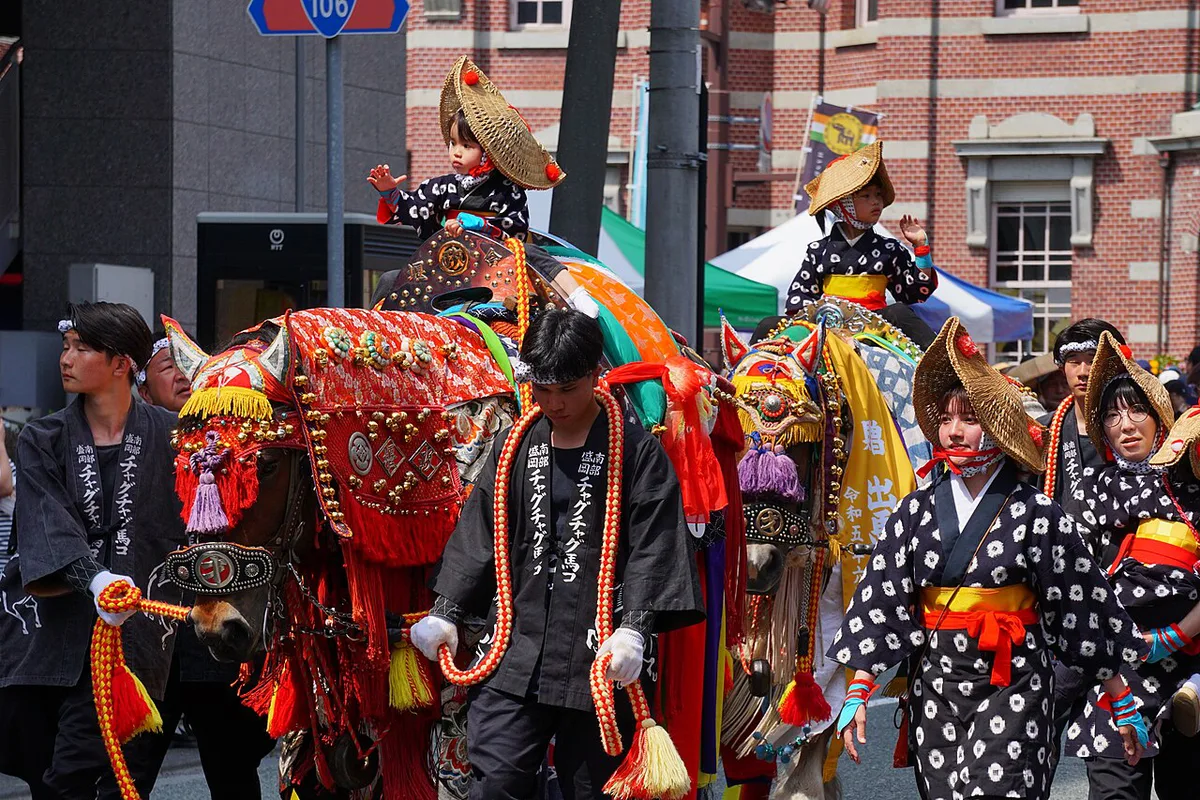
Chagu Chagu Umakko is a horse parade held every June in Iwate Prefecture. Roughly 70 to 100 workhorses, dressed in bright cloth harnesses, walk together from Takizawa to central Morioka. Events unfold across both rural Takizawa and central Morioka, so the mood shifts noticeably from start to finish. Each horse wears more than 700 small bells, and every step produces a soft clang. That rhythmic clatter is the source of the festival's name: chagu-chagu is an onomatopoeia for the sound the bells make as the horses move. Children ride many of the horses, dressed to match in traditional kimono.
History: Thanking Iwate's Workhorses
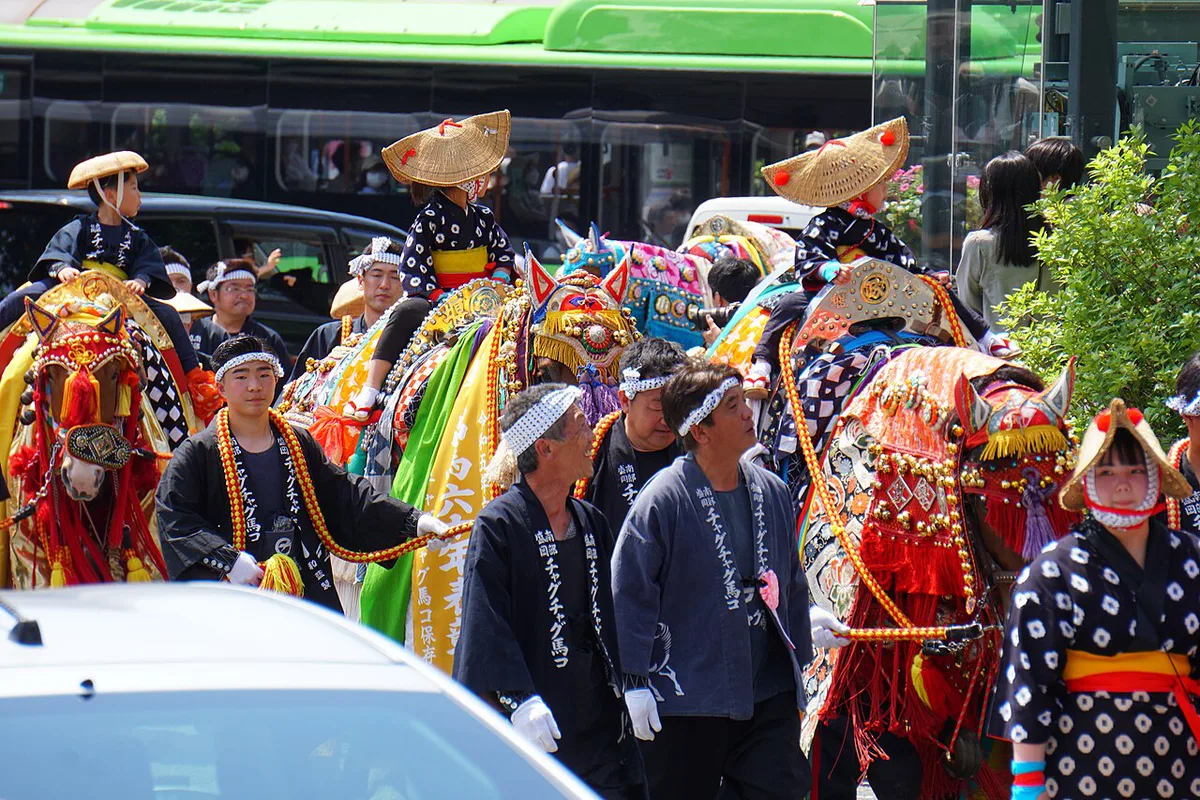
Horses and farmers have worked side by side in Iwate for centuries. According to the Iwate Prefecture Official Travel Guide, the region has a long-standing horse-breeding tradition that still shapes local customs today. Historical accounts describe Iwate households once sharing a roof with their horses, a closeness that helps explain the region's devotion to Chagu Chagu Umakko. Chagu Chagu Umakko grew out of a farming practice. After the exhausting work of rice planting, farmers led their horses to Onikoshi Sozen Shrine to rest and pray for their health. Sozen-sama, the shrine's guardian deity, is honored as the protector of horses. Japan's government designated the festival an Intangible Folk Cultural Property in 1978. Two decades later, in 1996, the Ministry of the Environment named the bells' sound one of the 100 Soundscapes of Japan. That recognition matched what local farmers had already treasured for generations.
The 14-Kilometer Route from Takizawa to Morioka
This parade covers 14 kilometers (8.7 miles) between two shrines. Horses gather at Onikoshi Sozen Shrine in Takizawa and depart around 9:30 AM. From there, the procession moves through rice paddies and rural back roads before reaching the edge of Morioka. Along the way, spectators often see children riding in traditional dress, a role many families treat as an honor passed down each year. Crowds thicken as the horses enter the city and head toward the finish. The parade reaches Morioka Hachimangu Shrine around 1:45 PM, where a closing ceremony marks the end of the walk.
Getting to the Festival: Shuttle Buses, Trains, and Taxis
Most visitors reach the start by shuttle bus rather than direct train. Take the Tohoku Shinkansen to Morioka Station, then board the festival-day shuttle from bus stop 16 in front of the station. One-way fare runs ¥500, with buses departing roughly every 20 minutes from 6:40 AM to 8:55 PM. That shuttle drops passengers at Big Roof Takizawa, about a 25-minute walk from Onikoshi Sozen Shrine. Return shuttles run from Big Roof Takizawa back to Morioka Station starting at 10:20 AM, departing roughly every 10 minutes until 11:10 AM. A taxi from Aoyama or Kuriyagawa Station on the Iwate Ginga Railway takes roughly 15 minutes to reach the shrine directly. If you're catching the 9:30 AM departure, book a place to stay in Morioka the night before, since the first shuttles leave before 7 AM.
Catching shuttles before 7 AM enables the 9:30 AM departure at Onikoshi Sozen Shrine. The parade concludes around 1:45 PM at Morioka Hachimangu Shrine, creating different logistical demands for viewing the start versus the finish.
- Shuttle: Morioka Station bus stop 16 to Big Roof Takizawa, ¥500 one way, roughly every 20 minutes, 6:40 AM-8:55 PM
- Return shuttle: Big Roof Takizawa to Morioka Station, from 10:20 AM, roughly every 10 minutes until 11:10 AM
- Taxi: about 15 minutes from Aoyama or Kuriyagawa Station (Iwate Ginga Railway) to Onikoshi Sozen Shrine
- Car: under 10 minutes from the Takizawa-chuo Smart IC on the Tohoku Expressway
Where to Watch: Comparing the Best Viewing Spots
Deciding where to stand matters more than most guides admit. Each stretch of the route offers a different experience, and the right choice depends on what matters most: atmosphere, crowd size, or ceremony. If you have a car or an early taxi, you can sometimes catch both the start and the finish by leaving Takizawa on one of the first return shuttles. The comparison below breaks down the three main viewing options. Standing near the start means an early wake-up but a rural, uncrowded view of the horses before the crowds build. Central Morioka works best for anyone combining the parade with other stops around Morioka's central attractions. Arriving at Morioka Hachimangu Shrine for the finish gives the clearest look at the closing ceremony, though the crowd is thickest there. Regional tourism listings from the Morioka Tourism and Convention Association include the shrine among the city's key sites, worth a slower visit once the parade disperses.
The 14 kilometers of the parade span from Takizawa's 9:30 AM start to Morioka's 1:45 PM finish. This four-hour duration makes it feasible for spectators to view multiple stretches of the parade.
| Viewing Spot | Atmosphere | Best For | Getting There |
|---|---|---|---|
| Onikoshi Sozen Shrine, Takizawa | Rural, quiet, right at the 9:30 AM departure | Photographers and early risers | Shuttle to Big Roof Takizawa, then a 25-minute walk |
| Central Morioka / Nakatsu River area | Urban, denser crowds, easiest access | Families and casual visitors | Walk from Morioka Station |
| Morioka Hachimangu Shrine | Grand finale with a closing ceremony near 1:45 PM | Travelers who want the full arrival | Short walk from central Morioka |
Costumes and the Riders Who Keep the Tradition Alive
Every costume is handmade, and the craftsmanship varies from household to household. Patterns and colors pass down through generations, and many families hold costume-making workshops over winter, when farm work slows. That tradition traces back to the mid-Edo period, when horse pilgrimages grew popular and dressing up one's horse became a mark of pride. Each horse carries more than 700 bells, including a distinctive donut-shaped bell worn around the neck. According to Travel Japan, that bell style was originally used to ward off wolves. Children often ride the decorated horses, dressed in kimono that match their mount's costume. Nanbu Morioka's Chagu Chagu Umakko Club organizes much of the effort behind the parade, from breeding and training workhorses to teaching costume-making skills to new generations. Outside festival season, a festival costume remains on permanent display at the Morioka History and Culture Museum for a closer look at the bells and fabric work.
Weather, Etiquette, and Mistakes to Avoid
Chagu Chagu Umakko falls squarely inside Japan's early-summer rainy season, tsuyu. Locals maintain that the weather almost always cooperates on festival day itself, even when the days around it are wet. Pack a light rain layer regardless. Check Morioka's seasonal weather guide for a fuller breakdown before booking. Humidity climbs through June, so light, breathable clothing works better than heavy layers. Around the horses, skip flash photography and loud noise. According to Travel Japan's guidance, also avoid standing directly behind a horse. Two rest stops along the route let visitors approach the horses, feed them carrots, and photograph the costumes up close. Timing causes the most common planning mistakes. Arriving at Morioka Hachimangu too early means a long wait. Arriving at Onikoshi Sozen Shrine after 9:30 AM means missing the departure entirely. Readers mapping out the rest of the year can check Morioka's seasonal event calendar to see how the parade fits alongside the city's other dates.
After the Parade: Local Food and Nearby Festivals
Morioka has its own food identity worth exploring once the parade ends. Reimen and jajamen, two of the city's signature noodle dishes, make an easy post-festival meal near the finish line. For a fuller rundown of where to find them, see Morioka's local food guide. Chagu Chagu Umakko isn't the city's only major festival. Morioka's Sansa Odori dance festival follows in early August, giving the city two distinct peak dates in a single summer. Together, June and August give Morioka back-to-back reasons to visit outside the cherry blossom and snow seasons. Travelers building a wider Tohoku festival loop have options nearby. Sendai's festival calendar covers events to the south in Miyagi. Akita's festival calendar covers the neighboring prefecture. Aomori's festival calendar rounds out a loop through northern Tohoku.
Frequently Asked Questions
When is Chagu Chagu Umakko in 2027?
Chagu Chagu Umakko follows the second Saturday of June every year. The 2026 edition took place on June 13, 2026. Iwate tourism authorities had not confirmed the exact 2027 date at the time of writing, so confirm details closer to spring 2027.
How much does it cost to watch the festival?
Watching Chagu Chagu Umakko is free. Most visitors only pay for transport. A festival-day shuttle from Morioka Station to Big Roof Takizawa runs ¥500 one way.
Where is the best place to watch Chagu Chagu Umakko?
It depends on what matters most to you: atmosphere, ease of access, or ceremony. Onikoshi Sozen Shrine in Takizawa offers a rural, early-morning view near the 9:30 AM departure. Central Morioka near the Nakatsu River area is easiest to reach and gets more crowded. Morioka Hachimangu Shrine hosts the closing ceremony around 1:45 PM and suits travelers who want the full arrival moment.
How do you get to Onikoshi Sozen Shrine?
Take the Tohoku Shinkansen to Morioka Station, then board the festival-day shuttle to Big Roof Takizawa. From there, it's roughly a 25-minute walk to the shrine. A taxi from Aoyama or Kuriyagawa Station on the Iwate Ginga Railway takes about 15 minutes directly to the shrine. Drivers can also reach the shrine in under 10 minutes from the Takizawa-chuo Smart IC.
What should you eat in Morioka after the parade?
Reimen and jajamen are two of Morioka's best-known noodle dishes and make an easy post-festival meal. Both are widely available near the finish line and across central Morioka. For more options, check Morioka's local food guide before you go.
Is Chagu Chagu Umakko suitable for families with young children?
Yes, the festival is a common family outing in Morioka. Central Morioka and the area near Morioka Hachimangu Shrine offer the easiest access with children, since crowds are denser but facilities and transit are closer. The rural Takizawa side requires an earlier start and more walking, which suits older kids and families comfortable with a longer day.
Free guide: Japan's Hidden Gems
12 under-the-radar places beyond Tokyo & Kyoto — with the best season to visit each and a local tip you won't find in the guidebooks.
You might also like

Continue reading
More guides you'll find useful