Hakone Glass Museum Guide: Venetian Glass, Garden and Visit Tips (2026)
Plan a visit to the Hakone glass museum in Sengokuhara. See the Venetian glass, shell inlay and garden, plus visit length and how it compares with Pola and Lalique.
On this page
Last updated October 2026. The Hakone glass museum, officially the Hakone Venetian Glass Museum and also called Garasu-no-Mori, sits in Sengokuhara. It is Japan's first art museum devoted to Venetian glass, with works from the 15th to 19th centuries. This guide covers the collection, the outdoor Glass Forest, visit length and how it fits beside other Hakone museums.
What the Hakone Glass Museum Is
Hakone Venetian Glass Museum is the formal name. Many visitors know it as the Hakone Glass Forest Museum, a translation of Garasu-no-Mori. Both names point to the same site in Sengokuhara. Its main collection covers Venetian glass from the 15th to 19th centuries, plus some modern pieces.
Two parts make the visit. Indoor galleries hold the glass and a special exhibition. Outdoor grounds hold the garden that gives the museum its "forest" name. One travel writer describes a fun couple of hours split between the glass indoors and the extensive grounds outdoors.
This is not a quick photo stop. You need time to look closely at surfaces that change with the angle of light. It also rewards a slow walk outside if the weather cooperates.
- Location: Sengokuhara, Hakone
- Main focus: Venetian glass, 15th to 19th centuries
- Also known as: Hakone Glass Forest Museum, Garasu-no-Mori
- Good for: couples, families and photographers
Planning Your Visit: Access, Timing and Tickets
Sengokuhara sits away from the lake-and-ropeway loop many first-timers follow. Buses run there from Hakone-Yumoto and Gora. Look for Tozan Bus services heading to Sengokuhara. Check the current timetable on the day, because routes and stops can change.
If you hold a pass, read our Free Pass details first. Passes usually cover the Tozan bus network, and some attractions offer holder discounts. Confirm whether this museum does before you buy at the gate.
Plan 1.5 to 2 hours for the full visit. That covers the galleries, the garden and a short break. Last entry is usually 30 minutes before closing. Add more time if you plan to join a workshop or sit for a meal.
Ticket prices and opening hours change. Check the official visitor information page for the current 2026 fee and hours. Expect an adult ticket in the same general range as other Hakone art museums, and verify it before you go.
- Allow 1.5 to 2 hours on site
- Arrive at least 30 minutes before the posted closing time
- Check current bus times from Hakone-Yumoto or Gora
- Ask about pass-holder discounts at the ticket desk
Radiant Legacy and Key Exhibits
The special exhibition, "A Radiant Legacy: The Art of Glass and Shell Inlay," runs with around 90 works on display. It explores color through two materials: glass and shell inlay. Check the official site to confirm it is still showing during your dates.
Display cases carry numbers, and the museum's exhibition guide follows them from 1 to 14. Free Wi-Fi is available inside. Use it to open the guide on your phone as you walk.
Start with the mosaic cup, dated 1st century BCE to 1st century CE. Colored glass rods were stretched and sliced to reveal flower or ring patterns. Floral versions carry the Italian name millefiori, meaning "a thousand flowers." Mosaic glass traces back to Mesopotamia around the fifteenth century BCE.
Next, look at the long-necked fragrant oil bottle, or unguentarium, from the 1st to 3rd century. Its rainbow shimmer comes from centuries of weathering underground. A 9th to 10th century cut glass bottle shows the same effect. Staff describe it as structural color, which shifts as you move. Walk slowly around both cases.
- Mosaic cup: millefiori technique, 1st century BCE to 1st century CE
- Unguentarium: iridescence from centuries underground
- Goblet in opalescent glass with a flower stem
- Compote with a dolphin stem
- Bowl in chalcedony glass and aventurine glass
- Nef ewer, a ship-shaped vessel
- Coptolabrus Pustulifer, a jewel beetle motif
Shell Inlay: The Japanese Link
Shell inlay is what sets this exhibition apart from a pure glass show. A Momoyama-period European-style chest, known as a yōbitsu, was made for export during the Nanban trade. Artisans decorated it with maki-e gold powder and raden shell inlay. Many similar chests survive in European monasteries and churches.
A Meiji-era tabletop chest in aogai inlay shows how fine the craft became. Its shell was polished down to just 0.1 millimeters. More than 80 figures appear along a stream motif. The scene shows a poetry gathering hosted by the calligrapher Wang Xizhi.
The guide also lists a Shibayama inlay tray with an "Insects and Flowers" design and a set of seashell sake cups from the Edo period. Tilt your view on each piece. The shimmer in shell and ancient glass both depends on angle.
The Glass Forest Garden
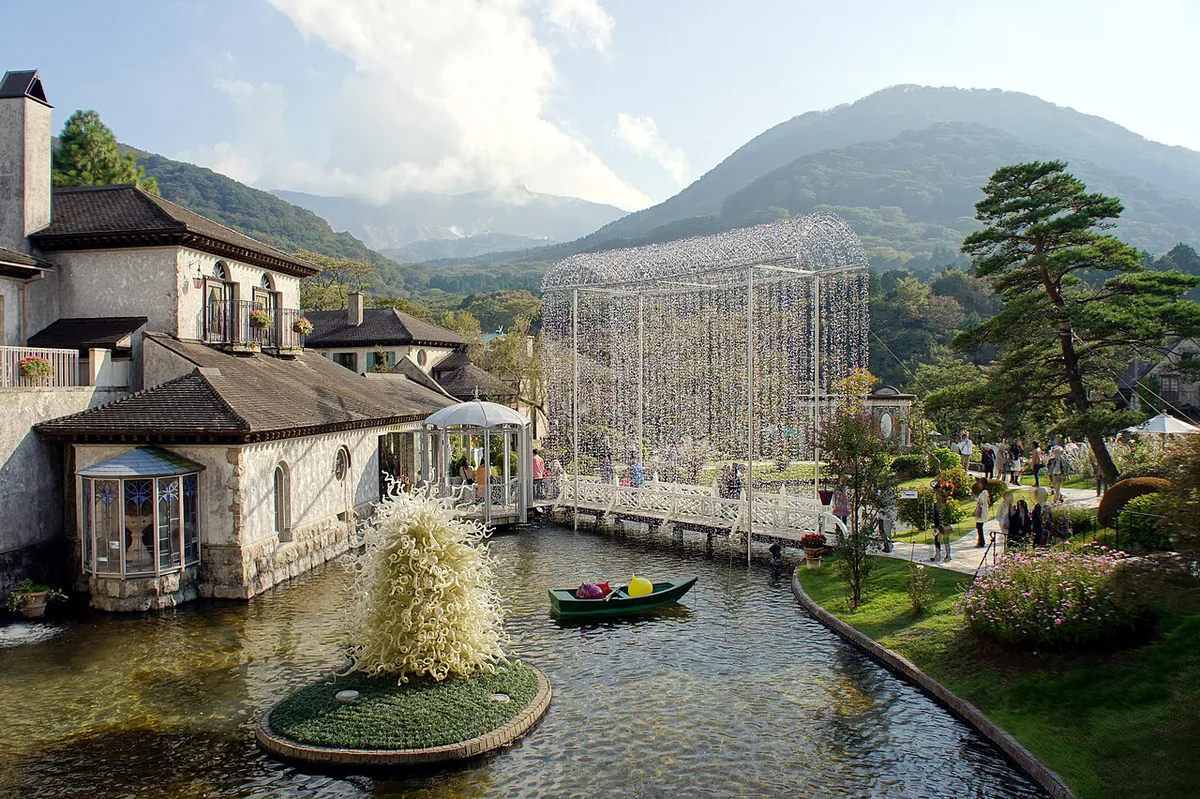
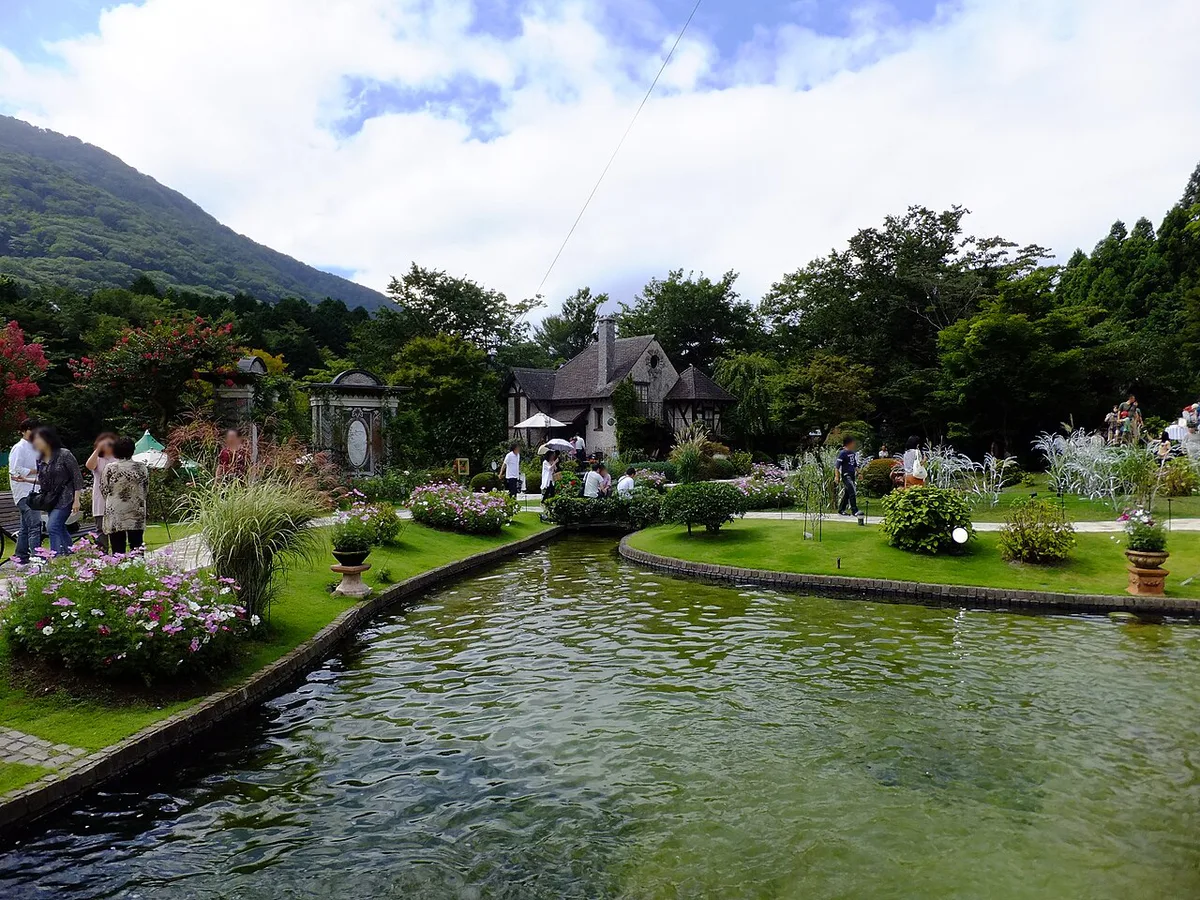
Outdoors, the museum shows a different side. The garden includes a crystal glass arch known as La Fontana, plus seasonal crystal trees. Which installations are on display varies with the season, so check the official page before you travel.
Light changes the look. Morning tends to give soft, even reflections. Golden hour late in the day gives warmer glints on the glass. Try both angles if your schedule allows, and frame the glass against the surrounding Hakone hills.
Rain cuts into this part of the visit. Most of the photo appeal is outdoors. If the forecast is poor, move your visit to another day, or lean on the indoor galleries and café.
- Look for the La Fontana crystal arch
- Check which seasonal crystal trees are on display
- Visit in the morning for soft light or late for warmer tones
- Bring a rain plan if the sky looks unsettled
Masks, Workshops and Caffe Terrazza
Venetian masks and costume pieces are a signature touch. Visitors can put them on for photos on arrival, according to a Hakone museum overview. Availability can change, so ask at the entrance.
Workshops, such as sandblasting or glass fusing, are offered at times. Treat them as a time-versus-cost decision. Check current options, prices and booking rules on the official site. Add extra time on top of the 1.5 to 2 hour baseline.
Caffe Terrazza is the on-site dining spot. Live Italian canzone performances have been part of the experience. Performance times vary, so check the daily schedule when you arrive. Missing a set is one of the easiest ways to lose value from the visit.
Hakone Glass Museum vs Pola and Lalique
Three art museums often compete for one afternoon. Each has a clear focus.
For paintings and forest walks, read our Pola Museum of Art guide. Pola's collection includes Monet, Cezanne, Renoir and Chagall. For Art Nouveau jewelry and glass, see the Lalique Museum guide. That museum holds more than 1,500 pieces by René Lalique (1860 to 1945).
Choose the glass museum if you want antique Venetian pieces, shell inlay and a garden. It is less ideal on a tight classic loop, since it needs a bus detour to Sengokuhara. Compare it with other Hakone sights before you commit a half day.
| Museum | Main focus | Typical time | Best for |
|---|---|---|---|
| Hakone Venetian Glass Museum | Venetian glass, shell inlay, outdoor garden | 1.5 to 2 hours | Couples, families, photographers |
| Pola Museum of Art | Impressionist and modern paintings, forest setting | Check official site | Art lovers |
| Lalique Museum Hakone | René Lalique glass and jewelry | Check official site | Design and Art Nouveau fans |
Fitting It Into Your Hakone Itinerary
Sengokuhara works best as a half-day base. Pair the museum with a slow lunch and a soak afterward. See our guide to onsen nearby for relaxing options after you leave.
Plan 1.5 to 2 hours for the full visit. That leaves little room for a second museum in one afternoon.
If you are coming from the capital, our Tokyo day-trip plan shows how to sequence the loop. Treat the glass museum as one anchor, not three. Adding Pola and Lalique the same day makes for a rushed schedule.
For wider context on trip planning, start with our Japan Travel Guide: Plan Your Trip with Expert Tips & Itineraries.
Common Mistakes to Avoid
Most problems come from timing and weather. Arriving close to closing is the first. Last entry is usually 30 minutes before the doors shut, so you could lose the garden.
Shell in the Meiji-era chest was polished down to just 0.1 millimeters, so rushing past it misses the detail.
Second, missing the live music schedule at Caffe Terrazza. Check times at the entrance and plan your meal around them.
Third, ignoring the forecast. Rain affects the outdoor highlight more than the galleries.
Fourth, rushing the cases. Iridescent glass and shell need slow, angled viewing. Plan for the full 1.5 to 2 hours.
Frequently Asked Questions
How long should I spend at the Hakone glass museum?
Plan 1.5 to 2 hours. That covers the galleries and the garden. Add more time for a workshop or a meal at Caffe Terrazza.
What is the Hakone glass museum known for?
It is Japan's first art museum specializing in Venetian glass. Its collection covers works from the 15th to 19th centuries. The grounds also hold the outdoor Glass Forest.
How do I get to the Hakone Glass Forest Museum?
Take a Tozan Bus toward Sengokuhara from Hakone-Yumoto or Gora. Check the current timetable on the day. A Hakone pass may cover the bus, so read the pass details before you buy.
How much are tickets?
Prices were not confirmed for this guide. Check the official museum site for the current 2026 fee. Ask at the desk about pass-holder discounts.
Is the museum worth it compared with Pola or Lalique?
It suits you if you prefer antique glass, shell inlay and a garden. Pola leans toward paintings. Lalique centers on one designer's glass and jewelry.
Free: The Hakone Essentials guide
Top things to do, where to stay, a perfect day plan, getting around, and the best time to go — a Hakone mini-guide you can take offline.
You might also like


Continue reading
More guides you'll find useful