Hakone Events Calendar: Festivals and Seasonal Highlights Month by Month (2026)
A month-by-month Hakone events calendar covering the Ekiden, Hydrangea Train, Lake Ashi fireworks, Daimyo Gyoretsu, and where to watch each one.
On this page
Last updated September 2026. A reliable hakone events calendar needs street-level detail, not just a list of dates, since road closures and shrine locations shift by event. This guide walks through Hakone's year month by month, from the January Ekiden relay to December's Crystal Illumination, noting the transport trade-off for each stop.
The Hakone Events Calendar at a Glance
Hakone's festival calendar centers on three fixed dates, each covered in more detail below. Around those anchors, shrine rituals, flower seasons, and illuminations fill in nearly every month of the year. Hakone spans several elevations, from Hakone-Yumoto at the valley floor to Owakudani near the crater rim, so where an event happens matters as much as when. Hakone's festivals overview tracks the full year; the table below groups the fixed dates by area and expected crowding. Several smaller festivals move by a week or two from year to year. Confirming exact dates through Hakone's tourist association site before booking is worth the extra step.
Hakone Free Pass covers pirate ship and ropeway year-round, but buses stop or reroute during Ekiden on January 2 and 3, and during the Daimyo Gyoretsu on November 3.
| Month | Event | Area | Crowd Level |
|---|---|---|---|
| Jan 2–3 | Hakone Ekiden | Route 1 | Very high (roads closed) |
| Feb 3 | Setsubun Festival | Hakone Shrine, Lake Ashi | Moderate |
| Mid-Jun–Jul | Hydrangea Train | Hakone Tozan Railway | Moderate to high |
| Jul 31–Aug 6 | Lake Ashi Summer Festival Week | Moto-Hakone, Hakone-machi, Kojiri | High |
| Aug 16 | Daimonji-yaki | Mount Myojogatake (viewed from Gora) | High |
| Nov 3 | Daimyo Gyoretsu | Hakone-Yumoto | High (pedestrian congestion) |
| Dec 1–25 | Crystal Illumination | Hakone Glass Forest Museum | Low to moderate |
Winter in Hakone: The Ekiden, Setsubun, and New Year (December–February)
December opens the winter calendar with Hatsumode, New Year shrine visits at Hakone Shrine and other local shrines. Crystal Illumination at the Hakone Glass Forest Museum, also known as the Venetian Glass Museum, runs the same month. Its lights have run daily from 10:00 am to 5:00 pm between December 1 and December 25 in recent seasons, with admission listed at ¥1,800 at the door. A grand purification ceremony and New Year's Eve service at Hakone Shrine round out late December, ahead of the shrine's first visitors of the new year.
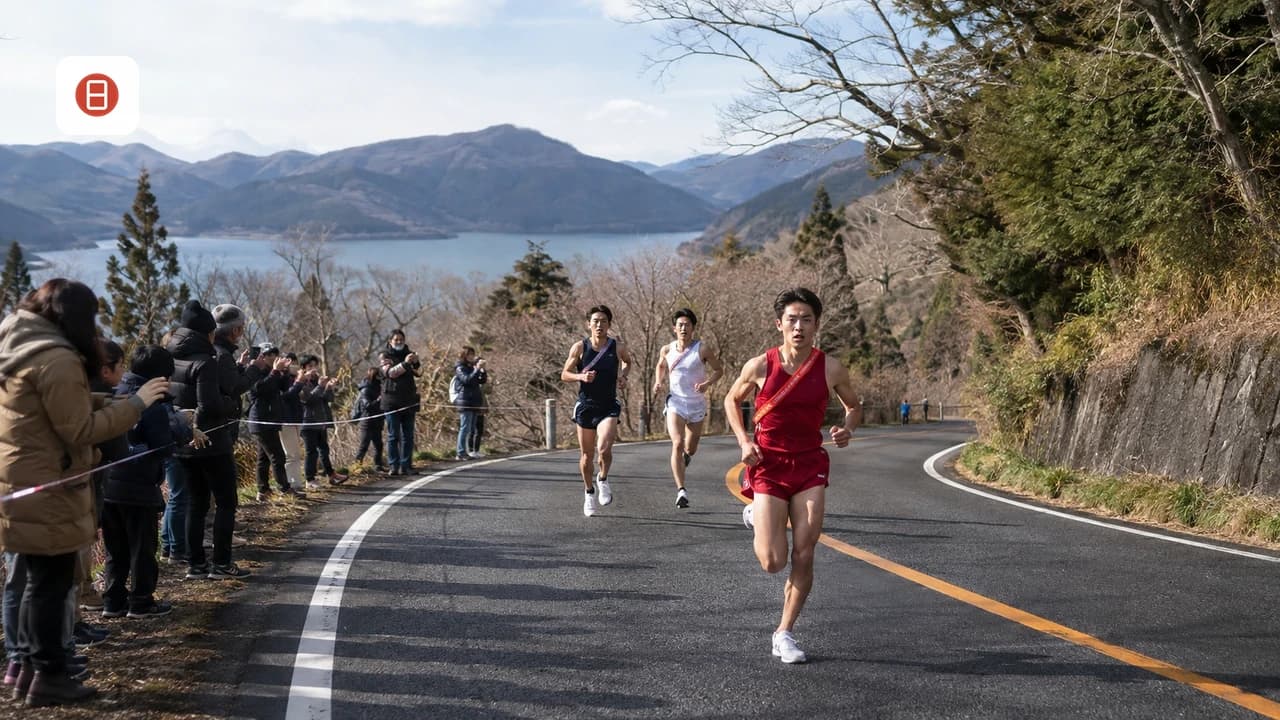
January is dominated by the Hakone Ekiden on January 2 and 3, a two-day relay race between Tokyo and Hakone. Route 1 closes to general traffic for hours on both race days. Spectating is free, but claiming a curbside spot means arriving well before the runners appear. Hakone Ekiden's official site publishes the current course and schedule each season. Ekiden spectator guide covers where to stand, how early to arrive, and which stretch of road offers the clearest view.
Setsubun on February 3 is the month's main event, held at Hakone Shrine. Bean-throwing is performed by costumed 'demons' who arrive on water skis across Lake Ashi, a detail unique to this shrine's version of the ritual. Hakone Shrine's official site lists the year's exact timing before you plan around it.
Snow is possible at higher elevations through the winter months, particularly around Gora and Owakudani. Roads and the Hakone Tozan Cable Car can run on delayed or reduced schedules after snowfall, so build in flexibility. Hakone in winter guide covers cold-season transport and packing.
Spring in Hakone: Cherry Blossoms, Azaleas, and Local Festivals (March–May)
March marks the start of fishing season at Lake Ashi, alongside the ceremonial burning of silver grass fields in Sengokuhara. Sengokuhara's Suwa Shrine also hosts the Yudate-Shishimai lion dance in March. Performers circle a cauldron of boiling water in a ritual believed to bring good health for the year ahead. Both events tie to Hakone's agricultural calendar rather than tourist scheduling, so exact dates shift slightly year to year.
Flower seasons overlap through spring and into early summer, moving by elevation much the way fall foliage does in reverse. Hakone's attractions guide lists specific viewing points at each elevation.
April adds two local festivals. Kaempfer and Birnie Festival takes place at Motohakone, and Ohiradai Onsen Festival runs April 16 and 17. May brings two more festivals. Sengokuhara's Kintoki Shrine hosts the Kintoki Festival, and Kowakidani's Houraien Garden holds an Azalea Festival on the second Sunday of the month. None of these spring festivals draw large crowds, so they pair easily with a standard sightseeing itinerary.
- Cherry blossoms: late March to early April, earliest at Hakone-Yumoto's lower elevation.
- Azalea: early April to late May, including the Kowakidani Azalea Festival at Houraien Garden.
- Roses: late May to late June.
- Hydrangea: late May into late July, peaking along the Hakone Tozan Railway in June.
Summer in Hakone: The Hydrangea Train and Lake Ashi Fireworks (June–August)
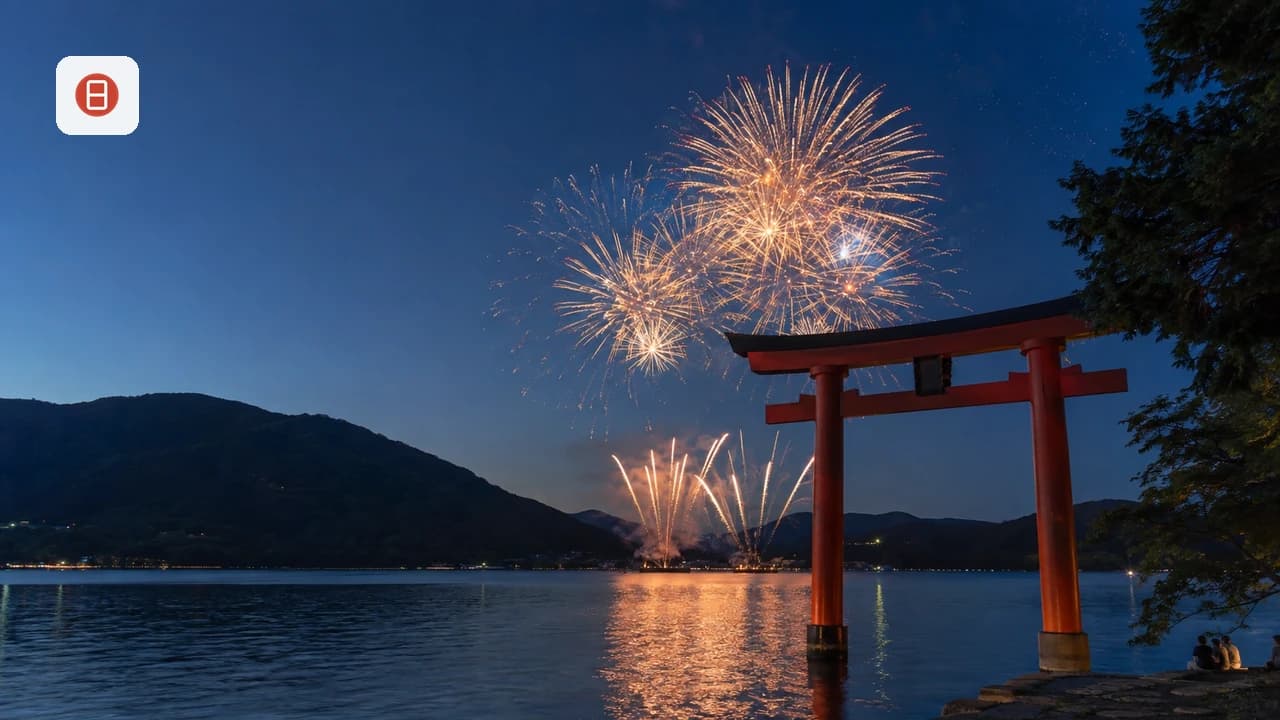
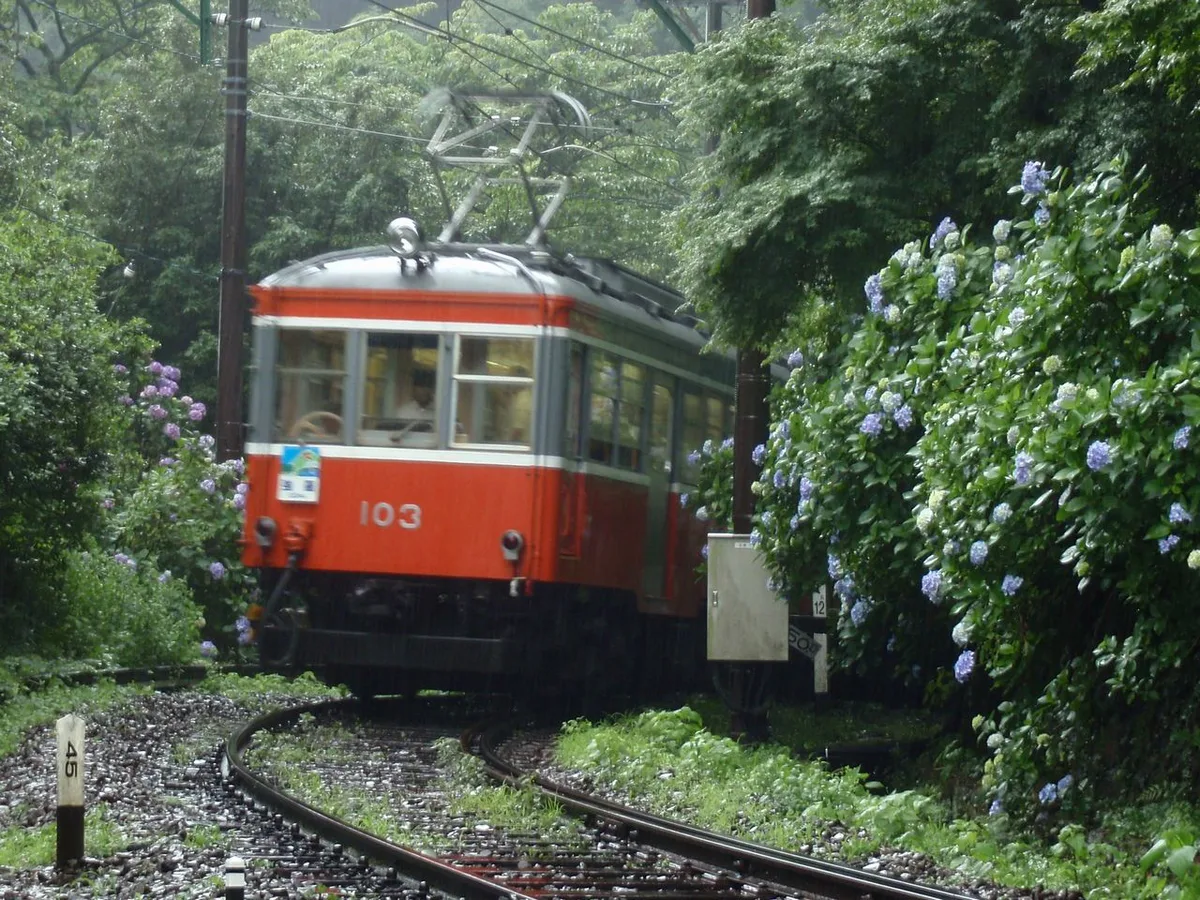
Summer is Hakone's busiest events season, anchored by three separate happenings across three months. Hydrangeas bloom along the Hakone Tozan Railway starting in June, with an illuminated night train that needs its own reservation separate from the regular timetable. Suwa Shrine's Miyagino Tenno Festival on July 15 adds a lion dance ritual before fireworks season begins. Late July shifts the focus to Lake Ashi, where fireworks rotate across different ports for roughly a week. Hakone Shrine's own Reitaisai grand festival falls inside that same week. August closes with Daimonji-yaki, a blazing character on Mount Myojogatake visible from the Gora side of the valley. Lake Ashi Summer Festival Week guide breaks down which port suits which viewing style. Lake cruises, including the Lake Ashi pirate ship cruise, sometimes add evening sailings during festival week, so confirm current schedules before booking. Food stalls typically line festival routes in July and August; Hakone's food guide covers regional specialties worth seeking out.
- Hydrangea Train: mid-June through July on the Hakone Tozan Railway. The Ajisai-go night train needs its own advance reservation, with tickets reported around ¥500.
- Lake Ashi Summer Festival Week: July 31 to August 6. Nightly fireworks rotate across Moto-Hakone, Hakone-machi, and Kojiri.
- Hakone Shrine Reitaisai: August 1, with a commemorative fireworks display recent seasons have put at roughly 2,500 shells.
- Daimonji-yaki: August 16 on Mount Myojogatake. View from the Gora station area for the clearest angle.
Autumn in Hakone: Pampas Grass, Fall Foliage, and the Daimyo Gyoretsu (September–November)
September opens with the Yumoto Kumano Shrine Festival on September 9, a short walk from Hakone-Yumoto Station. Mid-September brings the Sengokuhara Silver Grass Festival, held September 15, when the valley's pampas grass fields turn gold and a stage hosts traditional music and dance. A stargazing and night-view tour on the Komagatake Ropeway has typically run from mid-October through early January in recent years. Adult admission has been listed around ¥1,800; confirm current-season dates before planning a night around it.
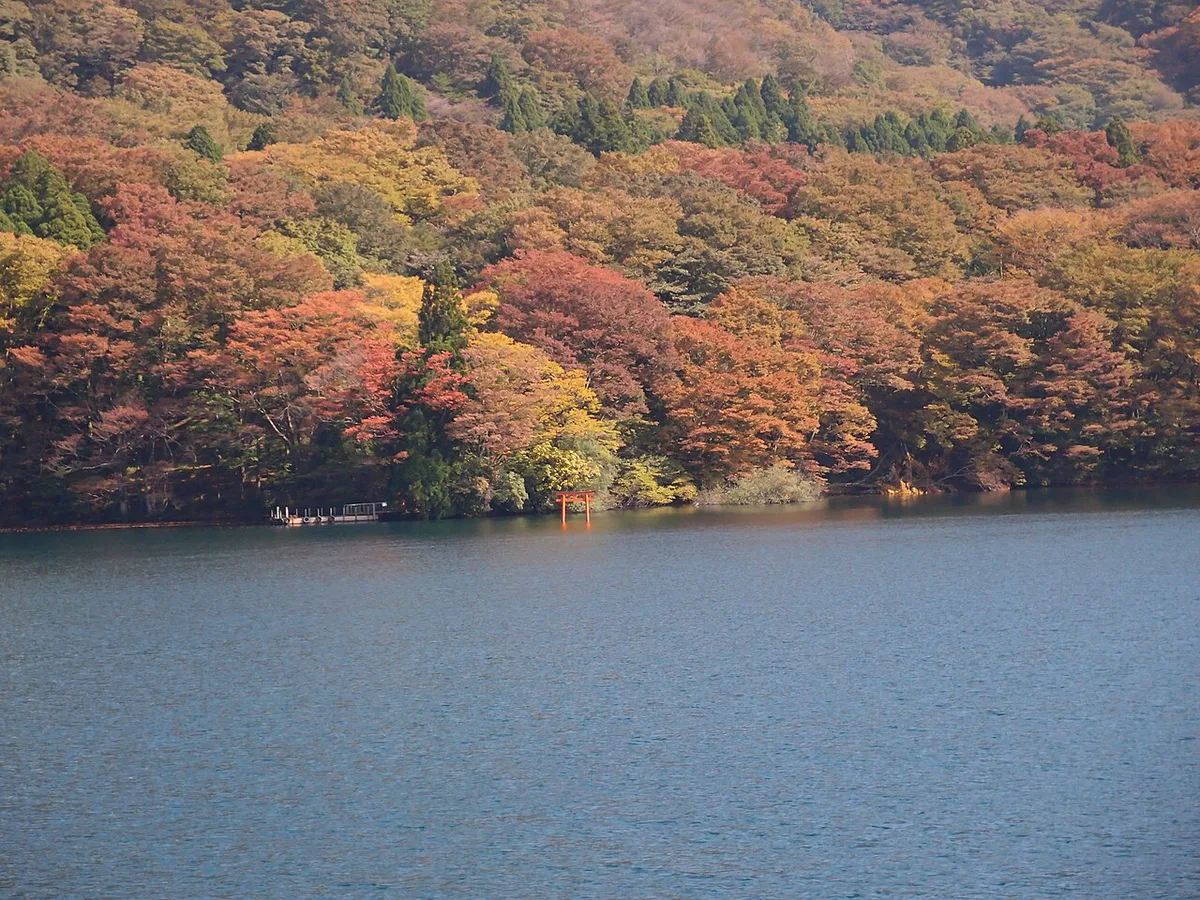
October marks the start of Hakone's fall foliage season, known locally as koyo. Color typically begins at higher elevations first, around Owakudani and the Komagatake Ropeway, then works down toward Gora and Hakone-Yumoto through November. Foliage timing depends on that year's weather. Checking a current forecast closer to travel dates works better than fixing plans too far ahead.
November 3 brings the biggest autumn event: the Daimyo Gyoretsu, a feudal lord's procession through Hakone-Yumoto. Past listings have run the parade from around 11:30 am to 2:45 pm, though times can shift year to year. Pedestrian congestion in the village is significant, since the parade route runs through the same streets as the shops and ryokan entrances. Daimyo Gyoretsu guide covers where to stand and how to route around the closures.
Planning a Trip Around the Hakone Events Calendar
A Hakone Free Pass covers most trains, buses, the ropeway, and the pirate ship cruise, which makes it useful for a normal sightseeing day. Reserved seats on the Ajisai-go night train are booked separately and are not included even with the pass. During the Ekiden and the Daimyo Gyoretsu, though, road closures affect bus routes on the pass. The pass itself does not solve the transport problem on those two dates. Planning stops around the parade or the relay, rather than relying on the pass to get through them, avoids the frustration.
Accommodation timing varies by event. Ekiden weekend rooms in Hakone-Yumoto and along the race route book out many months ahead. The relay falls on a fixed national date every January 2 and 3. Standard weekend demand is heavier but more flexible, and shifting a night midweek usually opens up availability. Hakone lodging guide breaks down areas by proximity to Lake Ashi, Gora, and Hakone-Yumoto.
Assuming buses run normally during the two biggest closures is the most common mistake. Buses along Route 1 stop or reroute during the Ekiden on January 2 and 3. Village buses in Hakone-Yumoto slow to a crawl during the Daimyo Gyoretsu on November 3, so walking is often faster than waiting that day. Building a loose day-by-day plan first makes it easier to see where an event fits; Hakone itinerary guide is a useful starting structure.
Nearby cities run their own event schedules worth checking when travel dates don't line up with anything on this calendar. Tokyo's events calendar covers the wider region's festivals and markets. Yokohama festivals guide lists that port city's seasonal lineup. Kamakura's event calendar rounds out the day-trip options near Tokyo.
How to Book the Night Hydrangea Train
The daytime Hakone Tozan Railway is enough for seeing hydrangeas, but the Ajisai-go is a separate evening experience. It runs through illuminated blooms between Hakone-Yumoto and Gora during the short summer season. Treat it as a reserved sightseeing service, not as an ordinary local train.
Reservation details, departure times, and operating dates are announced seasonally by Hakone Tozan Railway. Buy the required reserved-seat ticket when sales open, then arrive early at the stated departure station. A Hakone Free Pass covers ordinary eligible transport, but it does not replace the Ajisai-go seat reservation.
- Board at the station printed on your reservation; do not assume every train stops at your hotel area.
- Allow extra time at Hakone-Yumoto, where evening connections can be busy in hydrangea season.
- Choose a daytime train if reserved seats are sold out; the same route still passes many blooms.
Bring a light layer for the mountain evening and avoid relying on a late return connection after the special train.
Frequently Asked Questions
What is the single biggest event on the Hakone events calendar?
Hakone Ekiden on January 2 and 3 draws the largest crowds and the most disruptive road closures. Route 1 shuts to general traffic for hours on both days. Lake Ashi Summer Festival Week and the November 3 Daimyo Gyoretsu follow as the next-biggest draws, each with its own transport trade-off.
When should you visit Hakone to see the Hydrangea Train?
Hydrangeas bloom along the Hakone Tozan Railway from around mid-June into July. Ajisai-go night train reservations are separate from the standard timetable, and seats sell out, so book as early as the season's reservations open.
Does the Hakone Free Pass work during the Ekiden and the Daimyo Gyoretsu?
Not fully. Trains, the ropeway, and the pirate ship cruise still run on the pass. Bus routes on Route 1 and through Hakone-Yumoto are affected by closures on those two dates. Planning around the closure windows works better than counting on the pass to solve them.
Where is the best place to view Daimonji-yaki?
Gora station area gives the clearest angle on both the burning 'dai' character on Mount Myojogatake and the fireworks that follow. Daimonji-yaki happens annually on August 16, on the final night of Obon.
How far ahead should you book accommodation for the Hakone Ekiden weekend?
Rooms in Hakone-Yumoto and along the race route book out many months ahead. The Ekiden falls on a fixed national date every January 2 and 3. Standard weekends are more flexible, and shifting a stay midweek usually opens up availability.
When do cherry blossoms and hydrangeas bloom in Hakone?
Cherry blossoms typically run from late March to early April, opening first at Hakone-Yumoto's lower elevation. Hydrangeas follow from late May into July, peaking along the Hakone Tozan Railway in June.
Free: The Hakone Essentials guide
Top things to do, where to stay, a perfect day plan, getting around, and the best time to go — a Hakone mini-guide you can take offline.
You might also like


Continue reading
More guides you'll find useful