Hakone Ekiden Spectator Guide: Where to Watch and How to Get There
A spectator guide to the Hakone Ekiden covering the course, road closures, transit options, and where to stand on January 2-3.
On this page
Last updated September 2026, this spectator guide covers what international travelers need to watch the Hakone Ekiden in person. Ten university teams cover 217.1 km (about 135 miles) between Tokyo and Hakone every January 2 and 3. National Route 1 closes to private traffic for most of both days, so this guide covers where to stand and how to reach Hakone without getting stranded.
What Is the Hakone Ekiden?
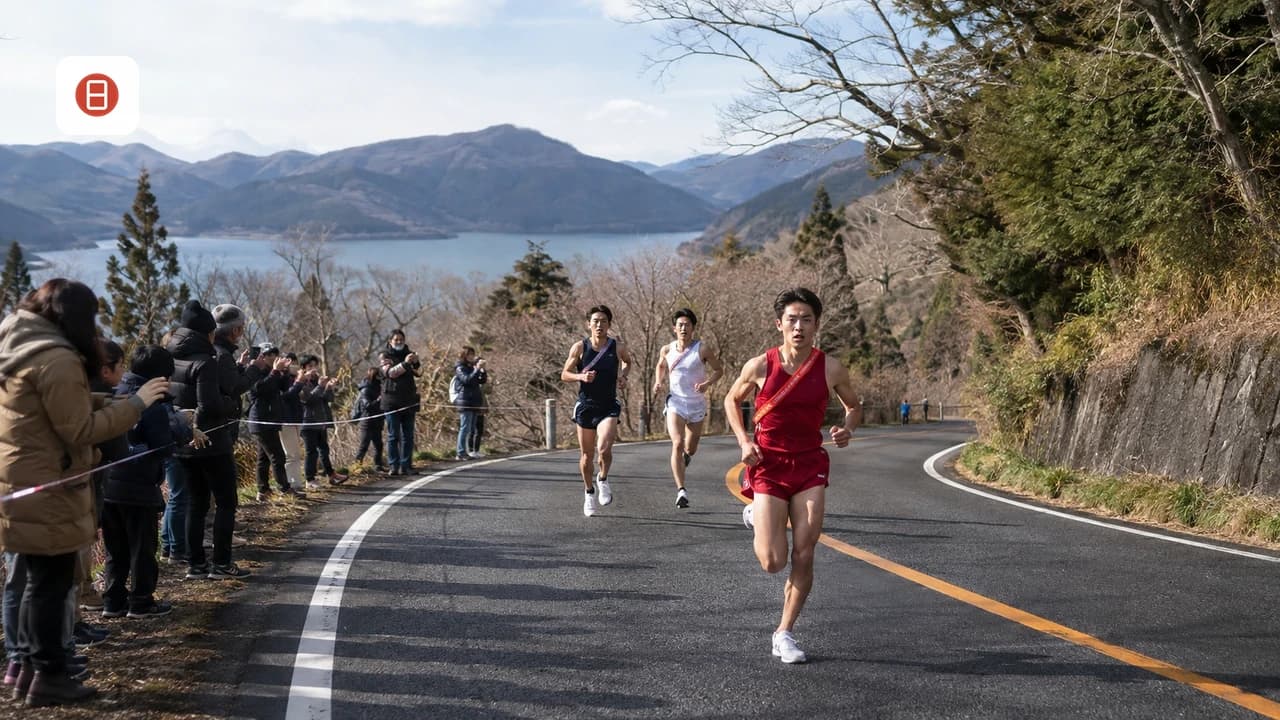
The Hakone Ekiden is a two-day university relay race held every January 2 and 3 between Otemachi, Tokyo, and Lake Ashi in Hakone. Ten runners per team carry a sash, the tasuki, across ten legs that add up to 217.1 km (about 135 miles) round trip. Twenty Kanto-region universities qualify through an October time trial called the Yosenkai, along with one non-scoring select team drawn from individual qualifiers at that same race. Television coverage draws one of Japan's largest annual sports audiences. That 2026 broadcast reportedly reached an estimated 56 million viewers across both days. Marathoner Shizo Kanakuri helped organize the first run in 1920, and the race has continued almost every year since. Passing the tasuki carries more weight than a simple handoff. It stands for shared responsibility across the whole team, which is part of why an injured runner sometimes keeps moving instead of stopping mid-leg. Race-day schedules and course maps are published on the official Hakone Ekiden site. This event is one entry in Hakone's broader festivals and events calendar. For a fuller view of what else happens across the year, see the month-by-month festival calendar. Travelers who enjoy organized processions might also compare the Daimyo Gyoretsu procession, held on a separate date later in the year.
Ten Legs From Tokyo to Hakone
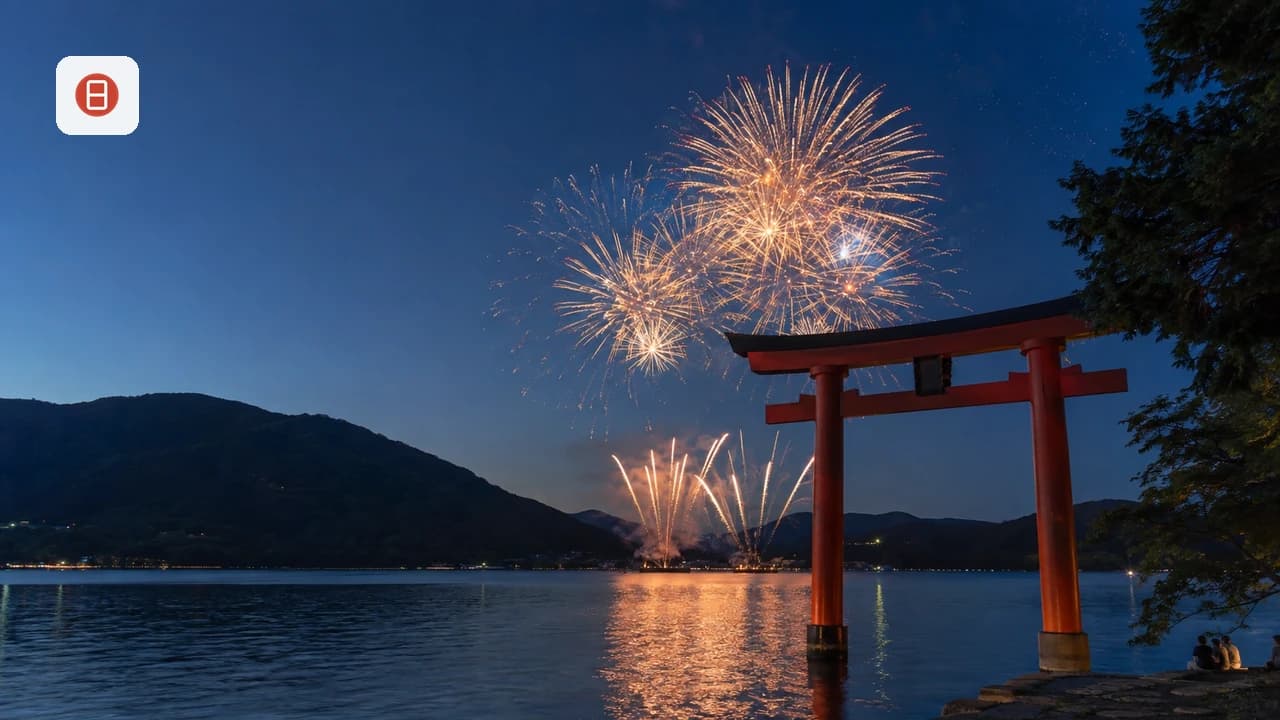
Day one covers legs one through five, a combined 107.5 km (about 66.8 miles) from Otemachi to Lake Ashi. Day two reverses the route across legs six through ten, covering 109.6 km (about 68.1 miles) back to the Yomiuri Shimbun Building. Leg 2 is nicknamed the Leg of Flowers for the strong runners teams traditionally assign to it. Leg 5 is the mountain climb, gaining roughly 874 meters (about 2,870 feet) in elevation, with its highest point on National Route 1 near the 16.2 km (10.1 mile) mark. Near the finish, runners pass beneath the torii gate at Hakone Shrine before reaching Lake Ashi. Runners who excel on that climb earn the traditional nickname God of the Mountain. Leg 6 reverses the same climb the next morning as the descent, and runners average close to 25 km/h (about 15.5 mph) heading back down toward Odawara. If a calmer, warm-weather visit to the same lake sounds appealing, the Lake Ashi fireworks week runs there each summer. Around the finish area, the Lake Ashi pirate ship cruise is a common add-on, though it's worth confirming its race-weekend schedule before relying on it.
| Leg | Route | Distance | Notable Feature |
|---|---|---|---|
| 1 | Otemachi to Tsurumi | 21.3 km (13.2 mi) | Flat start past Tokyo Tower and Shinagawa |
| 2 | Tsurumi to Totsuka | 23.1 km (14.4 mi) | Leg of Flowers; Totsuka Wall climb near the finish |
| 3 | Totsuka to Hiratsuka | 21.4 km (13.3 mi) | Shonan coastline with Mt. Fuji views |
| 4 | Hiratsuka to Odawara | 20.9 km (13.0 mi) | Passes Odawara Castle before the mountain climb |
| 5 | Odawara to Lake Ashi | 20.8 km (12.9 mi) | Mountain Climb; rises to about 874 m (2,870 ft) by the 16.2 km (10.1 mi) mark |
| 6 | Lake Ashi to Odawara | 20.8 km (12.9 mi) | Mountain Descent; runners average close to 25 km/h (15.5 mph) |
| 7 | Odawara to Hiratsuka | 21.3 km (13.2 mi) | Widest temperature swing of the race |
| 8 | Hiratsuka to Totsuka | 21.4 km (13.3 mi) | Uphill grade near Yugyoji-zaka |
| 9 | Totsuka to Tsurumi | 23.1 km (14.4 mi) | Leg of Pines; most early starts happen at the Tsurumi finish |
| 10 | Tsurumi to Otemachi | 23.0 km (14.3 mi) | Finishes near Nihonbashi and the Yomiuri Shimbun Building |
Where to Watch the Hakone Ekiden
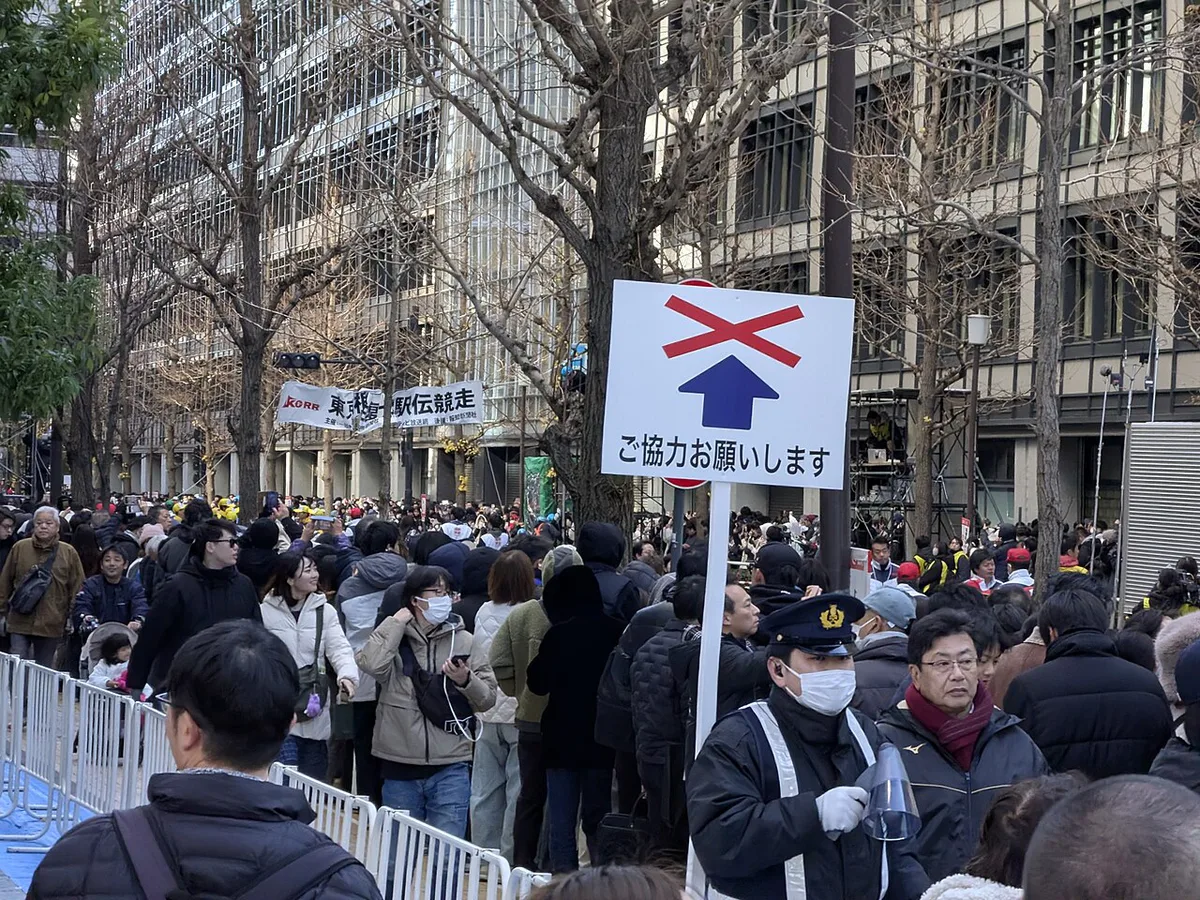
Otemachi hosts the most accessible viewing on both mornings. Runners depart the Yomiuri Shimbun Building at 8:00 a.m., a two-minute walk from Otemachi Station. Otemachi Station is served by five subway lines, including the Tozai and Marunouchi lines, which makes the start the easiest spot to reach by train. NTV's pre-race broadcast starts an hour earlier, at 7:00 a.m., a useful marker for when roadside crowds begin gathering. Tokyo's own New Year events calendar runs alongside race weekend if you want to build a longer morning around it. Along the Shonan coast, Leg 3 follows National Route 134 with Mount Fuji visible across Sagami Bay, and the sightlines stay more open than in central Tokyo. Travelers extending toward the coast can also check Kamakura's event calendar for anything overlapping the same weekend. Leg 4 passes through the quieter towns of Oiso and Ninomiya between Hiratsuka and Odawara, a lower-crowd alternative to the bigger viewing points. Tsurumi, where Leg 1 finishes and Leg 9 returns the next day, sits within Yokohama, whose winter festival lineup overlaps the same dates. Its 160-meter (525-foot) exposed approach to the relay station draws dedicated crowds, since tense sash handoffs and early starts often happen there in full view. Lake Ashi offers the most scenic finish but the hardest transit, since the mountain roads and rail lines toward Hakone become the most congested stretch of the whole course. Sightseeing near the finish beyond race day is covered in the Hakone attractions guide. Plan to arrive one to two hours before the runners are due at any of these spots, because barricade space fills early.
Tsurumi's 160-meter exposed approach draws crowds specifically because most Kuriage Shuppatsu early starts happen at this station, creating unmatched drama.
| Vantage Point | Crowd Level | Getting There | Best For |
|---|---|---|---|
| Otemachi Start | Heavy, but organized | 2-minute walk from Otemachi Station | Race-morning atmosphere, easiest logistics |
| Shonan Coast (Leg 3) | Moderate | Local rail near Chigasaki and Hiratsuka along Route 134 | Mount Fuji backdrop, open sightlines |
| Tsurumi Finish (Leg 9) | Heavy, narrow viewing | Short walk from Tsurumi Station | Early-start drama, tense sash exchanges |
| Lake Ashi Finish (Leg 5) | Heavy, cold | Slow mountain transit via train and bus | Most scenic finish, hardest to reach |
Getting to Hakone on Race Days
Getting into and around Hakone changes substantially on both race days, and the disruptions start with the roads themselves. Buses and taxis face extreme delays as a result, so don't plan a tight schedule around either option on January 2 or 3. Treat the morning hours on both days as the tightest window, and leave slack in the afternoon regardless of which base you choose. A Hakone Itinerary: 2-Day Travel Plan + Map & Tips built around race weekend should assume slower connections than usual everywhere in the area.
- National Route 1: closed to private vehicles for most of both days.
- Hakone Tozan Railway: the only reliable route through the mountains, running at capacity.
- Hakone Ropeway: operating, but slower than usual near Owakudani and Togendai.
- Hakone Free Pass: still covers trains, buses, and the ropeway, but won't guarantee a seat or a fast connection during the closures.
Where to Stay for the Hakone Ekiden
Hakone and Odawara lodging books out fast around New Year's regardless of the race, since the holiday itself is peak domestic travel season in Japan. Adding race-day crowds on top of that makes January 1 through 3 one of the hardest stretches of the year to find a room near Lake Ashi or in Hakone-Yumoto. Search and book well before the December holidays if race weekend is part of the plan. Basing in Odawara can help, since it sits at the base of the mountain climb and keeps train access to Lake Ashi relatively short compared with staying deeper in the hills. Neighborhood options beyond Odawara are covered in the where-to-stay guide if that base doesn't fit your plans. Winter travel in the region carries its own planning needs beyond the race, covered in the Hakone in Winter: 2026 Weather, Onsen and Mt. Fuji Guide guide, including cold-weather transit and shorter daylight hours. General seasonal travel conditions for the wider region are also outlined by the Hakone Town Tourist Association.
Race-Day Rules Spectators Should Know
Each team's ten runners share one tasuki, handed off at relay stations along the course. If a runner is more than 10 minutes behind the leader at the end of legs 1 or 2, the next runner starts early wearing a substitute sash instead of waiting for the real handoff. That threshold widens to 15 minutes at the end of legs 3 and 4, and to 20 minutes at the end of legs 6 through 9. This rule, called Kuriage Shuppatsu, is one of the most emotional moments for spectators, since teammates can see each other across the relay station without completing an official handoff. Tsurumi is the station where this happens most often, largely because of its exposed final approach. If a runner retires mid-leg from injury or exhaustion, the whole team is treated as retired, though the remaining runners are still allowed to run without an official time. Finishing in the top 10 carries its own weight beyond that day's result. It guarantees a team's spot in next year's Hakone Ekiden and skips the October qualifying race entirely. That's why the fight for 10th place on day two is often more tense to watch than the lead itself.
Rivalries, the Triple Crown, and Popular Culture
Hakone Ekiden is one of three major university ekidens contested each season, alongside the Izumo Ekiden in October and the All-Japan University Ekiden Championship in November. A team that wins all three in one season is said to complete the Triple Crown, though most years see different winners across the three races. Aoyama Gakuin University has won eight of the last eleven runnings and set the current overall course record of 10:37:34 in 2026. Komazawa University and Chuo University are consistent contenders, along with programs like Kokugakuin and Waseda that regularly place near the front of the field. Only Kanto-region universities and one non-scoring select team compete, and the field is limited to male university runners. The novel and anime series Kaze ga Tsuyoku Fuiteiru, known in English as Run with the Wind, follows a fictional team preparing for the Hakone Ekiden. It's often credited with introducing international audiences to the race.
When 56 million viewers watch the broadcast, Aoyama Gakuin's eight wins in eleven runnings becomes a dominant statement in Japan's most-watched sporting event.
Cold Weather and Food: What to Pack
Temperatures along the course, especially near Lake Ashi and the Leg 5 and 6 mountain sections, sit well below what's comfortable for standing still for hours. Dress the way the runners do for winter racing: multiple insulating layers, a windproof outer shell, and warm footwear rated for standing rather than walking. Most shops close for the New Year holiday period known as Hatsumode, when families visit shrines rather than open storefronts. Convenience stores tend to be the exception, and chains like 7-Eleven and Lawson near the route are usually the most dependable source of hot drinks and food on race mornings. Pack a thermos or hand warmers if you plan to hold one spot for the full one-to-two-hour wait before runners arrive. The Hakone food guide can help you plan what's realistically open around Lake Ashi that weekend.
Watching the Totsuka Wall and Leg 5 Mountain Climb
The Totsuka Wall is the late climb before the Leg 2 relay exchange at Totsuka. It is a better choice for seeing runners under pressure than for wide photographs. Use Totsuka Station as your rail base, then allow extra walking time to reach a legal roadside viewing space on the route.
For the race’s signature ascent, focus on a Route 1 section near Hakone-Yumoto or farther uphill toward Miyanoshita. These spots show the scale of Leg 5 more clearly than the Lake Ashi finish. They are also harder to leave once the crowd builds.
Take the Hakone Tozan Railway into Hakone-Yumoto, choose one viewing section, and plan to remain there through the runners’ passage. Do not attempt to move between mountain viewpoints by bus or taxi during the closure period. Check the official race map and local rail timetable shortly before the event, since crowd controls can change.
Frequently Asked Questions
Is it free to watch the Hakone Ekiden?
Yes. Standing along the public route costs nothing, and the race passes through open streets rather than a ticketed venue. Spots do fill early at the popular sections, so arrive well before the runners.
Can you follow the race by car?
No. National Route 1 and other sections of the course close to private vehicles for most of both days. Trains, subways, and walking are the only realistic ways to reach viewing spots along the route.
What should you wear to watch the Hakone Ekiden?
Plan for standing outdoors for one to two hours in mountain cold, especially near Lake Ashi or the Leg 5 and 6 sections. Insulating layers, a windproof shell, and warm footwear matter more than looking presentable for the cameras.
When does the Hakone Ekiden start each day?
The race starts at 8:00 a.m. on both January 2 and January 3, with NTV's pre-race broadcast beginning an hour earlier at 7:00 a.m. Crowds along the route typically build well before the runners arrive.
What is Kuriage Shuppatsu, the early start rule?
If a runner falls too far behind the leader at a relay station, the next runner starts without an official handoff. That cutoff is 10 minutes at the end of legs 1 and 2. It widens to 15 minutes at the end of legs 3 and 4. By the end of legs 6 through 9, the cutoff reaches 20 minutes. This produces one of the most dramatic sights for spectators at stations like Tsurumi.
How many teams compete in the Hakone Ekiden?
Twenty Kanto-region university teams take part, plus one non-scoring select team made up of individual qualifiers. Ten of the twenty earn automatic seeding by finishing in the top 10 the previous year, and the rest qualify through the October Yosenkai time trial.
Free: The Hakone Essentials guide
Top things to do, where to stay, a perfect day plan, getting around, and the best time to go — a Hakone mini-guide you can take offline.
You might also like


Continue reading
More guides you'll find useful