Hakone Ropeway Guide 2026: Fares, Stations & Mt. Fuji Views
Plan the Hakone Ropeway from Sounzan to Togendai: 2026 fares, the Owakudani transfer, best Mt. Fuji viewing stretch, and Hakone Free Pass coverage.
On this page
Last updated July 2026, this Hakone Ropeway guide walks through the ride from Sounzan Station to Togendai, including the mandatory transfer at Owakudani. You'll get current fares, operating hours, and the exact stretch where Mt. Fuji shows up on clear days. Use it to slot the ropeway leg into the Hakone Loop route before you pick a direction.
How the Hakone Ropeway Fits Into the Hakone Loop
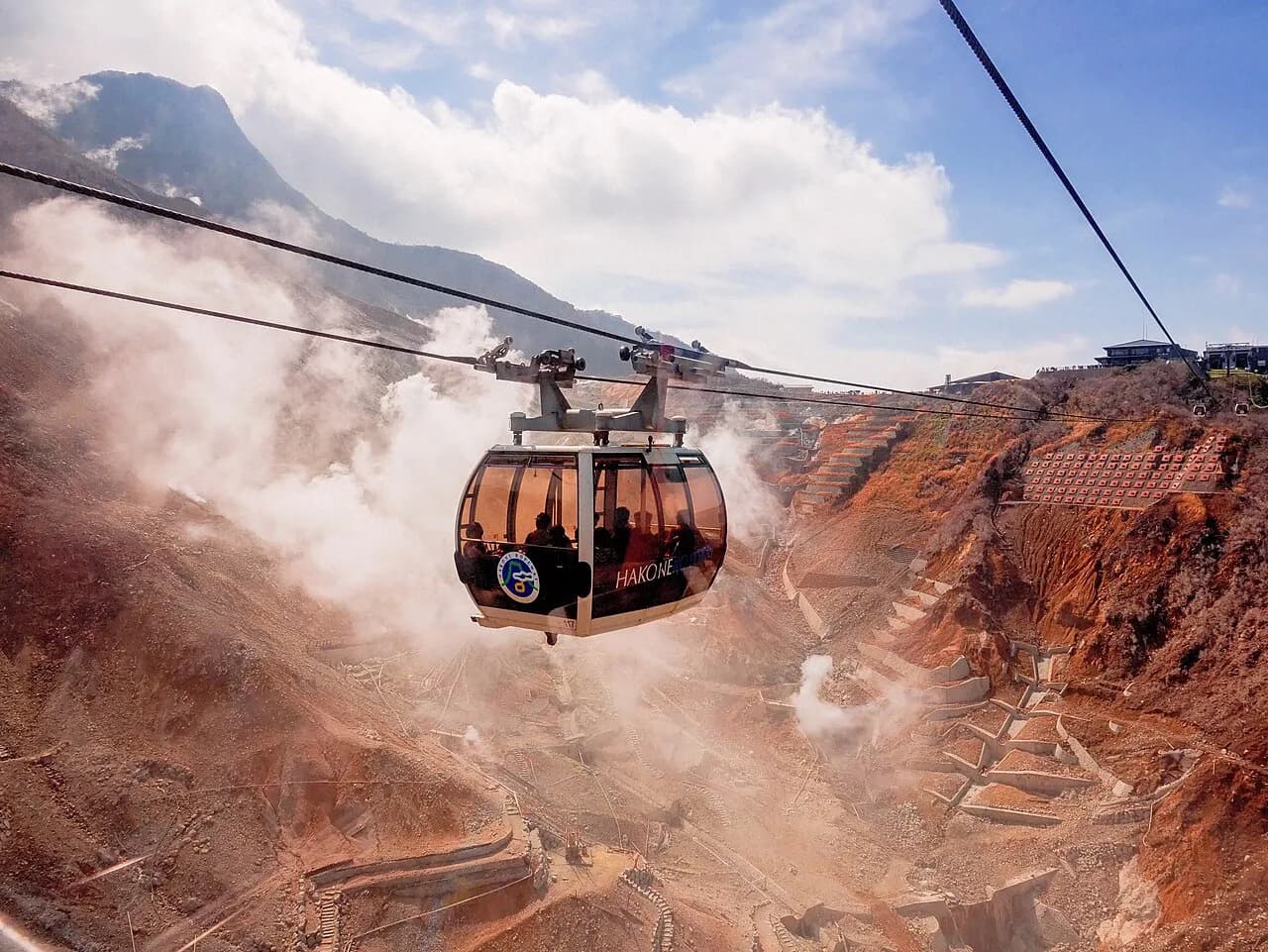
The Hakone Ropeway is an aerial gondola line linking Sounzan Station and Togendai Station. Gondolas stop at Owakudani and Ubako along the way, and depart roughly every minute, each holding up to 18 passengers. It forms the summit leg of the Hakone Loop, the circuit that also uses the Hakone Tozan cable car below Sounzan and the Lake Ashi sightseeing cruise from Togendai. For where the ropeway sits among other stops on the circuit, check the Hakone attractions guide. Before heading up, check the operator's live status page for wind and volcanic gas alerts. The ropeway can close with little notice.
Getting to Sounzan and Togendai
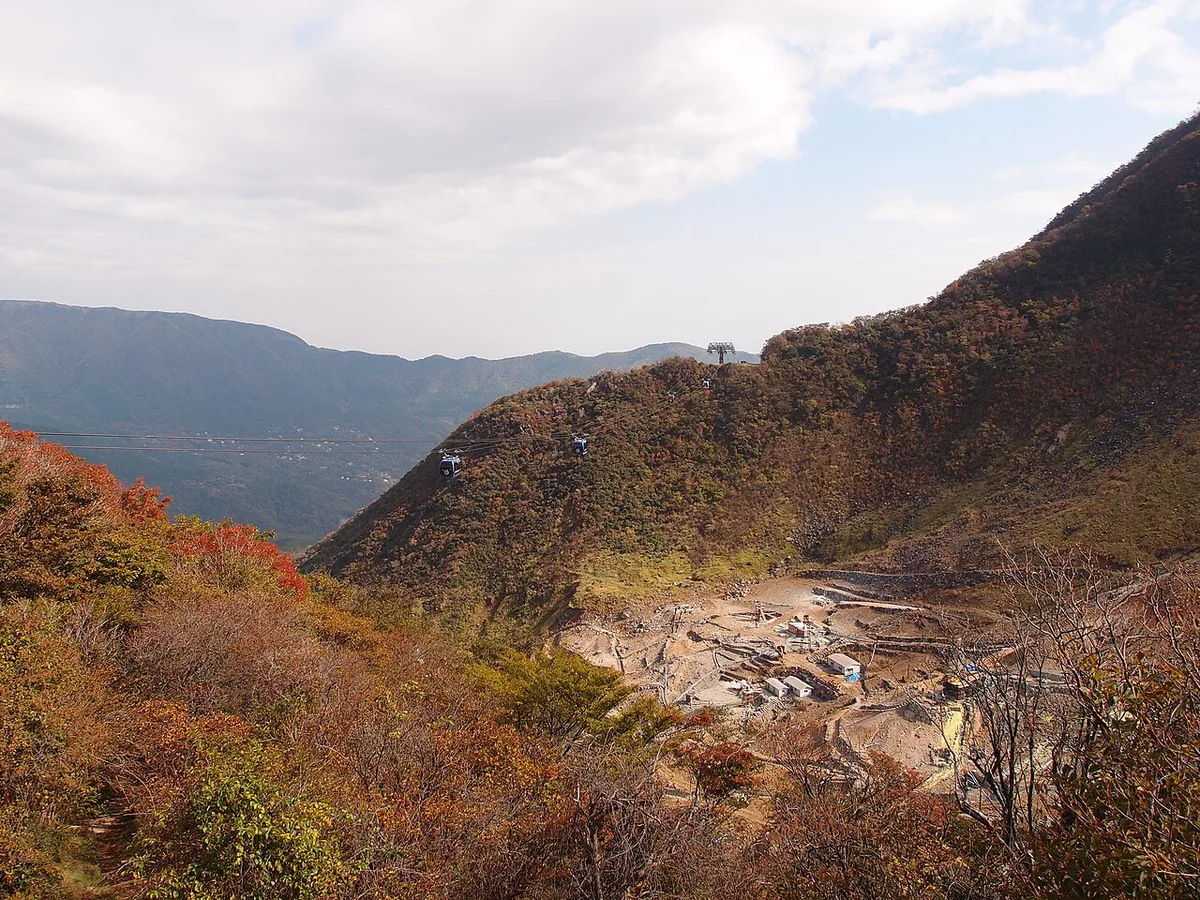
Sounzan Station sits at the top of the Hakone Tozan cable car line from Gora, about a 2-minute walk from the cable car platform to the ropeway entrance. Togendai Station sits at Lake Ashi's shore, next to the sightseeing cruise pier. Most riders following the Hakone Loop arrive at one end of the ropeway and depart from the other, using it as the link between the cable car below Sounzan and the cruise from Togendai.
Decision Matrix: Where to Start Your Ropeway Ride
Riders can join the Hakone Ropeway from either end of the Hakone Loop. Starting on the Hakone-Yumoto side, via Gora and Sounzan, puts you on the ropeway early, ahead of midday crowds at Owakudani. Starting at Togendai, after the Lake Ashi cruise, means riding the ropeway toward Sounzan later in the afternoon. Each direction changes light, crowd levels at Owakudani, and which way you cross the mandatory transfer. Segment times stay the same either way.
Golden Week and late October through mid-November bring 45+ minute Sounzan queues. Board from Togendai or use Ubako's free parking instead to avoid the main station rush.
- Sounzan to Owakudani: about 15 minutes
- Owakudani to Ubako: about 15 minutes
- Ubako to Togendai: about 15 minutes
- Full loop with the Owakudani stop: 1.5 to 2 hours
The Owakudani Transfer: Why You Can't Ride Straight Through
Passengers riding the full line must change gondolas at Owakudani Station. No change is needed at Ubako; that stop is a simple pass-through, with the same cabin continuing on. Buy one ticket to your final destination rather than separate tickets for each leg. You can still get off partway, explore, and reboard later on the same ticket. The transfer means leaving one gondola and walking through the station building to board the next. Owakudani sits over active volcanic vents, so expect a visible sulfur haze and a sharp smell as you disembark.
Station-by-Station: Sounzan, Owakudani, Ubako, and Togendai
Each of the four stations plays a different role on the ropeway line.
- Sounzan Station: the transfer point from the Hakone Tozan cable car, about a 2-minute walk between the two, inside the same building. Home to the cu-mo Hakone observation deck and a footbath. Paid car park with roughly 105 spaces.
- Owakudani Station: the summit stop and mandatory gondola transfer. Sulfur fields and volcanic vents give the valley its old name, Hell Valley. Try kuro-tamago, eggs boiled in the hot springs and sold on-site. OWAKUDANI KITCHEN, on the second floor, serves an Owakudani curry.
- Ubako Station: a quieter stop with access to nearby onsen ryokans. No gondola change is required here. Free car park with roughly 90 spaces.
- Togendai Station: the ropeway's stop at Lake Ashi, next to the sightseeing cruise pier. Connect here to the Lake Ashi pirate ship cruise. About a 3-minute walk between the cruise dock and ropeway entrance. Paid car park with roughly 40 spaces; the only ropeway station with a taxi rank.
Mt. Fuji Views: The Visibility Reality Check
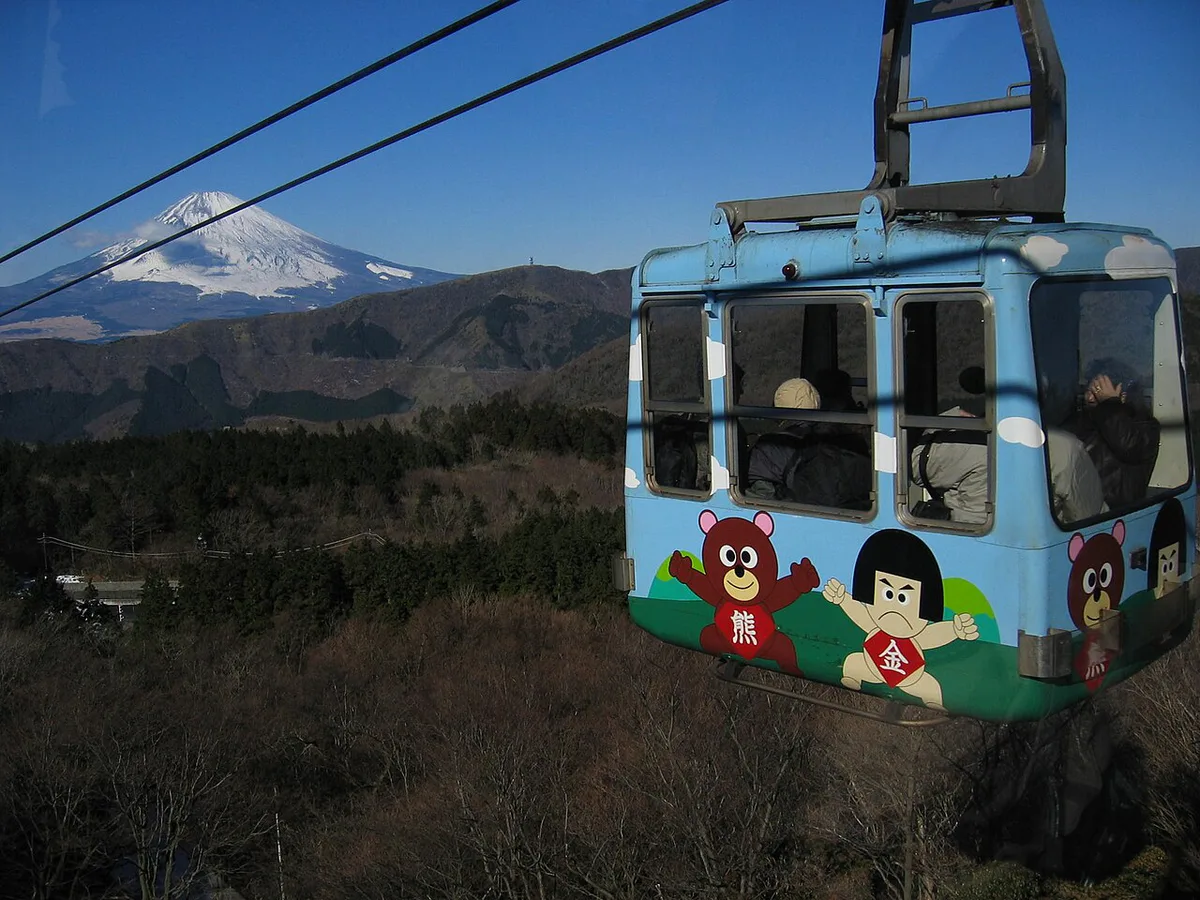
Mt. Fuji is visible from the Hakone Ropeway only on clear days, not on every ride. The operator names the best viewing stretch as the run between Ubako and Owakudani, plus the midpoint between Owakudani and Sounzan. Check the official live status page before you leave the hotel instead of judging by ground-level weather in Yumoto or Odawara. Cloud cover tends to build fastest in the afternoon during summer, so a clear morning reading doesn't guarantee the same view two hours later. Air tends to be clearest in winter; see Hakone in Winter: 2026 Weather, Onsen and Mt. Fuji Guide for a season-by-season read on visibility and closures. If catching Fuji is the priority, compare viewing angles against the lake town on the mountain's other side in Hakone vs Kawaguchiko: Which Fuji Base Should You Choose in 2026?.
Morning or Late Afternoon: Timing the Ride for Photos
Ride toward Sounzan in the morning for the clearest air over the Owakudani vents, before afternoon clouds tend to build. Ride toward Togendai in the late afternoon instead. The operator highlights this stretch for early-evening views of Lake Ashi's surface catching the light. Neither direction guarantees Mt. Fuji; that depends on the day's visibility, not the time of day. Photographers chasing both the valley and the lake in one visit should plan a full loop rather than an out-and-back ride, so both stretches get covered once in decent light.
Check the live status page before departing, not ground weather. Morning toward Sounzan offers clearest air over Owakudani; late afternoon toward Togendai captures Lake Ashi's early-evening light. Neither timing guarantees Mt. Fuji visibility.
2026 Hakone Ropeway Fares and Passes
Fares below reflect the most recently published 2026-season pricing. Confirm current rates on the operator's site before you travel, since ropeway fares can change mid-season. The Hakone Free Pass is close to mandatory for this route: it covers the ropeway plus most of the rest of the Hakone Loop, so most riders would pay more buying each leg separately. The sightseeing cruise/ropeway combo pass is sold directly at ropeway stations and cruise ports, though sales can pause in bad weather, so check availability on the day.
| Ticket | Price (2026) | Notes |
|---|---|---|
| One-way ride | ¥2,000 | Single direction between any two stations |
| Round trip | ¥3,000 | Sounzan to Togendai and back |
| Hakone Free Pass | Included in pass price | Covers ropeway plus most Hakone Loop transport |
| Owakudani 2-Day Pass (Tozan Railway + Ropeway) | Separate ticket price | Cable car and ropeway only, valid 2 consecutive days |
| Sightseeing cruise / ropeway combo pass | Price varies | Sold at ropeway stations and Lake Ashi cruise ports; sales can pause in bad weather |
Operating Hours and Winter Maintenance Closures
The Hakone Ropeway runs on a seasonal schedule and closes for planned maintenance most winters. Substitute buses cover the affected section during each closure window, so the loop route stays possible even when the ropeway itself is down.
- February to November: 9:00 AM to 5:00 PM
- December to January: 9:00 AM to 4:15 PM
- Dec 8-19, 2025: Sounzan-Owakudani section closed, substitute buses run
- Jan 13-30, 2026: Sounzan-Owakudani section closed, substitute buses run
- Jan 31-Feb 20, 2026: Owakudani-Togendai section closed, substitute buses run
- Service also suspends for winds of 30 m/s or more, extreme weather, or mechanical trouble
Facilities, Accessibility, and Payment
Hakone Ropeway stations are built for accessibility and cashless payment.
- Wheelchair users can stay in their own chair while boarding; every station is barrier-free and offers free wheelchair lending
- Baby rest areas at each station cover feeding and diaper changes
- Pets ride in a covered cage or closed carry bag; station cage rental runs about ¥100 per use (trained service dogs are exempt)
- Credit cards accepted: JCB, Visa, Mastercard, UFJ, American Express, and UnionPay
- IC cards such as Suica and Pasmo work at the ticket office
- Coin lockers are available at every station for ¥500
- Group reservations smooth boarding but do not grant priority over the queue
Where to Stay Near the Hakone Ropeway
Basing near Gora or Sounzan suits an early start, reaching the ropeway before the late-morning queue builds at Sounzan Station. Basing near Togendai or Lake Ashi suits sunset plans, since late-day cars into Togendai catch the lake's early-evening light and you're already at the cruise pier. Either base works with the Hakone Free Pass, so choose by ryokan style and how early you want to move. After a day on the ropeway, wind down at the nearby Yunessun onsen guide.
- Near Sounzan or Gora: shortest walk to the ropeway, good for an early first-gondola start before queues build
- Near Togendai or Lake Ashi: closest to the cruise pier, good for pairing a late ropeway ride with sunset over the lake
- Trade-off: station-adjacent hotels save transfer time; ryokans set back in Gora or Miyanoshita trade a short cable-car ride for a traditional onsen stay
Common Mistakes to Avoid
A few planning errors account for most bad Hakone Ropeway trips.
- Skipping the live status check, then finding the line wind-suspended on arrival at Sounzan
- Queuing 45 minutes or more at Sounzan during Golden Week or peak autumn leaves, late October to mid-November. Use Ubako's free lot or Togendai's paid lot instead, then ride in from there
- Hauling large suitcases into an 18-person gondola instead of using station lockers (¥500) or forwarding luggage ahead of the ropeway leg
- Ignoring the sulfur gas smell at Owakudani if you have respiratory sensitivities; the valley's vents are active year-round
- Assuming a reservation guarantees priority boarding; advance reservations only smooth group check-in, everyone still lines up
Luggage Forwarding Before the Ropeway
Do not treat the Hakone Ropeway as a luggage transfer route. Gondolas are built for seated sightseeing, and large suitcases are awkward during queues, transfers, and the Owakudani station walk.
If you are staying overnight in Hakone, use the Hakone Carry Service at Hakone-Yumoto Station before starting the loop. It sends bags between Hakone-Yumoto and participating hotels or ryokans around Gora, Miyanoshita, Sengokuhara, Moto-Hakone, and Lake Ashi. Confirm the same-day cutoff at the counter before leaving the station.
This works best for travelers arriving from Shinjuku or Odawara, then heading straight onto the Hakone Tozan Railway, cable car, ropeway, and Lake Ashi cruise. On departure day, many participating lodgings can also send bags back to Hakone-Yumoto for pickup before your train.
If your hotel is not covered, use coin lockers at Sounzan, Owakudani, Ubako, or Togendai instead, then return to the same station to collect your bag.
For trip-planning details, see Hakone - Wikivoyage and Hakone Ropeway - Wikipedia.
Frequently Asked Questions
How long does the Hakone Ropeway ride take?
Each leg, Sounzan to Owakudani, Owakudani to Ubako, and Ubako to Togendai, runs about 15 minutes. Add the mandatory stop at Owakudani and budget 1.5 to 2 hours for the full one-way trip.
Do you have to change gondolas partway?
Yes, at Owakudani. That change is mandatory for anyone riding the full line. No change is needed at Ubako. Buy one ticket to your final stop; you can still step off partway and reboard later.
Is the Hakone Free Pass worth it for the Hakone Ropeway?
For most itineraries, yes. A one-way ropeway ride alone runs ¥2,000, and a round trip runs ¥3,000. The Hakone Free Pass covers the ropeway plus most of the rest of the Hakone Loop, so pairing it with the cable car and Lake Ashi cruise usually costs less than buying each ride separately.
What happens if the ropeway closes for wind or maintenance?
Service suspends for winds of 30 m/s or more, extreme weather, or mechanical trouble. Planned winter maintenance also closes sections: Sounzan-Owakudani from Dec 8-19, 2025 and Jan 13-30, 2026, and Owakudani-Togendai from Jan 31-Feb 20, 2026. Substitute buses cover each closed section.
Where can you see Mt. Fuji from the Hakone Ropeway?
The operator names two stretches: between Ubako and Owakudani, and the midpoint between Owakudani and Sounzan. Visibility depends entirely on the day's weather, so check the live status page before you go rather than relying on a fixed time of day.
Can you bring luggage on the Hakone Ropeway?
Coin lockers are available at every station for ¥500. Large suitcases are awkward in the gondolas, so travelers doing the full Hakone Loop with bags often forward luggage ahead rather than carry it station to station.
Free: The Hakone Essentials guide
Top things to do, where to stay, a perfect day plan, getting around, and the best time to go — a Hakone mini-guide you can take offline.
You might also like


Continue reading
More guides you'll find useful