Pola Museum of Art Hakone: Collection, Nature Trail & Visitor Guide
Plan your visit to the Pola Museum of Art in Hakone. Explore the Monet collection, the underground architecture, nature trails, and practical transit tips.
On this page
Last updated October 2026: this guide covers the Pola Museum Hakone, a private art museum set in the Sengokuhara forest. Nikken Sekkei describes a collection of roughly 10,000 works, built around Impressionist paintings. Below you will find the highlights, the bus logic from Hakone-Yumoto and Gora, the 670m forest trail, and a clear comparison with the Hakone Open-Air Museum.
Why the Pola Museum Hakone Is Worth the Detour
Pola Museum of Art opened in 2002 in Sengokuhara, in the northern part of the Hakone caldera. Tsuneshi Suzuki (1930-2000), second-generation head of the Pola corporation, built the collection. He took a particular interest in Monet, Renoir and Picasso, and those three still anchor the galleries.
Expect a quiet visit rather than a checklist of sights. Most of the building sits underground, so you walk down from a forest entrance into calm, low-lit rooms. Allow 2 to 3 hours for the galleries and about 45 minutes for the outdoor trail. Pair it with other Hakone museums and sights if you have a second day.
Sengokuhara sits further out than the Gora cluster. That distance is the main trade-off. Plan the transport first, then build the day around it.
Getting to Sengokuhara: Bus Routes and Timing
From Tokyo, the usual route is the Odakyu Romancecar to Hakone-Yumoto. From there, take a Hakone Tozan bus on the Togendai-bound line, which the brief lists as the "T" route. Route letters change occasionally, so confirm them at the Hakone-Yumoto bus stands. The official Pola access page is the place to check current stops.
Galleries take 2 to 3 hours, so a visit that starts near 10:00 AM still has to leave before 5:00 PM.
From Gora Station, the brief lists the "S" and "M" bus lines toward Sengokuhara. Check the timetable before you leave Gora, because frequency drops in the evening. Service around Sengokuhara thins out after 5:00 PM, so work backwards from the last bus.
For a full Tokyo routing, see our notes on a Tokyo-to-Hakone day plan. If you will ride several buses and trains, compare costs using the Free Pass fares breakdown. Pass holders usually get an admission discount of about ¥200, but verify the current figure before you rely on it.
- Tokyo to Hakone-Yumoto: Odakyu Romancecar
- Hakone-Yumoto to Sengokuhara: Togendai-line "T" bus (confirm the letter)
- Gora to Sengokuhara: "S" or "M" bus (confirm the letter)
- Last practical return: aim to leave before 5:00 PM
The Collection: From Monet to Modern Glass
The core is about 400 works of Western modern art from the 19th and 20th centuries. Roughly 100 come from Impressionism, Post-Impressionism and Neo-Impressionism. Another 100 come from the École de Paris, a group of non-French painters working in 1920s Paris. Ingres, Delacroix, Kandinsky and the Surrealists fill out the timeline.
The museum says it holds the largest Japanese collections of several artists. The counts below come from the official collection page. Not every piece is on view at once, so check the current display list before you go.
- Monet: 19 works
- Renoir: 16 works
- Picasso: 19 works
- Léonard Foujita: 176 works
- Degas: 9 works
- Van Gogh: 3 works
Japanese Painting, Glass and Cosmetic Utensils
Japanese art is split into two traditions. Yoga means Western-style oil painting, with artists such as Kuroda Seiki, Fujishima Takeji and Kishida Ryusei. Nihonga means Japanese-style painting. The Nihonga holdings total about 160 works, mostly postwar, including 43 by Sugiyama Yasushi.
The crafts galleries add range. The museum holds 790 glass works, mostly Art Nouveau and Art Deco, with pieces by Émile Gallé and René Lalique. There are also about 200 Eastern ceramics and 6,700 cosmetic utensils, from 18th-century perfume bottles to 20th-century compacts.
If glass is your draw, build a short Sengokuhara loop. The Venetian glass museum nearby covers Venetian work. Our Lalique Museum guide covers a dedicated Lalique collection. Each museum publishes its own details, such as the Lalique Museum visitor page.
Architecture: Why the Museum Sits Underground
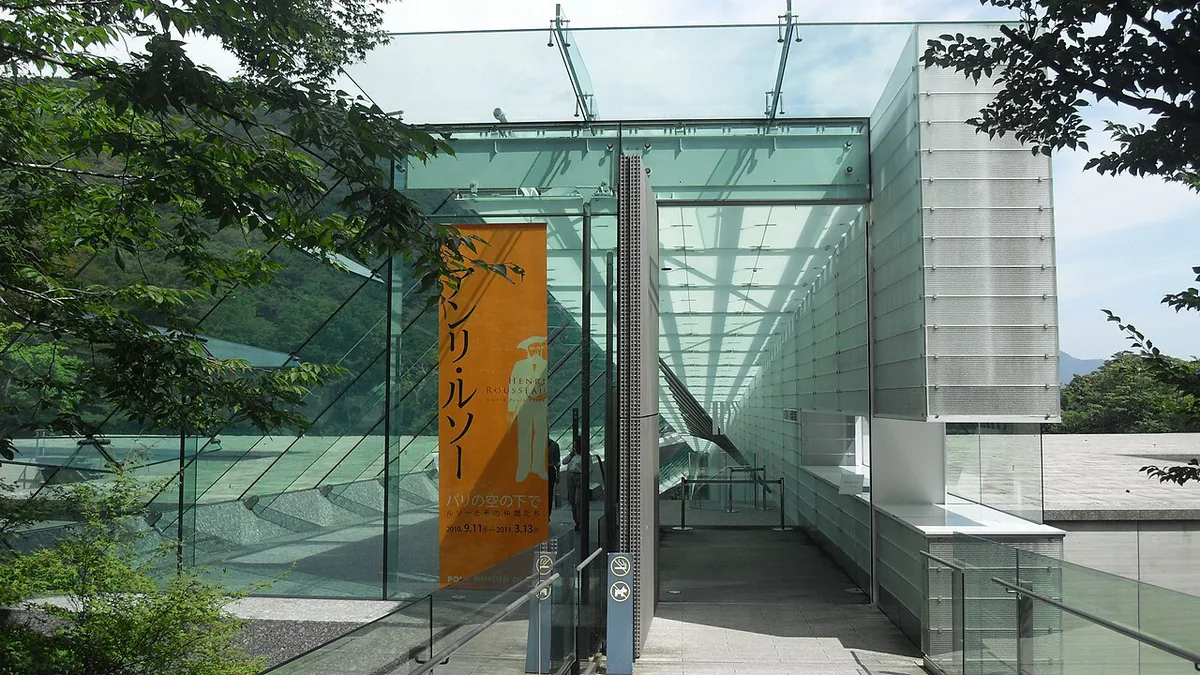
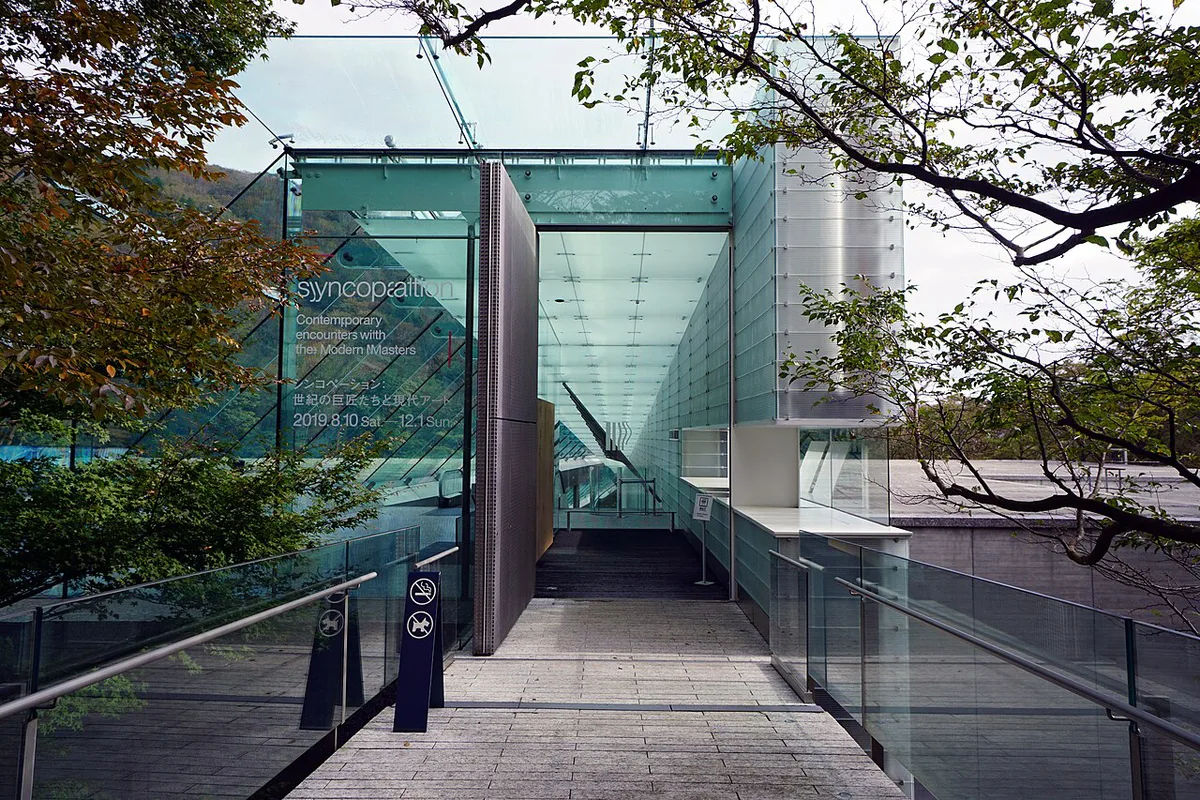
Nikken Sekkei designed the building, completed in 2002. Its site area is 56,572.24 square meters, and its building height is GL +8.00 m. Nikken Sekkei says the design was planned to coexist with the surrounding national park. Most of the building is underground.
A four-story atrium brings daylight down from a skylight into the central lobby. Visitors descend from a glass entrance at ground level into the galleries. One visitor account describes a bronze figure facing the entrance, set on a clear pedestal against the trees.
The design also earned recognition. Nikken Sekkei lists three awards from 2004, including one from the Architectural Institute of Japan. That detail matters less than the experience: you notice how the light changes with the weather and season.
The Art + Nature Trail
The trail is a 670m walk through forest beside the museum. Small sculptures sit among moss, shrubs and tall trees. Some pieces are nearly the size of grass clumps, so slow down and scan the ground.
Weather shapes the experience. Light rain or mist deepens the mood, according to one visitor account from a drizzly day. Heavy storms can close the path, so check status at the entrance. Parts of the trail include stairs, even though the museum interior is barrier-free.
Budget about 45 minutes. Wear shoes that handle wet boardwalk and mossy ground. Walk the trail either before the galleries to warm up, or after them to decompress.
Dining and Shopping: Nevar, Tune Cafe and the Shop
The museum site lists a restaurant, a cafe and a museum shop. Restaurant Nevar is the sit-down option with forest views. Tune Cafe serves sweets and light meals in a forest atmosphere, per the Hakone Tourist Association. The shop sells stationery and museum goods.
Menu prices and hours change, so check the official site before you plan a meal. Sengokuhara has fewer dining options than Gora, so eating on site often saves time. Arrive hungry if you reach the museum around midday.
After the museum, consider a soak. Our guide to onsen soaks around Hakone helps you pick one that fits your return bus.
Pola Museum vs. Hakone Open-Air Museum
Both are popular art stops, but they suit different days. Pola favors indoor contemplation of Impressionism and modern painting. The Open-Air Museum, listed by the Hakone Tourist Association, offers outdoor sculpture and the Picasso Pavilion. Choose by weather and by how much walking you want.
| Factor | Pola Museum of Art | Hakone Open-Air Museum |
|---|---|---|
| Main focus | Impressionism, modern painting, glass | Outdoor sculpture, Picasso Pavilion |
| Setting | Mostly underground, forest trail of 670m | Open grounds |
| Rainy day | Strong choice | Less comfortable |
| Area | Sengokuhara | Check access on the official site |
| Time needed | 2 to 3 hours plus 45 minutes on trail | Check official site |
Planning Your Visit: Timing, Tickets and Mistakes to Avoid
Aim to arrive near 10:00 AM to avoid tour groups. Late afternoon can give good forest light, but the last bus constrains you. Leave before 5:00 PM unless you have confirmed a later return.
Pass holders usually get about ¥200 off, so the Free Pass can offset part of an unconfirmed admission price.
Admission prices were not available in the sources for this guide. Check the official Pola site for the current ticket price. Special exhibitions may need separate tickets, especially in peak autumn foliage season. Rotating shows change what is on view, so confirm the schedule before you travel.
A few mistakes are easy to avoid. Do not rely on a single route letter without checking it. Do not skip the trail because of light drizzle. Do not plan a tight onward connection from Sengokuhara. For a wider trip frame, see our Japan planning guide.
Frequently Asked Questions
How long should I spend at the Pola Museum of Art?
Plan 2 to 3 hours for the galleries. Add about 45 minutes for the 670m Art + Nature Trail. Add more time if you eat at the restaurant or cafe.
How do I get to the Pola Museum from Tokyo?
Take the Odakyu Romancecar to Hakone-Yumoto. Then board a Hakone Tozan bus on the Togendai-bound line, listed as "T" in our brief. Confirm the current route letter locally.
Does the Hakone Free Pass discount admission?
Pass holders usually get a discount of about ¥200. Verify the current amount on the official site. Our Free Pass guide explains the pass in more detail.
Which artists are most represented in the collection?
The museum holds 19 works by Monet and 16 by Renoir. It also has 19 by Picasso and 176 by Foujita. Smaller groups include 9 by Degas and 3 by Van Gogh.
Is the museum accessible?
The museum is barrier-free inside, according to our brief. Parts of the forest trail include stairs. Check the official barrier-free page for current details.
Is the Pola Museum better than the Hakone Open-Air Museum?
It depends on weather and taste. Pola suits rainy days and Impressionist painting. Open-Air suits outdoor sculpture and the Picasso Pavilion.
Free: The Hakone Essentials guide
Top things to do, where to stay, a perfect day plan, getting around, and the best time to go — a Hakone mini-guide you can take offline.
You might also like


Continue reading
More guides you'll find useful